Affiliate disclosure: Some links in this guide may be paid referral links. If you purchase or sign up through one, One Stop Side Hustles may earn a commission. How our affiliate links work.
HANDMADE SELLER STARTER GUIDE
Learn how to turn your crafting hobby into a handmade shop. Whether you make jewelry, candles, pottery, or sewn goods, this guide covers a practical path from first products to a small collection that buyers can find and understand.
1. What Is Selling Crafts & Handmade Goods?
2. Why Selling Crafts & Handmade Goods Is a Great Side Hustle
3. What Types of Handmade Goods Sell Best?
4. How Much Can You Actually Earn?
5. Tools & Materials You Actually Need
6. Where to Sell Your Handmade Goods
7. From Prototype to Happy Customer
8. Marketing Your Handmade Business
9. Learning, Templates & Resources
10. Your First 6 Months Selling Crafts & Handmade Goods Plan
11. View the Handmade Seller Starter Kit
12. Frequently Asked Questions
Quick Snapshot
Earn: Varies widely — some pieces sell for extra income; higher monthly figures usually take a niche, photos, pricing, and consistent listings
Work: Make products in batches on your own schedule
Start: Medium cost — materials, tools, and packaging
Best for: Makers who turn a craft hobby into products
Grow: Simple products → signature style → brand/wholesale
1. What Is Selling Crafts & Handmade Goods?
Selling crafts and handmade goods means creating physical products by hand (or with small-scale tools) and selling them to customers who value uniqueness, quality, and the story behind handmade items. Unlike dropshipping or reselling, you're the maker—creating original or customized products.
🔄 How It Works (Simple 4-Step Process)
- Create your products (jewelry, candles, art, etc.)
- Set up your shop (Etsy, Shopify, local markets)
- Photograph and list items with compelling descriptions
- Fulfill orders (make, package, ship)
🎯 KEY TAKEAWAY
You're not just selling products—you're selling craftsmanship, uniqueness, and the emotional connection of owning something made by human hands, not machines.
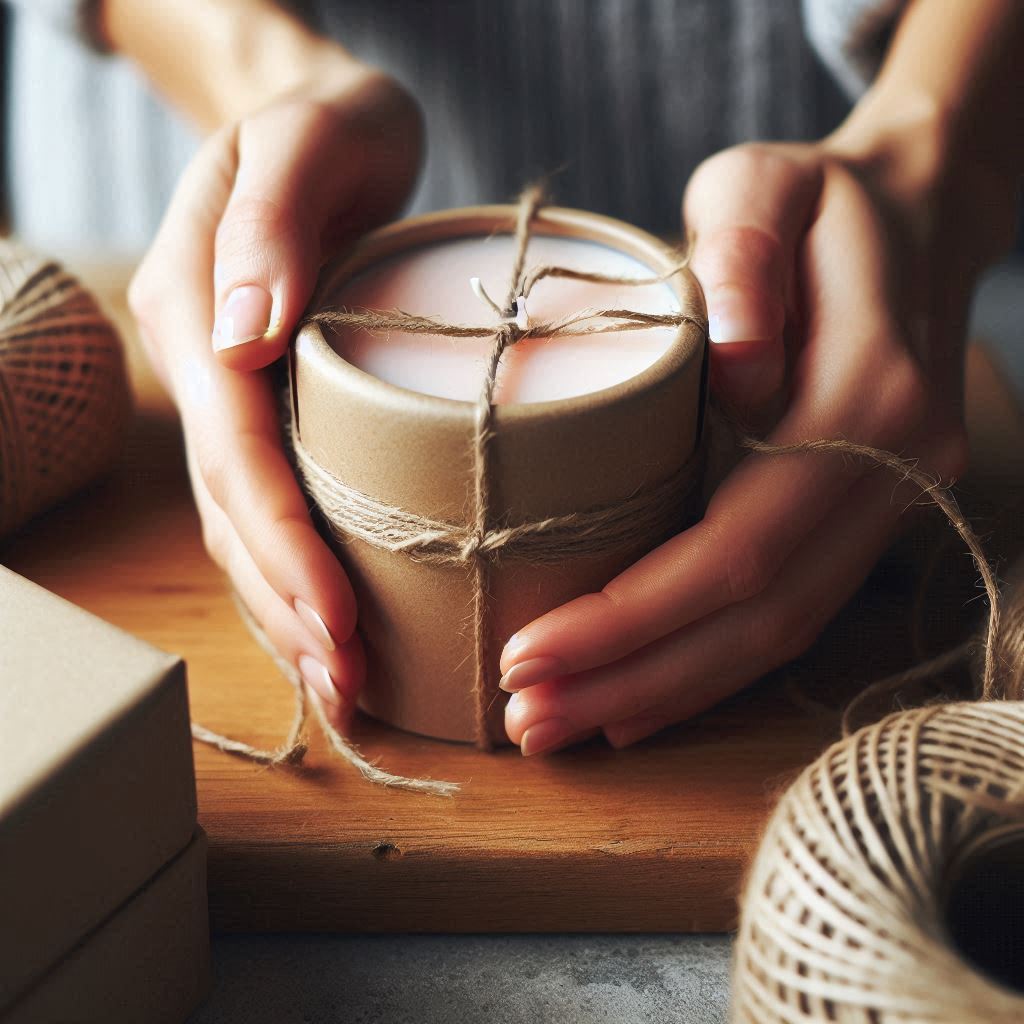
2. Why Selling Crafts & Handmade Goods Is a Great Side Hustle
Selling handmade goods is a strong side hustle because it combines creative skill, giftable products, and a clear path from small batches into a recognizable brand.
💰 Handmade products can command strong margins
Buyers are often willing to pay more for items that feel personal, custom, or artist-made.
That pricing power usually comes from:
- Original design
- Small-batch production
- Personalization
- Gift appeal
- Better presentation
You are not only selling materials — you are selling craftsmanship, style, and meaning.
🧵 You can turn an existing skill into income
This side hustle works especially well when you already enjoy making things and want to turn that interest into a real offer.
Common strengths include:
- Jewelry making
- Candle making
- Sewing or crochet
- Woodworking
- Paper crafts
That makes it easier to start with something you already like practicing instead of learning a completely unfamiliar business.
🎯 Niche products usually sell better than generic ones
Handmade shops tend to grow faster when the products clearly match a specific buyer, occasion, or style.
Strong niche angles often include:
- Personalized gifts
- Seasonal collections
- Wedding items
- Pet products
- Home décor themes
A clearer niche usually makes your products easier to market, photograph, and remember.
⚡ You can start with a small collection
You do not need a huge product line to begin testing demand.
A simple launch can look like:
- 3–5 products
- Small supply orders
- One main platform
- Basic packaging
- Simple photos
That lets you learn what buyers respond to without overinvesting before you have proof.
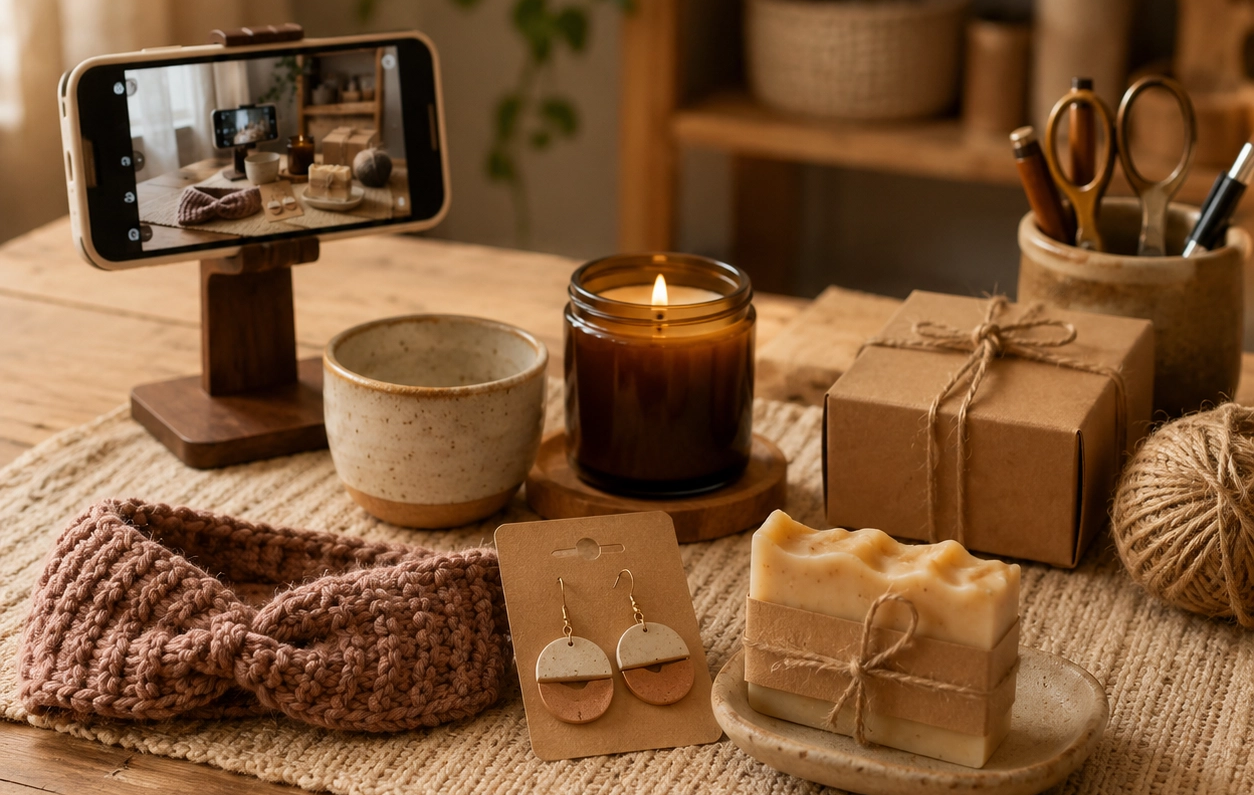
🕒 Production can fit around real life
Because you control the making schedule, this side hustle can adapt better than many fixed-hour jobs.
Common advantages include:
- Weekend batching
- Evening production
- Seasonal pushes
- Selective custom orders
- Flexible rest periods
That flexibility makes it easier to grow at a pace that matches your time and energy.
📦 Better systems can increase output without reinventing everything
As you repeat successful products, the business usually gets easier to run and more profitable.
Useful improvements often include:
- Batch production
- Repeatable designs
- Faster packaging
- Cleaner shipping workflow
- Better supply organization
Those systems help you spend less energy on chaos and more energy on products that actually sell.
🌍 It can grow from side income into a real brand
Handmade businesses have more upside than many people expect because they can expand across several channels over time.
Common growth paths include:
- Online marketplaces
- Social selling
- Local markets
- Repeat customers
- Wholesale or workshops
That creates a real path from hobby income into a more established creative business.
🤝 The emotional value can drive loyalty and referrals
Handmade products often feel more memorable than generic mass-produced items, especially when the experience is polished.
That can lead to:
- Gift repeat purchases
- Word of mouth
- Better reviews
- Stronger customer connection
- More brand loyalty
When people love both the product and the story behind it, they are more likely to come back and tell others.
3. What Types of Handmade Goods Sell Best?
Handmade products usually sell best when they feel personal, giftable, useful, or visually distinctive. The goal is not to make every kind of craft—it is to pick one product lane that fits your skills, your style, and what buyers already want.
Most beginners do better by choosing one focused niche, building a cohesive first collection of 3–5 products, and improving from real buyer feedback.
📝 QUICK NOTE
The prices below are illustrative retail ranges, not verified market prices or expected profit. Your real margin depends on materials, labor, packaging, fees, shipping, and taxes. Check safety, labeling, and permit requirements for your products, especially candles, bath and body items, and anything made for children.
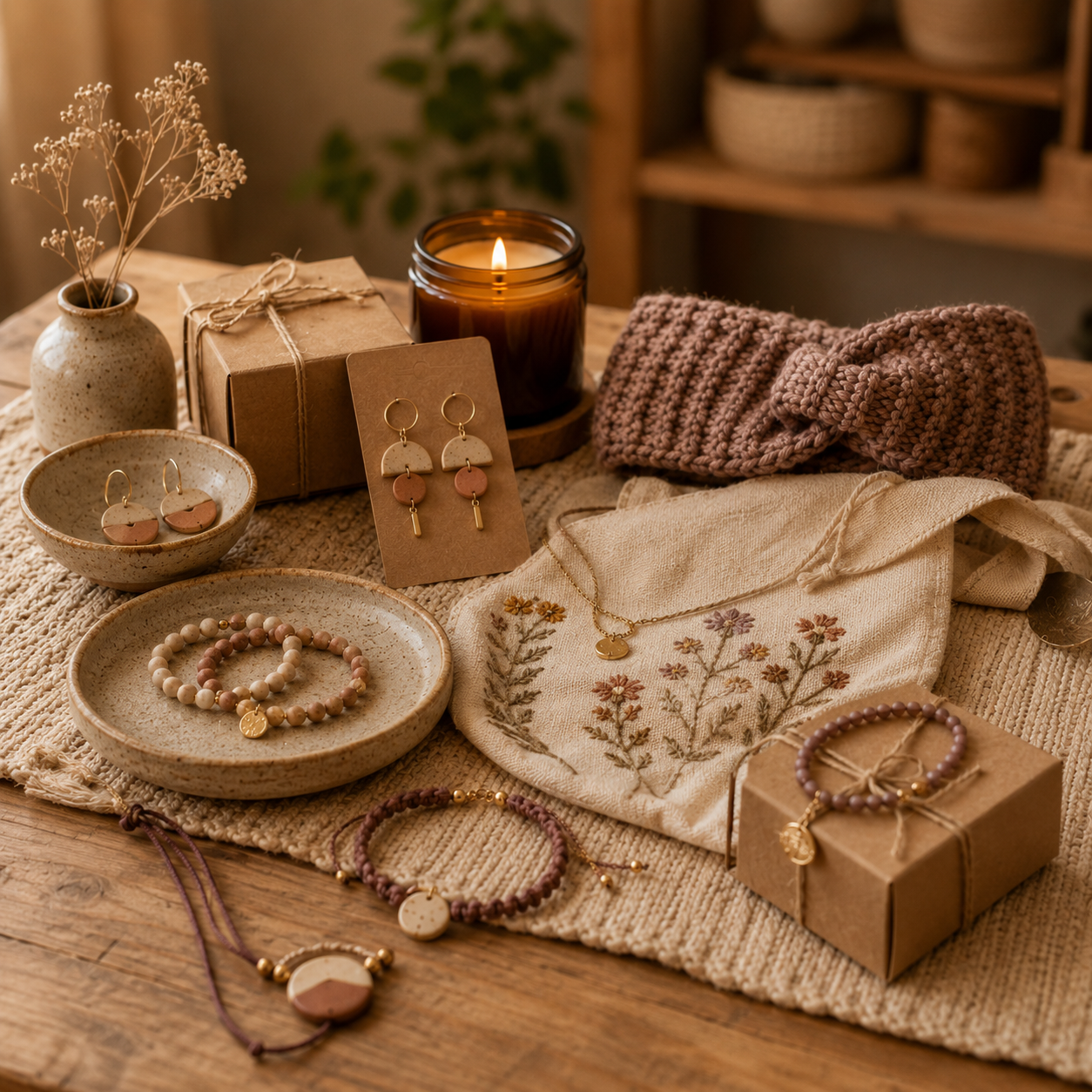
💍 Jewelry & Wearable Categories
💎 Handmade Jewelry
A strong beginner category because jewelry is giftable, lightweight, and easy to ship.
- 📌 What you might make: Earrings, necklaces, bracelets, birthstone pieces, clay, resin, and personalized jewelry
- 👥 Common buyers: Gift shoppers, style-focused buyers, and people marking special occasions
- 💰 Illustrative price: Roughly $15–$80, depending on materials and complexity
- ✅ Best for: Makers who enjoy detail work, personalization, and repeatable small-batch pieces
💡 PRO TIP
Choose a clear style, such as minimalist, boho, or birthstone. Be honest about materials, and check any metal or hypoallergenic claims before using them.
👗 Apparel & Accessories
A good lane for sellers with a strong visual style and repeat gift appeal.
- 📌 What you might make: Scarves, hats, totes, scrunchies, knit or crochet pieces, and small sewn accessories
- 👥 Common buyers: Gift buyers, fashion-conscious shoppers, and people seeking handmade character
- 💰 Illustrative price: Roughly $12–$60, depending on materials and time
- ✅ Best for: Sewists, embroiderers, knitters, crocheters, and makers of practical products
💡 PRO TIP
A cohesive collection sells better than unrelated one-off pieces. Track labor time so you do not underprice slow-to-make items.
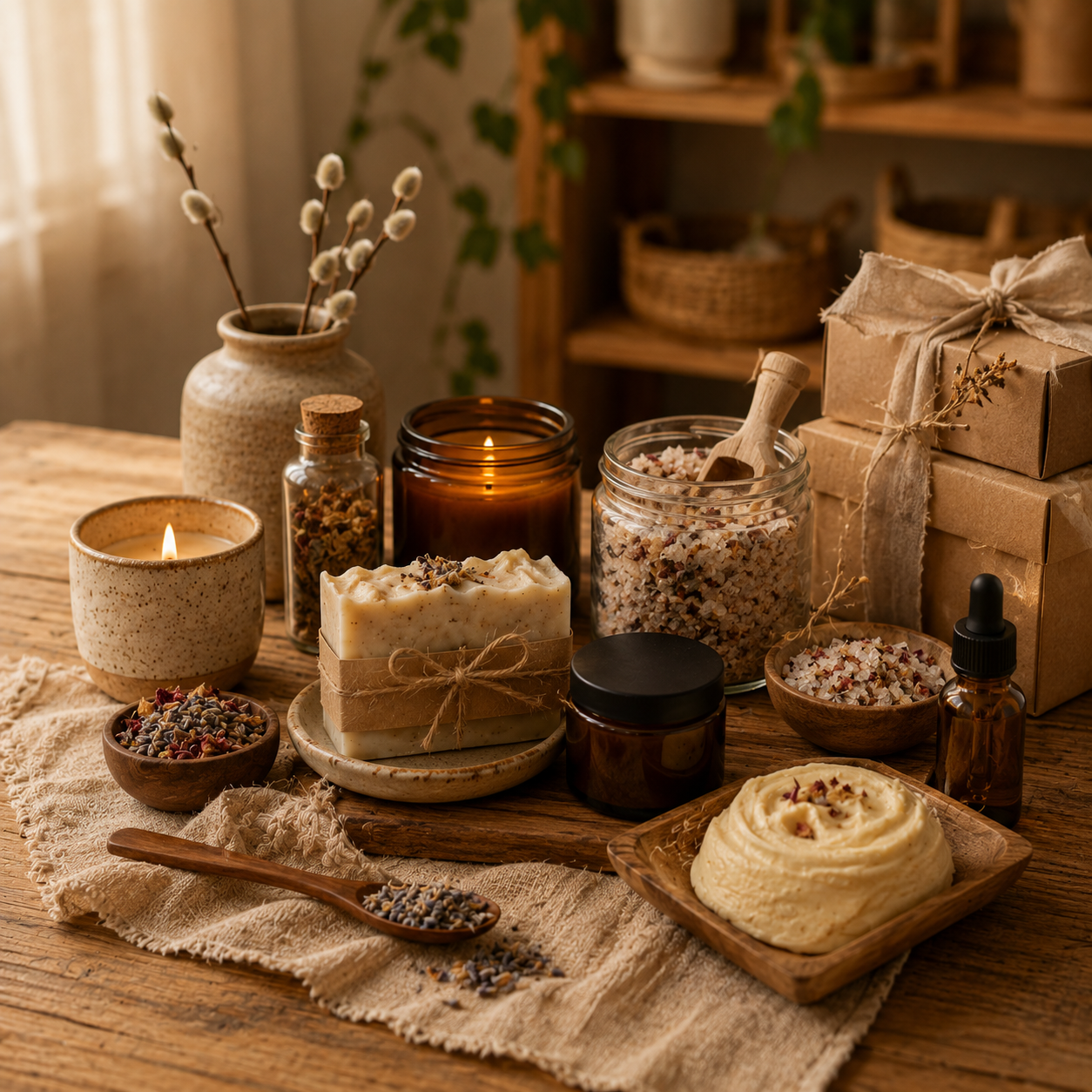
🕯️ Self-Care & Consumable Handmade Goods
🕯️ Candles
Giftable, visual products that suit seasonal collections and polished branding.
- 📌 What you might make: Scented candles, themed collections, gift sets, and seasonal fragrances
- 👥 Common buyers: Gift buyers, home-fragrance fans, and seasonal shoppers
- 💰 Illustrative price: Roughly $12–$35, depending on size and presentation
- ✅ Best for: Makers who enjoy scent blending, packaging, and lifestyle presentation
💡 PRO TIP
Use materials intended for candle making, test burn times, and include appropriate safety instructions and labels. Check local and platform requirements before selling.
🛁 Bath & Body Products
A self-care lane where buyers value gifting, routines, and a premium feel.
- 📌 What you might make: Soaps, scrubs, bath salts, balms, and bundled gift sets
- 👥 Common buyers: Self-care shoppers, gift buyers, and people who prefer small-batch products
- 💰 Illustrative price: Roughly $8–$30, depending on size and bundle
- ✅ Best for: Makers interested in ingredients, scent families, and consistent small-batch production
💡 PRO TIP
These products need careful labeling, ingredient consistency, and attention to regulations that vary by location. Do not make medical or skin-treatment claims.
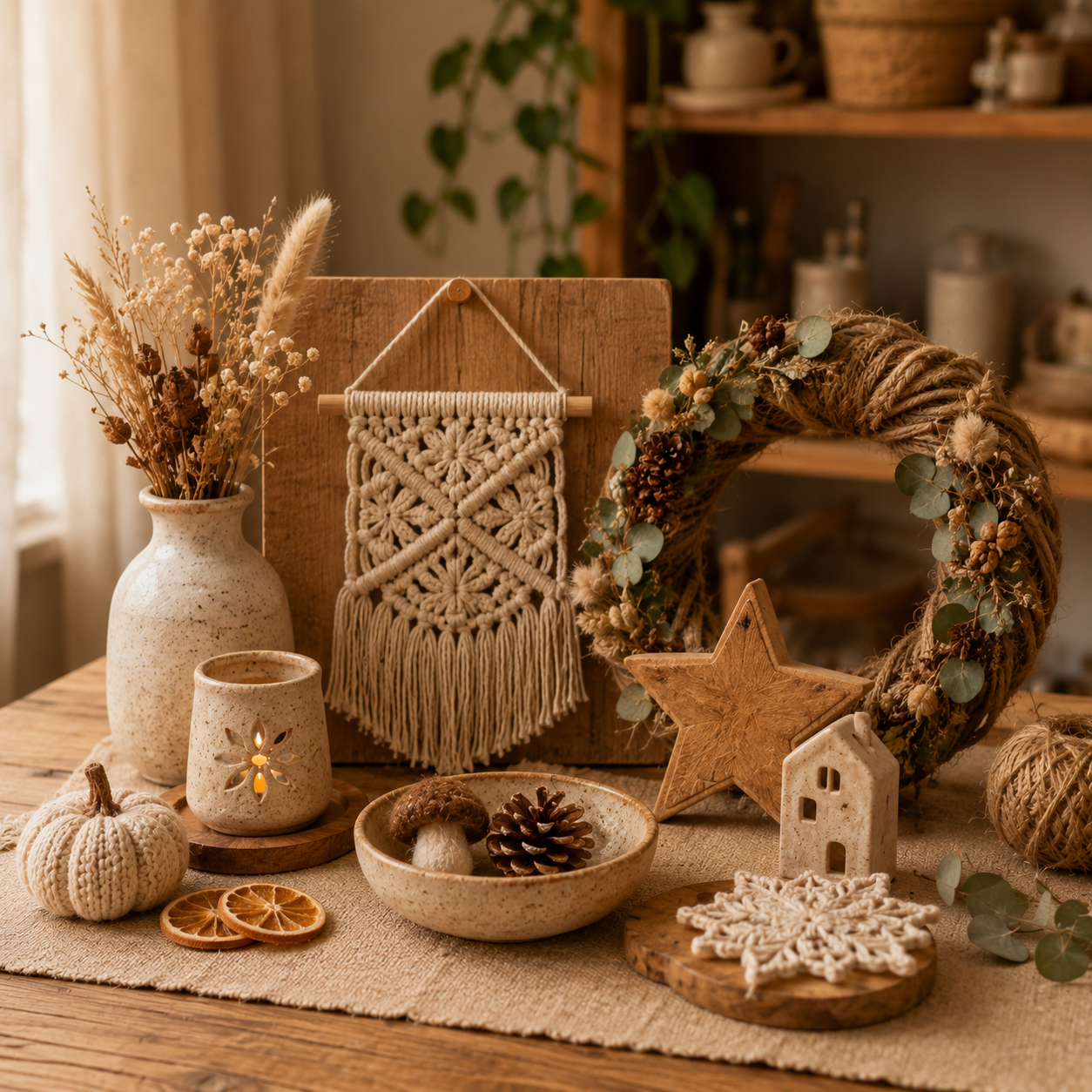
🏡 Home Décor & Seasonal Products
🏡 Home Décor
A lane for buyers who want warmth, personality, and handmade character in a space.
- 📌 What you might make: Fiber, wood, ceramic, floral, sign, wreath, and decorative accent pieces
- 👥 Common buyers: Homeowners, renters, new parents, and gift shoppers
- 💰 Illustrative price: Roughly $15–$100+, depending on size and materials
- ✅ Best for: Makers working in wood, fiber, ceramics, florals, or decorative accents
💡 PRO TIP
Match products to one clear style, such as farmhouse, minimalist, nursery, or cozy holiday. Consider breakage and shipping weight before pricing.
🎄 Holiday & Seasonal Goods
A category with strong demand spikes when buyers shop for gifts and event decor.
- 📌 What you might make: Ornaments, wreaths, themed decor, seasonal gift sets, and event products
- 👥 Common buyers: Gift buyers, hosts, families, and seasonal decorators
- 💰 Illustrative price: Roughly $8–$50, depending on the item and set size
- ✅ Best for: Planners who can design ahead and launch 2–3 months before the season
💡 PRO TIP
Treat each season as a collection, and plan materials and production time early. Leftover seasonal stock can be hard to sell after the event.
📝 Paper, Art & Lightweight Products
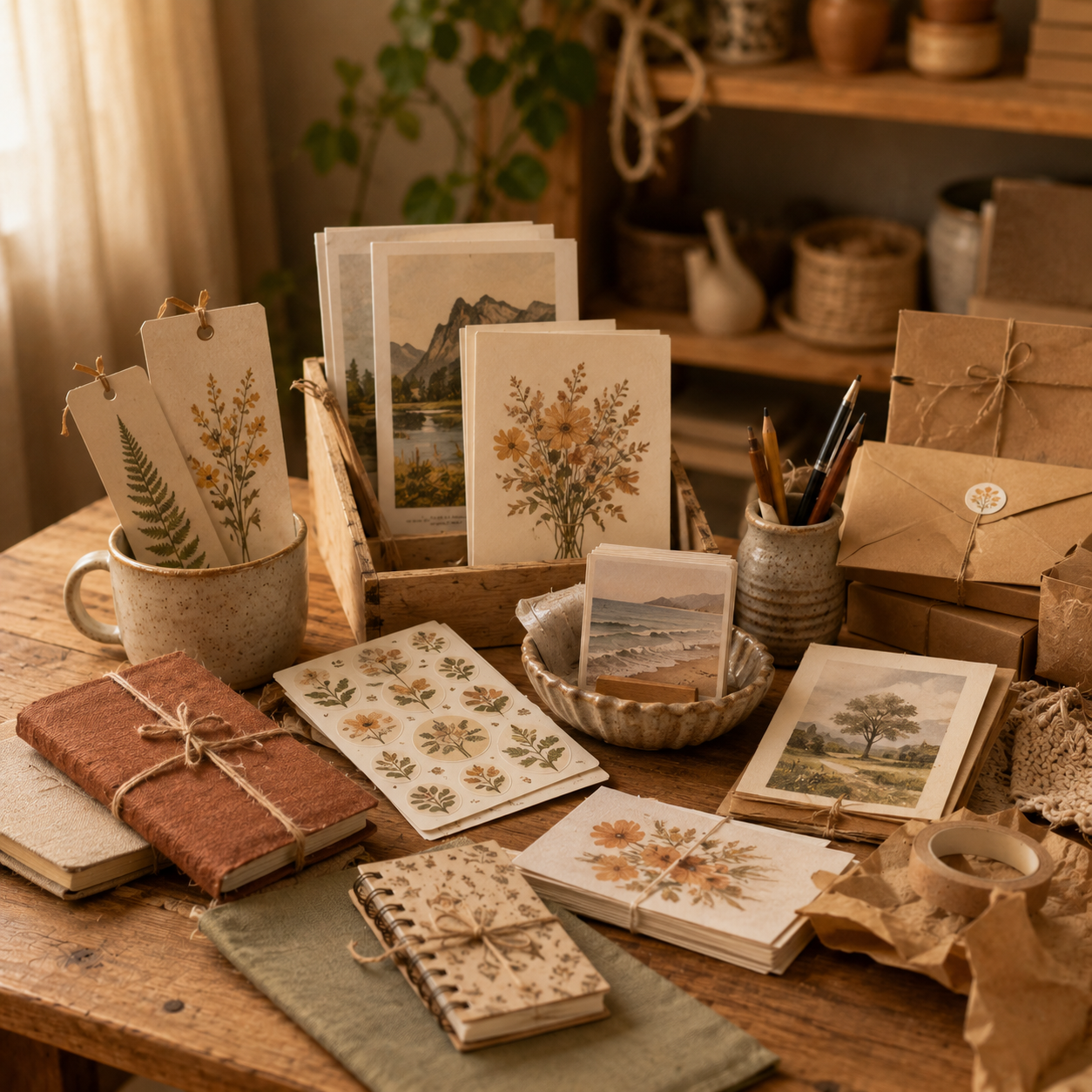
🗒️ Paper Goods & Stationery
Affordable, lightweight products that are easier to ship.
- 📌 What you might make: Cards, bookmarks, invitations, journals, tags, and event stationery
- 👥 Common buyers: Gift shoppers, event hosts, students, and planner fans
- 💰 Illustrative price: Roughly $3–$20, depending on quantity and finish
- ✅ Best for: Designers, illustrators, lettering artists, and makers who like customization
💡 PRO TIP
Tie each product to a clear use case, such as weddings, holidays, school, or productivity. Bundles can improve order value.
🖼️ Art Prints & Stickers
A way for artists to turn original work into repeatable products.
- 📌 What you might make: Art prints, sticker sheets, themed bundles, and coordinated collections
- 👥 Common buyers: Fans of a specific artist, theme, or community, plus gift shoppers
- 💰 Illustrative price: Roughly $3–$40, depending on size and edition
- ✅ Best for: Artists with a recognizable visual style, theme, or audience
💡 PRO TIP
Sell themed bundles or matching sets instead of single random items. Only use original art or artwork you are licensed to sell.
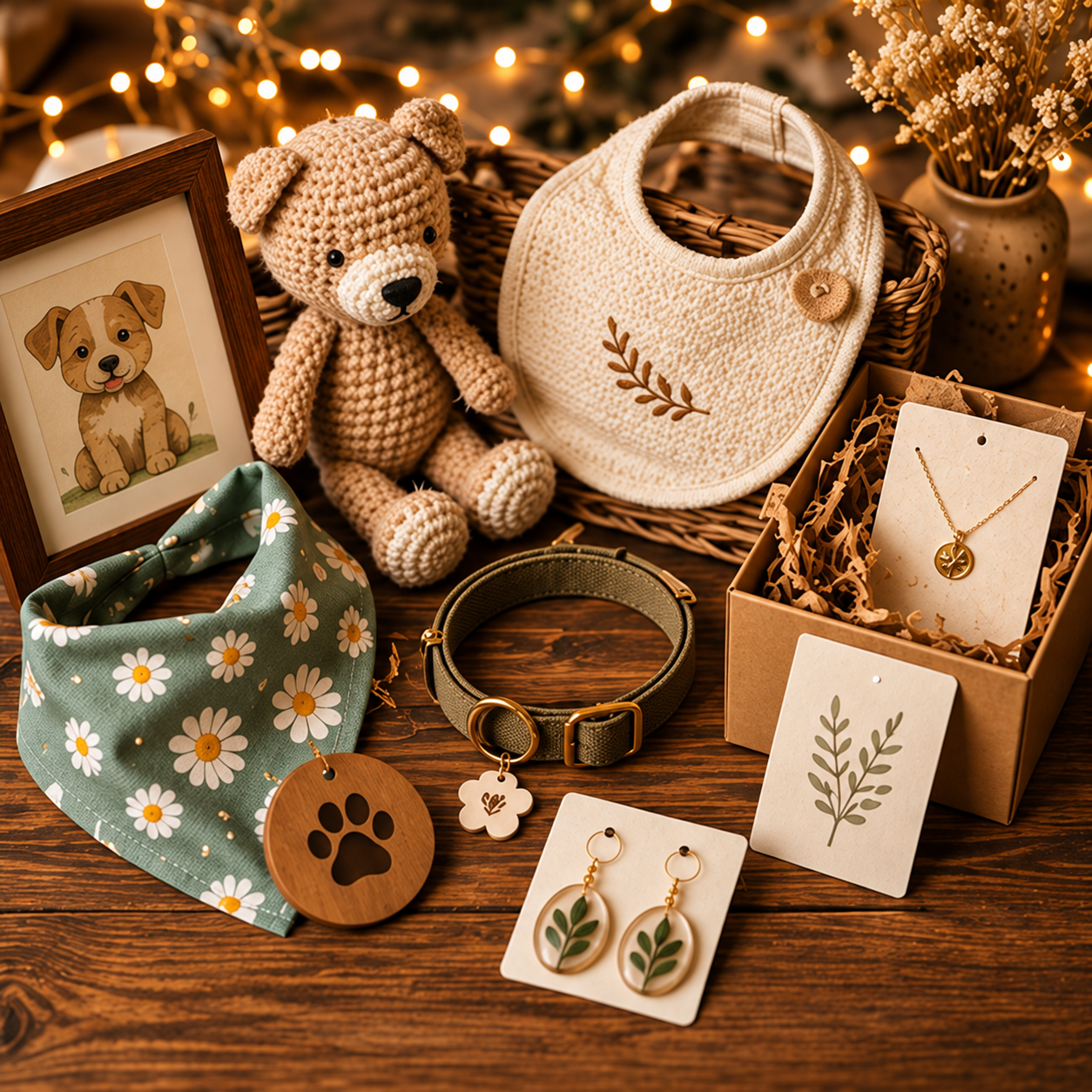
🧸 Family & Pet Products
🐾 Kids, Baby & Pet Products
A high-emotion category because buyers often seek personalized, sentimental gifts.
- 📌 What you might make: Personalized items, pet accessories, keepsakes, and small handmade gifts
- 👥 Common buyers: Parents, grandparents, pet owners, and gift buyers
- 💰 Illustrative price: Roughly $10–$50, depending on personalization and materials
- ✅ Best for: Makers focused on safe materials, thoughtful details, and special-occasion gifting
💡 PRO TIP
Products for babies and children may have additional safety, testing, and labeling requirements. Check the rules that apply where you sell before listing.
⭐ Best Products to Start With
⭐ Beginner-Friendly Choices
These products are easier to make in small batches, photograph, and ship.
- Jewelry and greeting cards
- Stickers, bookmarks, and simple art prints
- Candles, if you follow safety and labeling requirements
- Pet accessories and small sewn goods
✅ Start with the products that fit your skills and give you the fastest feedback.
✅ Why They Work
A small, repeatable collection lets you test demand without a major setup.
- They need little startup space or equipment
- They are easier to photograph and package consistently
- They let you test demand and improve before moving into more complex handmade products
✅ Learn what buyers respond to before expanding your range.
🎯 Build Your First Handmade Collection
🎯 KEY TAKEAWAY
Start with jewelry, stationery, candles, pet accessories, or simple art prints. These are easier to make in small batches, easier to photograph, and strong for gift-based selling. Sales are never guaranteed, so test a small collection before buying large amounts of materials.
🚀 ACTION STEP
Write a focused first plan:
- Buyer & product: Choose one product lane and a clear style or gift use.
- Repeatability: Make a small batch and record materials, labor, and quality checks.
- Safety & rights: Check applicable labeling, safety, and design ownership requirements.
- Listing plan: Price the work, photograph it clearly, and define shipping and customization terms.
4. How Much Can You Actually Earn?
Use this chapter to connect product demand, labor, materials, presentation, and repeat buyers to your handmade pricing plan.
🧠 Reality Check — What Actually Separates Earners
- Most handmade sellers start with small, inconsistent sales
- Not because handmade products do not sell
- 👉 Most beginners price too low
- 👉 Many sellers underestimate time, labor, packaging, and fees
- 👉 Generic products are harder to stand out with
- The sellers who earn more typically:
- Choose products with strong demand
- Build a recognizable style or niche
- Take clean, professional product photos
- Price for profit, not just materials
- Sell through multiple channels
- Turn one-time buyers into repeat customers
🎯 KEY TAKEAWAY
Handmade income is not just about being creative. It comes from combining product quality + pricing + presentation + repeat buyers.
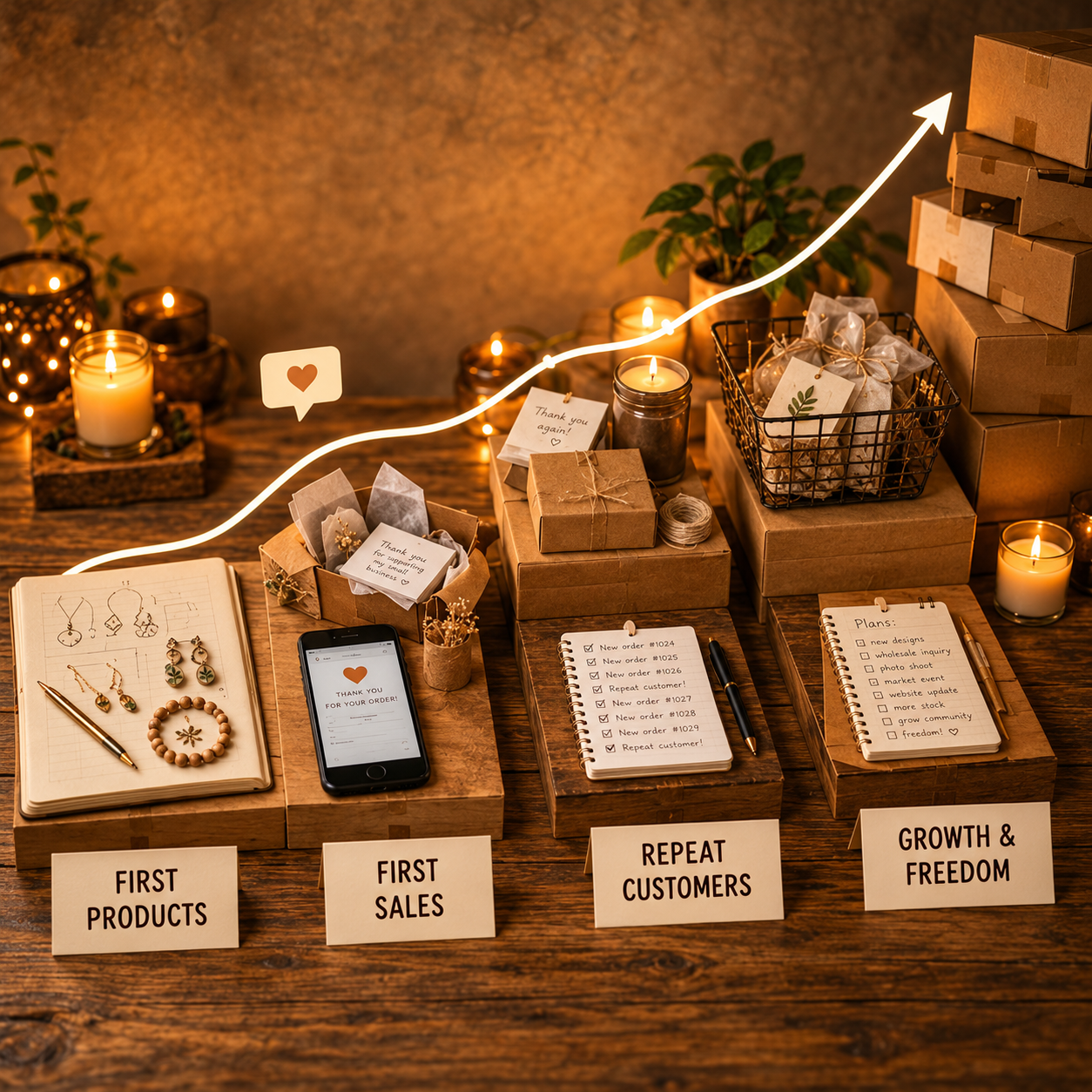
🔑 Smart Pricing Strategy
🧾 Cost Floor & Profit Allowances
- Start with a simple profit-focused formula:
- Materials
- Labor time
- Packaging
- Platform fees
- Shipping costs
- Profit margin
- Avoid pricing only based on what competitors charge
- Their costs may be different
- Their product quality may be lower
- They may be underpricing too
🎁 Product Value & Customization
- Price based on:
- Product uniqueness
- Time required
- Skill level
- Customization
- Giftability
- Brand presentation
🎯 KEY TAKEAWAY
Estimate materials, waste, labor, packaging, fees, shipping, and overhead before quoting. Customization and wholesale require their own cost and capacity checks.
🧪 Real Example
📋 REAL-WORLD EXAMPLE
These hypothetical scenarios show contribution before labor, as the examples state—not take-home profit. They use different products and sales volumes, so they are not a same-category controlled comparison. Shipping, overhead, taxes, and omitted costs can reduce the figures further.
🌱 Scenario A: Beginner Craft Seller
- Sells bracelets for $10 each
- Materials cost $3
- Packaging and fees cost $2
- Profit before labor: $5/item
- Sells 40/month
- Income: $200/month before labor
🎯 Scenario B: Niche Handmade Seller
- Sells personalized jewelry for $28 each
- Materials, packaging, and fees cost $8
- Profit before labor: $20/item
- Sells 75/month
- Income: $1,500/month before labor
🚀 Scenario C: Premium Handmade Brand
- Sells custom gift boxes or home decor for $65 each
- Costs average $22/item
- Profit before labor: $43/item
- Sells 150/month
- Income: $6,450/month before labor
🎯 KEY TAKEAWAY
Same craft category. Huge difference in pricing, positioning, customization, and sales volume.
🎯 KEY TAKEAWAY
Use these scenarios to understand the model, not to predict your own income. Compare actual results and risks with your written plan.
🎯 What Actually Drives Income
🧮 Buyer Fit × Product Quality × Sustainable Margin = Income Potential
This is a business framework, not a mathematical earnings forecast.
📊 Key Income Drivers
- Product type
- Jewelry, candles, printables, decor, and personalized gifts often have strong demand
- Profit margin
- Low-cost supplies + premium presentation = better earnings
- Time required
- Products that take too long can limit monthly income
- Customization
- Names, dates, colors, gift messages, and personalization can justify higher prices
- Photos and listing quality
- Better photos make handmade products look more trustworthy and gift-worthy
- Seasonality
- Holidays, weddings, birthdays, graduation, and Mother’s Day can drive major spikes
- Sales channel
- Etsy, craft fairs, social media, Shopify, local markets, and wholesale all perform differently
- Repeat buyers
- Reorders, collections, bundles, and gift sets increase lifetime customer value
🎯 KEY TAKEAWAY
The best handmade sellers do not just sell products — they sell gift ideas, personal style, and emotional value.
📈 Item Price & Making Time (Pricing Reality)
📖 Read the Numbers in Context
The amount left after supplies is not profit after labor. Include setup, making, finishing, photography, packing, customer messages, and rework. Product safety, labeling, and applicable selling requirements vary by category; children’s items, cosmetics, food, and candles can require extra testing and compliance.
🎯 KEY TAKEAWAY
Look beyond headline income: assess the complete economics, risks, and real cash available.
🚀 Build Your First Profitable Handmade Offer
Start with one buyer, a small repeatable product batch, full labor and materials costs, and one sales channel. Use a four-week test to learn demand and production capacity before accepting larger or customized orders.
🧭 Run a Focused Handmade Batch Test
- Choose a repeatable product and buyer. Select a product you can make consistently and safely for a clear audience. Start with a small batch and an affordable materials budget. Check applicable business, product-safety, labeling, and market rules before selling; do not treat regulated products as an easy add-on.
- Measure materials and labor. Make a prototype and record materials, waste, setup, production, finishing, and packing time. Include fees, shipping, and overhead allowances. Set a labor value explicitly so a positive materials margin is not mistaken for a profitable product.
- Define the offer and custom-order terms. State dimensions, materials, variations, care instructions, production time, delivery estimates, and return terms. Limit customization, revisions, and quantities to what you can deliver. Agree deposits, approval points, and payment terms where appropriate without promising impossible turnaround.
- Test a small batch for four weeks. Use original or licensed designs, accurate photos, and one main sales channel. Track inquiries and actual paid orders separately. Inspect quality before delivery, pack appropriately, and keep enough capacity for customer questions or rework. Do not bulk-buy supplies based only on likes or favorites.
- Review demand and capacity. Record collected revenue, refunds, materials, labor hours, fees, shipping, defects, and unsold stock. Compare contribution after labor allowance with production capacity. Adjust future pricing or product scope before adding variants, wholesale, or larger custom orders.
🎯 KEY TAKEAWAY
Price your making time as well as materials. A sale that only recovers supplies does not prove the product supports a sustainable business.
💡 Example: A Four-Week Handmade Offer Test
- Buyer: People seeking a small handmade desk accessory or gift
- Product: A simple original sewn pouch in a few defined fabric options
- Batch: A small batch within a capped materials budget
- Costing: Measured materials, waste, making time, packaging, fees, and shipping
- Terms: Clear dimensions, materials, care, turnaround, and return information
- Channel: One marketplace or suitable local sales channel for four weeks
- Signals: Paid orders, full labor effort, defects, feedback, and unsold stock
This is a batch and pricing test, not a promise of sales. Seasonal demand may not repeat every month. Wholesale discounts can make an otherwise viable retail item unprofitable if labor and full costs are ignored.
✍️ Write Your One-Line Earnings Test Plan
Use this structure to make the plan easy to review:
“For [buyer], I will test [small handmade batch] through [channel] for [period], within [materials budget]. I will price [materials, labor, fees, and delivery] and review [paid orders, quality, contribution, and capacity].”
✅ Completed example
“For gift buyers, I will test a small batch of original sewn pouches on one sales channel for four weeks within a fixed materials budget. I will measure full labor and costs, state clear product and delivery terms, and review paid orders, defects, unsold stock, and capacity before expanding.”
🚀 ACTION STEP
Before starting:
Keep the first plan focused. Build a workable process before adding more complexity.
📋 Pricing & Revenue Planning Reference
Use the stage and pricing ranges as illustrative references, not verified local benchmarks or guaranteed timelines. The scenario figures explicitly exclude labor and are not final business profit. Wholesale percentage ranges are not a substitute for costing your own product and order size.
💵 What Handmade Businesses Can Earn
📊 Income Progression by Stage
🚀 Stage | ✍️ Experience Level | 💵 Typical Monthly Income | ⏳ Timeline | 📌 What’s Happening |
Beginner | First products / first platform | $50–$500 | 0–3 months | Testing products, learning photos, low sales |
Developing | Repeat listings + early reviews | $500–$2,000 | 3–6 months | Improving quality, packaging, and listings |
Established | Clear niche + steady orders | $2,000–$6,000 | 6–12 months | Better pricing, repeat buyers, seasonal demand |
Advanced | Strong brand + multiple channels | $6,000–$12,000+ | 12–24 months | Custom orders, wholesale, markets, higher margins |
Professional | Full-time brand / small team | $12,000+/month | 2+ years | Systems, production help, wholesale, loyal audience |
🎯 KEY TAKEAWAY
The stages describe possible progression, not guaranteed income or a required timeline. Use your own capital or business records to plan realistically.
📊 Key Metrics & Margin Snapshot
📈 Item Price & Making Time (Pricing Reality)
📊 What Your Handmade Products Are Actually Worth
Metric | What to Record |
Collected item revenue | Separate retail, custom, bulk, and refunds |
Materials and waste | Record components, prototypes, spoilage, and packaging |
Full labor time | Include setup, making, finishing, packing, and admin |
Quality and stock | Track defects, rework, returns, and unsold items |
Margin after labor allowance | Compare full unit economics and production capacity |
🎯 KEY TAKEAWAY
If labor is omitted, the apparent margin can hide an unsustainable hourly return.
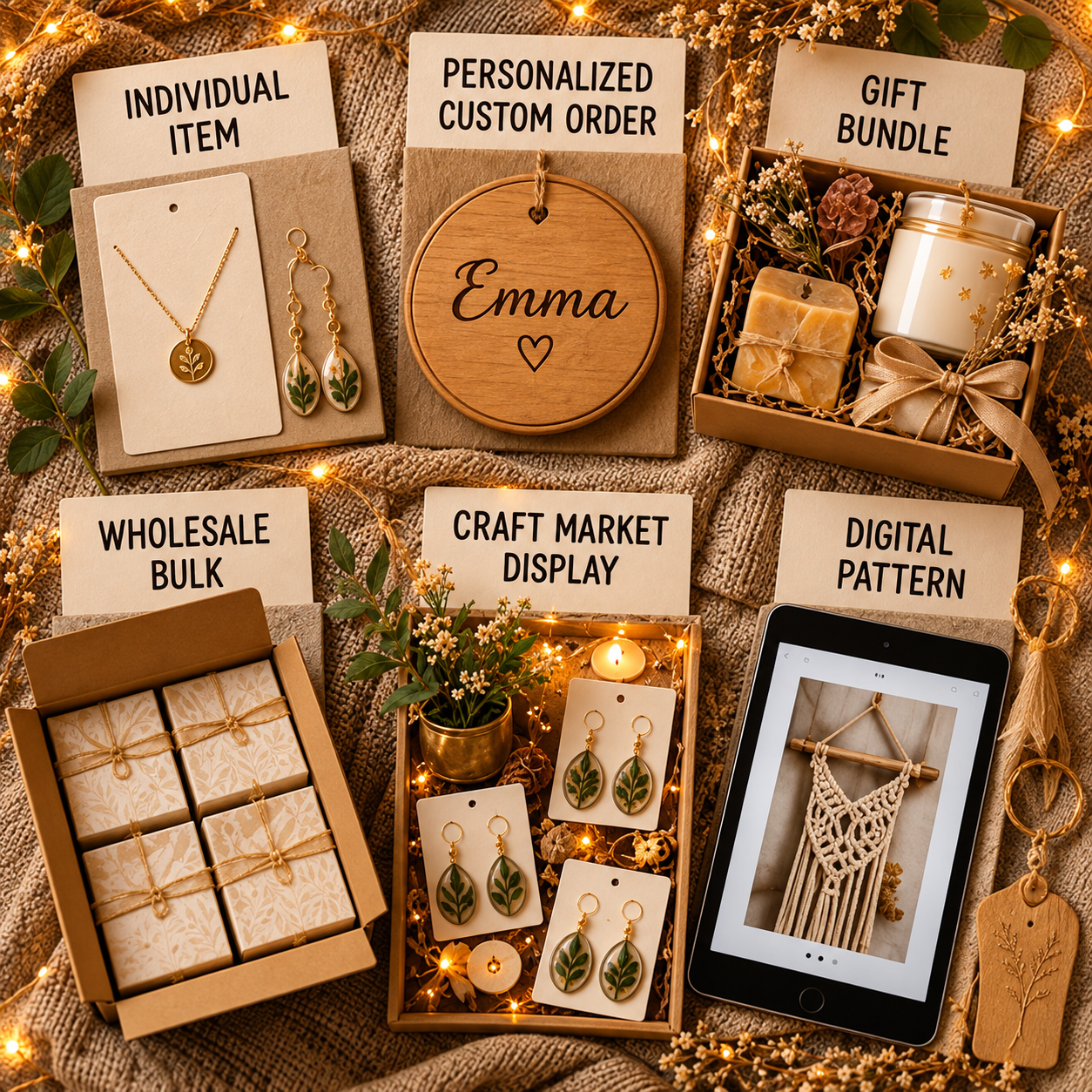
💸 How Handmade Sellers Charge
🧾 How Handmade Sellers Charge
🧾 Pricing Model | 💰 Typical Price Range | 📈 Best Use Case |
Single item | $8–$75+ | Jewelry, candles, stickers, accessories |
Custom order | $25–$250+ | Personalized gifts, signs, artwork, decor |
Bundles / sets | $20–$150+ | Gift boxes, product sets, party favors |
Wholesale | 40–60% of retail price | Boutiques, local shops, bulk buyers |
Craft fairs / markets | Varies by product | Local buyers, seasonal sales, impulse purchases |
Digital handmade products | $3–$30+ | Patterns, templates, SVG files, printables |
🎯 KEY TAKEAWAY
Cost each custom, bundle, or wholesale offer separately. A retail price or standard discount does not establish a profitable bulk quote.
🧮 Check Your Project & Revenue Economics
Unit contribution after labor allowance = collected item revenue − direct materials, packaging, fees, absorbed shipping, and the chosen labor allowance.
Track returns and rework without double-counting costs. A sole owner’s labor allowance is a planning measure, not automatically a cash expense or tax deduction. Account for tools, workspace, broader overhead, and taxes separately when assessing the business.
🚀 ACTION STEP
🗓️ Build a Monthly Handmade Revenue Snapshot
Use actual records and a sustainable plan—not projections alone—to decide what to continue.
5. Tools & Materials You Actually Need
🛠 TOOLS & RESOURCES
🧿 Jewelry Making
Supply | Cost (USD) | Where to Buy |
Beads, wire, findings | $50–150 | |
Tools (pliers, cutters) | $20–50 | Amazon, craft stores |
Jump rings, clasps | $15–30 | Bulk suppliers |
Packaging (boxes, bags) | $20–40 |
💰 Total Startup: $100–250
🕯️ Candle Making
Supply | Cost (USD) | Where to Buy |
Soy wax (10 lbs) | $25–40 | |
Fragrance oils | $40–80 | |
Wicks & centering devices | $15–25 | Candle supply shops |
Jars/tins (bulk) | $30–60 | |
Thermometer, pouring pot | $20–35 |
💰 Total Startup: $130–240
🧼 Bath & Body
Supply | Cost (USD) | Where to Buy |
Soap base or lye + oils | $40–80 | |
Essential/fragrance oils | $30–60 | |
Molds & cutters | $20–40 | |
Colorants | $15–25 | Soap suppliers |
Packaging | $25–40 |
💰 Total Startup: $130–245
⚠ IMPORTANT
Check local regulations — cosmetics may require licenses or insurance.
📸 Photography Setup
Tool | Cost (USD) | Why You Need It |
Natural light/window | Free | Best lighting for products |
White posterboard | $5–10 | Clean, professional backdrop |
Phone camera | Free | Perfect for beginners |
Cheap ring light | $20–35 | Consistent lighting setup |
Photo editing app | Free | Snapseed or Lightroom Mobile for polishing |
💰 Total: $25–45 (or FREE if using natural light only)
📦 Packaging & Shipping
Item | Cost (USD) | Where to Buy |
Poly mailers or boxes | $15–40 | |
Tissue paper | $10–20 | |
Thank-you cards | $10–25 | |
Stickers/branding | $15–30 | |
Bubble wrap/padding | $10–20 | |
Shipping scale | $15–30 |
💰 Total: $75–165
💡 PRO TIP
Beautiful packaging = shareable unboxing moments = free marketing on social media.
🧰 Platforms & Software
Tool | Cost | Purpose |
Etsy shop | $0.20/listing + fees | Selling platform |
Free-$13/mo | Design labels, packaging, marketing | |
Free | Marketing and sales | |
PayPal/Stripe | Transaction fees only | Payment processing |
Free (pay postage only) | Discounted shipping labels |
Monthly cost: $0-15 (before Etsy listing fees)
✨ Optional But Valuable Tools
As you grow:
- Label printer ($50-150) - Faster shipping labels
- Heat gun or embossing tool ($15-30) - Professional finishing
- Cricut or Silhouette ($200-300) - Custom designs, labels
- Photography lightbox ($30-80) - Consistent product photos
- Inventory management software ($0-30/mo) - Track supplies and sales
6. Where to Sell Your Handmade Goods
The right sales channel depends on your product, margins, production capacity, and buyer experience. Use this chapter to compare marketplaces, social commerce, your own store, in-person events, retail partnerships, and a practical multi-channel strategy.
🌐 Online Marketplaces — Start With Built-In Demand
Online marketplaces are usually the fastest way to get in front of buyers because they already have built-in traffic. The tradeoff is that you will deal with platform fees, competition, and search algorithms.
🛍️ Etsy — Best for Most Crafters
Feature | Details |
Fees | Listing fee + transaction fee + payment processing |
Traffic | Large audience of handmade, vintage, and craft-supply buyers |
Best For | Handmade products, vintage goods, craft supplies, personalized gifts |
Setup Time | 2–4 hours |
Pros | Built-in audience, trusted platform, beginner-friendly |
Cons | Fees add up, competition is high, algorithm changes can affect traffic |
🧰 Setup Essentials
- 🛍️ Start with 10–20 listings minimum
- 📸 Use professional photos, ideally 5–10 per listing
- 🔎 Write SEO-optimized titles and tags
- 📋 Complete your shop policies
- 💛 Add an About section with your brand story
- 🚚 Use clear processing times and shipping expectations
📱 Social Commerce — Turn Content Into Sales
Social platforms are great for visual products because people can see your process, personality, packaging, and finished pieces. This works especially well for products that look good in photos or short videos.
Feature | Details |
Traffic Source | Followers, Reels, hashtags, local discovery |
Best For | Jewelry, candles, art, crochet, home décor, accessories, personalized gifts |
Pros | Strong visual branding, easy to show process, good for community building |
Cons | Requires consistent posting, algorithm dependent, may take time to grow |
💡 Content Ideas
- Product photos
- Packaging videos
- Behind-the-scenes making process
- Customer reviews
- Before-and-after custom orders
- New product drops
- Limited-time collections
🎵 TikTok Shop
Feature | Details |
Traffic Source | TikTok discovery, short-form videos, livestreams |
Best For | Trend-friendly products, impulse buys, gifts, beauty, accessories, novelty items |
Pros | Viral potential, strong discovery, product demos work well |
Cons | Requires video content, fast-moving trends, platform rules can change |
🎵 Best TikTok Video Ideas
- “Pack an order with me”
- “How I make this product”
- “Small business day in the life”
- “Customer order reveal”
- “Restock with me”
- “Things I sell in my handmade shop”
💡 PRO TIP
Best social strategy: Do not only post product photos. Show the story, process, packaging, and transformation behind the product.
🛒 Your Own Store — Gain Control and Ownership
Your own store gives you more control over your brand, customer experience, and long-term business. The downside is that you must drive your own traffic through social media, SEO, email, Pinterest, ads, or repeat customers.
🛒 Shopify — Professional E-Commerce
- Best For: Established sellers ready to scale
- Pros: Professional storefront, scalable, strong e-commerce tools, no marketplace competition on your own site
- Cons: Monthly cost, more setup, you must drive traffic
👍 Good Fit If You Have
- Consistent sales
- Repeat customers
- A defined brand
- Multiple products or collections
- Plans to run ads, email marketing, or influencer campaigns
🎨 Squarespace — Beautiful & Simple
- Best For: Design-focused brands and simple product catalogs
- Pros: Attractive templates, easy website builder, portfolio + shop in one place
- Cons: Fewer advanced e-commerce features than Shopify
👍 Good Fit If You Sell
- Art prints
- Ceramics
- Handmade décor
- Jewelry
- Photography products
- Small curated collections
💰 Big Cartel — Budget-Friendly
- Best For: Artists, makers, and small product lines
- Pros: Affordable, simple, creator-friendly
- Cons: More limited features and design flexibility
👍 Good Fit If You Want
- A simple shop
- Low monthly costs
- A small catalog
- A clean place to send social media traffic
📝 QUICK NOTE
Your own website is not automatically better than Etsy. It becomes powerful once you already have traffic, repeat buyers, or a brand people search for directly.
🧺 In-Person Sales — Craft Fairs and Local Markets
In-person selling is one of the best ways to test products, get real-time feedback, build local awareness, and make immediate sales.
Event Type | Typical Booth Cost | Best For |
Local Craft Fairs | $25–$100 | Testing products and building a local customer base |
Farmers Markets | $20–$75/week | Weekly sales and repeat local buyers |
Holiday Markets | $100–$500 | Gift buyers and seasonal demand |
Art Festivals | $200–$1,000+ | Premium handmade goods and higher prices |
👍 Pros
- ✅ Immediate cash
- ✅ Real-time customer feedback
- ✅ No shipping hassles
- ✅ Builds loyal local following
- ✅ Great for testing pricing and product display
👎 Cons
- ❌ Time-consuming
- ❌ Outdoor events can be weather dependent
- ❌ Booth fees are paid upfront
- ❌ Requires inventory, display setup, and payment processing
⭐ Best Products for In-Person Selling
- Candles
- Jewelry
- Soap and bath products
- Stickers and stationery
- Crochet or knitted goods
- Seasonal décor
- Personalized gifts
- Small art prints
- Handmade ornaments
- Local-themed products
🏪 Retail Partners — Consignment, Wholesale and Boutiques
Retail partnerships can help you reach buyers without running every sale yourself. This works best when your products are polished, packaged well, and easy for a store to display.
📨 Where to Pitch Your Products
- Local boutiques
- Gift shops
- Coffee shops
- Salons and spas
- Yoga studios
- Plant shops
- Tourist shops
- Bookstores
- Museum shops
- Specialty local stores
🎯 Best Product Matches
Retail Partner | Good Product Fit |
Boutiques | Jewelry, accessories, candles, small gifts |
Gift Shops | Local-themed products, cards, ornaments, décor |
Coffee Shops | Stickers, mugs, art prints, small impulse buys |
Salons/Spas | Bath products, candles, jewelry, self-care gifts |
Bookstores | Bookmarks, journals, prints, stationery |
⚖️ Consignment vs. Wholesale
Model | How It Works | Best For |
Consignment | Store sells your product and keeps a percentage after it sells | Testing local retail without large upfront orders |
Wholesale | Store buys inventory from you upfront at a lower price | More established makers with repeatable products |
💰 Typical Pricing Expectation
For wholesale, stores often expect to buy around 50% of retail price, then sell at the full retail price.
⚠ COMMON MISTAKE
Do not offer wholesale until your pricing has enough margin. If your product costs too much to make, wholesale can wipe out your profit.
🧭 Platform Strategy — Build a Manageable Channel Mix
The goal is not to sell everywhere at once. The goal is to master one channel, build proof, then expand carefully.
🌱 Beginner Stage: Months 1–6
Start simple and focus on learning what sells.
- Start with Etsy for built-in buyer traffic
- Build an Instagram presence
- Test at 1–2 local markets
- Track which products get views, saves, messages, and purchases
- Improve photos, titles, pricing, and packaging
🎯 Main Goal
Build proof, reviews, and product-market fit.
🌿 Intermediate Stage: Months 6–18
Once you know what sells, expand your reach.
- Continue improving Etsy
- Add Facebook or Instagram selling
- Attend markets more regularly
- Test consignment with local shops
- Start building an email list
- Create seasonal product drops
🎯 Main Goal
Turn one-time buyers into repeat customers and build a recognizable brand.
🌳 Advanced Stage: 18+ Months
At this stage, focus on control, scale, and repeatable systems.
- Launch your own Shopify store
- Use Etsy and social media to drive repeat buyers to your brand
- Add wholesale accounts
- Join multiple market circuits
- Consider Amazon Handmade
- Build a product calendar around holidays and seasonal demand
🎯 Main Goal
Reduce dependence on one platform and build a sustainable handmade business.
🎯 KEY TAKEAWAY
Golden Rule: Start on one platform, master it, then expand. Selling on too many channels too early leads to inconsistent inventory, poor tracking, and burnout.
7. From Prototype to Happy Customer
Making something you love and selling it professionally are two different skills.
A successful handmade business needs a repeatable process that turns raw materials into a product that is safe, consistent, accurately described, properly packaged, delivered on time, and worth making again.
Use this workflow:
Design → Prototype → Test → Cost → Standardize → List → Order → Make → Inspect → Pack → Deliver → Follow Up → Improve
Your goal is not simply: “Can I make this?”
It is: “Can I make this consistently enough that a paying customer can trust what they receive?”
Use the seven tabs in order for your first product, then reopen the phase you need. Chapter 6 covers where to sell; this chapter takes one prototype through costing, listing, fulfillment, and a decision about whether to make it again.
🎯 PHASE 1 — Define the Product, Prototype It, and Check Rights
📋 Steps 1–4: Define the product, build one prototype, then check safety, labeling, and design rights before buying inventory. ✅ Ready to move on: You can describe the product precisely, have one tested prototype, and know which safety and rights rules apply.
🎯 Step 1: Define the Product Clearly
Before making inventory, write down exactly what the product is—something you can test, cost, photograph, and repeat.
👤 Buyer, Purpose, Materials & Size
Buyer: Who is most likely to want it?
Purpose: Is it decorative, functional, wearable, giftable, personalized, seasonal, or another use?
Materials: What exactly goes into it?
Dimensions: What size should the finished item be?
🎨 Variations, Customization, Time & Care
Variations: Which colors, scents, sizes, finishes, or options will you offer?
Customization: What can the buyer change?
Production Time: How long does one item actually take?
Care: What does the customer need to know after purchase?
🧪 Example: Turn a Vague Idea Into a Product You Can Repeat
📋 REAL-WORLD EXAMPLE
Instead of:
“Personalized dog bandana.”
Define:
“Reversible cotton dog bandana offered in three sizes and four fabrics, personalized with one heat-applied name, with an estimated production time of 20 minutes after materials are prepared.”
🎯 Know Whether You Are Selling a Product or a Commission
🎯 KEY TAKEAWAY
If every order is completely different, you may be selling custom commissions rather than a repeatable product. Either model can work—but know which one you are building.
🧪 Step 2: Build a Prototype Before Building Inventory
Do not buy materials for 50 units yet. Make one strong prototype and fix problems while you have one, not 30 finished products.
🔎 Use the Prototype to Check
Build: size, materials, construction, appearance
Use: durability, comfort when relevant, function, packaging fit
Production: difficulty and actual making time
📝 Record Problems
Maybe:
- Fabric stretches unexpectedly
- Candle label lifts from the jar
- Necklace clasp is difficult to use
- Paint chips too easily
- Package is too small
- Product takes twice as long as expected
⚠️ Step 3: Check Safety, Labeling & Selling Requirements
Not every handmade category carries the same risk. Before selling, check the rules that apply to your product, sales channel, and location. Another seller offering something does not prove your setup is compliant.
🧸 Products That May Need Extra Attention
Higher-risk categories: children's products, cosmetics and body products, food, candles, items with electrical components
Also check: wearable products, pet products, products making health-related claims
📋 Your Rule Before Listing
Before listing a product, understand:
- What must be tested?
- What must be labeled?
- What claims can I make?
- What records should I keep?
- Does my marketplace have additional rules?
⚠ COMMON MISTAKE
“Handmade” does not exempt a product from applicable safety or consumer rules.
⚖️ Step 4: Check Your Design & Asset Rights
Your product should also be yours to sell. Be especially careful about putting copyrighted or trademarked material on products simply because customers request it.
🖼️ Review Every Asset You Plan to Sell
Visuals: artwork, illustrations, patterns, stock graphics, AI-generated assets
Text & identity: quotes, phrases, logos, characters, fonts
Files & templates: SVG files, embroidery files, purchased templates
❓ Ask Whether You Can Sell It
Did I create this? If not: does the license allow this specific commercial use?
Watch for requests with: brand logos, sports teams, movie characters, song lyrics, celebrity references, popular slogans
💡 PRO TIP
A customer asking for copyrighted or trademarked material does not give you the right to sell it.
🚀 Your First 5 Actions
🚀 ACTION STEP
Keep the first week on one repeatable product—not a 30-item shop.
⏱️ PHASE 2 — Measure Real Labor and Build a Cost Card
📋 Steps 5–6: Time setup, making, finishing, and fulfillment, then record every direct cost on a product cost card. ✅ Ready to move on: You know active labor per unit, waiting time, maximum units per session, and current cost per unit.
⏱️ Step 5: Time the Entire Production Process
Do not measure only the fun part. If the final crochet section takes 25 minutes but preparing, finishing, photographing, and packing add another hour, the product does not take 25 minutes. Real timing tells you whether it fits your schedule.
🧰 Setup & Production Time
Setup: gathering materials, preparing tools, mixing, cutting, measuring
Production: making, assembly, drying or curing attention, personalization
✨ Finishing & Fulfillment Time
Finishing: trimming, cleaning, sanding, polishing, labeling
Fulfillment: customer messages, packing, printing labels, order records
📝 Record the Real Time
Hands-On Time: _____ · Waiting / Cure Time: _____ Total Active Labor: _____ · Maximum Units I Can Make Per Session: _____
🧾 Step 6: Build a Product Cost Card
Create one cost card per product to feed accurate data into your Chapter 4 pricing. Material costs, packaging, and workflow change, so update the card whenever they do—a card from six months ago may not describe the product you sell today.
📋 Cost Card Lines
Item | Cost |
Primary Materials | _____ |
Secondary Materials | _____ |
Waste Allowance | _____ |
Labels | _____ |
Product Packaging | _____ |
Shipping Packaging | _____ |
Platform / Payment Costs | _____ |
Labor Time | _____ |
Other Direct Cost | _____ |
📊 Also Record Per Unit
Batch Size: _____
Cost Per Unit: _____
Active Labor Per Unit: _____
Retail Price: _____
🎯 KEY TAKEAWAY
Never let an old supply price quietly turn a good seller into a bad-margin product.
📋 PHASE 3 — Write the Recipe, Batch It, and Set Quality Rules
📋 Steps 7–9: Document how the product is made, confirm several units match, and decide what is sellable before you attach emotion to leftovers. ✅ Ready to move on: You have a build sheet, a small matching batch, and written sellable / rework / reject rules.
📋 Step 7: Create a Product Recipe or Build Sheet
If a product sells, you should not have to reinvent it every time. Create a repeatable production record.
📝 Record the Recipe
Identity: product name, SKU or internal code
Materials: materials, quantities, supplier
Method: measurements, settings, production sequence, cure or drying requirements, finishing steps
Quality & fulfillment: quality checkpoints, packaging, typical labor time
💡 PRO TIP
This becomes more valuable when you batch products, restock months later, bring in helpers, or troubleshoot defects. Your memory is not a production system.
🧪 Example: Small Linen Zipper Pouch
📋 REAL-WORLD EXAMPLE
Product: Small Linen Zipper Pouch
Fabric: 2 outer panels + 2 lining panels
Zipper: 8-inch
Label: Lower-right interior seam
Finished Size: 8 × 5 inches
QC: Zipper operation + seam check + loose-thread inspection
🏭 Step 8: Build a Small Repeatable Batch
Make several units using the same process and check whether they actually match. Handmade goods do not need to look machine-made, but expected variation should be intentional rather than careless.
🔎 Compare the Units
Build: dimensions, stitching, weight, placement
Look & feel: color, scent when applicable, finish
Presentation: labeling, packaging
❓ Ask the Customer Question
Would a customer ordering two of these believe they came from the same product line?
✅ Step 9: Create a Quality Standard
Decide what qualifies as sellable before you are emotionally attached to the finished product. Create three categories:
- ✅ Sellable — Meets your normal quality standard.
- 🛠️ Rework — Can be corrected efficiently.
- ❌ Reject — Should not be sold as normal inventory.
🔎 Common Quality Checks
Depending on the product:
Build: measurements, seams, fasteners
Look: surface finish, cracks, color, print alignment
🧼 Finish, Safety & Personalization Checks
Finish & function: adhesion, scent, burn behavior
Safety & presentation: sharp edges, cleanliness, packaging, personalization accuracy
🎯 KEY TAKEAWAY
“I already spent time making it” is not a quality standard.
📸 PHASE 4 — Photograph Honestly, Answer Questions, and Bound Custom Work
📋 Steps 10–12: Photograph the real product, write a listing that answers buyer questions, and set customization limits before orders arrive. ✅ Ready to move on: Photos match the finished item, the listing answers the core questions, and customization has written boundaries.
📸 Step 10: Photograph the Real Product
Your listing should show what the customer will actually receive—the finished product, not an idealized version that hides its size, texture, or details.
🖼️ Photos Buyers Need
Core shots: hero image (clean primary view), detail image (craftsmanship and texture), scale image (size), in-use image (real-life fit)
Buyer-need shots: variation image (available options), packaging image (gift products), important detail image (closures, backs, labels, personalization)
🚫 Avoid Misleading Photos
- Filters that materially alter color
- Hiding normal product details
- Misleading scale
- Props that appear included when they are not
📝 Step 11: Build the Listing Around Customer Questions
Focus on preventing confusion, and do not use “handmade variation” as an excuse for avoidable quality problems.
❓ Your Listing Should Answer
The product: What is it? What is it made from? How large is it?
Options: What choices do I have? What is included? What is not included? Can it be personalized?
Timing & care: How long does production take? How should I care for it? What variation should I expect from handmade production?
🧵 For Handmade Variation
When appropriate, say something like:
“Because each item is handmade, small variations in placement, grain, color, or finish may occur. These variations are part of the handmade process.”
🎨 Step 12: Define Customization Boundaries
Customization can increase perceived value—and destroy your schedule. Set boundaries in advance so you get creativity without chaos.
🧭 Decide in Advance
Scope: What can be customized? How many options?
Cost & time: Does customization cost more? How much extra production time?
Approval: Will you provide a proof? How many revisions are included? When does production begin?
Policy: Can customized items be canceled or returned under applicable rules?
🧪 Example: Bounded Personalization
📋 REAL-WORLD EXAMPLE
Instead of:
“Message me and I can make anything!”
Try:
Personalization Options
- Name up to 12 characters
- Choice of 4 thread colors
- One preview before production
- One correction to spelling/layout
- Production begins after approval
🧵 PHASE 5 — Confirm the Order, Batch the Work, and Inspect Before Packing
📋 Steps 13–16: Review every order, use a production card, batch similar tasks, and inspect the finished piece before it is packed. ✅ Ready to move on: The order details are confirmed, personalization is copied exactly, and the finished item passed QC.
📩 Step 13: Review Every Order Before Production
Do not start making from a notification. Check the order, copy personalization exactly, and check spelling twice. If an instruction is unclear, ask before production.
✅ Confirm the Order Details
Item: product, quantity, variant, size, color
Customer: personalization, customer notes
Timing: delivery requirements, processing deadline
🎯 KEY TAKEAWAY
Five minutes of clarification can prevent an hour of remake work.
🗂️ Step 14: Create an Order Production Card
For each custom or made-to-order purchase, create a simple internal job record. It reduces mistakes when several orders are active at once.
🧪 Example: Order #1048
📋 REAL-WORLD EXAMPLE
Order: #1048 · Product: Personalized Bracelet
Customer: [Name] · Size: Medium · Metal: Gold Tone
Personalization: “MAYA”
Needed By: [Date] · Production Deadline: [Date]
🧵 Step 15: Batch Similar Work When Possible
Making one item at a time from start to finish can waste time. When the craft allows it, group similar tasks—but only where it does not reduce safety or quality.
🔁 Instead of One-Off Flow
Cut → Sew → Pack Product A Cut → Sew → Pack Product B Cut → Sew → Pack Product C
You may be able to:
Cut A, B, C → Sew A, B, C → Finish A, B, C → Inspect → Pack
📦 Batch These Tasks
Material prep, cutting, pouring, assembly, labeling, photography, and packaging.
💡 PRO TIP
Batching should remove repeated setup—not encourage rushed work.
🔍 Step 16: Inspect Every Order Before Packing
🔍 Make the Final Check
Do not let the customer become your quality-control department. For custom orders, check the personalization one final time against the original order.
✅ Compare the Finished Product Against
Order: order details, quantity, personalization
Product: product standard, size, color, finish
Package: included accessories, care instructions
📦 PHASE 6 — Protect the Product, Set Honest Times, and Communicate Early
📋 Steps 17–22: Package for protection, test the shipper, set realistic processing times, fulfill cleanly, and tell the customer early if something goes wrong. ✅ Ready to move on: Packaging has been tested, processing time is honest, and the dispatch / pickup checklist is complete.
📦 Step 17: Design Packaging for Protection First
A beautiful package is nice; a product arriving undamaged matters more. Protect first, then add brand presentation if it fits the economics.
📦 Packaging Should Be
Functional: protective, appropriately sized, suitable for the product
Practical: clean, repeatable, affordable, easy for you to stock
🛡️ Consider These Risks
Physical: crushing, scratching, fragility, movement inside the package
Environmental: moisture protection, leakage, temperature sensitivity when relevant
🎯 KEY TAKEAWAY
Do not spend $5 creating a luxurious unboxing experience for a product that cannot support $5 of packaging.
🧪 Step 18: Test the Packaging
Before relying on a package design, test it. For products you ship often, a basic test can prevent repeated damage claims.
🔎 Protection Checks
- Does the product move excessively?
- Does anything bend?
- Does the package crush easily?
- Is there unnecessary empty space?
🔬 Contents & Leak Checks
- Can a label rub against the product?
- Can liquids leak?
- Can delicate pieces tangle?
🚚 Step 19: Set Realistic Processing Times
Processing time is not only the minutes spent making the item.
📅 Consider the Full Queue
Workload: current order queue, supply availability, weekends, your actual work schedule
Production steps: cure or drying time, personalization approval, quality checks, packaging
⏳ Give Yourself Room
💡 PRO TIP
If you can usually finish an order in two days, advertising same-day turnaround only creates pressure. Underpromise slightly and deliver reliably rather than building your brand around constant rush orders.
📬 Step 20: Fulfill the Order Professionally
Complete the handoff the same way every time, whether you ship or offer local pickup.
📤 Before Dispatching
Verify: product, quantity, personalization, recipient details through the approved sales process
Prepare: required care or safety information, secure packaging, correct shipping method, tracking when applicable
📍 For Local Pickup
- Confirm time
- Confirm location
- Confirm payment arrangements
- Make the handoff process clear
💬 Step 21: Communicate Problems Early
Supplies arrive late, materials become unavailable, a piece breaks, you get sick. The worst response is silence—professional communication can rescue a frustrating situation.
📣 If There Is a Delay, Tell the Customer
- What happened
- How it affects the order
- What you can realistically do
- What options are available
🧪 Example: Delay Message
📋 REAL-WORLD EXAMPLE
“I wanted to update you before your expected ship date. The material for your original color arrived damaged, so I can't complete the piece to my normal standard on the original timeline. I can remake it in the same color and ship by [date], or I can offer [appropriate alternative]. Please let me know which you prefer.”
🎁 Step 22: Make the Unboxing Clear and Useful
Include only things that help the customer. For products requiring care, a care card can reduce avoidable complaints.
📦 Include Only What Helps
In the box: product, care instructions, safety information when applicable
Personal touch: thank-you note, order details, appropriate brand information
⭐ PHASE 7 — Follow Up, Track Economics, and Decide What to Repeat
📋 Steps 23–29: Follow up without pressure, handle problems as a business, record real order economics, and use the first 10 orders to decide what deserves another batch. ✅ Ready to move on: You have recorded actual labor and costs, classified the product, and written what the first 10 orders taught you.
⭐ Step 23: Follow Up Without Being Pushy
After delivery, give the customer time to receive and use the item, then follow up briefly. Your priority is “Was the customer satisfied?”—not “How fast can I get a five-star review?”
🧪 Example: Follow-Up Message
📋 REAL-WORLD EXAMPLE
“I hope your order arrived safely and that you're enjoying it. If anything isn't right, please let me know so I can help. If you're happy with it, I'd also appreciate your feedback.”
↩️ Step 24: Handle Problems Like a Business
Things will occasionally go wrong. Use:
Review → Verify → Follow Policy → Resolve → Record
Then use each problem to check your product description, photos, packaging, production, quality control, and customer instructions.
⚠️ Common Issues
Product: damage, defect, incorrect size, color mismatch
Order: wrong personalization, missing item, shipping delay, customer misunderstanding
🚫 Do Not
- Argue emotionally
- Blame the customer automatically
- Hide your mistake
- Promise something you cannot deliver
- Change your policy retroactively
📝 Step 25: Record the Actual Order Economics
After fulfillment, compare your estimate to reality—especially for your first several orders. A product you thought took 25 minutes may take 50 once packing and customer communication are included.
📊 What to Track: Revenue & Product Costs
Metric | What It Tells You |
Collected Revenue | What actually came in |
Materials | Real product cost |
Waste | Hidden production cost |
Packaging | Fulfillment cost |
Fees | Selling cost |
📊 What to Track: Labor, Service & Result
Metric | What It Tells You |
Active Labor | How much time you spent |
Shipping Absorbed | Delivery cost you covered |
Rework | Cost of mistakes |
Refund / Replacement | Service failure cost |
Contribution After Labor Allowance | Whether the product economics still work |
📊 Step 26: Track Production Capacity
A product can sell well and still be a bad business model if you cannot make enough of it sustainably. Check this before aggressive promotions or a wholesale order.
❓ Ask
How many units can I make per hour?
How many per week without burning out?
How many can I make before quality drops?
What happens during holiday demand?
🧪 Example: Hours vs. Orders
📋 REAL-WORLD EXAMPLE
If one product requires 2 hours each and you realistically have 10 production hours each week, your practical capacity is nowhere near 100 orders per week.
🚦 Step 27: Decide What Each Product Deserves
After several orders, classify the product. Not every product needs to stay in the shop forever.
✅ KEEP
Customers like it, quality is consistent, and the economics and workload make sense.
🛠️ IMPROVE
The product has potential but needs work: faster production, better packaging, a clearer listing, better materials, a higher price, or fewer variations.
📈 EXPAND
The product has repeatable demand and manageable production. Consider coordinated variations, bundles, complementary products, seasonal versions, or gift sets—and expand from proven demand.
❌ RETIRE
A product may not deserve more attention when:
Operations: it takes too long, quality is inconsistent, materials are unreliable, or it creates excessive custom work
Market & margin: complaints are common, margins are weak, or demand is low
🧪 Step 28: Use Your First 10 Orders as a Learning Lab
Instead of building a huge handmade brand immediately, use your first ten paid orders as a learning laboratory.
🧵 Orders 1–3 — Learn the Workflow
Focus on: order review, production, quality control, packaging, delivery
Write down anything you almost forgot.
📋 Orders 4–6 — Improve Consistency
Focus on: production time, product variation, material usage, quality standard, customer communication
Build checklists from repeated tasks.
💰 Orders 7–9 — Improve the Economics
Compare: estimated vs. actual time, estimated vs. actual materials, rework, packaging, contribution, customer requests
Would I happily accept 20 more orders for this product at this price? That question exposes a lot.
🔎 Order 10 — Review the Entire System
Ask:
- Production: Which product was easiest to produce? Which order took too long? Which variation caused problems?
- Customers & offer: Which product created the strongest response? Was my pricing realistic? Did my processing times work?
- Systems: Did any packaging fail? Did customization create too much admin? What should I standardize or remove? Which product deserves more attention?
📋 Step 29: Complete Your First-10-Order Scorecard
By the end of ten orders, you should know more than “People will buy my craft.” That is far more useful than chasing your first review milestone.
✅ You Should Know
Customers & products: what customers actually choose, which questions buyers repeatedly ask, which products are worth repeating
Production: how long it really takes, what materials you use, what fails, how much variation is manageable
Operations: what packaging works, how much capacity you realistically have
⭐ ADVANCED STRATEGY
As the business grows, create reusable systems. Keep these as optional operating-system choices, not beginner prerequisites.
The purpose is not bureaucracy.
It is to stop solving the same problem from scratch every week.
🧪 Product Development
- Product brief
- Prototype checklist
- Safety/compliance notes
- Cost card
- Production recipe
🧵 Production
- Material inventory
- Batch sheet
- Order production card
- Quality-control checklist
🎨 Custom Orders
- Personalization form
- Proof process
- Approval log
- Revision limits
📦 Fulfillment
- Packaging guide
- Shipping checklist
- Care-card template
- Damage / replacement process
💬 Customers
- Message templates
- FAQ
- Follow-up process
- Issue log
📊 Performance
- Product tracker
- Labor tracker
- Defect tracker
- Repeat-order tracker
- Capacity tracker
🔄 Your Handmade Order Workflow
Use the same basic cycle for every order:
Order → Confirm → Make → Inspect → Pack → Deliver → Follow Up → Record → Improve
Together with the product cycle at the start of this chapter, that is the operating system of a handmade business. Then use Chapter 8 to market the shop—this chapter makes a product a paying customer can trust; Chapter 8 helps more of the right buyers find it.
🎯 The Goal
Your goal is not “Make as many different crafts as possible.” It is “Build a small collection of products I can make beautifully, safely, consistently, and profitably.”
Prototype first, measure your time, know your costs, document your process, protect quality, set customization boundaries, communicate delays, package for protection, track every order, and learn from problems. Then make more of what proves itself.
A handmade business becomes scalable when craftsmanship stops depending on memory and starts running on a repeatable process.
8. Marketing Your Handmade Business
Handmade sells when buyers can find your work and connect with the maker. Start with search (Etsy SEO), then add social, email, and community content.
⭐ ADVANCED STRATEGY
1️⃣ Etsy SEO (Critical for Sales) 🔎
🏷️ Titles (140 characters)
- Front-load important keywords
- Include: what it is, material, style, use case
🔄 Example
❌ "Beautiful Handmade Earrings" ✅ "Resin Ocean Wave Earrings | Handmade Beach Jewelry | Hypoallergenic Stud Earrings for Women"
🔖 Tags (13 per listing)
- Use all 13
- Mix broad and specific ("earrings" + "beach earrings")
- Think like a buyer searches
- Include: material, style, occasion, color
🧰 Tools
2️⃣ Instagram Marketing (Visual Platform = Perfect) 📱
🖼️ Post types
- Product photos (40%) - Hero shots, lifestyle
- Behind-the-scenes (30%) - Making process, workspace
- Reels/videos (20%) - Time-lapses, tutorials, packing orders
- Personal/story (10%) - Your journey, inspiration
📅 Posting frequency
4-7 posts/week + daily stories
🎬 Reels ideas
- "Making [product] from start to finish"
- "Packing your order with me"
- "New product reveal"
- "Behind every order" (show your process)
- Trending audio + your products
#️⃣ Hashtag strategy
- 20-30 hashtags per post
- Mix: broad (#handmade), medium (#resinearrings), niche (#oceanjewelry)
- Create branded hashtag (#shopYourBrandName)
3️⃣ Pinterest (Underrated Sales Driver) 📌
💡 Why Pinterest works for handmade
- Users are in shopping mindset
- Pins live forever (not like Instagram)
- Drives traffic to Etsy/shop
- Great for DIY, home, gifts
📌 Pin strategy
- Create vertical images (1000x1500px)
- Text overlay with benefit/hook
- Link directly to product listing
- Pin consistently (5-10/day or use Tailwind)
- Create boards by category
🗂️ Example boards
- "Handmade Gift Ideas"
- "[Your Product] Inspiration"
- "Behind My Handmade Business"
4️⃣ Email Marketing (Highest ROI) 📧
📥 Build your list
- Offer discount code for signup (10-15% off)
- Include card in every package with QR code
- Add signup form to Instagram bio link
- Collect at craft fairs
✉️ What to send
- Welcome series (3-5 emails introducing brand)
- New product launches
- Sales and promotions (holiday, seasonal)
- Behind-the-scenes stories
- Restock alerts (for popular items)
📅 Frequency
1-2 times per week (don't oversend)
🧰 Tools
5️⃣ Content Ideas That Build Community 👥
📱 Instagram Stories
- Polls (help me choose colors!)
- Questions (what product should I make next?)
- Behind-the-scenes of your process
- Day in the life
- Customer shoutouts (repost their photos)
📝 Blog/long-form content
- How you started your business
- Material sourcing and why it matters
- Care instructions for products
- Gift guides featuring your items
- Meet the maker Q&A
9. Learning, Templates & Resources
🛠 TOOLS & RESOURCES
Selling Crafts & Handmade Goods brings together product consistency, safe materials, realistic pricing, and dependable fulfillment. You do not need to master everything at once. Choose resources that help you complete the next practical step.
🎓 Learning (Free & Paid)
Start with one source that fits your current level. Practice what it teaches before collecting more courses or tools.
🎬 Handmade Business Tutorials
Watch product-making and shop workflows to improve the steps between a finished sample and a shipped order.
Watch Creative Hive (YouTube Channel) for tutorials, examples, and practical ideas you can apply to selling handmade goods.
🟢 Beginner
Watch Wholesale Ted (YouTube Channel) for tutorials, examples, and practical ideas you can apply to selling handmade goods.
🟢 Beginner
Watch Kara Buntin (YouTube Channel) for tutorials, examples, and practical ideas you can apply to selling handmade goods.
🟡 Intermediate
Watch Starla Moore (YouTube Channel) for tutorials, examples, and practical ideas you can apply to selling handmade goods.
🟡 Intermediate
🆓 Free Handmade Business Learning
Learn product consistency, realistic costing, and clear listings before building a large collection.
Use Etsy Seller Handbook to learn beginner concepts, examples, and workflows before starting selling handmade goods.
🟢 Beginner
Use Shopify Handmade Guide to learn beginner concepts, examples, and workflows before starting selling handmade goods.
🟢 Beginner
Use Shopify Things to Make and Sell to learn beginner concepts, examples, and workflows before starting selling handmade goods.
🟢 Beginner
Use Etsy Success Podcast to learn beginner concepts, examples, and workflows before starting selling handmade goods.
🟡 Intermediate
Use Handmade Business Blog to learn beginner concepts, examples, and workflows before starting selling handmade goods.
🟡 Intermediate
Use Stocksmith Handmade Business Resources (formerly Craftybase) to read about materials tracking, inventory, pricing, and production costs for a handmade business.
🔴 Advanced
💬 Handmade Business Communities & Forums
Compare materials and selling experiences while checking safety and labeling requirements through authoritative sources.
Use r/crafts to ask questions, study real examples, and network with people doing selling handmade goods.
🟢 Beginner
Use r/EtsySellers to ask questions, study real examples, and network with people doing selling handmade goods.
🟢 Beginner
Use Etsy Community to ask questions, study real examples, and network with people doing selling handmade goods.
🟡 Intermediate
Use r/smallbusiness to ask questions, study real examples, and network with people doing selling handmade goods.
🟡 Intermediate
Use Handmade Seller Magazine to ask questions, study real examples, and network with people doing selling handmade goods.
🟡 Intermediate
💰 Paid Handmade Business Courses
Consider focused craft or business instruction when it solves a quality or workflow issue in products you already make.

Use Skillshare — Craft Business Classes for structured training, courses, or credentials that build confidence in selling handmade goods.
🟢 Beginner

Use Udemy — Etsy Selling Courses for structured training, courses, or credentials that build confidence in selling handmade goods.
🟢 Beginner
Use CreativeLive — Craft Business for structured training, courses, or credentials that build confidence in selling handmade goods.
🟡 Intermediate

Use LinkedIn Learning — Ecommerce for structured training, courses, or credentials that build confidence in selling handmade goods.
🟡 Intermediate
📝 QUICK NOTE
Product safety and labeling requirements vary by item and location, especially for children’s products, food-contact goods, and cosmetics. Check authoritative guidance before selling.
📝 What Should You Learn First?
Follow this order:
1️⃣ Buyer & product
Choose one product family and the use or occasion it serves.
2️⃣ Materials & safety
Learn suitable materials, construction methods, labeling, and applicable product requirements.
3️⃣ Repeatable production
Create a sample and record the process, quality checks, and time needed.
4️⃣ Costs & pricing
Include labor, materials, waste, packaging, fees, and shipping before setting a price.
5️⃣ Listing & presentation
Show the actual product clearly and explain size, care, customization, and lead time.
6️⃣ Orders & review
Track inventory, delivery, feedback, and actual costs before increasing volume.
🎯 KEY TAKEAWAY
Learn through a small, realistic practice task. Build confidence in the core workflow before adding more tools, paid courses, or commitments.
📄 Four Practical Starting Templates
Create these in a document, spreadsheet, or Notion page. They are working outlines—not ready-made legal agreements or professional advice. Use fictional data for practice and keep real records secure.
Product Specification
Record: Product | Materials | Dimensions | Process | Quality/safety checks | Care
Define what a consistent finished item looks like.
Pricing Worksheet
Record: Materials | Labor | Overhead | Packaging | Fees | Shipping | Price
Check whether the product can cover its real costs.
Materials & Order Tracker
Record: Material | Stock | Reorder point | Order | Quantity | Due date
Coordinate supplies with confirmed work.
Packing & Dispatch Checklist
Record: Item QA | Personalization | Care notes | Packaging | Address | Tracking
Review the order before shipping.
🚀 ACTION STEP
Choose one learning resource and draft your Product Specification. Use a small practice example to identify the next skill you need before taking on live work or spending more money.
🧰 Resources
Use these resources to put your selling crafts & handmade goods learning into practice. Start with a small, dependable setup and add a tool only when its purpose, cost, and limitations are clear.
🛒 Marketplaces & Storefronts
Choose sales channels that fit your products and fulfillment capacity. Compare fees, policies, and how buyers discover listings.
Use Facebook Marketplace to build a storefront or website that presents and sells your selling handmade goods offer.
🟢 Beginner
Use Square Online to build a storefront or website that presents and sells your selling handmade goods offer.
🟢 Beginner
Use Amazon Handmade to build a storefront or website that presents and sells your selling handmade goods offer.
🟡 Intermediate
Use Shopify to build a storefront or website that presents and sells your selling handmade goods offer.
🟡 Intermediate
🧵 Supplies & Materials
Source materials you can use consistently and safely. Check quality, availability, and costs before committing to a collection.
Use Creative Fabrica to compare, buy, or organize the tools and supplies needed for selling handmade goods.
🟢 Beginner
Use Hobby Lobby to compare, buy, or organize the tools and supplies needed for selling handmade goods.
🟢 Beginner
Use JOANN to compare, buy, or organize the tools and supplies needed for selling handmade goods.
🟢 Beginner
Use Michaels to compare, buy, or organize the tools and supplies needed for selling handmade goods.
🟢 Beginner
Use Uline to compare, buy, or organize the tools and supplies needed for selling handmade goods.
🟡 Intermediate
🎨 Design & Branding Tools
Develop a coherent product identity and packaging style. Confirm rights for fonts and supporting graphics.

Use Adobe Express to create visuals, templates, mockups, portfolios, or branded assets for selling handmade goods.
🟢 Beginner
Use Canva to create visuals, templates, mockups, portfolios, or branded assets for selling handmade goods.
🟢 Beginner
Use Cricut Design Space to create visuals, templates, mockups, portfolios, or branded assets for selling handmade goods.
🟢 Beginner
Use Silhouette Studio to create visuals, templates, mockups, portfolios, or branded assets for selling handmade goods.
🟢 Beginner

Use Adobe Illustrator to create visuals, templates, mockups, portfolios, or branded assets for selling handmade goods.
🔴 Advanced
📷 Product Photography & Mockups
Show the actual product’s scale, finish, and details. Use photos that help buyers understand what they will receive.
Use Canva / Canva Mockups to create visuals, templates, mockups, portfolios, or branded assets for selling handmade goods.
🟢 Beginner
Use PhotoRoom to create visuals, templates, mockups, portfolios, or branded assets for selling handmade goods.
🟢 Beginner

Use Lightroom to create visuals, templates, mockups, portfolios, or branded assets for selling handmade goods.
🟡 Intermediate

Use Placeit to create visuals, templates, mockups, portfolios, or branded assets for selling handmade goods.
🟡 Intermediate
🔍 Product Research & SEO
Research buyer needs and the language used to describe similar products. Look for useful positioning without copying another maker.
Use Etsy Search / Etsy to research keywords, niches, competitors, or content ideas that support selling handmade goods.
🟢 Beginner

Use Google Trends to research keywords, niches, competitors, or content ideas that support selling handmade goods.
🟢 Beginner
Use Pinterest Trends to research keywords, niches, competitors, or content ideas that support selling handmade goods.
🟢 Beginner
Use eRank to research keywords, niches, competitors, or content ideas that support selling handmade goods.
🟡 Intermediate
Use EverBee to research keywords, niches, competitors, or content ideas that support selling handmade goods.
🟡 Intermediate
📋 Pricing, Inventory & Workflow
Track production costs, supplies, work time, and orders. Use actual records to check whether your price covers the work.
Use Google Drive to organize clients, files, schedules, communication, or repeatable workflows for selling handmade goods.
🟢 Beginner
Use Google Sheets to organize clients, files, schedules, communication, or repeatable workflows for selling handmade goods.
🟢 Beginner
Use Notion to organize clients, files, schedules, communication, or repeatable workflows for selling handmade goods.
🟢 Beginner
Use Trello to organize clients, files, schedules, communication, or repeatable workflows for selling handmade goods.
🟢 Beginner
Use Stocksmith (formerly Craftybase) to track materials, inventory, production costs, and profitability for your handmade goods business.
🔴 Advanced
📦 Shipping & Packaging
Protect finished goods in transit and set realistic dispatch times. Check packaging costs and carrier requirements before listing.
Use Pirate Ship as a practical resource for selling handmade goods in this category.
🟢 Beginner
Use USPS Shipping Resources as a practical resource for selling handmade goods in this category.
🟢 Beginner

Use EcoEnclose as a practical resource for selling handmade goods in this category.
🟡 Intermediate
Use UPS as a practical resource for selling handmade goods in this category.
🟡 Intermediate
Use ShipStation as a practical resource for selling handmade goods in this category.
🔴 Advanced
💳 Payments & Finance
Reconcile sales, fees, refunds, and material costs. Keep business records current as order volume changes.
Use PayPal Business to handle payments, invoices, income tracking, or taxes for your selling handmade goods work.
🟢 Beginner
Use Square to handle payments, invoices, income tracking, or taxes for your selling handmade goods work.
🟢 Beginner
Use Wave to handle payments, invoices, income tracking, or taxes for your selling handmade goods work.
🟢 Beginner
Use Stripe to handle payments, invoices, income tracking, or taxes for your selling handmade goods work.
🟡 Intermediate
📣 Marketing & Social Platforms
Reach buyers through one channel you can maintain. Share the making process and product uses without overstating claims.
Use Facebook Groups to promote your offer, capture leads, and build an audience around selling handmade goods.
🟢 Beginner
Use Instagram to promote your offer, capture leads, and build an audience around selling handmade goods.
🟢 Beginner
Use Pinterest to promote your offer, capture leads, and build an audience around selling handmade goods.
🟢 Beginner

Use TikTok to promote your offer, capture leads, and build an audience around selling handmade goods.
🟢 Beginner
Use Google Business Profile to promote your offer, capture leads, and build an audience around selling handmade goods.
🟡 Intermediate
10. Your First 6 Months Selling Crafts & Handmade Goods Plan
Your first 6 months selling crafts and handmade goods should be focused on building product quality, clear pricing, strong photos, simple listings, and repeatable production systems.
The goal is to move from:
Craft Skill → Product Ideas → First Listings → First Sales → Customer Feedback → Repeatable Products
By the end of 6 months, you should know what handmade products people respond to, how much they cost to make, how to price them, where to sell them, and how to create more without getting overwhelmed.
🎯 6-Month Goal
By the end of your first 6 months, aim to have:
✅ One clear handmade product niche
✅ 5–15 product ideas tested
✅ 10–30 items created or listed
✅ A simple shop, marketplace profile, or local selling setup
✅ Clear product photos and descriptions
✅ A pricing formula that includes materials, time, fees, and profit
✅ First sales, reviews, or customer feedback
✅ A repeatable production and shipping process
✅ A plan to double down on best-selling products or seasonal items
🎯 KEY TAKEAWAY
Handmade products sell better when buyers understand what makes the item useful, giftable, personal, or special.
📅 Month 1: Choose Your Craft Niche & Product Direction
🎯 Main Goal
Pick a handmade product category and research what people already buy.
✅ What to Do
- List crafts you can make well or want to improve
- Choose 1–2 product categories to test
- Research similar handmade shops
- Study product photos, prices, reviews, and descriptions
- Create a list of 10–30 product ideas
- Estimate material costs
- Decide whether you will sell online, locally, or both
- Create a simple workspace and supply storage system
🏁 Month 1 Success Looks Like
- You chose a craft category
- You researched similar sellers
- You understand basic material costs
- You have your first product ideas
- You know where you want to sell first
⚠ COMMON MISTAKE
Making random items without checking demand, pricing, shipping difficulty, or how long each product takes to create.
💡 Handmade Product Ideas to Consider
Product Type | Why It Works |
Jewelry | Giftable, customizable, and lightweight |
Candles | Popular for gifts and home decor |
Soap and bath products | Useful, personal, and bundle-friendly |
Crochet or knitted goods | Handmade feel and seasonal demand |
Wood crafts | Home decor, signs, shelves, and gifts |
Tumblers and cups | Personalized and event-friendly |
Stickers and stationery | Low-cost, easy to ship |
Home decor | Signs, wreaths, wall art, and seasonal pieces |
Personalized gifts | Strong demand for birthdays, weddings, and holidays |
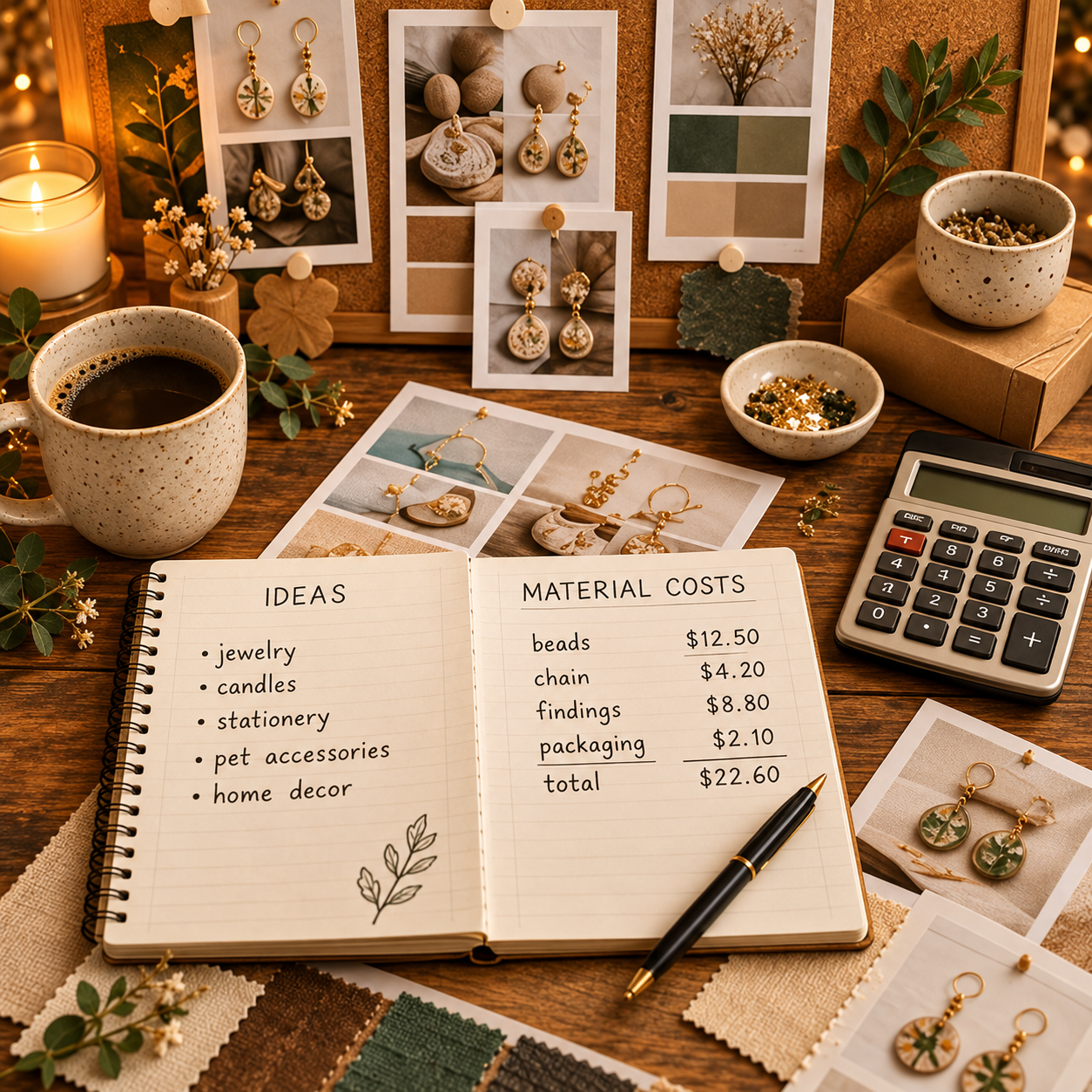
📅 Month 2: Create Your First Product Batch
🎯 Main Goal
Make a small batch of products so you can test quality, pricing, photos, and buyer interest.
✅ What to Do
- Create 5–10 finished products
- Track materials used for each item
- Track how long each product takes to make
- Take clear photos in good lighting
- Write simple product descriptions
- Create product names
- Decide your starting prices
- Package products safely for storage or shipping
🔒 What to Lock In Early
- Reliable materials
- Consistent product quality
- Real time tracking
- Simple naming and pricing
- Basic packaging that protects the item
🏁 Month 2 Success Looks Like
- You created your first finished products
- You know what each item costs to make
- You have usable product photos
- You understand which products are easiest to repeat
- You are ready to list or sell your first items
🎯 KEY TAKEAWAY
A product that is beautiful but takes too long to make may not be profitable unless the price matches the time and skill required.
☑️ Product Batch Checklist
Item | Why It Matters |
Material cost | Helps calculate price |
Time spent | Prevents undercharging |
Product quality | Builds trust and reduces returns |
Clear photos | Helps buyers understand the item |
Product size | Needed for descriptions and shipping |
Customization options | Can increase value |
Packaging needs | Protects the item |
Profit margin | Shows whether the product is worth repeating |
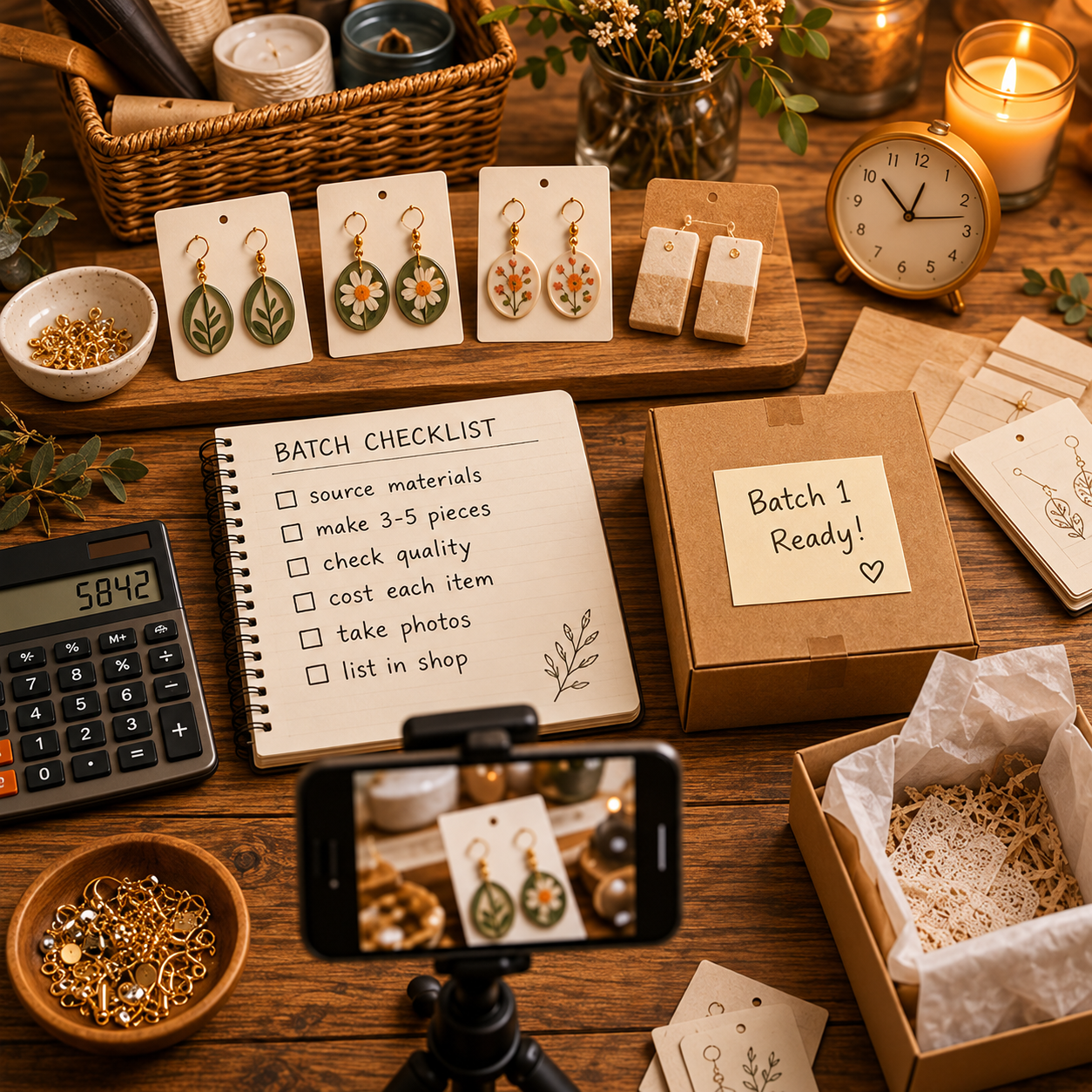
📅 Month 3: Set Up Your Shop & Make First Sales
🎯 Main Goal
Start selling your handmade products online, locally, or through your personal network.
✅ What to Do
- Choose your first selling platform
- Create your shop profile or sales page
- List your first products
- Add clear prices, photos, descriptions, and shipping details
- Share your products with friends, family, and local groups
- Test local markets, craft fairs, or pop-up opportunities if available
- Track views, favorites, messages, and sales
- Ask buyers for feedback or reviews
👀 What to Watch Closely
- Which listings get views
- Which products get messages
- Which photos attract attention
- Which price points feel accepted
- Which questions buyers ask repeatedly
- Which channel feels easiest to manage
🏁 Month 3 Success Looks Like
- Your first products are listed or available for sale
- Buyers can understand what you sell
- You have started sharing your products
- You received first messages, favorites, sales, or feedback
- You understand what questions buyers ask before purchasing
💡 PRO TIP
Early sales teach you what people actually want. Pay attention to which products get compliments, questions, saves, and purchases.
🛒 Places to Sell Handmade Goods
Platform | Best For |
Etsy | Handmade, personalized, and giftable items |
Facebook Marketplace | Local sales and custom orders |
Instagram | Visual products and brand building |
TikTok | Process videos and product discovery |
Shopify | Building your own store over time |
Local craft fairs | In-person sales and feedback |
Farmers markets | Local handmade and gift products |
Word of mouth | First trust-based buyers |
📅 Month 4: Build a Repeatable Production & Listing System
🎯 Main Goal
Create a simple system for making, listing, packaging, and delivering products consistently.
✅ What to Do
- Create a production checklist
- Batch similar products together
- Create listing templates
- Build a photo setup you can reuse
- Organize supplies by product type
- Create a packaging station
- Track inventory in a spreadsheet or Notion
- Improve listings based on buyer questions
🏁 Month 4 Success Looks Like
- Your production process is more organized
- You can create products faster
- Your listings are more consistent
- Your inventory is easier to track
- You know which products are worth making again
⚠ COMMON MISTAKE
Do not take too many custom orders before your process is organized. Custom work can become stressful if pricing, timelines, and revision limits are unclear.
🗓️ Simple Weekly Workflow
Day | Task |
Monday | Research ideas and order supplies |
Tuesday | Create products |
Wednesday | Finish and quality-check items |
Thursday | Photograph and write listings |
Friday | Publish listings and promote |
Weekend | Package orders and review shop data |
🔄 Simple Handmade Selling Workflow
Step | What Happens |
Product research | Find ideas buyers may want |
Material planning | Estimate supplies and cost |
Production | Create products in small batches |
Quality check | Inspect each item before listing |
Photography | Take clear product photos |
Listing | Add title, description, price, and shipping |
Sale | Buyer purchases or requests custom order |
Packaging | Prepare item safely and professionally |
Delivery | Ship or arrange pickup |
Follow-up | Ask for review or future interest |
📅 Month 5: Improve Pricing, Photos & Best-Selling Products
🎯 Main Goal
Use early feedback and sales data to improve your shop and focus on products with the best potential.
✅ What to Do
- Review which products got the most attention
- Review which products sold or got inquiries
- Improve weak photos
- Update product descriptions
- Adjust prices if you undercharged
- Create variations of your strongest products
- Test bundles, sets, or gift packaging
- Prepare seasonal products early
🏁 Month 5 Success Looks Like
- You know which products people respond to
- Your prices are more realistic
- Your photos and listings are stronger
- You have created variations of promising products
- You are building toward repeatable sales
🎯 KEY TAKEAWAY
Do not just make more products. Make more of the products that show signs of demand.
📈 Ways to Increase Handmade Product Value
Improvement | Why It Helps |
Better photos | Makes products feel more trustworthy |
Clear size details | Reduces buyer confusion |
Gift packaging | Makes items easier to buy as presents |
Personalization | Can increase perceived value |
Product bundles | Raises average order value |
Seasonal designs | Matches holiday demand |
Stronger descriptions | Helps buyers understand quality and use |
Better branding | Makes the shop feel more professional |
📅 Month 6: Review, Refine & Plan Your Next Product Line
🎯 Main Goal
Review your first 6 months and decide which products, platforms, and sales methods deserve more focus.
✅ What to Do
- Review all products created
- Review all listings, sales, and customer messages
- Identify your best-selling or most-requested items
- Calculate real profit after materials, fees, shipping, and time
- Remove products that are too hard or low-profit
- Update your shop branding and product photos
- Create a 90-day plan for months 7–9
- Plan your next seasonal or best-seller product batch
❓ 6-Month Review Questions
- Which products sold best?
- Which products got the most attention?
- Which products were easiest to make repeatedly?
- Which products took too long for the price?
- Which platform brought the best buyers?
- Which items had the best profit margin?
- What questions did customers ask most?
- What should you stop making?
- What should become a product line?
🏁 Month 6 Success Looks Like
- You know your strongest handmade products
- You understand your real profit better
- Your shop or sales process is more organized
- You have customer feedback or reviews
- You have a 90-day plan for better products and more consistent sales
🎯 KEY TAKEAWAY
Handmade selling becomes more profitable when you turn your best items into repeatable product lines instead of constantly starting from scratch.
📊 Decision Table
If This Happens | Do This |
One product sells best | Create more colors, sizes, or variations |
Custom orders get interest | Create clear custom order packages |
Products get views but no sales | Improve photos, price, title, or description |
Local sales work best | Focus on craft fairs, pop-ups, and local groups |
Shipping is difficult | Focus on smaller or easier-to-ship products |
Product takes too long | Raise price or simplify the design |
Seasonal items sell well | Plan holiday inventory earlier |
Reviews are strong | Use them in listings and product posts |

✅ 6-Month Success Checklist
By the end of 6 months, check whether you have:
✅ Chosen a handmade product niche
✅ Researched similar shops and products
✅ Created your first product batch
✅ Tracked material costs and production time
✅ Taken clear product photos
✅ Created listings or a local sales page
✅ Made first sales or collected feedback
✅ Created a production workflow
✅ Built a packaging process
✅ Calculated real profit
✅ Identified your best products
✅ Created a plan for the next 90 days
⚠️ What Not to Do During the First 6 Months
Avoid these mistakes:
❌ Making random products with no buyer in mind
❌ Undercharging by ignoring time, fees, and materials
❌ Using poor product photos
❌ Taking custom orders without clear details
❌ Promising unrealistic delivery times
❌ Ignoring packaging and shipping needs
❌ Buying too many supplies before testing demand
❌ Copying another maker’s designs
❌ Selling unsafe or poorly made items
❌ Treating sales price as profit
📝 QUICK NOTE
Handmade goods are personal. Quality, presentation, pricing, and customer experience all shape whether buyers come back or recommend you.
🧭 Simple 6-Month Milestone Tracker
Month | Main Focus | Target Output |
Month 1 | Niche & research | 10–30 product ideas |
Month 2 | First product batch | 5–10 finished products |
Month 3 | Shop setup & sales | First listings and buyer feedback |
Month 4 | Production system | Inventory, listing, and packaging workflow |
Month 5 | Product improvement | Better photos, prices, and variations |
Month 6 | Review & product line | 90-day growth plan created |
🚀 Final 6-Month Strategy
Your first 6 months should follow this simple path:
Month 1: Choose your craft niche and product direction
Month 2: Create your first product batch
Month 3: Set up your shop and make first sales
Month 4: Build a repeatable production and listing system
Month 5: Improve pricing, photos, and best-selling products
Month 6: Review results and plan your next product line
The handmade sellers who grow fastest are not just creative. They understand their buyers, price their work properly, present products clearly, and build repeatable items people want to purchase again or gift to others.
11. View the Handmade Seller Starter Kit
🎁 Your Handmade Business Toolkit
The Selling Crafts & Handmade Goods Starter Kit includes 12 browser-based workspaces for pricing, product photos, online listings, packaging, craft fairs, production, customer support and sourcing.
The 12 components:
✅ 1. Handmade Product Pricing Calculator — Estimate product prices using your labor, materials, platform fees and target margin assumptions.
✅ 2. Etsy Listing & SEO Builder — Research relevant keywords and draft listing titles and tags for review before publishing.
✅ 3. Product Photo Shot List — Plan useful product angles and track which photos still need to be taken.
✅ 4. Packaging & Unboxing Checklist — Review shipping readiness, product presentation and packaging costs.
✅ 5. Craft Fair Launch Planner — Plan your event setup, inventory and estimated break-even point.
✅ 6. Expense & Cash Flow Tracker — Record spending and revenue and export your records for review.
✅ 7. Handmade Shop Launch Roadmap — Organize shop-launch tasks, timelines and milestones.
✅ 8. Production Schedule Planner — Plan production batches around materials, quantities, deadlines and available capacity.
✅ 9. Social Media Content Planner — Plan 30 days of social posts and captions for your handmade shop.
✅ 10. Customer Email Toolkit — Draft customer messages for orders, shipping delays and other service situations.
✅ 11. Shop Policy Builder — Draft shop policies and review applicable customer rights and seller obligations.
✅ 12. Supplier Comparison Guide — Compare supplier quotes and sourcing options; recheck older examples against current prices and terms.
Also included in the editable master: A central dashboard and Start Here instructions are also available.
The current dashboard is a private review edition, not an approved customer release. This kit does not publish listings, send messages, buy supplies or verify historical supplier prices automatically. Sales are not guaranteed.

12. Frequently Asked Questions
🎨 Do I need to be highly skilled to start?
No — but your product must be good enough to sell.
You can start with:
- 🕯️ Beginner-friendly crafts, such as candles
- 💍 Simple jewelry
- 🧾 Stickers
- 🎁 Small handmade gifts
- 📺 Learning through YouTube and practice
💡 Skill improves quickly with repetition — your first 20–50 products are your training phase.
💰 How much can I realistically make?
Income varies. Extra money is possible with a few products; higher figures usually take time, pricing, and consistent sales.
Illustrative ranges, not a guarantee:
- 🌱 Hobby level: extra income with a small shop
- 📈 Part-time: possible with regular production and listings
- 🚀 Full-time: possible later, not a typical starting outcome
💡 Growth usually comes from:
- 📦 Increasing production of what sells
- 📈 Raising prices when demand and quality support it
- 🛍️ Expanding product lines carefully
- 🧠 Improving branding and marketing
🛍️ Where should I sell first?
Best starting platforms:
- 🛒 Etsy for easiest built-in traffic
- 📍 Facebook Marketplace for local sales
- 📸 Instagram for branding + audience building
👉 Start with one platform, master it, then expand.
📦 Do I need inventory upfront?
Yes — but start small.
Begin with:
- 🧪 5–10 products to test
- 📸 Clean photos
- 📝 Strong descriptions
- 💬 Early customer feedback
Produce more only after demand is proven.
💡 Avoid overproducing — let sales guide production.
💵 How should I price my products?
Use this baseline:
- 🧾 Materials
- ⏰ Labor
- 📦 Overhead
- 💰 Profit margin
Then multiply for profit.
💡 Never compete on price alone — handmade sells on value, not cheapness.
🚀 How do I get my first sales?
Start with:
- 👨👩👧 Friends and family
- 📱 Social media posts
- 🔍 Etsy SEO
- 🛍️ Local groups
- 🎁 Small launch offer
💡 Your first goal:
👉 Learn the listing and fulfillment process — reviews come from real buyers, not a 5–10 sale promise.
⭐ How important are reviews?
Critical.
Reviews help with:
- 🤝 Building trust
- 🔍 Improving ranking
- 🛒 Increasing conversions
- 💰 Supporting higher prices
💡 More reviews = more sales = higher pricing power.
⚠️ What are the biggest beginner mistakes?
Avoid these:
❌ Underpricing
❌ Poor photos
❌ Too many product types
❌ Not marketing
❌ Giving up too early
💡 Most people fail because they stop before momentum builds.
🔁 Can this become a full business?
Some sellers do, but it is not automatic.
A common path:
- 🌱 Start as a hobby
- 🛍️ Build consistent sales
- 📦 Increase production
- 🧩 Expand your product line
- 🏷️ Scale into a brand
👉 Treat it like a business, and use your own results — not headline income ranges — to decide.
13. Important Considerations
Before you open your shop, understand these key realities — handmade selling rewards consistency, quality, and business discipline as much as creativity.
🧠 This Is Both Creative AND Operational
You’re not just making products.
You’re also:
- 📦 Managing inventory
- 💬 Handling customers
- 📣 Marketing your brand
- 🚚 Shipping orders
- 🧾 Tracking expenses
- 📸 Creating product photos
👉 Treat this like a business from day one.
💰 Profit ≠ Revenue
You must account for:
- 🧾 Materials
- 💳 Fees, such as Etsy and payment processing
- 📦 Packaging
- 🚚 Shipping
- ⏰ Your time
- 📣 Marketing costs
💡 Many beginners think they’re profitable — but aren’t.
📦 Time vs. Money Trade-Off
Handmade products are time-intensive.
More orders means:
- ⏰ More production time
- 📦 More packaging
- 🚚 More shipping
- 💬 More customer service
Eventually, you must:
- 📈 Raise prices
- 🗂️ Batch production
- 👥 Outsource parts of the process
- ⚙️ Create repeatable systems
📸 Marketing Is Not Optional
Even great products won’t sell without visibility.
You must:
- 🔍 Learn basic SEO, especially Etsy titles and tags
- 📱 Post consistently on social media
- 📸 Improve product photography
- 📝 Write clear descriptions
- 🛍️ Show your products in use
👉 Visibility = sales.
⚖️ Legal & Safety Requirements
Depending on your product, you may need to follow specific rules.
Examples:
- 🧴 Bath/body products → ingredient labeling + regulations
- 🧸 Kids products → safety standards
- 🍪 Food products → local food laws
- 🕯️ Candles → safety labels and burn testing
- 👕 Apparel → care labels and material details
💡 Always research before selling regulated items.
🔁 Consistency Wins
This business rewards long-term consistency.
Focus on:
- 📅 Posting consistently
- 📦 Producing regularly
- 📸 Improving product photos
- 🧠 Learning from sales data
- ⭐ Building reviews
- 📈 Improving each product over time
👉 This business rewards long-term consistency, not quick bursts of effort.
14. Your Next Steps
🚀 ACTION STEP
🟢 Step 1: Choose Your Product
Pick ONE category so you don’t overwhelm yourself.
Choose something that is:
- 🛠️ Simple to produce
- 🛍️ In demand
- ❤️ Enjoyable to make
- 📦 Easy to ship
- 💰 Profitable after materials and time
🟢 Step 2: Create Your First Products
Start small:
- 🧪 Make 5–10 items
- 🏆 Focus on quality over quantity
- 📸 Take clean, professional photos
- 📝 Write down materials and production time
- 💰 Calculate pricing carefully
🟢 Step 3: Launch Your Shop
Start with Etsy or local listings.
Do this:
- 🛒 Open your shop
- 📝 Create optimized product listings
- 🔍 Use searchable keywords
- 💵 Set fair, profitable pricing
- 📸 Upload strong product photos
🟢 Step 4: Get Your First Sales
Start with:
- 👨👩👧 Friends and family
- 📱 Instagram or Facebook
- 🛍️ Local groups
- 🎁 A small launch discount
- 💬 Personal outreach
👉 Goal: learn the process and collect proof — not a guaranteed 5–10 sales.
🟢 Step 5: Improve & Optimize
After your first sales:
- 📊 See what sells
- 📸 Improve photos
- 📝 Improve listings
- 💵 Adjust pricing if needed
- 🧠 Listen to customer feedback
- 🔁 Make more of what works
🟢 Step 6: Build Momentum
Keep growing by:
- ➕ Adding new products
- 📱 Staying consistent with marketing
- 🏷️ Building your brand identity
- ⭐ Collecting reviews
- 📦 Improving packaging
- 🔁 Creating repeatable production systems
🎯 30-Day Goal
Aim for:
- 🛍️ A small first collection listed
- 💰 Early sales if they come — not a 5-sale promise
- ⭐ Honest feedback when you have buyers
- 📸 Better product photos
- 📊 A clearer idea of what customers want
🔥 Your First Milestone
👉 Build a repeatable process — not a guaranteed $500/month.
From there, decisions get easier because you’ll know:
- What sells
- What customers like
- What pricing works
- Which platform performs best
🚀 Final Step
Don’t wait for perfection.
👉 Start small.
👉 Improve fast.
👉 Stay consistent.
Your first sale is the hardest — everything gets easier after that.
15. The Bottom Line
🎯 KEY TAKEAWAY
Selling crafts and handmade goods can be a practical way to turn a craft skill into income — but it works when you treat it as a business: products people actually want, priced for real profit.
🙋 If you:
✔ Make products people actually want, not just what you love
✔ Batch production and photograph everything beautifully
✔ Price for materials + time + profit — not hobby prices
✔ Show up consistently on Etsy and at local markets
🏗️ You can build:
💰 Extra income is possible; higher monthly figures usually take a niche, photos, pricing, and consistent production — not a per-piece promise
🔁 Repeat buyers, custom orders, and seasonal demand can help, but they are not automatic
📈 A signature brand or wholesale can support more income later — not a $12,000/month forecast
🚀 List your first product when quality, photos, pricing, and safety checks are ready.
16. Recommended Websites & Tools
🛠 TOOLS & RESOURCES
You do not need every resource listed below. This directory brings together the major platforms, tools, and resources from this guide, along with additional research and learning options, so you can find them in one place when you need them.
Start with the essentials. Add tools only when your craft business develops a specific need for them.
🛍️ Handmade Marketplaces & Selling Platforms
- Etsy — Beginner-friendly handmade marketplace for selling jewelry, candles, stationery, personalized gifts, art prints, stickers, and craft products.
- Amazon Handmade — Handmade marketplace inside Amazon for approved makers who want access to a large buyer base.
- Facebook Marketplace — Local selling platform for handmade items, seasonal products, home decor, furniture, and local pickup orders.
- Instagram — Visual platform for showcasing handmade products, sharing process content, taking custom requests, and building a craft brand.
- TikTok Shop — Social commerce platform for selling products directly through TikTok content, shop listings, and creator-driven discovery.
💡 PRO TIP
Start on Etsy — its buyers are already searching for handmade. Add your own shop only after you know what sells.
🌐 Own Store & Website Builders
- Shopify — E-commerce platform for building a professional handmade brand store with product pages, checkout, email tools, and integrations.
- Squarespace — Website builder for creating a polished craft brand site, portfolio, product pages, and simple online store.
- Big Cartel — Budget-friendly storefront builder for artists, makers, and small handmade shops with smaller product catalogs.
🧵 Craft Supplies, Materials & Maker Resources
- Amazon — General supply source for tools, beads, packaging, candle supplies, molds, shipping scales, and starter materials.
- Fire Mountain Gems — Jewelry supply source for beads, wire, findings, gemstones, and jewelry-making materials.
- Michaels — Craft store for jewelry tools, seasonal supplies, décor materials, packaging, wood pieces, and maker basics.
- CandleScience — Candle-making supplier for soy wax, fragrance oils, wicks, containers, and candle business resources.
- Bramble Berry — Soap and bath product supplier for bases, oils, molds, fragrance, and body-care making supplies.
- SKS Bottle — Packaging supplier for jars, tins, bottles, containers, and product packaging for candles or bath products.
- Bulk Apothecary — Bulk supplier for soap, bath, body, fragrance, essential oil, and handmade product ingredients.
- Plant Therapy — Essential oil supplier mentioned for fragrance, bath, body, and self-care product creation.
- Ganxxet — Fiber and macramé supply source for cords, yarns, and materials for handmade home décor.
📝 QUICK NOTE
Buy materials in bulk once a product sells consistently. Supply cost is your biggest margin lever.
🎨 Design, Labels & Product Creation Tools
- Canva — Design tool for labels, product inserts, thank-you cards, packaging, social posts, flyers, and handmade business marketing.
- Cricut — Cutting machine platform for custom labels, vinyl designs, packaging details, stickers, personalization, and craft production.
- Silhouette — Cutting machine platform for vinyl projects, labels, stickers, paper goods, and handmade product customization.
- Snapseed — Free mobile photo editing app for polishing product photos before listing or posting.
- Lightroom Mobile — Mobile photo editing app for improving product photos, lighting, color, and shop visuals.
📦 Packaging, Printing & Shipping Tools
- Paper Mart — Packaging supplier for boxes, bags, tissue paper, ribbon, wrapping, and gift-ready handmade product packaging.
- Uline — Packaging and shipping supplier for mailers, boxes, bubble wrap, shipping materials, and fulfillment supplies.
- Canva Print — Printing option for thank-you cards, inserts, labels, flyers, and branded packaging pieces.
- Vistaprint — Printing service for business cards, thank-you cards, stickers, packaging inserts, and branded handmade shop materials.
- Sticker Mule — Custom sticker and label printing service for packaging, branding, product stickers, and promotional materials.
- Moo — Premium print service for business cards, thank-you cards, packaging inserts, and polished brand materials.
- Pirate Ship — Discounted shipping label tool for buying postage, printing labels, and managing handmade product shipping costs.
📝 QUICK NOTE
Packaging is part of the product with handmade goods. Unboxing photos drive reviews and repeat buyers.
🔎 SEO, Product Research & Trend Tools
- eRank — Etsy SEO and keyword research tool for improving listing titles, tags, search visibility, and product research.
- Marmalead — Etsy SEO tool for keyword optimization, competition research, and listing improvement.
- EtsyHunt — Etsy research tool for product trends, keyword ideas, competitor research, and listing analysis.
📣 Marketing, Social Growth & Email Platforms
- Instagram — Visual marketing platform for product photos, reels, behind-the-scenes content, Stories, launches, and customer proof.
- Tailwind — Pinterest scheduling tool for planning pins, driving evergreen traffic, and promoting handmade products consistently.
- Mailchimp — Email marketing platform for sending product launches, seasonal promotions, customer updates, and repeat-buyer campaigns.
- Kit — Creator-focused email platform for building a handmade brand audience, sending newsletters, and promoting product drops.
- Flodesk — Visual email marketing platform for polished handmade brand newsletters, product announcements, and promotion emails.
⚖️ Compliance & Product Safety Resources
- FDA Cosmetics — Regulatory resource mentioned for checking requirements before selling cosmetics, soaps, bath products, or skin-contact handmade goods.
🎯 KEY TAKEAWAY
You do not need every tool on this page. One marketplace, decent photos, and honest pricing are enough to make your first sale.
🧭 How to Use This Directory
🧰 Start With a Simple Setup
Do not start by creating accounts with every service listed above. For most beginners, a simple setup is enough:
- One marketplace
- One photo setup
- One shipping solution
That is enough to start building. Add tools only when you can name the specific problem they will solve.
🎯 KEY TAKEAWAY
Tools support the business. They are not the business.
Your biggest advantages will come from:
Product quality → Photos → Reviews → Repeat buyers
17. Explore Similar Side Hustles
 Print-on-Demand — Put your designs on products without making each one by hand.
- Selling Digital Products — Sell your patterns and templates as instant downloads.
 Product Flipping — Apply your marketplace skills to undervalued resale goods.
 Art & Illustration Commissions: Get Paid for Drawing What You Love — Take custom commissions from the same buyers who love your work.
 Blogging: Build an Online Brand and Earn from Your Words — A craft blog drives search traffic straight to your shop.
 Faceless Video Content Creation: Go Viral Without Showing Your Face — Process videos of your craft can grow a channel that markets your shop.