
Affiliate disclosure: Some links in this guide may be paid referral links. If you purchase or sign up through one, One Stop Side Hustles may earn a commission. How our affiliate links work.
HANDYMAN & FIX-IT SERVICES STARTER GUIDE
Learn how a local handyman service works—including landing early jobs, quoting clearly, and growing from small repairs toward more specialized work.
1. What Are Handyman Services?
2. Why Handyman & Fix-It Services Are a Great Side Hustle
3. Types of Handyman Services You Can Offer
4. How Much Can You Earn & Pricing Strategies
5. What You Actually Need to Start
7. How to Start: Your Beginner Roadmap
8. Building Your Reputation & Growing
9. Learn Handyman Skills for Free (or Cheap)
10. Your First 6 Months Handyman & Fix-It Services Plan
11. Get the Handyman Starter Kit
12. Frequently Asked Questions
Quick Snapshot
Earn: Highly variable — small repairs and assembly jobs are common starting points; later rates depend on skill, market, and specialization
Work: Schedule jobs on evenings and weekends around your life
Start: Low-to-medium cost — basic hand tools to begin
Best for: Hands-on people who enjoy fixing and building
Grow: Small repairs → specialties → team or contracting
1. What Are Handyman Services?
Handyman services are on-demand home repair, maintenance, and improvement work. You provide skilled labor to fix problems homeowners can't or don't want to handle themselves—anything from hanging shelves to fixing leaky faucets to painting walls.
Unlike general contracting (which requires licenses for major renovations), handyman work covers small to medium projects that homeowners need quickly and reliably.
🔄 How It Works (Simple 4-Step Process)
- Market your services (Craigslist, Facebook, Nextdoor, TaskRabbit)
- Get client inquiry (homeowner describes problem/project)
- Provide estimate (visit, assess, quote price)
- Complete work (show up, fix problem, get paid)
🎯 KEY TAKEAWAY
People don't care about your credentials—they care that you show up on time, do quality work, and charge fairly. Reliability is your competitive advantage.
2. Why Handyman & Fix-It Services Are a Great Side Hustle
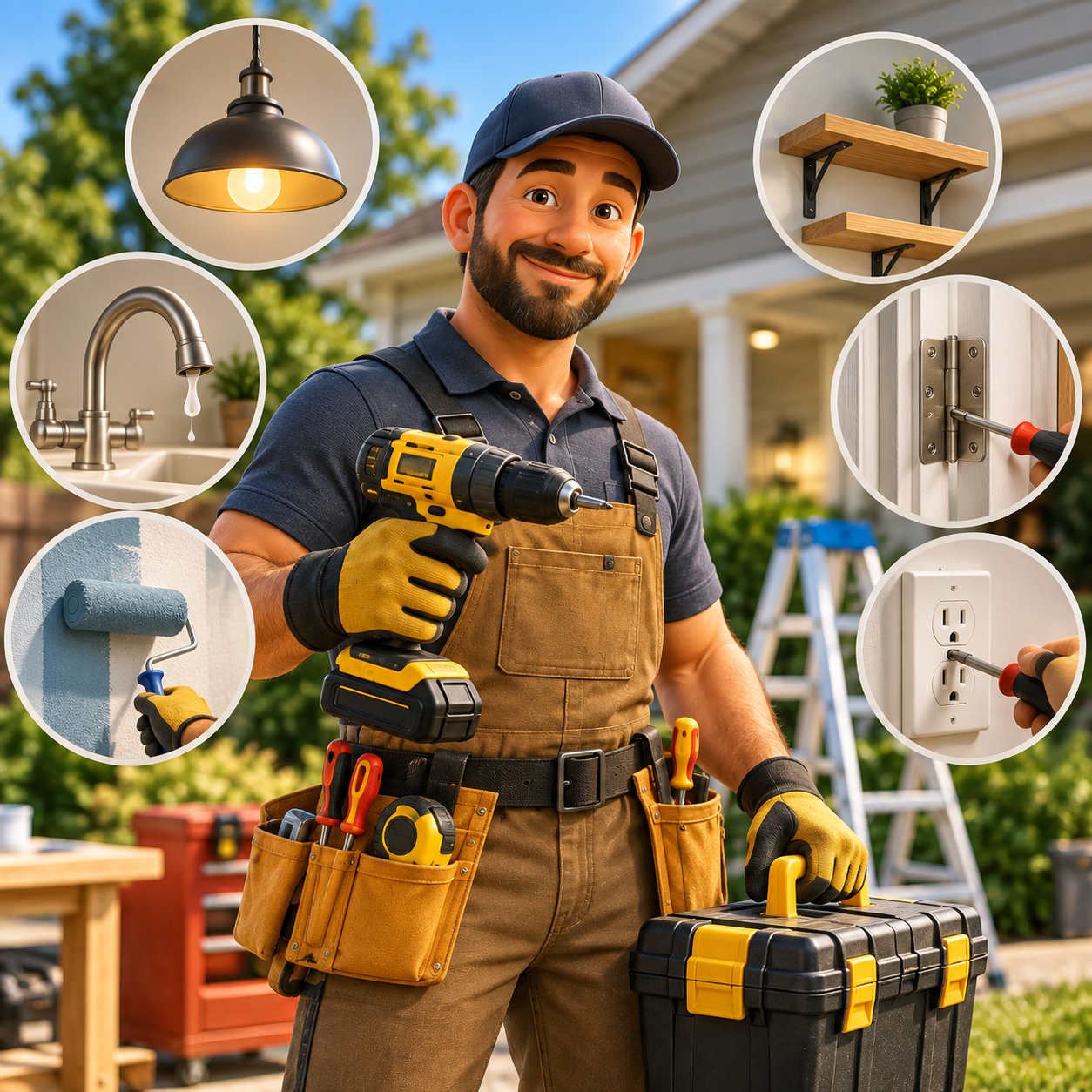
Handyman work is a strong side hustle because people will pay well for reliability, practical skill, and problems solved quickly — especially when they do not want to handle the work themselves.
💰 Practical skills can command strong rates
Even relatively small jobs can outperform many beginner side hustles.
Common upside comes from:
- Hourly repair work
- Flat-rate installs
- Bundled service calls
- Higher-value specialty jobs
That makes handyman work one of the clearer paths from side income to solid local earnings.
🧰 You can begin with a basic tool setup
Most people do not need a full workshop to start.
A practical starter setup usually means:
- Basic hand tools
- Drill or driver
- Measuring tools and level
- Safety gear
You can upgrade tools gradually as paid jobs justify the investment.
⚡ Local demand makes it easier to get early jobs
Small repairs and installs pile up constantly, so homeowners often want help fast.
Early work commonly comes from:
- Friends and neighbors
- Local Facebook and Nextdoor posts
- Task platforms
- Before-and-after proof
That urgency can make first clients easier to find than in many online-only side hustles.
📈 Income improves as you price and specialize better
Growth usually comes from moving beyond random low-value jobs.
High-potential upgrades include:
- TV mounting
- Drywall repair
- Furniture assembly
- Minor plumbing fixes
- Flat-rate service packages
That shift can raise both your average ticket and your efficiency.

🧠 You may already have monetizable skills
If you can install, patch, assemble, mount, or troubleshoot safely, you may already have sellable value.
Common beginner-friendly services include:
- Shelves and curtain rods
- Furniture assembly
- Door and hardware fixes
- Small home repairs
That makes handyman work especially attractive for people who are already hands-on.
🤝 Good work can turn into repeat local business
Strong service tends to compound because one happy customer often leads to more.
Common referral paths include:
- Repeat homeowners
- Neighbor recommendations
- Real estate agents
- Property managers
- Landlords and investors
In local service businesses, trust can become a major growth engine.
🌍 There is constant, evergreen local demand
Things keep breaking, homes need upkeep, and businesses want fast fixes.
Common repeat demand includes:
- Maintenance work
- Mounting and installs
- Move-in or move-out repairs
- Seasonal projects
That consistency is a big reason handyman work can hold up well over time.
⚠️ Professionalism can raise trust and pricing power
Customers often pay more when the experience feels organized and low-risk.
What builds value fastest:
- Showing up on time
- Clear estimates
- Clean work and cleanup
- Honest scope boundaries
- Before-and-after proof
In this side hustle, reliability often matters almost as much as the repair itself.
3. Types of Handyman Services You Can Offer
One of the biggest advantages of handyman work is the variety of services you can offer. But when you're starting out, you do not need to advertise yourself as someone who can fix everything.
A better beginner strategy is to choose a small group of services you can perform safely, confidently, and profitably, then expand your service menu as your skills, tools, and reputation grow.
Below are the main handyman service categories you can build your business around.
🔨 Everyday Home Repairs
🔧 General Home Repairs
- 🧰 Typical Work: Tightening loose handles, replacing hardware, adjusting doors, fixing hinges, installing weatherstripping and handling small household repairs
- ⭐ Difficulty: ⭐⭐ Easy to moderate | 🔥 Demand: Very high
- 🛠️ Main Equipment: Basic hand tools, drill/driver, measuring tools and common hardware
- 👥 Typical Customers: Homeowners, renters, landlords, seniors and busy families
- 🌟 Best for: Beginners who want a broad selection of small jobs that can be combined into one service visit.
🧱 Minor Drywall & Wall Repair
- 🧰 Typical Work: Filling small holes, patching minor drywall damage, repairing nail holes and preparing damaged areas for finishing
- ⭐ Difficulty: ⭐⭐⭐ Moderate | 💰 Add-On Potential: High
- 🛠️ Main Equipment: Putty knives, patching compound, sanding tools and basic finishing supplies
- 👥 Typical Customers: Homeowners, landlords, rental properties and people preparing to move
- 🌟 Best for: Handymen who want a repeatable repair skill that pairs naturally with painting and mounting work.
💡 PRO TIP
Small repairs are an excellent foundation because they are easy to bundle, recur across many properties, and build trust quickly.
🎨 Painting & Finish Work
🖌️ Touch-Up Painting
- 🧰 Typical Work: Wall touch-ups, small-area painting, covering repaired sections and refreshing worn surfaces
- ⭐ Difficulty: ⭐⭐ Easy to moderate | 👀 Visible Value: High
- 🛠️ Main Equipment: Brushes, rollers, drop cloths, painter's tape and basic prep supplies
- 👥 Typical Customers: Homeowners, landlords, property managers and sellers preparing homes for market
- 🌟 Best for: Beginners who want jobs where customers can immediately see the improvement.
🧴 Caulking & Finish Repairs
- 🧰 Typical Work: Replacing worn caulk, sealing gaps, refreshing trim joints and handling small cosmetic finish repairs
- ⭐ Difficulty: ⭐⭐ Easy | ⚡ Job Speed: Usually fast
- 🛠️ Main Equipment: Caulk gun, scraper, utility knife and finishing tools
- 👥 Typical Customers: Homeowners with aging kitchens, bathrooms, windows and trim
- 🌟 Best for: Adding inexpensive, quick services to larger handyman visits.
💡 PRO TIP
Visible improvements are easy for customers to understand, making finish work a strong add-on to repairs, move-outs, and property refreshes.

🪑 Assembly & Installation
🪑 Furniture Assembly
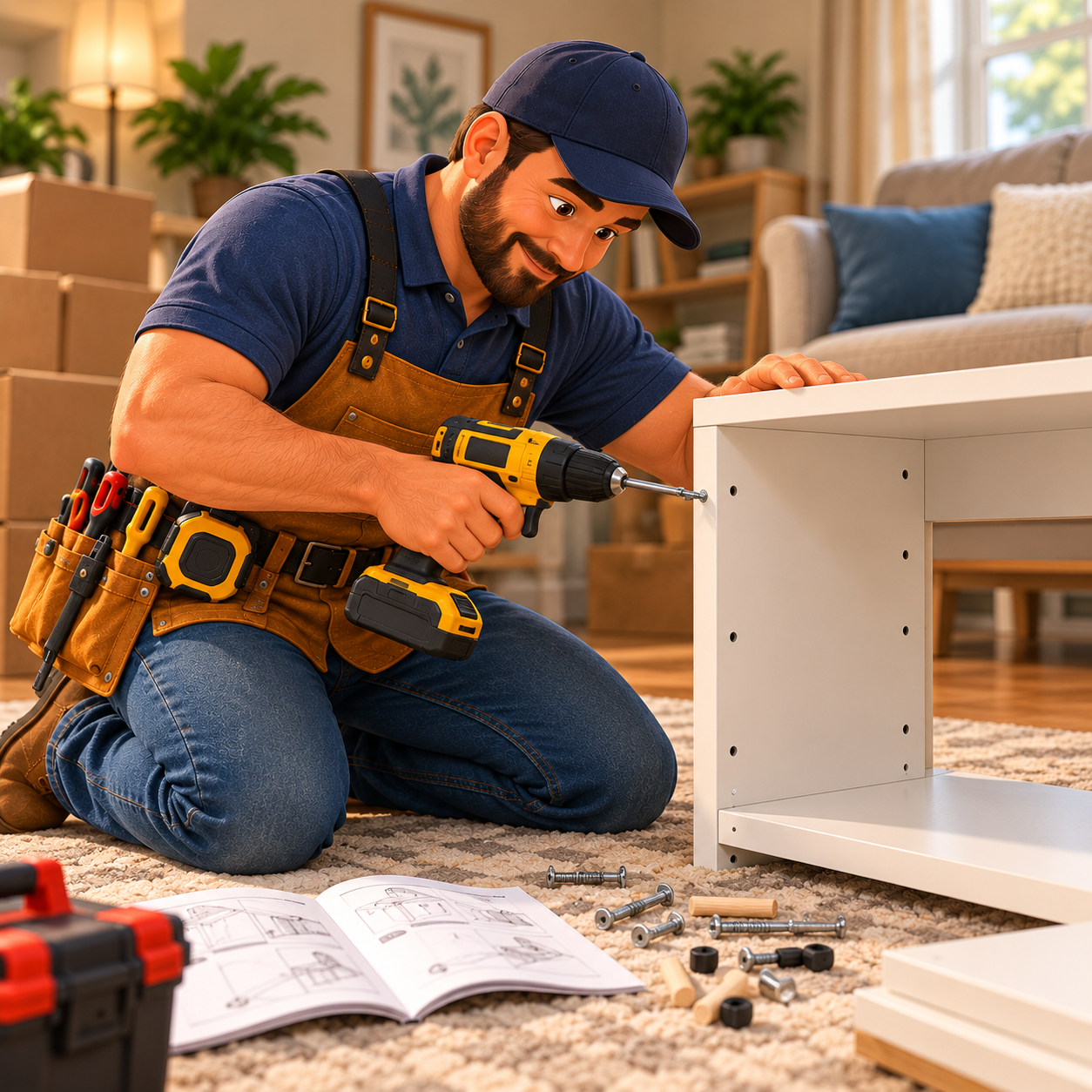
- 🧰 Typical Work: Assembling desks, beds, shelving units, cabinets, tables and flat-pack furniture
- ⭐ Difficulty: ⭐⭐ Easy to moderate | 📦 Demand: High
- 🛠️ Main Equipment: Drill/driver, screwdrivers, hex keys, level and basic hand tools
- 👥 Typical Customers: Busy professionals, families, renters, seniors and people moving into new homes
- 🌟 Best for: Beginners because the job scope is usually easy to understand before arriving.
🖼️ Shelves, Mirrors & Décor Installation
- 🧰 Typical Work: Hanging shelves, mirrors, artwork, curtain rods and other wall-mounted accessories
- ⭐ Difficulty: ⭐⭐⭐ Moderate | ➕ Bundle Potential: Very high
- 🛠️ Main Equipment: Drill, level, measuring tape, stud finder, appropriate anchors and mounting hardware
- 👥 Typical Customers: Homeowners, renters, offices and newly moved households
- 🌟 Best for: Combining several smaller installations into one higher-value appointment.
💡 PRO TIP
Assembly and installation work is highly packageable: several clear, small tasks can become one convenient and profitable appointment.
📺 Mounting & Home Setup
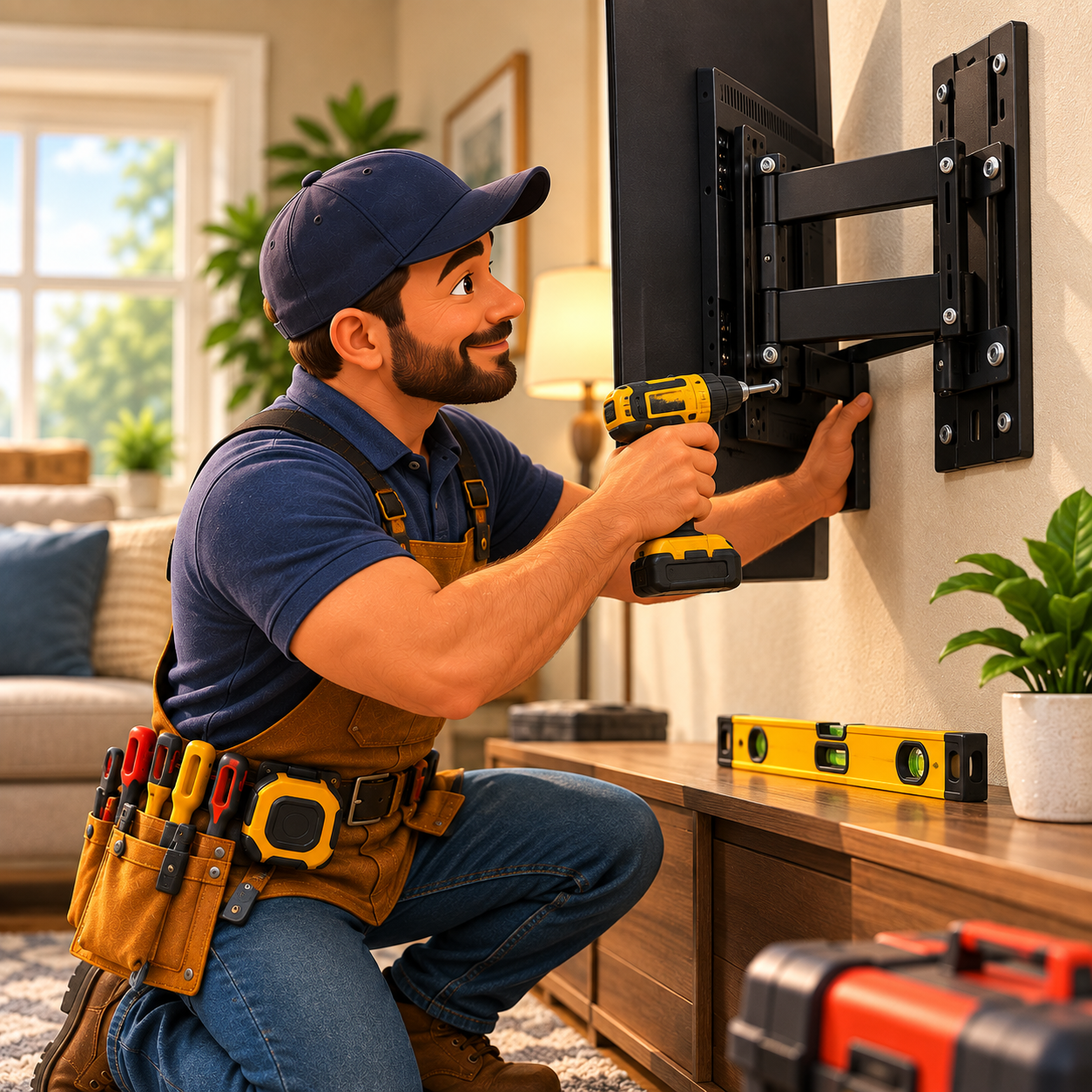
📺 TV Mounting
- 🧰 Typical Work: Installing compatible TV mounts, positioning televisions and completing straightforward mounting setups
- ⭐ Difficulty: ⭐⭐⭐ Moderate | 💰 Perceived Value: High
- 🛠️ Main Equipment: Stud finder, level, drill/driver, measuring tools and appropriate mounting hardware
- 👥 Typical Customers: Homeowners, renters, offices and entertainment-room customers
- 🌟 Best for: Experienced beginners looking to move from general repairs into higher-value specialty work.
🏠 Move-In & Home Setup
- 🧰 Typical Work: Hanging décor, assembling furniture, installing shelves, setting up curtain rods and completing miscellaneous move-in tasks
- ⭐ Difficulty: ⭐⭐ Easy to moderate | 📦 Bundle Value: Very high
- 🛠️ Main Equipment: General handyman toolkit plus mounting and assembly equipment
- 👥 Typical Customers: New homeowners, renters, families and people relocating
- 🌟 Best for: Creating convenient multi-task packages instead of charging for several tiny jobs separately.
💡 PRO TIP
Home setup combines several familiar tasks into a high-convenience offer, especially for new homeowners, renters, and relocating families.
🚪 Property & Exterior Maintenance
🚪 Doors, Trim & Hardware
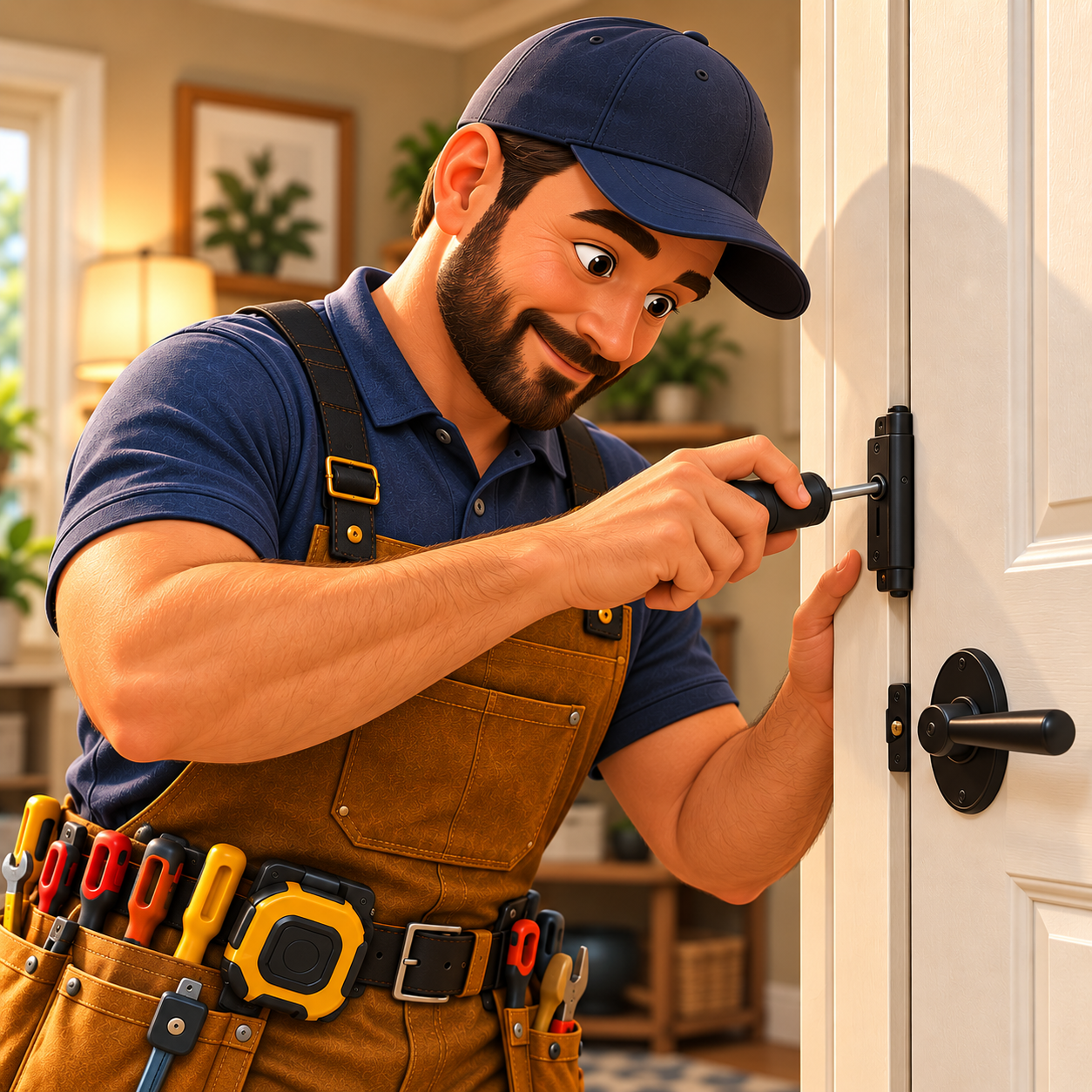
- 🧰 Typical Work: Adjusting sticking doors, replacing handles, fixing minor trim issues and replacing basic household hardware
- ⭐ Difficulty: ⭐⭐⭐ Moderate | 🏠 Demand: Consistent
- 🛠️ Main Equipment: Hand tools, drill/driver, level, measuring tools and appropriate replacement hardware
- 👥 Typical Customers: Homeowners, landlords, rental properties and property managers
- 🌟 Best for: Handymen comfortable diagnosing small mechanical and fitment problems around a property.
🧹 Exterior Property Maintenance
- 🧰 Typical Work: Gutter cleaning, pressure washing, fence touch-ups and other straightforward exterior maintenance
- ⭐ Difficulty: ⭐⭐⭐ Varies | 🌤️ Seasonality: Moderate
- 🛠️ Main Equipment: Depends on the service and working conditions
- 👥 Typical Customers: Homeowners, landlords and small property managers
- 🌟 Best for: Expanding beyond indoor repairs and creating seasonal service opportunities.
💡 PRO TIP
Exterior work broadens your service area and can create seasonal revenue, but always match the job to your equipment, safety practices, and local requirements.

🔁 Bundled & Recurring Services
📋 Punch-List & Fix-It Visits
- 🧰 Typical Work: Completing several small repairs during one appointment, such as loose hardware, wall patches, hanging items and minor adjustments
- ⭐ Difficulty: ⭐⭐⭐ Moderate | 💰 Ticket Potential: High
- 🛠️ Main Equipment: Versatile general-purpose handyman toolkit
- 👥 Typical Customers: Homeowners with accumulated repairs, new homeowners, sellers and landlords
- 🌟 Best for: Increasing job value by solving several small problems during a single visit.
🏘️ Recurring Property Maintenance
- 🧰 Typical Work: Routine repair visits, rental turnover punch lists, property-manager requests, short-term rental upkeep and scheduled maintenance
- ⭐ Difficulty: ⭐⭐⭐ Moderate | 🔁 Repeat Potential: Very high
- 🛠️ Main Equipment: Broad general-repair toolkit based on the properties you service
- 👥 Typical Customers: Landlords, property managers, short-term rental operators, real estate professionals and repeat homeowners
- 🌟 Best for: Experienced operators who want steadier work instead of constantly finding one-time customers.
💡 PRO TIP
Bundles raise the value of each visit, while recurring maintenance creates a more predictable pipeline than one-time repair calls.
🎯 Build Your Beginner Handyman Menu
🎯 KEY TAKEAWAY
Start with three to five services you can perform safely and explain clearly—such as general repairs, furniture assembly, wall installations, touch-up painting, and punch-list visits. Add higher-value specialties and recurring property maintenance only as your skills, tools, and proof of work grow.
🚀 ACTION STEP
Write a focused first plan:
- Services: Select a few repairs you can perform safely and competently.
- Limits: Check licensing and coverage; state work you will not accept.
- Quote: Define the job, materials, access, estimated time, and payment terms.
- Proof: Photograph completed work with permission and build a small local portfolio.
4. How Much Can You Earn & Pricing Strategies
Handyman income grows when you stop thinking only in hours and start thinking in job value, efficiency, and repeat demand. The same skill set can produce very different results depending on what you offer and how you price it.
🧠 Reality Check (What Actually Raises Income)
Top earners usually do four things well:
- Choose services people ask for often
- Quote confidently instead of guessing
- Bundle multiple tasks into one visit
- Build repeat clients and referrals
You are not only selling labor — you are selling convenience, speed, trust, and a finished result.
🎯 KEY TAKEAWAY
Better offers and better packaging can matter more than simply working more hours. Build pricing around safe execution, clear scope, total job time, and repeat demand.
🔑 Best Pricing Shift
A strong beginner progression is:
🧾 Starter Pricing & Job Timing
- Start with hourly or minimum-fee jobs
- Learn how long repeat tasks actually take
📦 Flat Rates, Bundles & Specialties
- Move common services into flat-rate pricing
- Add bundle packages and premium specialties
This is usually where income starts to jump.
🎯 KEY TAKEAWAY
Move to flat rates only when scope and timing are predictable. Bundles should improve customer convenience and your margin—not hide extra unpaid work.
🧪 Real Example
📋 REAL-WORLD EXAMPLE
These are illustrative scenarios, not verified typical outcomes or earnings guarantees. Actual demand, total working time, costs, and taxes vary. Treat the listed monthly amounts as gross revenue illustrations before costs, overhead, and taxes; Scenario A uses a simplified four-week month.
🌱 Scenario A: Basic hourly work
- $35/hour
- 25 billable hours/week
- Around $3,500/month
🎯 Scenario B: Flat-rate plus bundles
- 2–3 jobs/day
- $125–$250 average ticket
- Around $6,000–$10,000/month
🚀 Scenario C: Specialty + repeat accounts
- Higher-value installs and maintenance plans
- Strong referrals
- Around $10,000+/month
🎯 KEY TAKEAWAY
The same service base can produce different revenue when scope, pricing, efficiency, and repeat demand change. Revenue alone does not show profitability.
🎯 What Actually Drives Income
🧮 Skill × Scope × Efficiency = Income Potential
This is a positioning framework, not a mathematical earnings forecast.
- Service mix: TV mounting and bundled repairs usually pay better than one-off tiny fixes
- Speed: Faster execution raises your effective hourly rate
- Local market: Higher-income areas often support higher pricing
- Skill range: More safe capabilities = more quoting opportunities
- Reputation: Reviews and referrals reduce feast-or-famine income
- Professionalism: Clear estimates and reliability raise trust fast
📈 Total Job Time (Pricing Reality)
📖 Read the Numbers in Context
A billable hour is not the same as an hour of business time. Travel, purchasing materials, setup, cleanup, estimating, and callbacks can reduce the return on a job. Track service mix, local demand, reputation, and professionalism alongside actual job economics.
🎯 KEY TAKEAWAY
Use actual collected pay, complete working time, and realistic costs to judge what you keep.
🚀 Build Your First Paid Handyman Offer
Start with one safe, repeatable service, one customer type, a defined local area, and a clear quoting process. Learn the complete job economics before adding premium specialties or recurring accounts.
🧭 Run a Disciplined Handyman Offer Test
- Choose a service within your limits. Select work you can perform competently, safely, and legally with the tools you already have. Confirm licensing, permit, insurance, and local job-value restrictions. Decline or refer regulated, structural, electrical, plumbing, or other work outside your authorization and ability.
- Define the job before quoting. Ask for photos, item specifications, access conditions, surface or wall details where relevant, and the customer’s priorities. Specify labor, materials, travel, setup, cleanup, disposal, and exclusions. Use a site visit or conditional estimate when hidden conditions make a fixed quote unreliable.
- Test one local offer for four weeks. Promote one manageable service through a primary local channel or referrals. Keep the service radius small, allow travel and supply-run buffers, and limit bookings to safe capacity. Use hourly or minimum-fee pricing for uncertain work; test flat rates only on familiar, defined jobs.
- Record every job’s full workload. Track inquiries, estimates, bookings, collected payments, travel, purchasing, setup, work, cleanup, and callbacks. Separate reimbursed materials from labor revenue. Record consumables, fees, helper costs, and equipment wear so a high invoice does not conceal a weak return.
- Adjust scope and pricing from evidence. Compare estimated and actual time, contribution, customer feedback, and repeat requests. Require written approval before scope changes. Tighten unclear offers, raise underquoted future jobs, and bundle only compatible tasks you can deliver safely. Add specialties after the core offer proves workable.
🎯 KEY TAKEAWAY
Better offers and better packaging can matter more than simply working more hours. Build pricing around safe execution, clear scope, total job time, and repeat demand.
💡 Example: A Four-Week Handyman Offer Test
- Customer: Nearby households needing straightforward flat-pack furniture assembly
- Offer: Assembly of one specified freestanding item using the manufacturer’s instructions
- Intake: Confirm brand, model, parts, room access, workspace, packaging, and whether a second person is needed
- Scope: State assembly and cleanup inclusions; quote disposal, extra items, and other tasks separately
- Safety: Check required anchoring and local requirements; decline work you cannot complete safely or within your authorization
- Cadence: Offer a few evening or weekend slots over four weeks; leave realistic buffers for travel and delays
- Quote: Estimate all job time and costs; agree price, payment terms, and change approval before booking
- Signals: Compare bookings, collected labor revenue, total time, costs, callbacks, and customer feedback
The test does not promise bookings or a particular rate. Job revenue is not profit: materials, travel, fees, tools, coverage, overhead, and taxes affect what remains. Reliability matters, but speed must never replace safe work.
✍️ Write Your One-Line Earnings Test Plan
Use this structure to make the test easy to evaluate:
“For [local customer], I will offer [defined service] within [service radius] for [test period], with [scope and exclusions]. I will quote from [total time and costs] and review [bookings, actual workload, margin, and feedback] before expanding.”
✅ Completed example
“For nearby households, I will offer clearly scoped furniture assembly for four weeks through local referrals. I will confirm the item, access, safety requirements, inclusions, and payment terms before booking, then track total job time, direct costs, collected revenue, and callbacks before changing my pricing or service menu.”
🚀 ACTION STEP
Before starting your first test:
Keep the first test focused. Improve the core workflow before adding more platforms, services, or commitments.

📋 Pricing & Revenue Planning Reference
Review the work stages, pricing models, and job economics alongside your scope, service radius, skills, legal limits, and actual costs. Existing ranges are indicative planning references, not verified local benchmarks or guaranteed income. Business revenue—especially for a team—is not the owner’s take-home pay.
💵 What Handyman Services Can Earn
📊 Income Progression by Stage
🚀 Stage | Focus | 💰 Typical Monthly Income | ⏳ Timeline | 📌 What’s Changing |
Beginner | Small repairs and assembly | $500–$2,000 | 0–3 months | Learning quotes, collecting reviews, finding first repeat jobs |
Developing | Bundled visits and local referrals | $2,000–$5,000 | 3–6 months | Better pricing, fuller calendar, more efficient work |
Established | Specialty installs and recurring clients | $5,000–$10,000 | 6–12 months | Higher ticket jobs and stronger local reputation |
Advanced | Premium specialties or property accounts | $10,000–$20,000+ | 12–24 months | Packages, premium jobs, and repeat contracts drive growth |
Professional | Team or business operation | $20,000+/month | 2+ years | Multiple jobs, systems, and delegation expand capacity |
🎯 KEY TAKEAWAY
Repeatable services, appropriate pricing, and reliable local demand can support growth, but no stage or timeline guarantees an income level.
📊 Key Metrics & Margin Snapshot
📈 Total Job Time (Pricing Reality)
📊 What Your Work Is Actually Worth
Metric | What to Record |
Collected job revenue | Separate labor from materials and other reimbursements |
Total job time | Include travel, purchasing, setup, cleanup, and callbacks |
Direct job costs | Track materials, consumables, helper costs, and fees |
Contribution per total hour | Compare what remains with the complete job workload |
Repeat demand and quality | Record rebookings, referrals, and callbacks |
🎯 KEY TAKEAWAY
Compare contribution after direct costs with the full workload. Track business overhead and personal taxes separately before judging take-home income.
💸 Handyman Pricing Models
🧾 Common Pricing Models
Model | Typical Range | Best Use |
Hourly | $25–$75+/hour | Troubleshooting, uncertain jobs, or first-time work |
Minimum service call | $75–$150 | Small jobs that still require travel and setup |
Flat-rate per job | $75–$500+ | Assembly, mounting, patching, and repeatable work |
Bundle package | $150–$1,000+ | Multiple repairs or punch-list visits |
Recurring maintenance | $300–$2,000+/month | Landlords, property managers, Airbnb, repeat homeowners |
🎯 KEY TAKEAWAY
Minimum fees, flat rates, and bundles work best when scope, materials, travel, and change approvals are explicit.
🧮 Check Your Handyman Economics
Job contribution = collected job revenue − materials, direct labor or helper costs, fees, and other job-specific costs.
Compare contribution with total job time, not just onsite labor. Allocate insurance, tool replacement, vehicle overhead, and other ongoing costs when assessing the business. Material reimbursements can increase invoices without increasing your earnings.
🚀 ACTION STEP
🗓️ Build a Monthly Handyman Revenue Snapshot
Use collected revenue, actual costs, and total working time—not invoice totals or advertised rates alone—to decide what to repeat.
5. What You Actually Need to Start
A handyman setup starts with a safe, narrowly defined service—not a garage full of tools. Match purchases to work you are competent and legally allowed to perform, and build a clear quoting, cleanup, and payment process.
🧰 Your Minimum Viable Setup
🧰 Start With What You Already Have
- Basic tools: Inspect the hand tools you already own and choose only what your initial service needs.
- Safety: Appropriate protective equipment, training, and a safe work area.
- Transport: Secure storage and a practical way to reach jobs.
- Client records: Job photos with permission, written scope, schedule, and quotes.
- Business readiness: Check local registration, licensing, permits, and suitable insurance.
💡 PRO TIP
Start with a practice task within your competence. Verify measurements, fixings, safe tool use, and cleanup before offering the same service to a customer.
🧭 Choose One Working Path
Assembly-first: Begin with familiar furniture and follow manufacturer instructions, including required anti-tip measures.
Small maintenance: Offer clearly scoped tasks only after checking the materials, environment, and your skill level.
Specialized trades: Electrical, plumbing, structural, gas, roofing, and hazardous-material work can require specific qualifications and permits. A tool list does not authorize the work; refer jobs outside your competence or legal scope to qualified professionals.
🎯 KEY TAKEAWAY
A small service menu, safe technique, and reliable client process are a stronger starting point than buying every tool in the tables.
⚙️ Set Up Your Workflow in 5 Steps
📦 1. Define Your Allowed Services
List tasks you can complete safely and check applicable local rules and insurance. Identify exclusions and referral options. Do not assume that work labeled “basic” is unregulated or low risk.
🧰 2. Inspect Tools and Protection
Check tool condition and learn safe operation. Choose protective equipment for the actual hazard; a simple dust mask is not a substitute for appropriate respiratory protection. Do not disturb suspected asbestos, lead, or other hazardous materials without qualified assessment.
💰 3. Prepare a Written Quote
Review the job, materials, access, wall or surface condition, and client expectations. Specify included work, exclusions, materials, payment, and how changes are approved. Obtain consent before taking or sharing photos.
🧠 4. Plan and Perform the Job Safely
Confirm measurements and appropriate fixings, inspect for relevant hazards, protect the property, and follow manufacturer guidance. Use safe ladder and lifting practices. Stop if hidden conditions or unknown risks exceed the agreed scope or your competence.
🧹 5. Inspect, Clean Up, and Handover
Check the result, remove debris safely, and explain any limitations or follow-up needs. Record client approval, issue the agreed invoice, and keep accurate costs and time records.
Before you begin:
💸 Keep Your Tool Budget Lean
⚠ COMMON MISTAKE
Buying specialized tools and then accepting work you are not qualified or insured to perform.
Buy or rent for a defined, permitted service. Include consumables, transport, training, insurance, and cleanup—not just the tool purchase price. Necessary safety measures are not optional upgrades.
🚀 ACTION STEP
Choose two or three services you can safely deliver, check local requirements and coverage, inspect your starter tools, and prepare a written quote template. Refer regulated or hazardous work when needed.
📋 Tool, Equipment & Setup Reference
🛠 TOOLS & RESOURCES
Use these existing comparisons as a reference library, not a requirement to buy or use every option.
📝 QUICK NOTE
Original comparison entries are retained. Listed prices, fees, eligibility, availability, timelines, and performance claims have not been reverified here. Check current provider terms and applicable requirements before relying on them; a free software tier does not eliminate equipment, training, transaction, or other business costs.
🔧 Basic Hand Tools
Tool | Purpose | Estimated Cost | Priority |
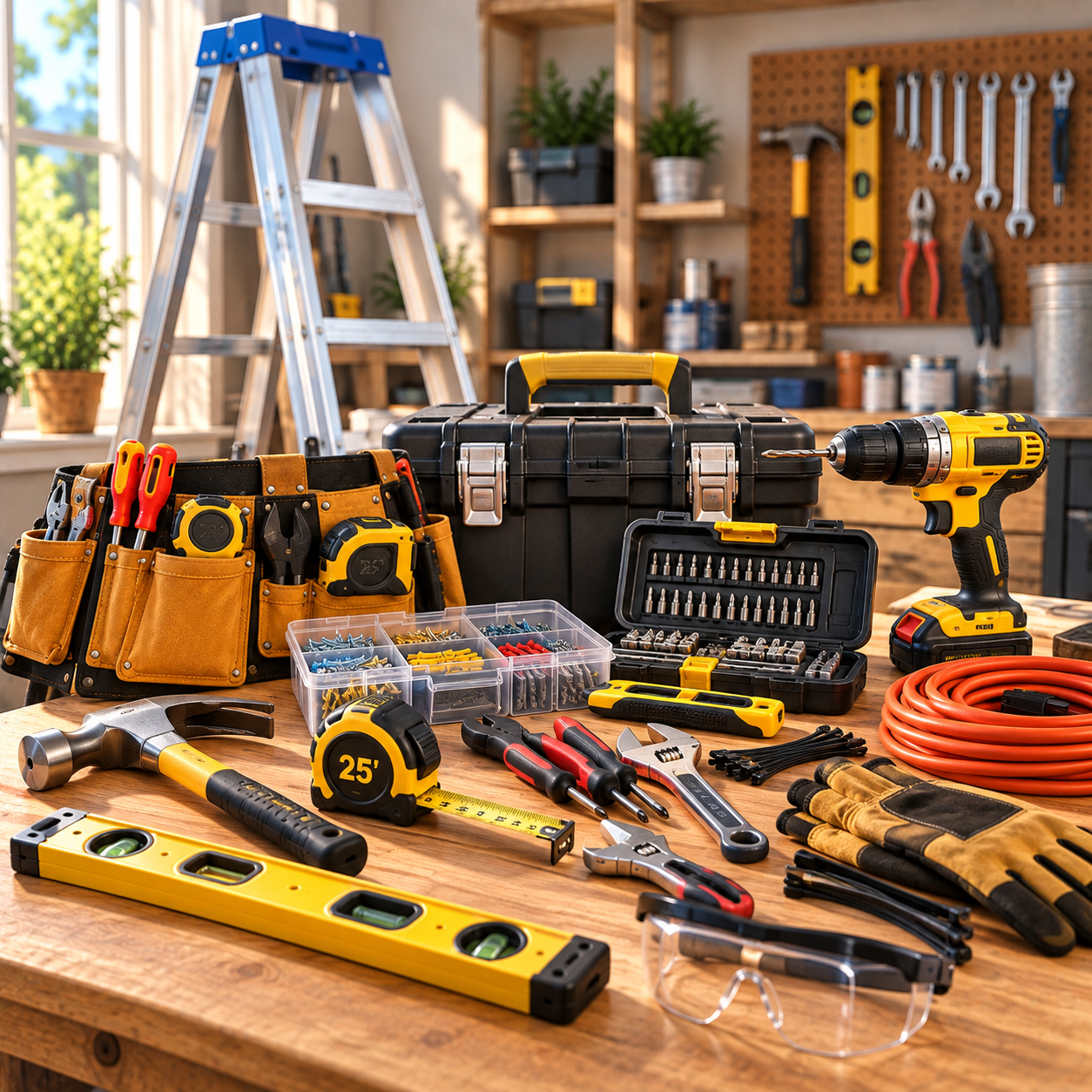
Hammer | Hanging items, small repairs, basic carpentry | $10-$25 | 🔥 Essential |
Screwdriver Set | Tightening, assembling, removing hardware | $10-$30 | 🔥 Essential |
Adjustable Wrench | Plumbing, bolts, general repairs | $10-$25 | 🔥 Essential |
Pliers Set | Gripping, bending, pulling, small fixes | $15-$40 | 🔥 Essential |
Tape Measure | Measuring rooms, furniture, shelves, materials | $5-$15 | 🔥 Essential |
Level | Hanging shelves, frames, TVs, cabinets | $10-$25 | 🔥 Essential |
Utility Knife | Cutting boxes, drywall, caulk, packaging | $5-$15 | ⭐ High |
Flashlight / Work Light | Working in closets, sinks, garages, crawlspaces | $10-$30 | ⭐ High |
Estimated cost: $50-$100 if buying everything new.
🦺 Safety Gear
Gear | Purpose | Estimated Cost | Priority |
Work Gloves | Protect hands from cuts, splinters, chemicals | $10-$20 | 🔥 Essential |
Safety Glasses | Protect eyes from dust, debris, drilling | $5-$15 | 🔥 Essential |
Dust Mask / Respirator | Protect lungs from dust, paint, fumes | $10-$50 | 🔥 Essential |
Hearing Protection | Protect ears when using saws and grinders | $10-$20 | ⭐ High |
Steel-Toed Boots | Protect feet from dropped tools/materials | $60-$120 | ⭐ High |
Knee Pads | Comfort for flooring, plumbing, cabinet work | $15-$40 | Medium |
Estimated cost: $100-$200
⚡ Power Tools
Tool | Purpose | Estimated Cost | Buy When |
Cordless Drill / Driver | Assembly, mounting, drilling pilot holes | $50-$150 | 🔥 First power tool |
Circular Saw | Cutting lumber, shelves, boards | $40-$100 | When offering carpentry jobs |
Miter Saw | Clean angled cuts for trim and wood projects | $60-$200 | When doing finish work |
Angle Grinder | Cutting, grinding, removing rust or metal | $30-$100 | Optional / advanced |
Shop Vacuum | Cleanup after dusty or messy jobs | $40-$120 | Strong upgrade |
Estimated cost: $200-$400 total, but you do not need to buy everything at once.
🧰 Specialized Tools by Service Type
Service Type | Tools Needed | Estimated Cost | Best For |
Painting | Paint roller, brush set, drop cloths, painter’s tape, primer | $75-$150 | Interior touch-ups, small rooms, trim |
Basic Plumbing | Plunger set, pipe wrench, drain snake, plumber’s tape | $55-$120 | Clogs, leaks, loose fixtures |
Basic Electrical | Voltage tester, wire strippers, insulated screwdrivers | $40-$75 | Light switches, outlets, fixtures |
Mounting & Shelving | Stud finder, drill bits, level, wall anchors | $60-$150 | Shelves, curtain rods, TVs, mirrors |
Furniture Assembly | Allen wrench set, rubber mallet, drill/driver bits | $25-$75 | IKEA-style furniture, desks, beds |
📱 Technology & Client-Finding Tools
Tool / Platform | Purpose | Cost | Priority |
Show up in local searches and collect reviews | Free | 🔥 Essential | |
Post in local groups and community pages | Free | 🔥 Essential | |
Get neighborhood handyman leads | Free | ⭐ High | |
Find local repair and assembly jobs | Commission-based | ⭐ High | |
Basic Website | Showcase services, photos, reviews, contact info | $100-$200/year | Medium |
Track appointments and job schedule | Free | 🔥 Essential | |
Let clients book estimates or calls | Free-$15/mo | Medium |
💳 Payments, Quotes & Invoices
Tool | Purpose | Cost | Best Use |
Digital payments and invoices | Transaction fees | Simple client payments | |
Payment links and card processing | 2.9% + $0.30 | Professional payments | |
Mobile card payments and invoices | Transaction fees | In-person payments | |
Quick payments from local clients | Free / fees vary | Small jobs | |
Free invoicing and basic bookkeeping | Free-$15/mo | Tracking income | |
Google Sheets | Simple quote and expense tracking | Free | Beginner tracking |
✅ Your Minimal Startup
Need | Starter Option | Estimated Cost |
Basic hand tools | Hammer, screwdrivers, wrench, pliers, tape measure, level | $75 |
First power tool | Cordless drill / driver | $60 |
Safety gear | Gloves, glasses, dust mask, hearing protection | $100 |
Starter supplies | Paint supplies, anchors, screws, tape, blades | $40 |
Scheduling | Free | |
Payments | Pay per transaction | |
Client leads | Free |
Total to launch: $200-$500 if buying tools new.
Reality: If you already own a hammer, screwdrivers, wrench, and basic supplies, your startup cost may be much lower.
💡 PRO TIP
Start with small, low-risk jobs first: furniture assembly, picture hanging, shelf installation, basic painting, minor repairs, and simple fixture replacements. Build reviews before taking on larger or more technical projects.
6. Finding Your First Clients
Use platforms for early momentum, local search for high-intent leads, and referrals for long-term growth. Build proof on every job so each client can help generate the next one.
🛠️ TaskRabbit for Fast Early Momentum
TaskRabbit is one of the quickest ways to get your first handyman jobs because customers are already searching for help with repairs, assembly, mounting, moving, and small home projects.
🧭 Platform Playbook
⚙️ How It Works
- Create a profile with a clear photo, service list, and experience
- Complete the required background check
- Add photos of past work or sample projects
- Customers search for services in their area
- You accept jobs, complete the work, and get paid through the platform
- TaskRabbit keeps a platform fee, so your take-home pay is lower than direct clients
📦 Best Services to Offer First
- 🪑 Furniture assembly
- 📺 TV mounting
- 🧱 Shelf installation
- 🔧 Minor repairs
- 🪟 Curtain rod installation
- 🖼️ Picture hanging
- 🚪 Door handle replacement
- 📦 Small moving help
- 🌿 Basic yard or garage cleanup
👍 Pros
- Immediate access to customers
- Built-in payment system
- Good for building reviews
- Easier than starting from zero
- Helps you learn which services are in demand locally
👎 Cons
- Platform fees reduce profit
- Competitive with other providers
- Some jobs are lower-paying
- You do not fully own the customer relationship
💵 Expected Rate: Many beginners may earn around $25–$50/hour after platform fees, depending on location, skill level, demand, and job type.
🎯 KEY TAKEAWAY
Use TaskRabbit to complete your first 20–30 jobs, build confidence, collect reviews, and learn which services are most profitable.
📍 Google Business Profile for Local Search
A Google Business Profile is one of the most important tools for local handyman work because customers often search phrases like “handyman near me” or “TV mounting near me.”
🧠 Profile Playbook
⚙️ How It Works
- Create a free business listing
- Add your service area
- Upload photos of completed jobs
- Add business hours, phone number, and website if available
- Show up in Google Maps and local search
- Collect reviews from happy customers
💡 Why It Matters
- Free local visibility
- Builds credibility
- Helps customers find you 24/7
- Reviews improve trust
- Local search traffic can bring high-intent leads
☑️ Profile Setup Checklist
- Business name
- Service categories
- Service area
- Phone number
- Photos of your work
- List of services
- Short business description
- Booking or contact link
- Review request link
🧠 Best Review Strategy
- Ask every satisfied customer for a review
- Send the review link by text after the job
- Mention the specific service they can reference
- Aim for 5–10 early reviews as quickly as possible
- Add photos regularly to keep the profile active
🚀 ACTION STEP
Set up the profile immediately, even before you have steady clients. It can take 3–6 months to build strong local visibility.
📣 Direct Local Marketing That Builds Visibility
Local marketing works well for handyman services because most customers want someone nearby, reliable, and easy to contact.
🧠 Local Marketing Playbook
📣 Best Local Marketing Methods
Method | Estimated Cost | Best For |
Flyers | Around $50 for 500 copies | Grocery stores, libraries, community centers |
Door Hangers | Around $100 for 500 | Neighborhood targeting |
Local Facebook Groups | Free | Service posts, referrals, local trust |
Community Bulletin Boards | Free–low cost | Coffee shops, gyms, libraries, churches |
Lawn Signs | Low–medium cost | Visibility while working in a neighborhood |
Business Cards | Low cost | Easy referrals and repeat contact |
📄 What to Put on Flyers or Cards
- Business name
- Phone number
- Service area
- Main services offered
- “Free estimates” if you offer them
- Google review QR code
- Before/after photo if possible
- Simple call-to-action
💡 Example Flyer Headline
Reliable Local Handyman for Small Repairs, Mounting, Assembly & Home Projects
📦 Good Services to Advertise Locally
- Furniture assembly
- TV mounting
- Drywall patching
- Minor plumbing fixes
- Door repairs
- Fence repairs
- Shelf installation
- Pressure washing
- Gutter cleaning
- Small painting jobs
📝 QUICK NOTE
A simple flyer, door hanger, business card, and yard sign setup may cost around $100–$300 total.
🛒 Craigslist and Facebook for Direct Leads
Craigslist and Facebook Marketplace can help you find direct customers without platform commissions. These channels require more screening, but they can lead to repeat clients.
🧠 Channel Playbook
⚙️ How It Works
- Post your services with clear photos
- List the jobs you handle
- Include your service area
- Add starting prices or “quote required”
- Respond quickly to messages
- Negotiate terms directly
- Follow up after the job for reviews and referrals
👍 Pros
- No platform commission
- Direct customer relationships
- Can lead to repeat work
- Good for testing which services get inquiries
- Useful for local visibility
👎 Cons
- No built-in payment protection
- More customer screening required
- Some people will price-shop
- Takes time to build trust
- You need strong communication
📝 Posting Tips
- Use photos of real completed work
- Mention your most profitable services first
- Keep the post short and clear
- Add your general location or service area
- Refresh posts regularly when allowed
- Include a professional contact method
🛡️ Safety Tips
- Meet during daylight for consultations when possible
- Get detailed job descriptions in writing
- Require upfront payment for materials
- Avoid buying materials out of pocket without a deposit
- Confirm customer name, address, and phone number
- Trust your instincts if something feels off
🎯 KEY TAKEAWAY
These platforms are best for building a direct client base and finding long-term recurring work without paying platform commissions.
🏘️ Nextdoor for Neighborhood Trust
Nextdoor is powerful for handyman work because people often ask neighbors for recommendations before hiring someone.
👥 Community Playbook
⚙️ How It Works
- Create a local service profile
- Post about your services
- Respond to neighbors asking for help
- Join local discussions without spamming
- Build trust through helpful comments
- Ask happy customers to recommend you
📝 What to Post
- Short intro post about your services
- Before-and-after project photos
- Seasonal maintenance reminders
- Helpful home repair tips
- Limited-time local discount
- Availability updates
- Customer review screenshots, if allowed
💡 Example Post
Hi neighbors, I’m offering local handyman help for small home projects like furniture assembly, TV mounting, shelf installation, minor repairs, and fixture replacements. I’m available this week for small jobs and free estimates. Feel free to message me if you need help around the house.
👍 Pros
- Highly local
- Trust-based platform
- Great for referrals
- Good for repeat neighborhood work
- Strong fit for small home projects
👎 Cons
- Slower to build
- Limited to local neighborhoods
- Reputation matters a lot
- Requires consistent engagement
💡 PRO TIP
Offer a small 10% neighborhood discount or first-job discount to encourage early reviews, recommendations, and referrals.
📢 Referrals for Compounding Local Growth
Referrals are one of the best client sources for handyman work because homeowners trust recommendations from neighbors, friends, and family.
🤝 Referral Playbook
🤝 How to Generate Referrals
- Do excellent work every time
- Show up on time
- Communicate clearly
- Clean up after the job
- Send before-and-after photos when useful
- Follow up after completion
- Ask for a Google review
- Ask directly for referrals
🤝 Simple Referral Ask
I’m glad you’re happy with the work. If you know anyone else who needs small handyman projects done, I’d really appreciate the referral.
🤝 Referral Incentive Ideas
- $20–$50 referral bonus
- Discount on the next job
- Free small add-on service
- Priority scheduling
- Seasonal maintenance discount
🤝 Make Referrals Easy
- Keep business cards with you
- Add a referral note to invoices
- Text customers your contact info after the job
- Include a Google review link
- Give customers a simple list of services you offer
💡 PRO TIP
One happy customer can lead to multiple neighbors, family members, and repeat projects over time.
🧭 Build a Balanced Client-Finding System
The goal is to use platforms for early momentum, then shift toward direct local clients and referrals where profit margins are higher.
📅 90-Day Growth Path
📈 Recommended Growth Path
Stage | Main Goal | Best Channels |
Weeks 1–2 | Set up visibility | Google Business Profile, TaskRabbit, Nextdoor |
Weeks 3–6 | Get first jobs and reviews | TaskRabbit, Facebook Groups, Craigslist |
Months 2–3 | Build direct local leads | Google reviews, flyers, Nextdoor, Facebook Marketplace |
Months 3+ | Increase profit and repeat work | Referrals, direct clients, local partnerships |
🚀 Start With These 5 Actions
- Create a Google Business Profile
- Join TaskRabbit or another local service platform
- Post in local Facebook Groups and Nextdoor
- Print simple business cards or flyers
- Ask every satisfied customer for a review and referral
📦 Best Services for First Clients
- Furniture assembly
- TV mounting
- Shelf installation
- Minor repairs
- Picture hanging
- Small painting jobs
- Door repairs
- Basic plumbing fixes
- Pressure washing
- Gutter cleaning
🔍 Track These Weekly
- Number of inquiries
- Jobs completed
- Revenue by service type
- Reviews collected
- Referral sources
- Best neighborhoods
- Most profitable services
- Repeat customers
🎯 KEY TAKEAWAY
Platforms help you get started, but reviews, referrals, and local search are what build a real handyman business.
7. How to Start: Your Beginner Roadmap
You do not need every tool, every repair, or every customer to start. Use the seven tabs in order. Begin with a few services you can perform safely, a written scope, and one completed job. Confirm each checkpoint before adding specialties or saying yes to work you have not done. Paid jobs are not guaranteed.
Your first goal: Turn one clear customer problem into one safely completed, paid job you would stand behind.
🔧 PHASE 1 — Choose Services You Can Deliver
📋 Steps 1–2: Do not market yourself as someone who can “fix anything.” Start with jobs you already understand and can complete safely, consistently, and legally.
✅ Ready to move on: A small menu of 3–5 services with clear, achievable finished results.
🧰 Step 1: Choose Your Beginner-Friendly Starting Menu
Strong first services:
- Furniture assembly
- Picture, décor, and curtain-rod hanging
- Minor household repairs
- Door and hardware adjustments
- Small touch-up painting
- Minor drywall patching
- Punch-list visits with several small tasks
Choose work that:
- Matches skills you already have
- Uses tools you own or can justify
- Has a clear finished result
- Is easy to explain
- Can be priced consistently
- Carries manageable risk
🎯 Step 2: Check That You Can Stand Behind Each Job
A service belongs on your list only if you can:
- Assess it
- Quote it
- Complete it
- Clean up after it
- Stand behind it afterward
If you are unsure whether you can finish a job safely, correctly, or legally, do not learn it on the customer’s property. Practice first, or refer it.
Keep the menu small. Three reliable services beat twelve you cannot quote or finish well.
🎯 KEY TAKEAWAY
Reliability beats range. Customers hire the person who shows up, stays in scope, and finishes the job they promised.
Phase checkpoint: You can name 3–5 services you would accept this week and explain what the finished result looks like.
🚀 Your First 5 Actions
🚀 ACTION STEP
- Choose the menu: List 3–5 services you can assess, quote, complete, clean up, and stand behind.
- Write the limits: Record your Don’t list, check local requirements and coverage, and identify a referral option.
- Prepare the process: Gather suitable tools and safety gear, then create intake questions and a written quote template.
- Screen one request: Tell nearby contacts what you offer and ask for photos, specifications, access, and the desired result before pricing.
- Complete one suitable job cycle: Obtain written approval, prepare, work safely, inspect, collect payment as agreed, record the workload, and follow up.
Do not use a customer’s property to learn an unfamiliar or unsafe task.
🚀 ACTION STEP
Use this 30-day plan:
- Days 1–3: Choose 3–5 services and write your Don’t list.
- Days 4–7: Prepare tools, intake questions, and a quote template.
- Days 8–14: Tell nearby contacts and respond to inquiries with photos first.
- Days 15–21: Complete small, clearly scoped jobs.
- Days 22–26: Review time, costs, mistakes, and feedback.
- Days 27–30: Tighten the menu, quotes, and follow-up ask.
🚫 PHASE 2 — Write Your Do / Don’t Boundaries
📋 Steps 3–4: Knowing your limits is part of being professional. Make a simple Do / Don’t list before you advertise.
✅ Ready to move on: A written work boundary and referral option for unsuitable requests.
✅ Step 3: List the Work You Will Accept
Jobs you can confidently:
- Assess from photos or a visit
- Quote without guessing
- Complete with the tools you have
- Clean up
- Warrant within a reasonable, stated limit
These should be the only jobs in your ads, flyers, and platform profile.
Set follow-up terms that remain consistent with applicable customer rights.
❌ Step 4: List the Work You Will Decline or Refer
Decline or refer work that is:
- Outside your skill level
- Unsafe with your current equipment
- Outside your insurance coverage
- Permit-restricted or license-restricted
- Structural, gas, or otherwise high-risk
- Better handled by a qualified trade
Depending on local rules, electrical, plumbing, HVAC, roofing, and similar work may require licensing or permits. A tool in the truck does not authorize the job.
💡 PRO TIP
Professionalism is not saying yes to everything. Sometimes the right answer is, “That job needs a specialist.”
Phase checkpoint: You have a written Don’t list and a referral option for work outside your scope.
📲 PHASE 3 — Screen the Inquiry Before Quoting
📋 Steps 5–6: Do not give a price the moment someone texts. Learn enough to decide whether the job is a fit.
✅ Ready to move on: Enough detail for a responsible quote, assessment, further question, or referral.
📸 Step 5: Request Photos, Access & the Desired Result
Request:
- Photos or a short video
- A description of the problem
- Measurements when relevant
- Brand or model for assembly or mounting
- General location and access
- Preferred timing
- Surface or wall information
- Known damage or safety concerns
- What “done” looks like to them
A fuzzy request is not a job yet. It is a screening question.
🧭 Step 6: Choose the Next Screening Action
After you review the details:
- Quote remotely if the job is simple and clearly defined
- Schedule an assessment if you need to see it
- Ask for more information if key details are missing
- Decline or refer if it is outside your scope
Do not let pressure for a fast number turn into an expensive mistake.
⚠ COMMON MISTAKE
Pricing from a one-line text like “How much to mount my TV?” without photos, wall type, or access. That is how quotes miss travel, hardware, and hidden conditions.
Phase checkpoint: You have an intake checklist and will not quote until photos, access, and the desired result are clear — or you have scheduled a look.
💵 PHASE 4 — Define the Full Job & Quote Clearly
📋 Steps 7–9: A job is more than the minutes spent holding a tool. Price the whole workload, then put the scope in writing.
✅ Ready to move on: Written inclusions, exclusions, assumptions, price, schedule, payment, and change terms.
🔍 Step 7: Account for the Whole Visit
Include:
- Travel and parking
- Material pickup
- Setup and on-site labor
- Cleanup and disposal
- Extra help if needed
- Possible return trips
- Consumables and payment fees
📋 Step 8: Write the Terms Every Quote Should State
- Work being completed
- Who supplies materials
- Labor or project price
- Travel or service fees, if any
- Cleanup or disposal
- What is excluded
- Important assumptions
- Schedule window
- Payment terms
- How changes get approved
🧪 Example: Make the Shelf Scope Specific
Instead of “Install shelf — $75,” write:
Install one customer-supplied shelf on an accessible drywall wall, including measuring, mounting, leveling, and basic cleanup. Extra hardware, wall repair, hidden conditions, or additional shelves are separate.
🪑 Step 9: Apply a Clear Scope to the Assembly Example
Example:
Project: Furniture assembly
Scope: Assemble one specified dresser per manufacturer instructions
Included: Assembly, placement, packaging cleanup
Not included: Extra anchoring hardware, moving other furniture, extra disposal
Price / schedule / payment: stated before you reserve the slot
Required manufacturer safety measures, including anti-tip anchoring, must be resolved before calling assembly complete. If they need extra hardware or work, agree that scope first; do not treat required safety measures as an optional omission.
💡 PRO TIP
A professional quote does not need to be long. It needs to prevent surprises.
Phase checkpoint: The quote names inclusions, exclusions, assumptions, price, schedule, and payment in writing.
✍️ PHASE 5 — Confirm the Agreement Before Starting
📋 Steps 10–11: Do not rely on “Yeah, that sounds good.” Confirm the agreement before you reserve the appointment.
✅ Ready to move on: Written agreement on scope, price, materials, schedule, and payment.
✅ Step 10: Get Written Approval on the Core Terms
Get a yes, in writing, on:
- Final scope
- Price or pricing method
- Materials
- Date and time
- Payment terms
- Important exclusions
Keep confirmation by text, email, an approved estimate, or a signed work order, as appropriate to the job and applicable requirements. Do not rely solely on a casual verbal agreement.
💬 Step 11: Confirm the Booking & Materials Arrangement
Please confirm that the scope, price, and schedule above look correct. Once approved, I will reserve the appointment.
If the customer wants extra work later, that is a new quote — not an automatic add-on.
Collect a materials deposit when you must buy parts before arriving. Do not fund the customer’s project out of pocket.
Use the agreed, permitted deposit arrangement and any applicable platform process.
🎯 KEY TAKEAWAY
Written approval protects the customer too. Everyone starts with the same expectations.
Phase checkpoint: You have a written yes on scope, price, schedule, and payment before tools come out of the truck.
🏠 PHASE 6 — Prepare & Complete the Approved Work
📋 Steps 12–14: The job starts before you arrive. Customers remember the whole visit, not only whether the repair works.
✅ Ready to move on: The agreed work completed safely, with any change explained and approved.
🧰 Step 12: Prepare Before You Leave
Confirm:
- Time, address, and contact
- Scope and product specs
- Tools, hardware, and safety gear
- Payment method
Leave travel buffer. Do not stack jobs so tightly that one delay ruins the day.
🔨 Step 13: Protect the Work Area & Stay in Scope
On site:
- Arrive when promised
- Protect the work area
- Work safely
- Stay inside the agreed scope
- Keep the customer informed
Follow manufacturer instructions and use appropriate fixings and protection for the actual task. Pause if the work area, hidden conditions, or required safety measures are not what you expected; do not improvise beyond your competence or authorization.
🛑 Step 14: Stop & Seek Approval When the Job Changes
If you find something that changes the work:
- Stop before doing extra work
- Explain what you found
- Explain why it changes the original scope
- Say what the new work requires and costs
- Get approval before continuing
Never surprise a customer with extra work and a larger bill afterward.
If hidden conditions exceed your competence, coverage, or the agreed job, stop and refer.
⚠ COMMON MISTAKE
Keeping going “since you’re already there” without a new price. That is how small jobs become unpaid extra work.
Phase checkpoint: You can complete the agreed scope, pause for changes, and explain any limit before you leave.
✅ PHASE 7 — Inspect, Get Paid & Improve the Next Job
📋 Steps 15–19: Do not rush out when the repair is finished. Close the visit, then make it easy for a satisfied customer to remember you.
✅ Done when: A checked result, payment and workload records, and a clear follow-up plan.
🧹 Step 15: Inspect, Clean Up & Handover the Result
Before you leave:
- Inspect the work
- Clean the area
- Confirm it functions as intended
- Walk the customer through the result
- Take after photos with permission
Ask: “Does everything look the way you expected?” Fix concerns while you are still there, within the agreed scope and your safe capabilities. Explain any limitations or unresolved work rather than representing an incomplete result as finished.
💳 Step 16: Collect Payment & Send the Receipt or Invoice
Close payment using the terms agreed before the appointment:
- Collect payment
- Send a receipt
If the agreement calls for an invoice or later payment, send it as agreed and record the due date and balance. Confirm actual funds received, not only a payment screenshot, and use the platform’s completion/payment process where applicable.
📊 Step 17: Log the Quoted & Actual Workload
Record time, costs, and any issues.
Then log quoted vs. collected pay, estimated vs. actual time, travel, callbacks, and lead source. That is how later quotes get accurate.
⭐ Step 18: Follow Up for Reviews & Repeat Work
A finished job can also produce a review, a referral, repeat work, and portfolio photos.
Short follow-up:
Thanks again for having me help with the project. If everything looks good, I would appreciate a quick review. If other small repairs come up, feel free to reach out.
Do not hard-sell. Make it easy to find you again.
If the same extra task keeps appearing, add it as a priced add-on — do not keep throwing it in.
🔄 Step 19: Review Similar Jobs & Refine Your Menu
⭐ ADVANCED STRATEGY
After a few similar jobs, compare actual time and callbacks. Raise underquoted work, drop unsafe or unprofitable jobs, and keep the services that finish cleanly.
This phase is complete when: You have been paid, logged the real workload, and asked for a review or the next small project.
🎯 Turn the Roadmap Into One Job Cycle
🎯 KEY TAKEAWAY
You do not need to become the handyman who can do everything. You need a process customers can trust:
Inquiry → Screen → Scope → Quote → Approve → Complete → Get paid → Review
Start narrow. Work safely. Track what happens. Expand from evidence, not guesswork.
8. Build Trust & Improve Results
Use this section to build trust with homeowners, present your service professionally, communicate clearly, finish every job to a high standard, market with purpose, specialize strategically, and avoid the mistakes that cost new handymen customers, income, and energy. Chapter 7 walks you through a single job; this chapter helps you look credible, price confidently, and keep customers calling you back.
⭐ ADVANCED STRATEGY
1️⃣ Build Proof Before You Pitch 📁
Non-negotiable
Customers are letting you into their homes and trusting you with their property. Before asking anyone to hire you, show that you can do clean, safe, reliable work.
🛡️ Why Proof Builds Trust
Homeowners want evidence that you can fix the problem without creating a bigger one, not just a claim that you are handy.
Why this matters:
- They are inviting a stranger into their home
- One weak review can hurt local trust
- A profile with no photos feels risky
- Before-and-after shots show your finish quality, not just your tools
- Clear examples help them picture their own project
☑️ Minimum Proof Checklist
- 5–8 before-and-after photo sets to start
- Two or three clearly named services
- Each photo set labeled with the job and what was done
- A wide shot and a close-up of the finished work
- A short bio, your service area, and your availability
- Clear contact or booking instructions
- At least one review or testimonial once you have it
- Permission for any customer work you show
🛡️ How to Create Proof Before Your First Paid Customer
🏠 Option 1: Use What You Already Have
Start with projects in your own home or space that you already finished.
What to do:
- Photograph shelves, mounts, repairs, or paint work you have done
- Add a short note on what the job involved
- Group photos by service, such as mounting or assembly
- Use good lighting and take a wide shot and a close-up
- Remove anything that does not match the work you want to be hired for
🔧 Option 2: Create Practice Projects
Complete small projects as if a real customer had booked them.
What to do:
- Mount a shelf, assemble a piece of furniture, or patch a test panel of drywall
- Follow your full process, from scope to cleanup
- Label every photo set as a practice project
- Fill any gaps in the services you plan to offer
- Never practice on a customer's property
🎁 Option 3: Offer a Few Discounted First Jobs
Use a small number of reduced-price slots to earn real examples and reviews.
What to do:
- Offer 2–3 slots, clearly labeled as an introductory batch
- Keep the same scope, terms, and payment process you will use later
- Ask permission to photograph and share the result
- Request a short review right after the job
- Move to standard pricing as soon as the batch is done
💡 PRO TIP
A first-job discount should shorten the trust gap, not set your long-term rate. A small 10% neighborhood or first-job discount can encourage early reviews and referrals.
🤝 Option 4: Help Friends, Family & Neighbors
People who already know you can become your first reviewers.
What to do:
- Offer a free or low-cost small job in exchange for an honest review
- Treat it like a real customer job, with a scope and a cleanup
- Ask whether you can share the before-and-after photos
- Keep the finished photos in your portfolio
Avoid:
- Posting photos of a home or person without permission
- Showing someone else's work as your own
- Taking on work outside your skill, license, or insurance coverage
2️⃣ Showcase Your Portfolio 🗂️
🖼️ What to Include in Your Portfolio
Portfolio Piece | What It Shows |
Before-and-after photos | You deliver visible, finished results |
Wide shot and close-up | Both the overall result and the quality of the detail |
Short job description | The scope, what was included, and what the customer wanted |
Reviews and testimonials | Other homeowners were happy working with you |
Range within your services | You can handle several small jobs and combine them into one visit |
Clean job-site photos | You protect the work area and clean up afterward |
Keep it tight:
- Show only your strongest 5–8 jobs
- Group by service: assembly, mounting, repairs, painting
- Label each photo set with the job and what was done
- Replace older photos when stronger ones are ready
- Photograph every job before and after, with permission
🛡️ Where to Show Your Portfolio
Place | Best For |
Google Business Profile | Local searches such as “handyman near me” and collecting reviews |
Facebook & Nextdoor | Neighborhood trust, recommendations, and referrals |
TaskRabbit profile | Showing samples where customers are already searching |
Simple website or Notion page | One home page that links your photos, services, and contact details |
Photo folder or PDF | Sharing a tailored selection with a landlord or property manager |
Flyers and business cards | A QR code to your reviews and a before-and-after photo |
Display reviews:
- Ask customers for permission before quoting them
- Use a short line like “On time, careful, and left everything clean.”
- Add one near your contact or booking button
- Save longer reviews on your profile or website
💡 PRO TIP
Label every photo set with the service and the result. A homeowner should be able to picture their own project in your portfolio within seconds.
3️⃣ Be Recognizable and Honest ✨
Trust is built by what customers can see, repeat, and verify.
🎨 Make Your Service Instantly Recognizable
- Use one clear headline, such as “Furniture assembly and TV mounting in [your area]”
- Present every photo set in the same clean format
- Keep your name, photo, bio, and service list consistent across platforms
- Use the same name and look on your quotes, flyers, and invoices
- Describe the result you deliver, not just the tools you own
Why it works:
- Customers understand what you do in seconds
- A clear specialty makes pricing easier to justify
- Consistent examples reduce hesitation
📱 Optimize Your Profiles
- Name your main services and service area in your headline
- Put your best before-and-after photo first
- Write a short, benefit-focused description
- Include availability, how to request a quote, and what details to send
- Use a clear photo of yourself and a tidy layout
Avoid:
- “I fix anything” profiles
- Long lists of every possible service
- Blurry photos or messy, inconsistent materials
⭐ Build Reviews That Compound
After every job:
- Ask: “Would you mind leaving me a review on Google or TaskRabbit?”
- Send the link by text so it takes about two minutes
- Ask what you did well, and use permitted quotes in your marketing
The numbers:
- 5 reviews gets you local visibility
- 15–20 reviews makes you competitive
- 50+ reviews can support stronger local visibility
🤝 Be Honest About Your Work
Do:
- Say what you do and do not offer
- State your service area, availability, and payment terms
- Admit when a job is outside your skill, license, or coverage
- Label practice projects as practice work
Avoid:
- Claiming licenses, insurance, or experience you do not have
- Promising a price or timeline before you know the job
- Hiding limitations until the work has started
4️⃣ Communicate Like a Professional 💼
Customers judge your reliability from your first reply.
💬 Clear, Prompt Communication
Do:
- Reply to inquiries within a stated time, such as the same day
- Ask for photos, measurements, access details, and what “done” looks like
- Confirm the scope, price, and schedule in writing before you start
- Show up on time, or call 24 hours ahead if plans change
- Explain what you are doing as you work
Avoid:
- Taking too long to respond
- Missing or moving appointments without notice
- Quoting from a one-line text with no photos
- Starting without clear scope and payment terms
🔁 Handling Changes & Follow-Ups
Do:
- Stop and explain when you find something that changes the work
- Say what the new work requires and costs, and get approval first
- Fix mistakes in the agreed work without an extra charge
- Follow up a week later to confirm they are satisfied
- Quote any additional tasks separately
Prevent problems by:
- Keeping all agreements in writing
- Asking questions as soon as something is unclear
- Referring work outside your skill, license, or coverage
🟢 Show Your Availability Status
Status | Example Wording |
Open | “Now booking small repairs, assembly, and mounting” |
Limited | “Booking this week: 3 slots left” |
Closed | “Fully booked — reopening [date]” |
⏱ Give Clear Arrival Windows
- Be realistic: allow travel and supply-run buffers
- Under-promise, over-deliver
- Update your availability regularly
- Mention same-week or priority scheduling separately
- Reliability is a selling point, but never at the cost of safe work
📝 QUICK NOTE
Only say slots are limited when they really are. Honest scarcity builds trust; fake scarcity damages it.
5️⃣ Quote & Follow-Up Templates 📝
📝 Quote Confirmation Template
Send this after the customer describes the job and before you reserve the appointment:
Do not start work until the scope, price, and payment terms are confirmed.
✅ Job Completion Message Template
Use this when the work is done and payment is settled:
Close payment using the terms you agreed before the appointment.
⭐ Review & Referral Templates
Keep these short and easy to copy:
Review request:
Thanks again for having me help with your [job]. If
everything looks good, I'd really appreciate a quick
review: [link].

Referral ask:
I'm glad you're happy with the work. If you know anyone
else who needs small home projects done, I'd really
appreciate the referral.
📜 Service Terms Template
Keep your terms short, readable, and consistent every time:
☑️ What Your Terms Should Cover
- What is included and what is excluded
- Materials: who supplies them and when a deposit is due
- Price or pricing method, and when payment is due
- How changes are approved before extra work starts
- Rescheduling and cancellation policy
- Safety, access, and the limits of what you will do
- Any follow-up period for the agreed work
- How photos may be used
📌 Use Your Templates Every Time
- Save each template in your notes app or Notion
- Fill in the brackets, then read it back before sending
- Use text, email, or an approved estimate as your written record
- Keep records of quotes, approvals, and payments
💡 PRO TIP
Written terms every time, even for small jobs, prevent most scope creep and misunderstandings.
6️⃣ Marketing Hook Mastery 🎣
Good work still needs a reason for people to stop scrolling and reach out.
🪝 Hooks That Get Attention
Hook Type | Example |
Before / after | “Sagging shelf → level, secure, and cleaned up” |
Problem solver | “Sticking door? Loose handle? Booking this week.” |
Free estimate | “Free estimates for small home projects” |
Open slots | “Now booking — 3 slots this week” |
Move-in help | “New home? Assembly, mounting, and fixes in one visit” |
Neighbor result | “A tidy TV mount in an afternoon” (use only real, permitted results) |
🧠 Marketing Tactics That Work
📸 Share your work regularly
- Before-and-after photos show skill and build trust
- Post seasonal maintenance reminders and helpful home tips
- Share a short intro about the services you offer
🎁 Run limited-time offers
- “First-job discount for new neighbors”
- “Book a punch-list visit this month”
- Use real limits and real deadlines
⚡ Offer Priority Scheduling for a Premium
- Normal: your standard booking window
- Priority: a faster slot at a clearly stated surcharge
- Only offer it when your calendar can handle it
- Never rush past safe work or the final check
🤝 Partner With Local Professionals
- Connect with landlords, property managers, and real estate agents
- Offer reliable punch-list and turnover help
- Exchange referrals with other local trades you trust
📧 Build Referral Relationships
- Ask satisfied customers directly for referrals
- Consider a small referral bonus or a discount on the next job
- Keep business cards handy and add a referral note to invoices
- Repeat customers are more reliable than any single platform
🚀 ACTION STEP
Pick one hook from the table, create one post or profile update this week, and include your availability status and a clear way to request a quote.
7️⃣ Job Quality Checklist ✅
Finish quality is part of the product. It protects your reputation and reduces callbacks.
☑️ Job Completion Checklist
Check | What to Verify |
Scope followed | The work matches the agreed quote, and nothing excluded was slipped in |
Function | The repair, mount, or assembly works as intended and has been tested |
Safety | Fixings, anchoring, and manufacturer safety measures are done correctly |
Finish | Edges, paint, caulk, and surfaces look clean and even |
Cleanup | The work area is cleaned and debris removed |
Walkthrough | The customer has seen the result and confirmed it meets expectations |
Photos | After photos taken, with permission |
Payment | Receipt or invoice sent as agreed |
Records | Time, costs, and notes logged for your next quote |
🔍 Pre-Departure Review
Before you leave, check:
- Test the finished work yourself
- Look at it from the customer's point of view
- Compare the result against the quote point by point
- Walk the customer through the result
- Ask: “Does everything look the way you expected?”
Common reasons customers ask for fixes:
- A detail from the scope was missed
- Hardware or fixings were not the right fit
- Cleanup was incomplete
- Something changed without being discussed
- The result was not what they expected
🧰 The Fundamentals
- Show up on time, or call 24 hours ahead
- Dress professionally
- Use clean work practices, such as drop cloths
- Explain what you are doing
- Clean up before leaving
- Fix mistakes without an extra charge
- Follow up a week later to confirm satisfaction
🔁 Why It Matters
- One weak review can hurt local trust
- Consistent good work helps you get recommended
- Callbacks cost unpaid time and travel
- A smooth finish makes it easy to ask for a review
🛠 TOOLS & RESOURCES
Keep a reusable completion checklist in your notes app and run through it before you leave every job.
8️⃣ Specialization & Pricing Strategy 🎯
Customers usually hire the handyman who feels made for their project, not the one who says yes to everything.
🎯 Choose a Direction
Specialty | Typical Pricing (from Chapter 4) | Why It Works |
TV, shelf & mirror mounting | Flat-rate per job: $75–$500+ | Clear demand and easy packaging |
Furniture assembly | Flat-rate per job: $75–$500+ | Scope is easy to understand before you arrive |
Minor repairs & troubleshooting | Hourly: $25–$75+/hour | Flexible when the job is uncertain |
Touch-up painting & caulking | Minimum service call: $75–$150, or flat-rate | Visible improvement customers can see right away |
Punch-list & move-in packages | Bundle package: $150–$1,000+ | Several small tasks become one higher-value visit |
Rental & property maintenance | Recurring: $300–$2,000+/month | Repeat work from landlords, property managers, and short-term rentals |
💰 Create Tiered Pricing Options
- Makes the decision easier for customers
- Builds an upsell opportunity into every visit
- Keeps extra work priced separately
Pricing reminder: Pay ranges are planning figures, not promises. Estimate the full job time, including travel, purchasing, setup, and cleanup, and check the price against your effective hourly revenue.
🎯 How to Specialize in 5 Steps
1️⃣ Learn Several Services First
In your first year, try multiple services and notice which ones you finish well and enjoy repeating.
2️⃣ Study Your Own Numbers
Review which jobs paid best, which took too long, and which created callbacks.
3️⃣ Build a Service Menu
Offer 3–5 clear services with minimum fees, flat rates, and add-ons.
4️⃣ Set Your Boundaries
Write what you will and will not do, including work that needs a licensed trade or is outside your coverage.
5️⃣ Create Signature Photo Sets
Make 5–8 before-and-after sets that perfectly represent the work you want more of, then focus on 1–2 high-demand services as experience grows.
Generic Positioning | Specific Positioning |
“I fix anything” | “Furniture assembly and TV mounting for busy households” |
“Handyman” | “Small repairs and punch-list visits for homeowners and landlords” |
“Odd jobs” | “Move-in setup: assembly, hanging, and minor fixes in one visit” |
⭐ ADVANCED STRATEGY
Raise your rates every 6–12 months if you are consistently booked, after 25–30 positive reviews, or when you are turning down work. A 15–25% increase per round is reasonable. Keep some regular customers at their old rate, apply the new rate to new customers, and announce it clearly, such as “Due to demand and increased experience, rates are increasing January 1st.”
9️⃣ Common Mistakes: Pricing, Portfolio & Positioning ⚠️
The most expensive mistakes are often the ones that feel humble or polite.
❌ Underpricing to Get Work
The trap: “I'll charge almost nothing so people hire me.”
The reality: It attracts cheap customers, devalues your labor, and makes raising rates harder later.
The fix: Price the full job, including travel, materials, setup, and cleanup. If no one books, improve your photos, positioning, or outreach, not just your price.
❌ Not Showing Your Proof
The trap: “My profile says I'm reliable, so that should be enough.”
The reality: Claims are easy to make. Homeowners trust before-and-after photos and reviews.
The fix: Photograph every job with permission, build a small portfolio, and show your process.
❌ Taking Every Job
The trap: Saying yes to work outside your skill or comfort zone.
The reality: It dilutes your focus, leads to poor service, and creates safety and legal risk.
The fix: Define what you will and will not do. Specialize and refer the rest.
❌ Not Asking for Referrals or Following Up
The trap: Assuming happy customers will spread the word on their own.
The reality: Some undecided inquiries only book after a follow-up, and referrals are your easiest growth source.
The fix: Follow up on every lead, and ask every satisfied customer for a review and a referral.
⚠ COMMON MISTAKE
A cluttered profile, unclear pricing, and a vague service list all make the customer work harder to say yes.
🔟 Common Mistakes: Contracts, Payment & Burnout ⚠️
Protecting your time, safety, and energy is part of running a professional handyman business.
❌ No Written Estimate or Terms
The trap: Casual agreements feel friendly.
The reality: They lead to scope creep, disputes, and unpaid extra work.
The fix: Use a written estimate and terms every time, even for small jobs.
❌ Starting Without a Payment Agreement
The trap: “I trust them, they seem nice.”
The reality: Unpaid work cannot be recovered, and buying materials out of pocket puts your money at risk.
The fix: Agree on payment terms and collect a materials deposit before you buy or begin.
❌ Ignoring Insurance, Licensing & Safety
The trap: “It's a small job, so the rules do not apply.”
The reality: One accident could be expensive, and some work requires a license or permit depending on local rules.
The fix: Check local requirements and consider liability coverage. Refer regulated or high-risk work to a qualified trade.
❌ Overbooking & Giving Up Too Soon
The trap: Saying yes to every job, or quitting before momentum builds.
The reality: Rushed jobs lead to mistakes and burnout, and it often takes 3–6 months to build a pipeline.
The fix: Limit daily bookings, leave travel buffers, and track your results before deciding.
🚀 ACTION STEP
Save your quote confirmation, completion message, and service terms as reusable templates this week, then use them on every job.
9. Learn Handyman Skills for Free (or Cheap)
🛠 TOOLS & RESOURCES
Handyman & Fix-It Services brings together safe practical skills, legal scope, accurate quotes, and job handoffs. You do not need to master everything at once. Choose resources that help you complete the next practical step.
🎓 Learning (Free & Paid)
Start with one source that fits your current level. Practice what it teaches before collecting more courses or tools.
🎬 Handyman Tutorials & YouTube
Use repair demonstrations to study methods and recognize complexity, not as a substitute for supervised practice or required qualifications.
Watch Home RenoVision DIY (YouTube Channel) for tutorials, examples, and practical ideas you can apply to handyman and repair services.
🟢 Beginner
Watch See Jane Drill (YouTube Channel) for tutorials, examples, and practical ideas you can apply to handyman and repair services.
🟢 Beginner
Watch The Handyman (YouTube Channel) for tutorials, examples, and practical ideas you can apply to handyman and repair services.
🟡 Intermediate
Watch This Old House (YouTube Channel) for tutorials, examples, and practical ideas you can apply to handyman and repair services.
🟡 Intermediate
Watch Vancouver Carpenter (YouTube Channel) for tutorials, examples, and practical ideas you can apply to handyman and repair services.
🟡 Intermediate
🆓 Free Handyman Learning
Learn safe starter tasks, tool use, and estimating before taking on a client’s property.
Use Family Handyman to learn beginner concepts, examples, and workflows before starting handyman and repair services.
🟢 Beginner
Use Lowe’s DIY Projects & Ideas to learn beginner concepts, examples, and workflows before starting handyman and repair services.
🟢 Beginner
Use The Home Depot DIY Projects to learn beginner concepts, examples, and workflows before starting handyman and repair services.
🟢 Beginner
Use WikiHow Home Repairs to learn beginner concepts, examples, and workflows before starting handyman and repair services.
🟢 Beginner

Use Ask This Old House to learn beginner concepts, examples, and workflows before starting handyman and repair services.
🟡 Intermediate
💬 Handyman Communities & Forums
Discuss tools and job-planning questions with experienced workers while checking regulated-work advice through official sources.
Use DIY Chatroom to ask questions, study real examples, and network with people doing handyman and repair services.
🟢 Beginner
Use r/handyman to ask questions, study real examples, and network with people doing handyman and repair services.
🟢 Beginner
Use r/HomeImprovement to ask questions, study real examples, and network with people doing handyman and repair services.
🟢 Beginner
Use r/Tools to ask questions, study real examples, and network with people doing handyman and repair services.
🟡 Intermediate
Use Contractor Talk to ask questions, study real examples, and network with people doing handyman and repair services.
🔴 Advanced
💰 Paid Handyman Courses
Look for practical, safety-focused instruction that matches the specific work you are legally permitted to offer.

Use Skillshare — Home Repair Classes for structured training, courses, or credentials that build confidence in handyman and repair services.
🟢 Beginner

Use Udemy — Handyman Courses for structured training, courses, or credentials that build confidence in handyman and repair services.
🟢 Beginner

Use LinkedIn Learning — Construction Skills for structured training, courses, or credentials that build confidence in handyman and repair services.
🟡 Intermediate

Use Home Inspector Training by AHIT for structured training, courses, or credentials that build confidence in handyman and repair services.
🔴 Advanced

Use InterNACHI House of Horrors Training for structured training, courses, or credentials that build confidence in handyman and repair services.
🔴 Advanced
📝 QUICK NOTE
Tutorials do not establish competence or permission to perform regulated work. Verify local licensing, insurance, and permit rules and decline tasks outside your training.
📝 What Should You Learn First?
Follow this order:
1️⃣ Scope & local rules
Identify the tasks you can perform safely and legally; refer regulated or unfamiliar work to qualified tradespeople.
2️⃣ Tools & safe methods
Learn manufacturer instructions, protective equipment, and safe working conditions.
3️⃣ Site assessment
Check access, materials, hidden risks, and the limits of a photo-only estimate.
4️⃣ Quotes & approvals
Specify work, exclusions, materials, changes, payment terms, and expected timing.
5️⃣ Execution & quality
Use a task checklist and stop if conditions exceed your competence or scope.
6️⃣ Handoff & follow-up
Check the result with the client and document outstanding issues.
🎯 KEY TAKEAWAY
Learn through a small, realistic practice task. Build confidence in the core workflow before adding more tools, paid courses, or commitments.
📄 Four Practical Starting Templates
Create these in a document, spreadsheet, or Notion page. They are working outlines—not ready-made legal agreements or professional advice. Use fictional data for practice and keep real records secure.
Job Assessment
Record: Task | Site conditions | Measurements | Hazards | License check | Decision
Use before accepting work or giving a firm quote.
Quote & Materials List
Record: Scope | Materials | Labor | Travel | Exclusions | Approval
Make the included work clear.
Job Checklist
Record: Task | Safety checks | Materials | Completion | Client sign-off
Review the work before leaving the site.
Job Cost Review
Record: Quoted amount | Hours | Material cost | Other costs | Payment | Lessons
Improve future estimates using actual job records.
🚀 ACTION STEP
Choose one learning resource and draft your Job Assessment. Use a small practice example to identify the next skill you need before taking on live work or spending more money.
🧰 Resources
Use these resources to put your handyman & fix-it services learning into practice. Start with a small, dependable setup and add a tool only when its purpose, cost, and limitations are clear.
🦺 Safety & Licensing Resources
Check safety guidance and the legal boundaries of your work. Use official local sources for licensing and permit questions.

Use CPSC Recalls to understand safety, compliance, and first-aid expectations before offering handyman and repair services.
🟢 Beginner

Use OSHA Ladder Safety to understand safety, compliance, and first-aid expectations before offering handyman and repair services.
🟢 Beginner
Use OSHA Construction Standards to understand safety, compliance, and first-aid expectations before offering handyman and repair services.
🟡 Intermediate

Use UL Solutions Safety Resources to understand safety, compliance, and first-aid expectations before offering handyman and repair services.
🟡 Intermediate
Use EPA Lead Renovation, Repair and Painting to understand safety, compliance, and first-aid expectations before offering handyman and repair services.
🔴 Advanced
🧰 Tools & Equipment
Choose dependable equipment for the tasks you actually offer. Learn safe use and maintenance before buying a larger kit.
Use Harbor Freight to compare, buy, or organize the tools and supplies needed for handyman and repair services.
🟢 Beginner
Use Stanley to compare, buy, or organize the tools and supplies needed for handyman and repair services.
🟢 Beginner
Use DeWalt to compare, buy, or organize the tools and supplies needed for handyman and repair services.
🟡 Intermediate
Use Grainger to compare, buy, or organize the tools and supplies needed for handyman and repair services.
🔴 Advanced
Use Milwaukee Tool to compare, buy, or organize the tools and supplies needed for handyman and repair services.
🔴 Advanced
💼 Handyman Job Platforms
Explore local job leads and booking channels. Compare lead fees, project fit, and customer expectations before responding.
Use Taskrabbit to find paid opportunities, pitch services, or connect with clients for handyman and repair services.
🟢 Beginner
Use Facebook Groups to find paid opportunities, pitch services, or connect with clients for handyman and repair services.
🟢 Beginner

Use Nextdoor to find paid opportunities, pitch services, or connect with clients for handyman and repair services.
🟢 Beginner
Use Angi Services for Pros to find paid opportunities, pitch services, or connect with clients for handyman and repair services.
🟡 Intermediate
Use Thumbtack to find paid opportunities, pitch services, or connect with clients for handyman and repair services.
🟡 Intermediate
📣 Marketing & Client Outreach
Show the repairs you can perform confidently. Use permitted photos, clear service limits, and local referrals to build trust.
Use Facebook Pages to promote your offer, capture leads, and build an audience around handyman and repair services.
🟢 Beginner

Use Instagram to promote your offer, capture leads, and build an audience around handyman and repair services.
🟢 Beginner

Use Canva / Canva Mockups to promote your offer, capture leads, and build an audience around handyman and repair services.
🟢 Beginner

Use Google Business Profile to promote your offer, capture leads, and build an audience around handyman and repair services.
🟡 Intermediate

Use Yelp for Business to promote your offer, capture leads, and build an audience around handyman and repair services.
🟡 Intermediate
⚙️ Handyman Business Management
Organize requests, bookings, materials, and follow-up. Choose tools that help prevent missed appointments and unfinished tasks.
Use Google Calendar to schedule appointments, availability, and work reminders for Handyman & Fix-It Services.
🟢 Beginner
Use Google Docs to draft, edit, and share project documents with authorized collaborators for Handyman & Fix-It Services.
🟢 Beginner
Use Google Drive to store, organize, and share project files with authorized recipients for Handyman & Fix-It Services.
🟢 Beginner
Use Trello to organize assignments, checklists, and project stages on task boards for Handyman & Fix-It Services.
🟢 Beginner
Use Jobber to organize service requests, quotes, scheduling, and client job administration for Handyman & Fix-It Services.
🔴 Advanced
💳 Payments, Quotes & Invoices
Prepare clear estimates and keep payment records. Document approved scope changes before charging for extra work.
Use PayPal Business to handle payments, invoices, income tracking, or taxes for your handyman and repair services work.
🟢 Beginner
Use Wave to handle payments, invoices, income tracking, or taxes for your handyman and repair services work.
🟢 Beginner
Use Joist to handle payments, invoices, income tracking, or taxes for your handyman and repair services work.
🟡 Intermediate
Use Square Invoices to handle payments, invoices, income tracking, or taxes for your handyman and repair services work.
🟡 Intermediate

Use Quickbooks to handle payments, invoices, income tracking, or taxes for your handyman and repair services work.
🟡 Intermediate
10. Your First 6 Months Handyman & Fix-It Services Plan
Your first 6 months in handyman and fix-it services should be focused on building trust, safety, basic repair skills, clear pricing, and repeat local clients.
The goal is to move from:
Skills → Tools → Small Jobs → Reviews → Referrals → Repeat Work
By the end of 6 months, you should know what services you can confidently offer, how to price small jobs, where to find clients, and how to turn one-time repairs into steady local income.
🎯 6-Month Goal
By the end of your first 6 months, aim to have:
✅ A clear list of handyman services you can safely offer
✅ A basic tool kit
✅ Simple pricing for common jobs
✅ A local service profile, flyer, or business page
✅ 5–15 small jobs completed
✅ Before-and-after photos of your work
✅ Customer reviews or testimonials
✅ A repeatable quote and scheduling process
✅ A plan to specialize, raise prices, or add higher-value services
🎯 KEY TAKEAWAY
Handyman work grows through trust. People want someone reliable, careful, honest, and capable of fixing the problem without creating a bigger one.
📅 Month 1: Choose Your Services & Build Your Basic Setup
🎯 Main Goal
Decide what services you can safely handle and prepare the basic tools, pricing, and communication process.
✅ What to Do
- List your current repair and maintenance skills
- Decide which jobs you are comfortable offering
- Research local handyman service prices
- Build or organize your basic tool kit
- Learn safety basics for each service
- Create a simple service list
- Create a basic quote template
- Decide your availability and service area
🏁 Month 1 Success Looks Like
- You know which services you will offer
- You know which jobs you will not take
- Your basic tools are ready
- You have a simple service list
- You can explain what you do clearly
⚠️ Beginner Mistake: Taking jobs outside your skill level. If the job involves electrical, plumbing, structural work, permits, or safety risks, know your limits and local requirements.
📦 Beginner-Friendly Handyman Services
Service Type | Examples |
Furniture assembly | Desks, beds, shelves, chairs |
TV mounting | Wall mounts, cable hiding, basic setup |
Picture hanging | Frames, mirrors, shelves, decor |
Minor repairs | Door handles, hinges, loose fixtures |
Basic caulking | Bathrooms, kitchens, windows |
Light fixture help | Bulb swaps, simple fixture replacement if qualified |
Yard/home maintenance | Fence touch-ups, small outdoor repairs |
General punch-list jobs | Small tasks homeowners need finished |
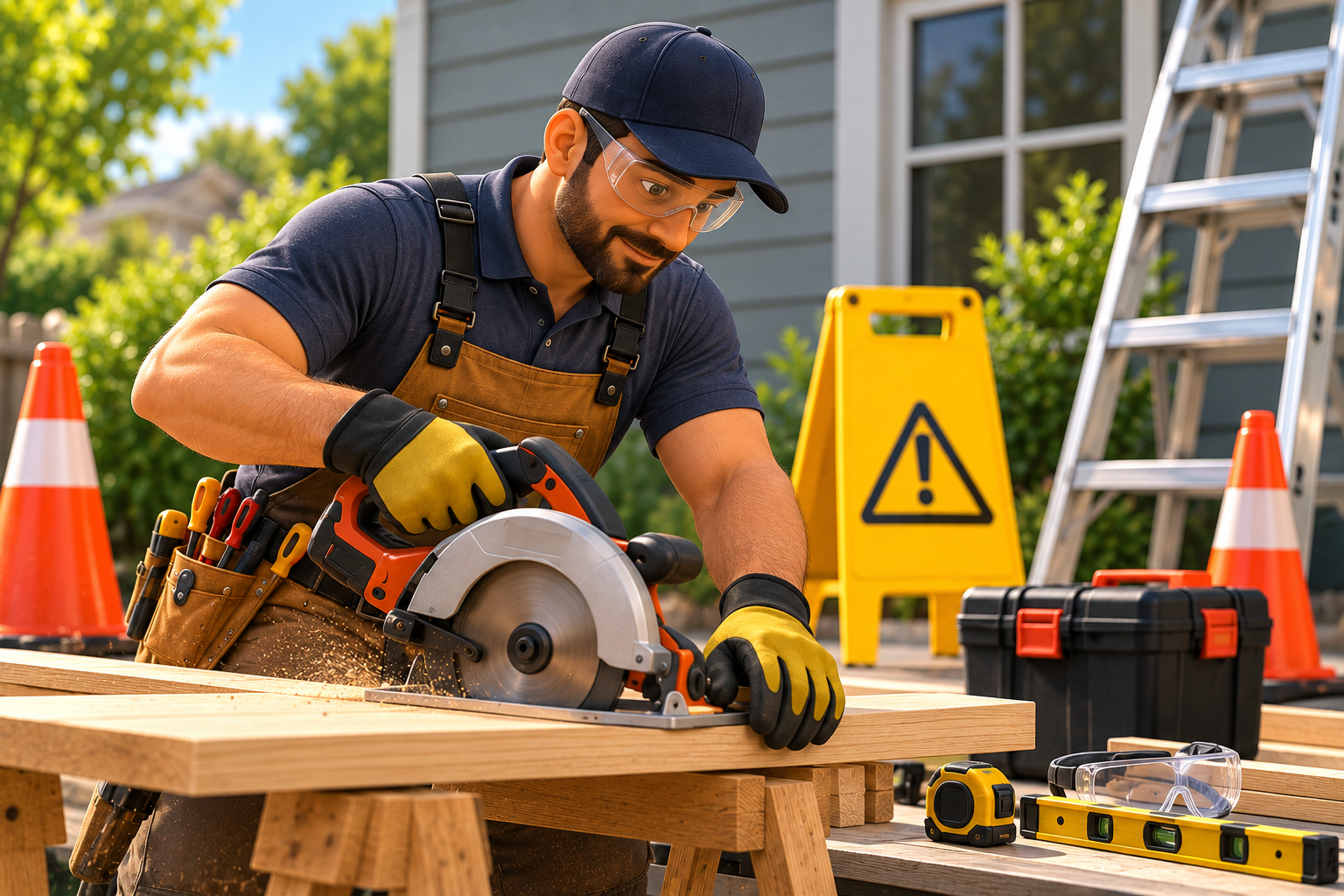
📅 Month 2: Create Your Local Service Offer
🎯 Main Goal
Make your handyman service easy for local customers to understand, request, and book.
✅ What to Do
- Create a simple profile or service page
- Create a local flyer or digital post
- Add your services, availability, and service area
- Set starting prices or estimate ranges
- Create a customer intake form
- Take photos of tools, setup, or sample work
- Post in local groups where allowed
- Tell friends, neighbors, coworkers, and family you are available

🏁 Month 2 Success Looks Like
- Your service is visible locally
- Customers know what you offer
- Your pricing is easier to explain
- You have a basic quote process
- You are ready for first small jobs
🎯 KEY TAKEAWAY
Clear service descriptions reduce back-and-forth. Customers should know what you fix, what it may cost, and how to book you.
📦 Simple Service Packages
Package | What It Includes |
Quick Fix Visit | 1–2 small household repairs |
Furniture Assembly | Assemble one or more furniture items |
Wall Mounting Service | TV, shelf, mirror, or picture mounting |
Home Punch List | Multiple small tasks in one visit |
Move-In Setup | Assembly, hanging, minor fixes, setup help |
Rental Turnover Help | Small repairs before or after tenants |
Senior Home Help | Simple repairs, safety fixes, and setup tasks |
📦 What to Include in Your Offer
- Services offered
- Service area
- Availability
- Starting rate or estimate range
- Minimum service fee if needed
- Photos of work
- How to request a quote
- What details the customer should send
📅 Month 3: Complete Your First Small Jobs
🎯 Main Goal
Start taking small jobs, deliver reliable work, and collect proof through photos and reviews.
✅ What to Do
- Start with low-risk jobs you can complete confidently
- Confirm the scope before arriving
- Bring the correct tools and supplies
- Take before-and-after photos with permission
- Communicate if the job changes
- Clean up after the work
- Ask for a review or referral
- Track time, materials, mileage, and profit

🏁 Month 3 Success Looks Like
- You completed your first jobs
- You learned how long common tasks take
- You collected photos or reviews
- You improved your communication
- You understand which services are easiest and most profitable
💡 Growth Tip
Small jobs can lead to bigger jobs. A customer who trusts you for one repair may call you again for a full home punch list.
☑️ First Job Checklist
Step | Why It Matters |
Confirm task details | Prevents confusion |
Ask for photos before visit | Helps you bring the right tools |
Confirm price or estimate | Avoids payment issues |
Check safety concerns | Protects you and the customer |
Bring extra basic supplies | Saves time |
Test the completed repair | Confirms quality |
Clean work area | Makes service feel professional |
Ask for review | Builds trust for future clients |
📅 Month 4: Build a Repeatable Job System
🎯 Main Goal
Create a simple system for quoting, scheduling, completing, and following up on handyman jobs.
✅ What to Do
- Create message templates for quotes
- Use a calendar for scheduling
- Create a tool and supply checklist
- Track every job in a spreadsheet or Notion
- Set a minimum service fee if needed
- Create a simple invoice or receipt
- Organize before-and-after photos
- Follow up with past customers
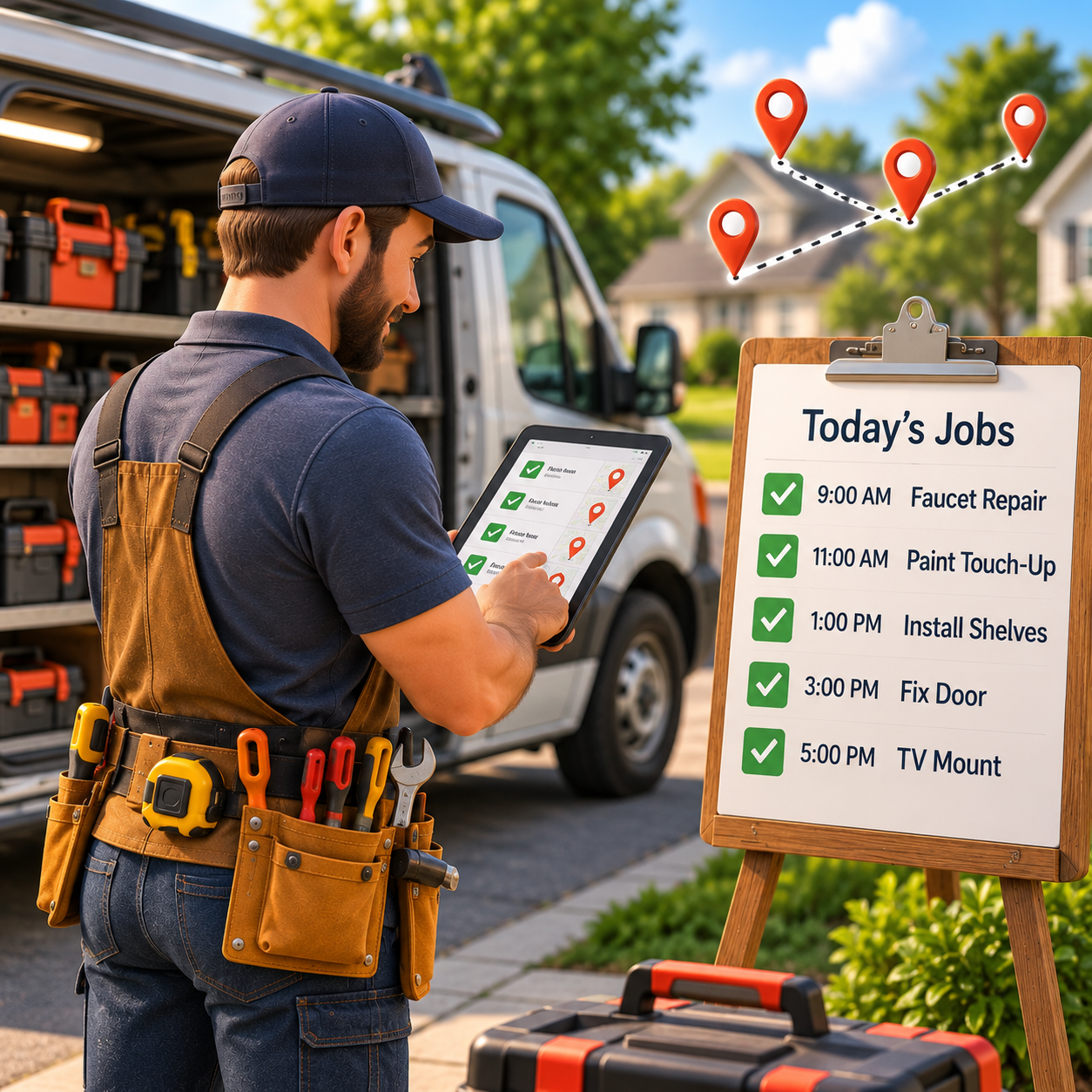
🏁 Month 4 Success Looks Like
- Your jobs are organized
- You quote more confidently
- You know your minimum profitable job size
- You have a better tool and supply routine
- You are getting repeat requests or referrals
⚠️ Scale Smart
Do not let small jobs become unpaid extra work. Define what is included and quote additional tasks separately.
🗓️ Simple Weekly Workflow
Day | Task |
Monday | Reply to inquiries and schedule jobs |
Tuesday | Complete small repair jobs |
Wednesday | Quote new jobs and order supplies |
Thursday | Complete assembly or mounting jobs |
Friday | Follow up with past customers |
Weekend | Post photos, update services, review profit |
🔄 Simple Handyman Workflow
Step | What Happens |
Inquiry | Customer asks about a repair or task |
Details | Customer sends photos, location, and job description |
Quote | You provide estimate, rate, or inspection fee |
Schedule | You confirm date, time, and access details |
Job prep | You gather tools and supplies |
Service visit | You complete the repair or task |
Payment | Customer pays after completion or as agreed |
Follow-up | You request a review or future punch-list work |
📅 Month 5: Improve Pricing, Reviews & Higher-Value Services
🎯 Main Goal
Use early experience to improve pricing, build trust, and focus on better-paying handyman work.
✅ What to Do
- Review which jobs paid best
- Review which jobs took too long
- Raise prices for difficult or time-consuming services
- Add photos and testimonials to your profile
- Offer bundled punch-list services
- Reach out to landlords, realtors, and small businesses
- Build referral relationships
- Add higher-value services only if you can do them safely and legally
🏁 Month 5 Success Looks Like
- Your best services are clearer
- You have reviews or proof of work
- Your pricing is more realistic
- You are attracting better-fit jobs
- You have started building referral sources
🎯 KEY TAKEAWAY
Bundled handyman jobs are often better than one tiny task because travel time, setup, and cleanup are spread across more paid work.
📈 Higher-Value Service Opportunities
Service | Why It Can Pay More |
Home punch-list package | Multiple tasks in one visit |
Rental property repairs | Repeat work from landlords |
Move-in setup | Assembly, mounting, and fixes together |
Business maintenance | Small recurring commercial repairs |
TV and shelf mounting | Clear demand and easy packaging |
Furniture assembly bundles | Multiple items per visit |
Preventive maintenance | Keeps homes in better condition |

📅 Month 6: Review, Specialize & Grow Locally
🎯 Main Goal
Review your first 6 months and decide which handyman services are worth focusing on long term.
✅ What to Do
- Review every completed job
- Identify your most profitable services
- Identify your most requested services
- Review where customers came from
- Remove services that are risky, stressful, or low-paying
- Update your service list and pricing
- Build a simple referral plan
- Create a 90-day plan for months 7–9

🏁 Month 6 Success Looks Like
- You know your strongest services
- You have reviews and work photos
- You understand your pricing better
- You have a repeatable job system
- You have a plan to grow with better jobs and referrals
🎯 KEY TAKEAWAY
Handyman services become more profitable when you specialize in reliable, repeatable jobs that customers can easily understand and recommend.
📊 Decision Table
If This Happens | Do This |
Furniture assembly sells best | Create assembly packages |
Mounting jobs are profitable | Promote TV, shelf, and mirror mounting |
Customers ask for multiple small tasks | Offer home punch-list visits |
Jobs require skills you do not have | Refer out or get proper training |
Travel time hurts profit | Set a service area or minimum fee |
Reviews are strong | Use them in flyers and profiles |
Landlords contact you | Create rental maintenance packages |
You are fully booked | Raise rates or narrow your services |
❓ 6-Month Review Questions
- Which jobs paid best for the time required?
- Which jobs were easiest to complete well?
- Which services did customers request most?
- Which jobs caused the most problems?
- Which customers were most likely to refer you?
- Which neighborhoods or platforms worked best?
- What tools do you need next?
- What should you stop offering?
- Are you ready to raise prices?
✅ 6-Month Success Checklist
By the end of 6 months, check whether you have:
✅ Chosen services you can safely offer
✅ Built a basic tool kit
✅ Created a service list
✅ Researched local pricing
✅ Created a quote process
✅ Completed first small jobs
✅ Tracked time, mileage, supplies, and profit
✅ Collected reviews or testimonials
✅ Saved before-and-after photos
✅ Built a repeatable scheduling process
✅ Identified your best services
✅ Created a plan for the next 90 days
⚠️ What Not to Do During the First 6 Months
Avoid these mistakes:
❌ Taking unsafe jobs outside your skill level
❌ Ignoring local licensing, permit, or insurance requirements
❌ Giving vague prices with no scope
❌ Forgetting to include travel time and supplies
❌ Working without confirming the customer’s expectations
❌ Taking jobs that require specialized trades if you are not qualified
❌ Leaving mess behind after the job
❌ Failing to test the repair before leaving
❌ Undercharging for multi-task visits
❌ Forgetting to ask for reviews and referrals
⚠️ Reminder: Handyman work depends on safety, trust, and reliability. Know your limits, communicate clearly, and protect your reputation.
🧭 Simple 6-Month Milestone Tracker
Month | Main Focus | Target Output |
Month 1 | Skills & setup | Service list, tools, basic pricing |
Month 2 | Local offer | Profile, flyer, quote process |
Month 3 | First jobs | 3–5 small jobs completed |
Month 4 | Job system | Scheduling, tracking, templates |
Month 5 | Reviews & pricing | Testimonials and improved offers |
Month 6 | Review & specialize | 90-day growth plan created |
🚀 Final 6-Month Strategy
Your first 6 months should follow this simple path:
Month 1: Choose your services and build your setup
Month 2: Create your local service offer
Month 3: Complete your first small jobs
Month 4: Build a repeatable job system
Month 5: Improve pricing, reviews, and service quality
Month 6: Review results and specialize
The handyman services that grow fastest are built on clear pricing, reliable work, strong communication, and customers who are willing to recommend you.
11. Get the Handyman Starter Kit
🎁 Your Handyman Service Toolkit
The Handyman & Fix-It Services Starter Kit brings together 12 browser-based workspaces to help select appropriate jobs, estimate costs, communicate with clients, plan work and organize referrals.
Explore the 12 included workspaces:
✅ 1. Handyman Service Menu — Define services you can safely and legally offer.
✅ 2. Job Pricing Calculator — Estimate labor, time, supplies and total job pricing using your own inputs.
✅ 3. Quote & Invoice Builder — Prepare clear job estimates and customer invoices.
✅ 4. Customer Intake Form — Record customer requests, job details and scope boundaries before accepting work.
✅ 5. Job Safety & PPE Checklist — Review job precautions, tools and personal protective equipment before starting work.
✅ 6. Repair Workflow Guide — Plan a documented work sequence for repairs within your skills and legal scope.
✅ 7. Weekly Job Scheduler — Arrange weekly appointments and tasks around your available capacity.
✅ 8. Local Marketing Toolkit — Draft local promotional materials and clear descriptions of your services.
✅ 9. Customer Review Manager — Organize customer feedback and prepare ethical review requests.
✅ 10. Service Agreement Builder — Draft service terms and agreements for professional legal review.
✅ 11. Before & After Photo Guide — Plan consent-based before-and-after photos to document completed work.
✅ 12. Referral Program Builder — Plan referral activities and rewards while organizing repeat-customer opportunities.
Also in the editable master: The editable master also includes a dashboard, Start Here guide and a fictional first-client practice walkthrough.
This is a review candidate, not a certified repair-training program. Licensing, insurance, permits and safety practices must be independently checked; these materials do not authorize regulated work or guarantee customers or income.

12. Frequently Asked Questions
🔧 Do I need experience to start a handyman business?
Not necessarily years of trade experience — but you do need basic skills, safety, and a willingness to learn.
You can start with:
- 🛠️ Simple repairs, such as handles, shelves, and drywall patches
- 🪑 Furniture assembly
- 🧰 Basic maintenance tasks
💡 Most successful handymen learn on the job + through YouTube + practice.
💰 How much can I realistically make starting out?
Income varies widely. Some people earn extra cash part-time; larger monthly totals depend on bookings, rates, hours, and expenses—not a set ladder.
💡 Income can improve as you:
- 🔧 Gain experience
- 🤝 Build referrals
- 📈 Increase your rates
🛠️ How much does it cost to get started?
You can start with:
- 💵 $0–$200 if you already have tools
- 🧰 $200–$500 for a basic setup
Essentials:
- 🔨 Basic hand tools
- 🔩 Drill
- 🥽 Safety gear
💡 You don’t need everything upfront — buy tools as jobs require them.
📜 Do I need a license to do handyman work?
It depends on your location.
Generally:
- ✅ Small repairs may not require a license, depending on local rules
- ⚠️ Plumbing/electrical = may require a license
- ⚠️ Larger jobs = may require a contractor license
👉 Always check local regulations before offering services.
📍 How do I get my first clients?
Start with:
- 🐇 TaskRabbit, often the fastest way
- 👥 Facebook groups
- 🏘️ Nextdoor
- 🤝 Friends and family
💡 Your first 5–10 jobs are about:
- 🔧 Building experience
- ⭐ Getting reviews
- 📸 Creating a portfolio
⭐ How important are reviews?
Extremely important.
- ⭐ 5 reviews = credibility
- 🌟 15–20 reviews = competitive
- 🏆 50+ reviews can support stronger local visibility
💡 Reviews directly impact:
- 👥 How many clients choose you
- 💵 How much you can charge
💵 Should I charge hourly or per job?
Both work — use the right one:
- ⏱️ Hourly → uncertain jobs
- 📦 Per job → clear scope work, better for profit
- 🔁 Monthly → recurring clients
💡 Most experienced handymen prefer per-project pricing.
🚗 Do I need a truck or van?
No.
You can start with:
- 🚗 A car
- 🧰 Basic tools
Upgrade later if needed.
💡 Many jobs, such as assembly, repairs, and mounting, require minimal equipment.
⚠️ What are the biggest beginner mistakes?
Avoid these:
❌ Underpricing your work
❌ Not getting clear job scope upfront
❌ Skipping safety precautions
❌ Not asking for reviews
❌ Taking every job, even bad ones
💡 The biggest mistake:
👉 Treating it like a “side gig” instead of a business
🧠 How do I increase my income over time?
Focus on:
- 🎯 Specializing, such as painting, mounting, plumbing, etc.
- 📈 Raising rates every 6–12 months
- 🔁 Building repeat clients
- 🤝 Getting referrals
💡 Specialists can often charge more than generalists, but results still depend on demand, skill, and local competition.
🔁 Can this turn into a full-time business?
Some people do, after they have repeat work, reviews, and a process they can keep up. Timing varies.
A common path is:
- 🧩 Start part-time
- 🤝 Build repeat clients
- 📈 Adjust rates with demand
- 🚀 Consider more hours if the work still pays after costs
- 👥 Hire help only if capacity and demand support it
💡 Local demand can support growth, but full-time income is not guaranteed.
🛡️ Do I need insurance?
Strongly recommended.
- 🛡️ Protects you from damage claims
- 🤝 Builds trust with clients
💡 One accident can be expensive. Appropriate coverage is a business decision, not a guarantee against claims.
📸 Do I need a website?
Not required to start.
You can begin with:
- 🐇 TaskRabbit
- 📍 Google Business Profile
👉 But eventually:
A website helps you look professional and trustworthy.
🔥 Final Question: Is this actually worth it?
If you:
- 🔧 Like working with your hands
- 💰 Want local, reliable income
- 🚫 Don’t want to rely on online algorithms
Then it can be a practical local option.
Results still depend on skill, reliability, local demand, and how you price the work.
13. Important Considerations
Before you start, understand what separates successful handymen from those who struggle.
⏳ It Takes 3–6 Months to Build Momentum
- 🐢 Early months are slow
- 🤝 Referrals take time to build
👉 Most people quit right before it starts working
💸 Underpricing Will Hurt You
- ⚠️ Cheap pricing attracts difficult clients
- 📉 Makes it harder to raise rates later
👉 Price fairly — not cheaply
⚖️ Licensing & Legal Requirements Matter
- ⚠️ Some services require licenses, such as electrical or plumbing work
- 📍 Requirements vary by state
👉 Always check local regulations before offering services
🛡️ Liability Is Real
- 🏠 Mistakes can cause property damage
- 🚑 Injuries can happen
👉 Consider:
- 🛡️ Liability insurance
- 📄 Written agreements
📉 Not Every Job Is Worth Taking
- ❌ Bad-fit jobs waste time and hurt your reputation
👉 Focus on:
✔ Jobs you can do well
✔ Jobs that pay fairly
⭐ Reputation Is Everything
- ⚠️ One bad review can hurt
- 🌟 Strong reviews drive most of your business
👉 Your success depends on:
- ⏰ Reliability
- 💬 Communication
- 🏆 Quality work
🔁 This Is Not Hands-Off Income
- 🛠️ You must show up and do the work
- ⏳ Income is tied to effort
👉 However:
It can evolve into a team-based business later.
🧠 Skill Growth Is Required
- 📚 You’ll need to learn new skills over time
- 🎥 YouTube and hands-on experience are key
💡 Final Reality Check
This is:
✔ ⚡ A practical way to earn locally with skills you can use
✔ 🔧 A skill-based, high-demand service
✔ 🏗️ A pathway to a real business
But also:
❌ Requires effort and consistency
❌ Requires professionalism
❌ Requires learning and improvement
🚀 The people who win aren’t the most skilled — they’re the most reliable.
14. Your Next Steps
🚀 ACTION STEP
Here’s a practical way to go from setup to first jobs, then more consistent local work.
📍 Today — Start Immediately
- 🎯 Choose 3–5 services you can confidently offer
- Example: furniture assembly, minor repairs, mounting
- 🧰 Gather your basic tools
- Most people already have what they need
- 📣 Create your first listing
- TaskRabbit
- Facebook Marketplace
- Craigslist
📅 This Week — Get Visible
- 📍 Set up your Google Business Profile
- 👥 Post in local Facebook groups + Nextdoor
- 🗣️ Tell friends, family, and coworkers
Early jobs often come from your immediate network first.
🔧 Week 2 — Get Your First Jobs
- 📅 Book 2–5 small jobs, even at lower rates
- 🎯 Focus on:
- ⏰ Showing up on time
- 🧼 Doing clean, professional work
- 📸 Taking before/after photos
👉 Goal: Build trust, not maximize profit yet.
📈 Weeks 3–4 — Build Momentum
- ⭐ Ask every client for:
- A review
- A referral
- 📈 Start raising your rates slightly
- 📸 Begin posting your work online
- ⭐ 5–10 reviews = visibility
- 🌟 15–20 reviews = strong credibility
💰 Month 2+ — Turn It Into Real Income
- 🔁 Focus on repeat customers
- 🎯 Specialize in higher-paying services
- 📈 Raise rates 10–25% as demand grows
Use your own job records—not a set monthly target—to decide which services to keep.
🎯 Your Simple Success Formula
- 🧩 Start small
- 🏆 Do excellent work
- ⭐ Get reviews
- 🤝 Get referrals
- 📈 Raise rates
🚀 The fastest way to grow isn’t ads — it’s doing great work and letting people talk about you.
15. The Bottom Line
🎯 KEY TAKEAWAY
Handyman services are a practical local side hustle — ongoing demand for small repairs, useful hourly potential, and a modest setup if you already have basic tools.
🙋 If you:
✔ Show up on time and do clean, professional work
✔ Ask every client for a review and a referral
✔ Price fairly — not cheaply
✔ Specialize and raise your rates as demand grows
🏗️ You can build:
💰 Earnings that vary with jobs, rates, and hours — not a set monthly ladder
⭐ A local reputation that can bring repeat clients
🏗️ A service that can grow if demand and capacity allow
🚀 Once people trust you, they may call you again for related work.

16. Recommended Websites & Tools
🛠 TOOLS & RESOURCES
You do not need every resource listed below. This directory brings together the major platforms, tools, and resources from this guide, along with additional research and learning options, so you can find them in one place when you need them.
Start with the essentials. Add tools only when your handyman business develops a specific need for them.
📍 Local Lead Generation & Client-Finding Platforms
- Google Business Profile — Free local business listing for showing up in “handyman near me” searches, collecting reviews, and building local credibility.
- Facebook — Social platform for posting in local groups, sharing before-and-after photos, and finding neighborhood handyman leads.
- Facebook Groups — Group discovery page for finding local community groups, neighborhood groups, homeowner groups, and service-request posts.
- Facebook Marketplace — Local marketplace for posting handyman services, furniture assembly help, repair offers, and direct client listings.
- Nextdoor — Neighborhood platform for building trust, responding to local repair requests, and getting referrals from nearby homeowners.
- Craigslist — Classifieds platform for posting handyman services, finding direct local clients, and testing service demand without platform commissions.
- TaskRabbit — Local task marketplace for handyman jobs like furniture assembly, mounting, moving help, repairs, and small home projects.
💡 PRO TIP
Set up your Google Business Profile before anything else — it’s free, and it’s where “handyman near me” searches turn into calls.
📅 Scheduling, Estimates & Job Tracking
- Google Calendar — Calendar tool for tracking estimates, appointments, job schedules, follow-ups, and recurring maintenance visits.
- Calendly — Booking tool for letting clients schedule estimates, calls, walkthroughs, or repair appointments based on your availability.
- Google Sheets — Spreadsheet tool for tracking quotes, job details, expenses, materials, client lists, and basic handyman business numbers.
💳 Payments, Invoices & Business Money Tools
- PayPal — Payment platform for digital payments, simple invoices, deposits, and one-time handyman jobs.
- Stripe — Payment processor for card payments, payment links, invoices, deposits, and more professional client checkout.
- Square — Mobile payment and invoicing platform for taking card payments in person after completing local jobs.
- Venmo — Quick payment option for small local jobs, simple repairs, and casual neighborhood clients.
- Wave — Free invoicing and basic bookkeeping tool for tracking handyman income, expenses, invoices, and payments.
📝 QUICK NOTE
Get a written yes on scope and price before starting, and invoice the same day. Payment speed is a system, not luck.
🧰 Website & Online Presence Basics
- Google Business Profile — Best first online presence tool for local handyman work because it helps customers find you through Google Search and Maps.
- Facebook — Useful for posting service updates, before-and-after photos, customer reviews, and availability.
- Nextdoor — Strong fit for local trust-building because neighbors often ask each other for repair and handyman recommendations.
🎯 KEY TAKEAWAY
You do not need every tool on this page. A Google Business Profile, one lead platform, and one payment tool are enough to book your first jobs.
🧭 How to Use This Directory
🧰 Start With a Simple Setup
Do not start by creating accounts with every service listed above. For most beginners, a simple setup is enough:
- One lead platform
- A Google Business Profile
- One payment & invoicing tool
- One way to schedule jobs
That is enough to start building. Add tools only when you can name the specific problem they will solve.
🎯 KEY TAKEAWAY
Tools support the business. They are not the business.
Your biggest advantages will come from:
Showing up on time → Doing clean work → Collecting reviews → Earning referrals
17. Explore Similar Side Hustles
 Lawn Care & Yard Work: Earn Money Maintaining Outdoor Spaces — Build another hands-on local service route with recurring outdoor clients.
 House Cleaning & Organization: Make Money Creating Clean, Tidy Spaces — Add a complementary local service with recurring weekly or monthly clients.
 Gig Economy Apps: Earn Money on Your Schedule Using Your Phone — Fill the gaps between handyman jobs with flexible on-demand task work.
 Product Flipping — Use your repair skills to fix undervalued furniture and goods, then resell them for profit.
 Pet Sitting & Dog Walking: Earn Money Caring for Pets — Build another trust-based local service with repeat clients in your neighborhood.
 Investing & Dividend Income: Grow Your Wealth with Smart Investments — Put your handyman profits to work so your money starts earning alongside you.