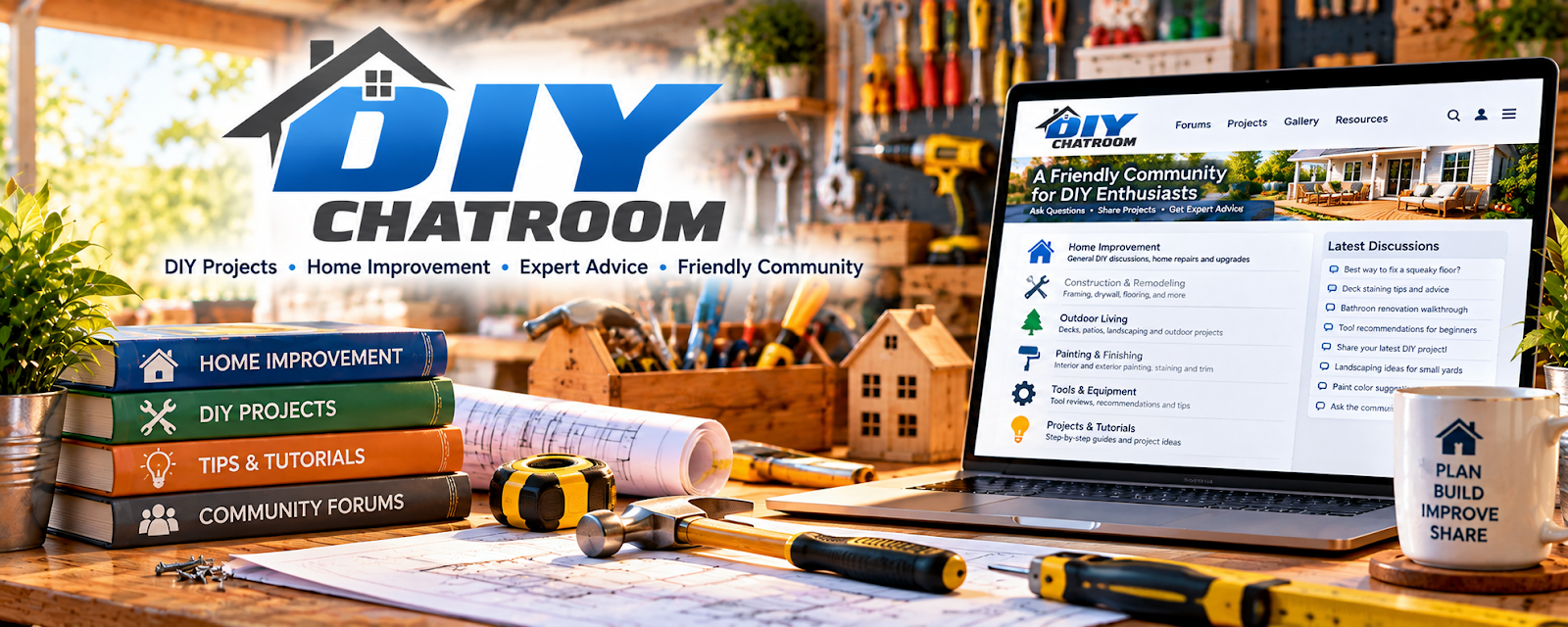
Official Website
DIY Chatroom is a home-improvement forum where people troubleshoot repairs, compare materials, and discuss tools.
🔗 Visit Official Website — DIY Chatroom
Domain: www.diychatroom.com
What This Website Is
DIY Chatroom is a home-improvement forum where people troubleshoot repairs, compare materials, and discuss tools. For 🔧 Handyman & Fix-It Services, it's a research library for diagnosing common residential repair problems.
How to Apply It to 🔧 Handyman & Fix-It Services
Search by symptom, material, and room before quoting or attempting unfamiliar jobs, then turn strong threads into intake questions, tool lists, and plain-English customer explanations.
Step-by-Step Implementation:
- Phase 1: Research — search one repair category you offer often and save strong troubleshooting threads.
- Phase 2: Build intake — note the details experts ask for and build an intake checklist.
- Phase 3: Verify + refine — verify safety-critical steps and update your checklist after each job.
Common Use Cases for this Side Hustle:
- Scenario A: You're troubleshooting an unfamiliar repair.
- Scenario B: You're comparing parts or materials.
- Scenario C: You're building job checklists.
When to Use This
- Before troubleshooting an unfamiliar repair.
- When comparing parts or materials.
- When building job checklists.
- When you need to explain a fix clearly to a client.
Best Tasks to Use It For
- Repair-diagnosis research
- Tool and material research
- Estimate-prep research
- Customer-question research
- Common-mistake research
Getting Started Steps
- Search one repair category you offer often.
- Save strong troubleshooting threads.
- Note the details experts ask for.
- Build an intake checklist.
- Verify safety-critical steps.
- Update your checklist after each job.
Good Beginner Search Terms
- DIY Chatroom door repair
- drywall anchor best type
- leaky faucet cartridge replacement
- GFCI keeps tripping
- caulk vs grout repair
Monetization Angle
Better research reduces callbacks, improves estimates, and helps you explain repairs confidently, which supports higher trust and repeat clients.
Pros
- Deep archive of repair scenarios
- Practical tool and material discussions
- Useful for intake and estimating
Cons
- Advice quality varies
- Safety and code issues need verification
- Older threads may be outdated
Who Should Use This
Handypeople who want better diagnostic confidence and job planning for common residential fixes.
Who Should Skip This
Skip it if you need official licensing, code, or safety training for regulated work.
Practical Applications
- Use a clearly described home-repair question to identify issues requiring further investigation.
- Compare suggested approaches with manufacturer instructions and current local requirements.
- Build a scope checklist that distinguishes routine work from tasks requiring a licensed professional.
Important Considerations
- Forum contributors cannot fully assess a job remotely, and older advice may be unsafe or out of date.
- Do not rely on a thread for structural, electrical, gas, or other high-risk work beyond your competence. Verify permits, licensing, safe methods, and insurance separately.
Related Resources
r/HomeImprovement — Crowd-sourced repair diagnosis and material advice.
Google Business Profile — Local search visibility and customer reviews.
 This Old House (YouTube Channel) — Trusted demonstrations of repair techniques.
Related Side Hustles
 House Cleaning & Organization: Make Money Creating Clean, Tidy Spaces — Shares the same local homeowner clients.
 Lawn Care & Yard Work: Earn Money Maintaining Outdoor Spaces — Complementary property-maintenance service.
 Product Flipping — Repair skills add value to resold tools and items.