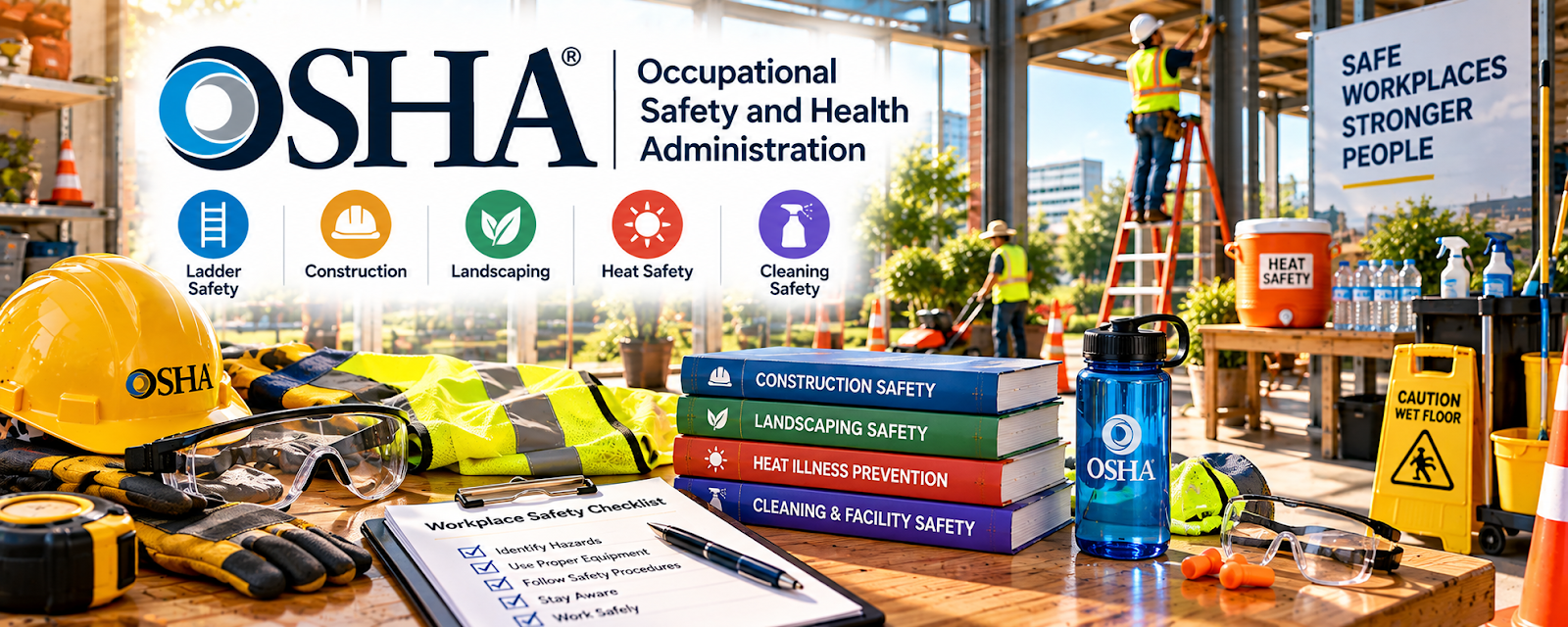
Official Website
OSHA Construction Standards is the official OSHA reference for construction-related workplace safety requirements.
🔗 Visit Official Website — OSHA Construction Standards
Domain: www.osha.gov
What This Learning Resource Is
OSHA Construction Standards is the official OSHA reference for construction-related workplace safety requirements. For 🔧 Handyman & Fix-It Services, it helps you understand safety expectations around tools, ladders, fall hazards, electrical risks, protective equipment, and jobsite conditions.
How to Use It for Handyman & Fix-It Services
Use OSHA Construction Standards as a safety reference, not a casual project guide. Focus on the parts relevant to small home-service work, especially ladders, power tools, PPE, electrical awareness, fall prevention, and hazard communication.
Step-by-Step Implementation:
- Identify the types of handyman tasks you plan to offer.
- Review OSHA topics that match those hazards.
- Build a safety checklist for each service category.
- Choose PPE and tools based on the risk.
- Document hazards before starting work.
- Refer out work that requires specialized training, licensing, or higher-risk construction knowledge.
Best Time to Use This
- Before offering repair or installation services.
- When using ladders, power tools, or jobsite equipment.
- When creating safety procedures.
- Before taking on unfamiliar or higher-risk work.
Best Skills to Learn Here
- Hazard recognition
- PPE planning
- Ladder and fall safety
- Tool safety
- Worksite preparation
- Compliance awareness
Getting Started Steps
- Open OSHA Construction Standards.
- Search for the hazard tied to one service you offer.
- Translate the guidance into a plain-language checklist.
- Add required PPE and setup steps.
- Review the checklist before client jobs.
Good Beginner Search Terms
- OSHA construction standards
- OSHA ladder safety
- handyman safety checklist
- construction PPE basics
- OSHA power tool safety
- home repair hazard awareness
Monetization Angle
Safety knowledge helps protect your business, reputation, and clients. A handyman who communicates hazards clearly and follows safer work practices can build trust and avoid jobs that are not worth the risk.
Pros
- Official safety reference.
- Useful for risk awareness.
- Supports safer client work.
- Helps define what not to take on.
Cons
- Dense and technical.
- Not written as a beginner course.
- Does not replace training, licensing, or insurance.
- Requires translating rules into practical checklists.
Who Should Use This
Use this if your handyman work involves tools, ladders, construction-like tasks, or jobsite hazards.
Who Should Skip This
Skip this if you only do low-risk household tasks and need simple project ideas instead.
Practical Applications
- Locate standards relevant to a planned construction-related task.
- Identify questions for a competent safety or regulatory adviser.
- Build a job-specific hazard review before deciding whether to accept work.
Important Considerations
- Applicability depends on the work, jurisdiction, employment arrangement, and current rules.
- Reading a standard is not certification or authorization for regulated work; obtain required training and do not improvise on serious hazards.
Related Resources
Family Handyman — Provides practical project ideas.
OSHA Ladder Safety — Focuses specifically on ladder risk.
CPSC Recalls — Helps identify unsafe products.
Related Side Hustles
 Handyman & Fix-It Services: Turn Your Skills into Cash — OSHA standards support safety-aware repair work.
 Lawn Care & Yard Work: Earn Money Maintaining Outdoor Spaces — Outdoor work also requires hazard awareness.
 House Cleaning & Organization: Make Money Creating Clean, Tidy Spaces — Home services benefit from safety procedures.