Affiliate disclosure: Some links in this guide may be paid referral links. If you purchase or sign up through one, One Stop Side Hustles may earn a commission. How our affiliate links work.
DROPSHIPPING STARTER GUIDE
Learn how dropshipping actually works—including the honest challenges most guides skip. Whether it's right for you depends on your skills, resources, and realistic view of the business model.
3. Choose Your Niche & Products
4. Earnings, Pricing & Offer Selection
5. Essential Tools & Your Starting Setup
6. Find Customers & Reach Your Audience
7. How to Start: Your Beginner Roadmap
8. Build Trust & Improve Results
9. Learning Resources & Templates
10. Your First 6 Months in Dropshipping
11. Get the Dropshipping Starter Kit
12. Frequently Asked Questions
Quick Snapshot
Earn: Highly variable — many tests lose money; profit depends on product, ads, and margins
Work: Run your store and marketing from anywhere
Start: Medium cost — $500–$2,000+ for ads and testing
Best for: Marketers comfortable testing products
Grow: Winning product → branded store + automation
1. What Is Dropshipping?
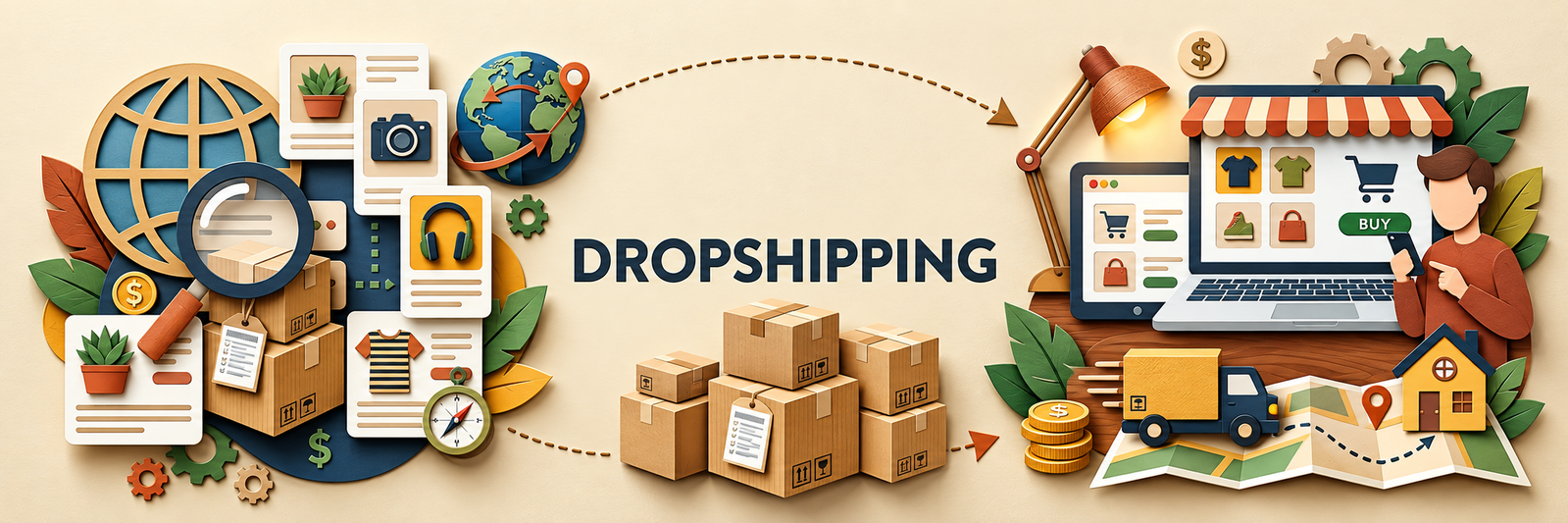
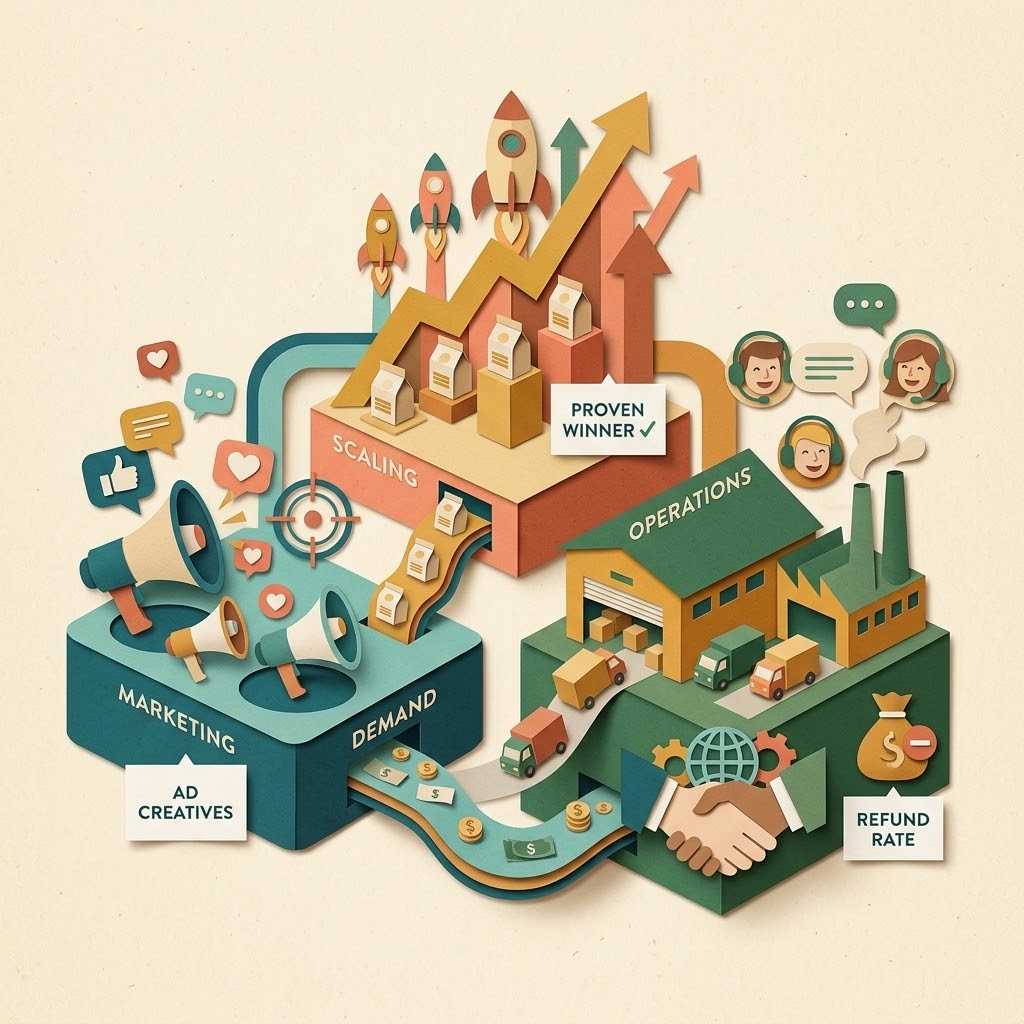
Dropshipping is an e-commerce fulfillment model where you sell products through your online store, but a third-party supplier holds inventory and ships directly to customers. You never touch or see the products.
⚙️ How it actually works:
- Customer orders product from your store for $49.99
- You immediately purchase same product from supplier for $15
- You provide customer's shipping address to supplier
- Supplier ships directly to customer (ideally with your branding)
- You keep the $34.99 difference (minus payment processing, ads, apps, returns)
- You handle all customer service, refunds, complaints
You handle: Marketing, store design, customer service, returns, scaling
Supplier handles: Inventory, storage, packing, shipping
🎯 KEY TAKEAWAY
You're not just "listing products and making money." You're running a real e-commerce business with real customer service responsibilities, real ad costs, real competition, and real risk. Most dropshippers lose money for months before (maybe) finding a winning product.
2. Why Choose Dropshipping?
Dropshipping lets you run an e-commerce business with no upfront inventory, which makes it easier to test products, improve offers, and learn e-commerce without buying stock first.
💰 You avoid the biggest inventory mistake
One of the biggest beginner risks in retail is buying a large amount of stock before knowing whether anyone wants it.
Dropshipping lowers that risk because you can validate demand before committing to inventory.
🧠 You focus on the highest-leverage work
The supplier handles inventory and fulfillment while you focus on:
- Product selection
- Store setup
- Marketing
- Offers
- Customer experience
That makes dropshipping a business model centered on testing and demand creation.
⚡ You can launch and test quickly
Because you are not waiting on inventory, you can move faster on:
- Product tests
- Ad angles
- Pricing
- Creatives
- Store pages
That speed is valuable because dropshipping is a game of rapid iteration.
📈 One winning offer can change the store
When the right product, audience, and creative line up, a single winner can outperform a long list of average products.
The real upside usually comes from:
- Better margins
- Stronger conversion rates
- Higher order value
- Smarter scaling
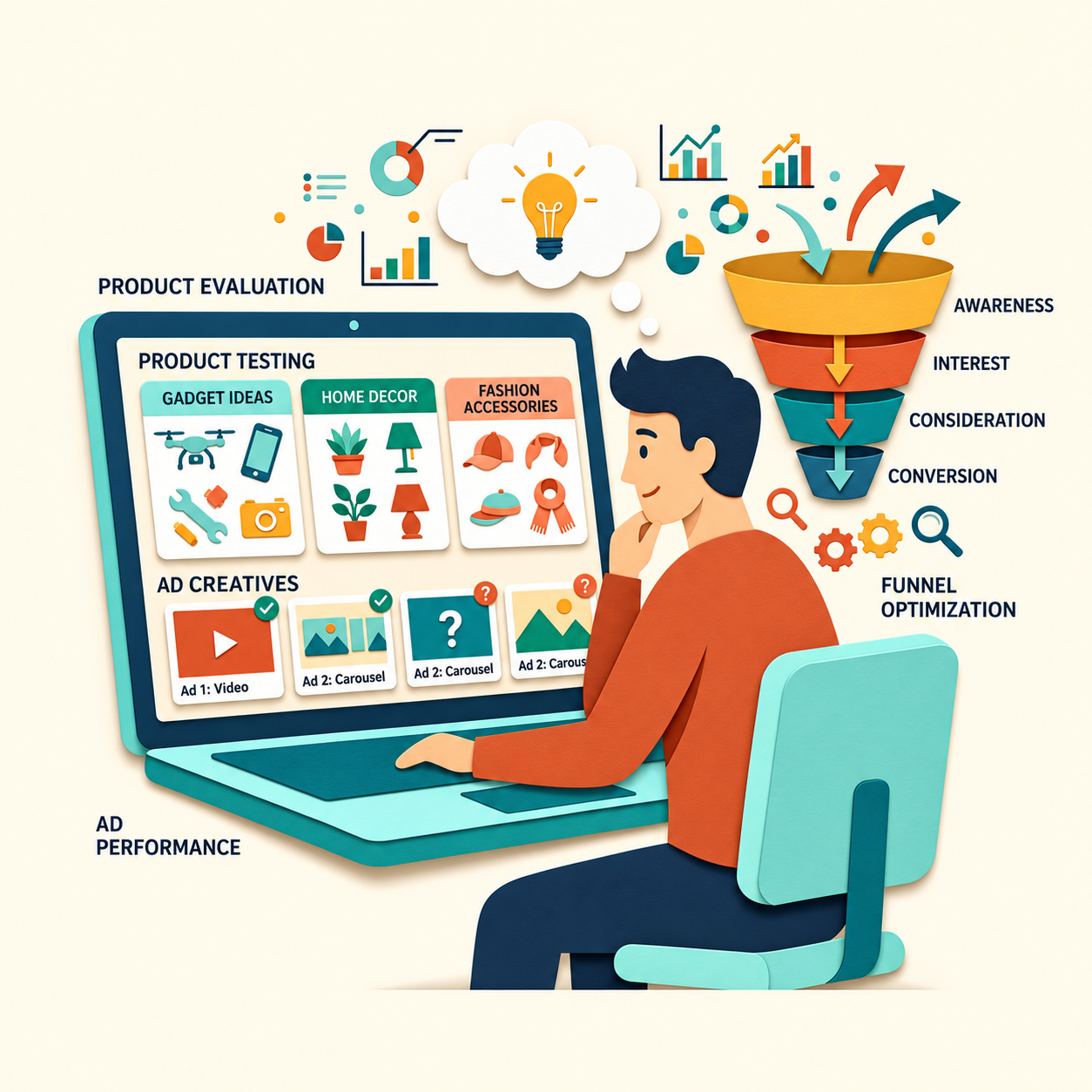
🎯 It is ideal for testing products and offers
Dropshipping rewards people who can experiment and improve quickly.
Success usually depends on refining:
- The product
- The angle
- The ad creative
- The landing page
- The full funnel
It is a strong fit for people who like data, testing, and optimization.
🌍 You can run it from almost anywhere
As long as you can manage suppliers, orders, support, and traffic, the business is location-flexible.
That makes it possible to build part-time from home or alongside other work.
🧪 It teaches real e-commerce skills
Even before you find a big winner, dropshipping helps you build practical skills in:
- Product research
- Offer building
- Store design
- Paid traffic
- Customer support
Those skills transfer into many other online businesses.
🚀 A winning store can evolve into a brand
If demand proves out, you can improve the business over time with:
- Better suppliers
- Faster fulfillment
- Custom packaging
- Branded products
- Stronger retention systems
That gives dropshipping a path from testing model to more durable brand.
3. Choose Your Niche & Products
Dropshipping works best when product research is treated like a testing system, not a guessing game. The product you choose affects ad costs, conversion rate, refund pressure, shipping experience, and how easy it is to make profit after fees.
You do not need hundreds of products. A smarter beginner approach is to test a small number of offers that solve a clear problem, look strong in short-form content, and still leave enough margin after ads.
🔍 Research Strategy That Finds Better Products
⚠️ What to Avoid
🚫 Products that already went viral months ago and are now saturated
🚫 Items you choose only because you personally like them
🚫 Low-quality products with weak reviews or supplier complaints
🚫 Products with no clear audience, no strong angle, or no margin room
💡 PRO TIP
A bad product makes ads, landing pages, and pricing much harder to fix.
🔍 What to Look For Instead
✅ Problem-solving products that save time, reduce frustration, or improve comfort
✅ Emerging trends with room before heavy saturation
✅ Strong “scroll-stopping” visual appeal for TikTok, Reels, or product demos
✅ Balanced competition that proves demand without making the market impossible
💡 PRO TIP
A product does not need to be brand new. It needs a better angle, better audience fit, and a better offer.
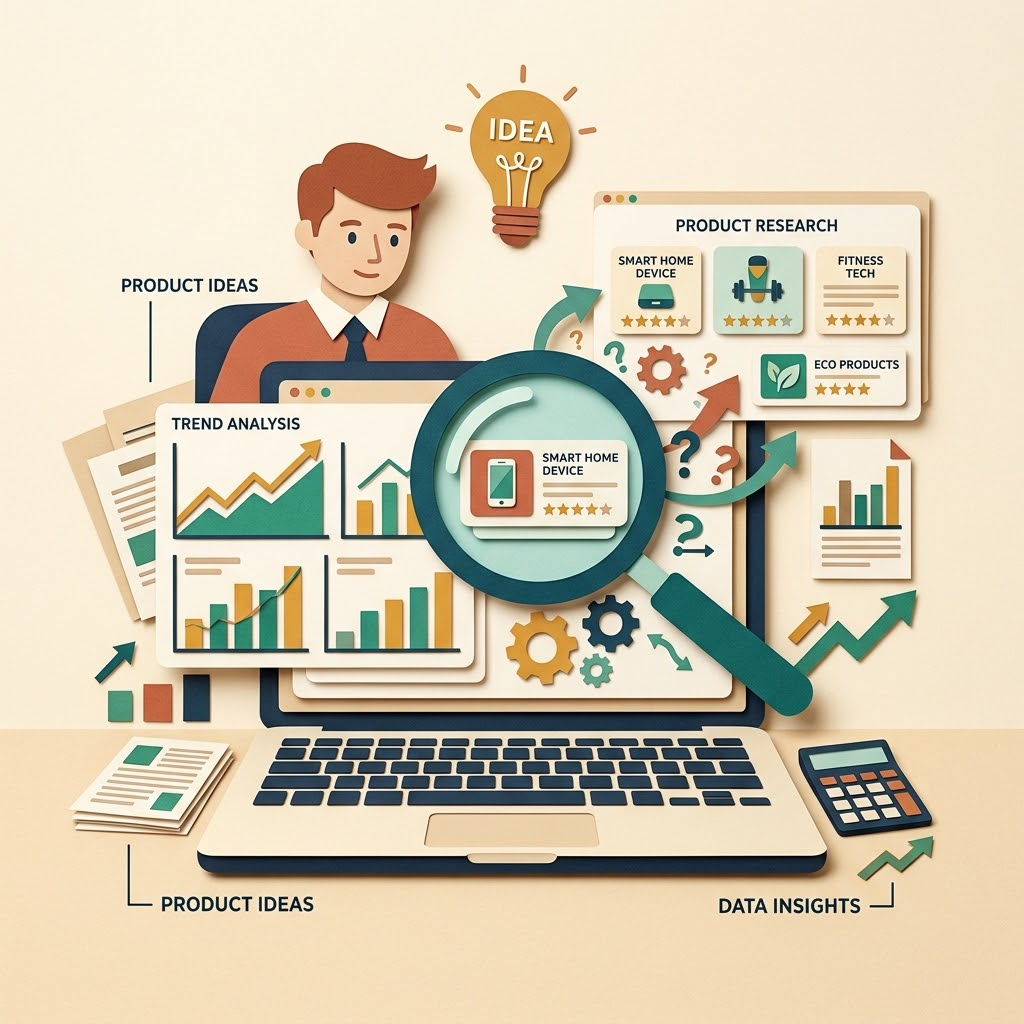
🧰 Product Research Tools That Actually Help
🆓 Free Research Stack
📱 TikTok Creative Center for product hooks, ad angles, and creative trends
🛒 Amazon Best Sellers for demand clues and category momentum
🕵️ Meta Ad Library for competitor ads already spending money
📦 AliExpress Dropshipping Center for supplier options, order history, and shipping signals
📈 Google Trends for seasonality and whether interest is rising or falling
💡 PRO TIP
Free tools are usually enough to start noticing patterns before you pay for advanced software.
💳 Paid Research Stack
🤖 Sell The Trend for broad product discovery and store analysis
📊 Dropship.io for store research and product estimates
🎯 Minea for ad intelligence across TikTok, Facebook, Instagram, and Pinterest
⛏️ Niche Scraper for top-store product patterns
💡 Ecomhunt for curated product ideas and beginner-friendly insights
💡 PRO TIP
Paid tools should help you validate faster, not replace judgment about quality, margin, and audience fit.
✅ What Makes a Product Worth Testing
🎯 Problem & Audience Fit
🛠️ Solves a specific pain point
🎯 Feels useful to a clear audience
🧠 Easy to explain in a few seconds
✨ Can create a fast emotional reaction, visual demo, or “wow” moment
💡 PRO TIP
If the benefit is confusing, the ad and the product page usually become much harder to convert.
📦 Margin, Logistics & Competition
💰 Enough room for profit after product cost and ads
📦 Lightweight, durable, and easier to ship
⭐ Strong reviews and acceptable supplier reliability
⚖️ Some competition, but not too much
🔄 Bonus if it has upsell, bundle, or repeat-purchase potential
💡 PRO TIP
Great-looking products still fail if shipping, quality, or margins are weak.

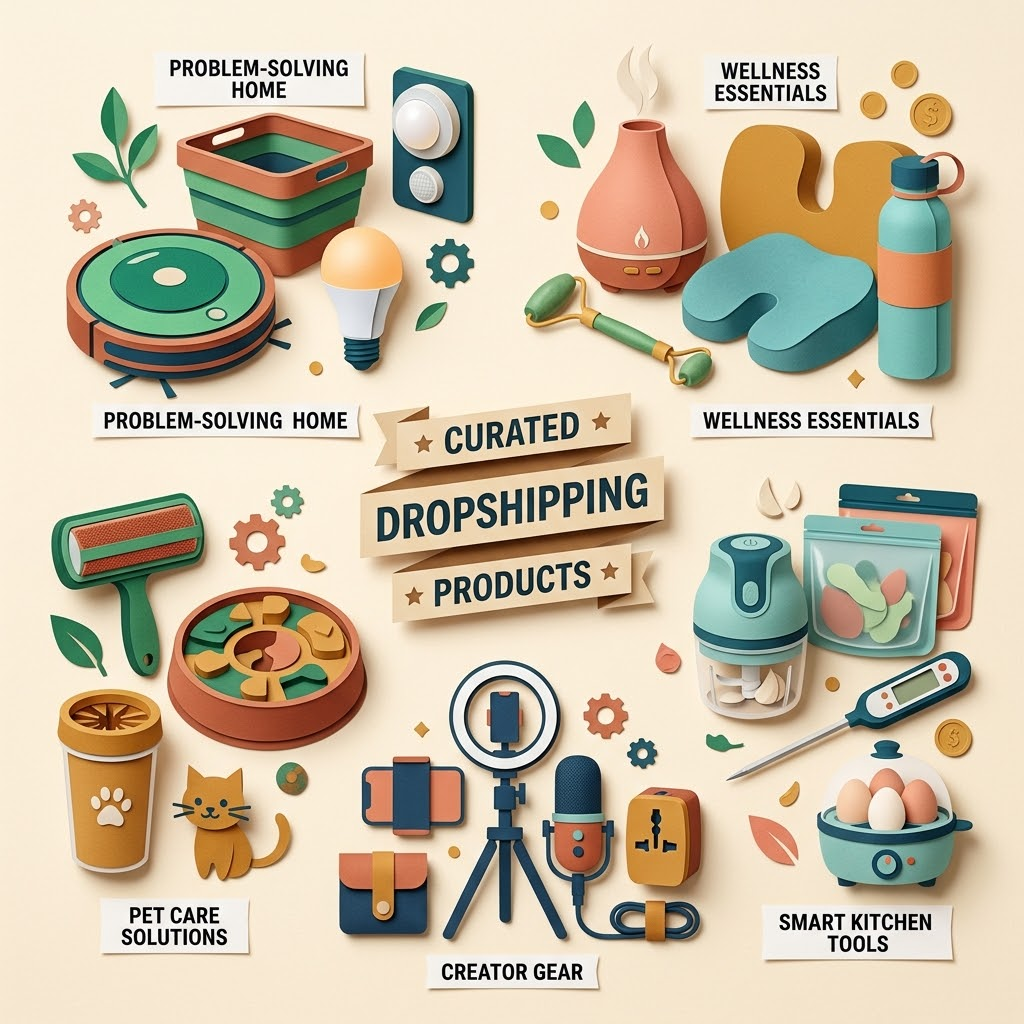
📦 Product Categories With Strong Beginner Potential
🚀 Higher-Potential Product Directions
🧘 At-home wellness and recovery products
🐾 Smart pet accessories
🏠 Home comfort and organization tools
🍱 Kitchen problem-solvers and reusable helpers
🤳 Content creator accessories and desk gear
💡 PRO TIP
These categories often work because the benefit is easy to show visually and easy to understand quickly.
⚠️ Categories to Be More Careful With
🌀 Overdone novelty gadgets
📿 Commodity jewelry with weak differentiation
🕶️ Low-margin accessories sold everywhere
📦 Old products that already peaked and now feel stale
💡 PRO TIP
Beginners usually do better with simple problem-solvers than with crowded products that rely only on hype.
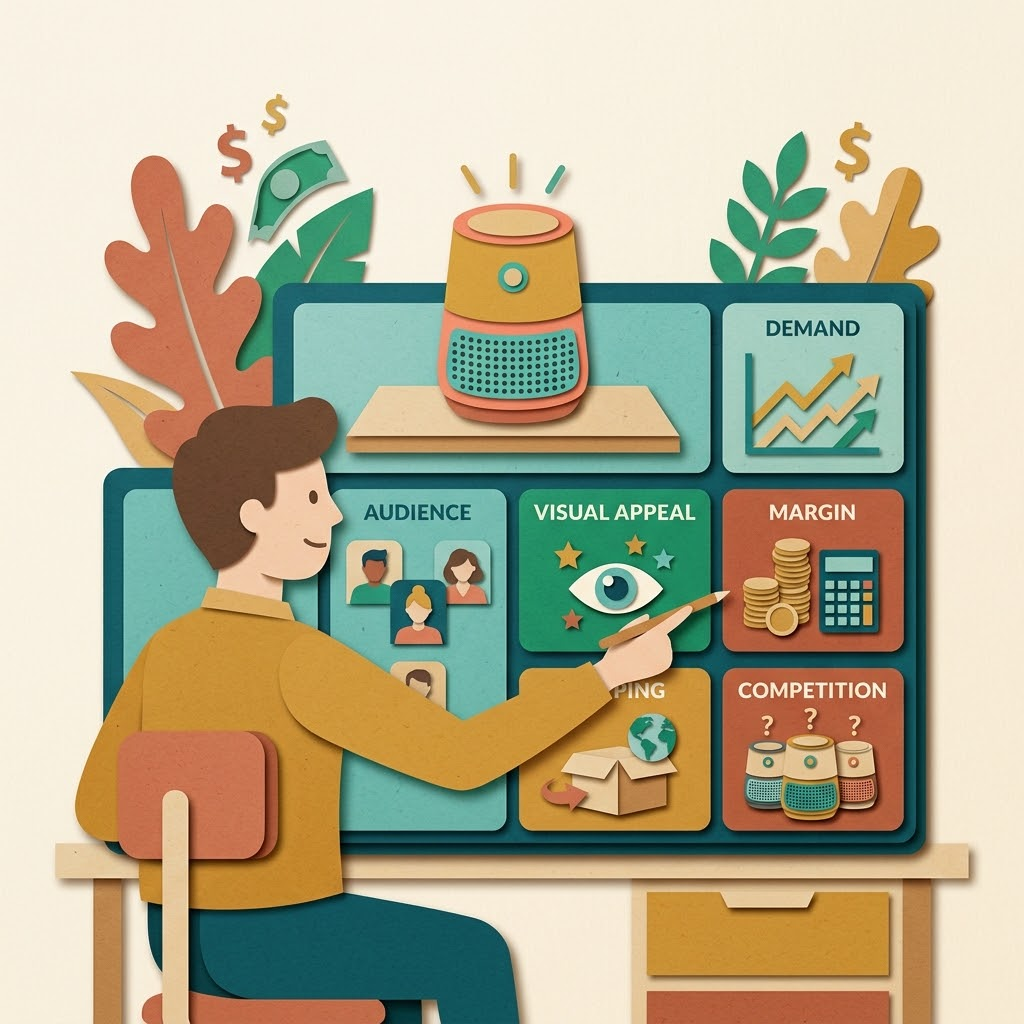
🎯 Simple Validation Flow
✅ A Basic 5-Step Product Check
- Check if the product solves a real problem
- Confirm people are already buying or advertising similar offers
- Review supplier ratings, shipping, and sample quality
- Make sure the product leaves enough margin after ads
- Ask whether the offer is easy to explain in a short video or product demo
💡 Why This Matters
Testing becomes much cheaper when you filter out bad products before building pages and spending on traffic.
The goal is not finding a “perfect” product. The goal is finding products that deserve a real test.

🎯 Choose Your First Product Test
🎯 KEY TAKEAWAY
Start with small, lightweight, problem-solving products that have a clear visual demonstration, a clear audience, and enough pricing room to survive ad costs.
🚀 ACTION STEP
Write a focused first plan:
- Audience & problem: Write the problem the product solves and who needs it.
- Supplier check: Review samples, delivery, returns, and product safety requirements.
- Economics: Estimate product, shipping, fees, returns, and acquisition costs before committing.
- Small test: Set a limited test budget and clear criteria for stopping or continuing.
4. Earnings, Pricing & Offer Selection
Use this chapter to review product pricing, store profit, and the metrics behind your earnings before planning your next product test.
🧠 Reality Check (What Actually Separates Earners)
- Most beginners lose money or stay near break-even early on
- Not because dropshipping cannot work
- 👉 Many test weak products
- 👉 Or they ignore ad costs, margins, and conversion numbers
- Stores that improve faster usually:
- Test products quickly
- Watch the numbers honestly
- Improve product pages and creatives
- Scale only after proof appears
🎯 KEY TAKEAWAY
Dropshipping is a testing business. Profit usually comes from finding and scaling winners, not from hoping one random product works.
🔑 Smart Pricing Strategy
🧾 Costs & Margin Room
- Start with pricing that leaves room for:
- Product cost
- Shipping
- Payment fees
- Ad spend
- Refund risk
📦 Bundles, Upsells & Add-Ons
- Improve average order value with:
- Bundles
- Upsells
- Add-ons
🧪 Real Example
📋 REAL-WORLD EXAMPLE
🌱 Scenario A: Weak product
- Low demand
- High ad costs
- Profit: $0 to losing money
🎯 Scenario B: Decent product
- Moderate demand
- Break-even or small profit
- Profit: $1,000–$3,000/month
🚀 Scenario C: Strong winner
- Clear demand
- Better creative
- Better numbers
- Profit: $5,000–$20,000+/month
🎯 KEY TAKEAWAY
Same store model. Big difference in product quality, creative strength, and financial discipline.
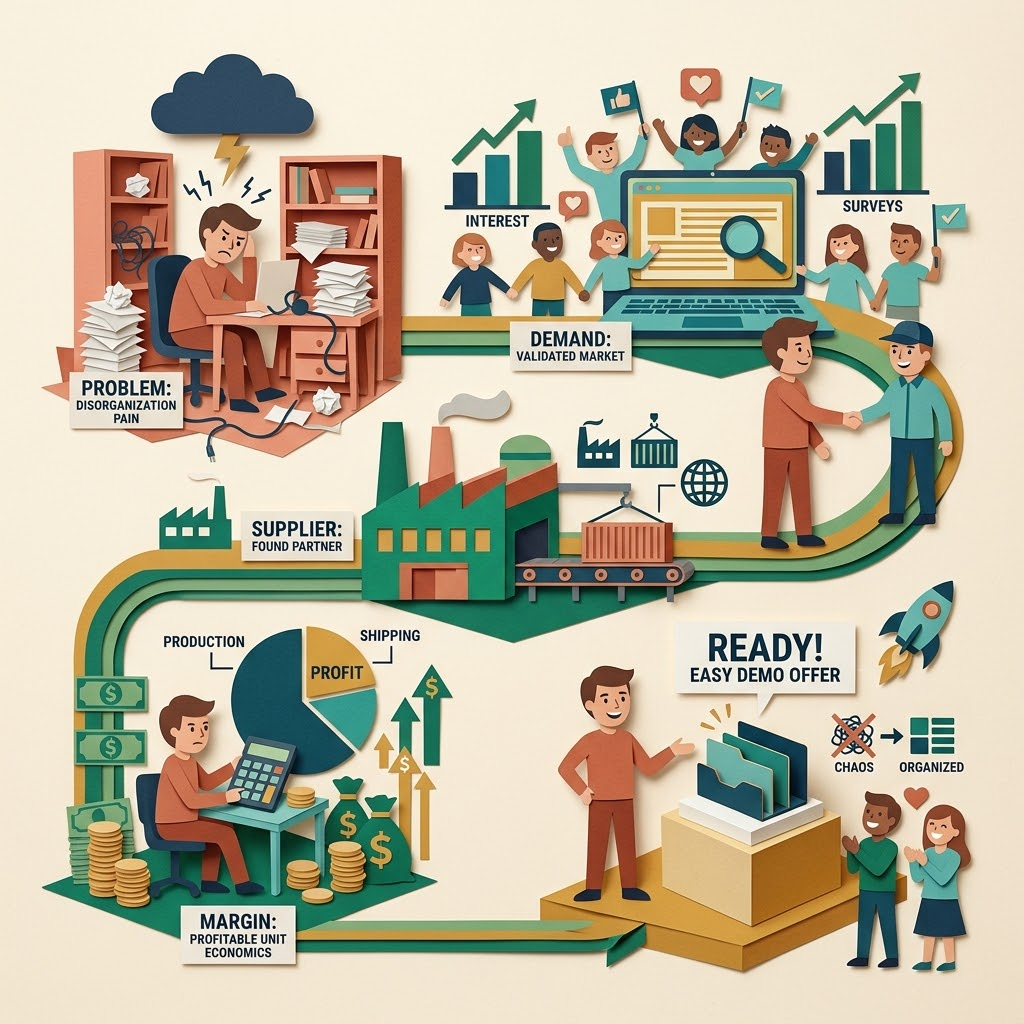
🎯 Pricing Strategy (This Is What Matters)
Most beginners think: 👉 “I just need a product to sell.”
But the real formula is:
🧮 Product × Marketing × Margins = Income
- Good product + weak marketing = no sales
- Good marketing + weak margins = no real profit
- Better product + better creative + better numbers = scalable income
📈 What Affects Your Earnings
📊 Key Income Drivers
- Type of product
- Problem-solving products with clear visual appeal usually outperform commodity gadgets
- Ad efficiency
- Lower cost per click and stronger creatives leave more room for profit
- Average order value
- Bundles, upsells, and add-ons raise the value of every order
- Refunds and product quality
- Weak suppliers and unclear expectations erase margin quickly
- Specialization
- A focused niche usually supports better pricing and stronger offers
🎯 KEY TAKEAWAY
Small improvements in product choice, creative quality, and margin discipline usually move income faster than more traffic.
🚀 Plan Your First Profitable Product Test
Start with one product, one traffic channel, and one clear success metric. Set your allowable acquisition cost, test budget, and stop criteria before you spend.
🧭 Run a Disciplined Product Test
- Set your allowable acquisition cost.
- Use a fixed test budget with clear stop criteria.
- Test multiple price points and creatives.
- Track purchases and contribution margin, not clicks.
- Scale only after repeatable profitable results.
Work backward from your margin — if a sale leaves $10 after product costs and fees, you cannot pay more than that to acquire a buyer.
Decide in advance how much you will spend and what results will continue or end the test.
Compare hooks and offers so the data reflects real demand instead of one guess.
Clicks and engagement do not pay for product costs, ads, fees, or refunds.
Increase volume when profit and fulfillment stay healthy across several days of data.
🎯 Key Takeaway
The stores that last are usually not the ones with the flashiest screenshots. They are the ones with honest numbers, stronger offers, and enough margin to keep testing.
💡 Example: Profit Margin Breakdown
- Sell a product for $30
- Product cost = $10
- Ads = $10
- Remaining profit = $10 per sale before additional fees or refunds
The key lesson is simple:
Revenue is not the same as real earnings.
💡 Margin Reminder
The example is illustrative. Account for payment processing, shipping, refunds, and app costs before trusting any margin.
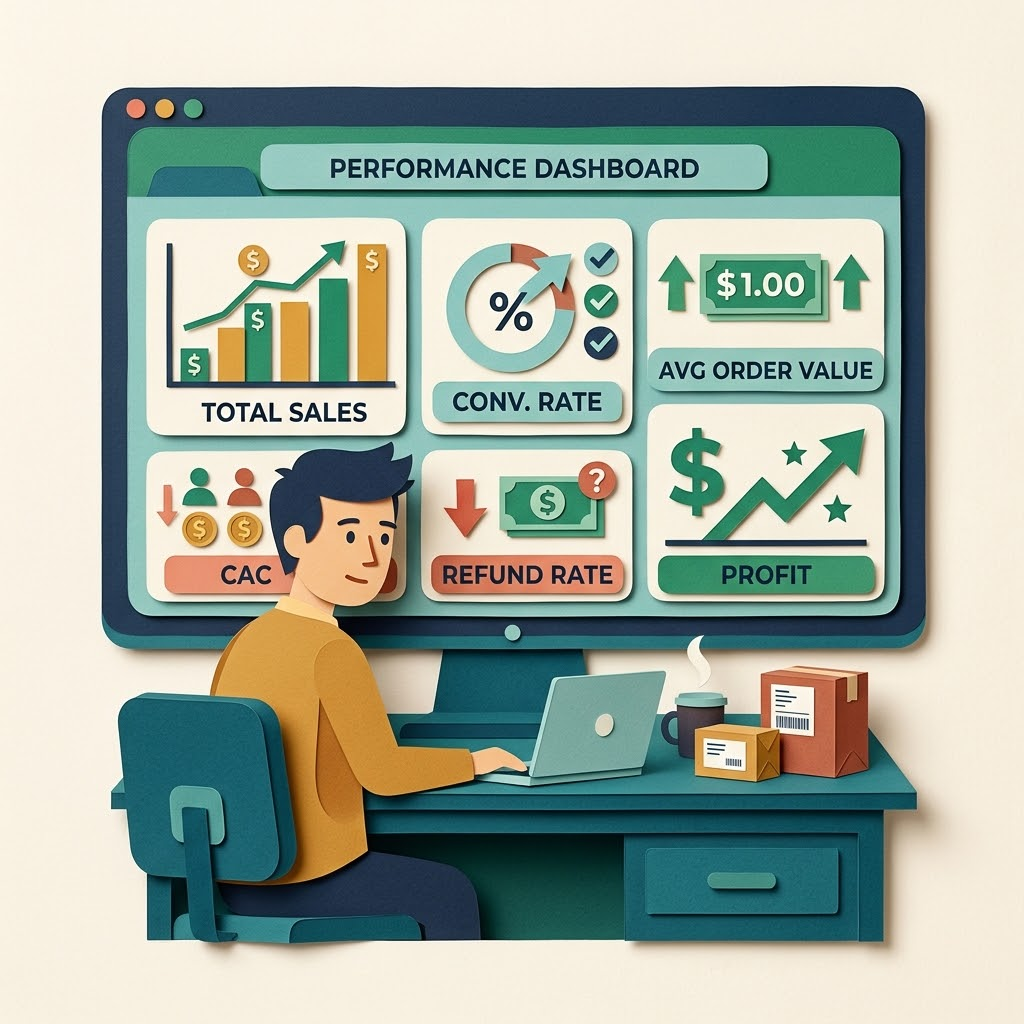
✍️ Write Your One-Line Test Plan
Use this structure to make your test easy to evaluate:
“I will test [product] for [audience] at [price], spending up to [test budget] on [traffic channel], and stop or scale based on [success metric].”
✅ Completed example
“I will test one problem-solving product for a clear audience at a price that covers product costs, ads, and fees, spending up to $300 on one channel, and stop or scale based on profitable orders.”
🚀 Action Step
Before launching your next test:
Focus on profitable sales, not just sales volume. Add new products or channels only when the current test produces repeatable profit.
📋 Pricing & Revenue Planning Reference
Review the store stages, key metrics, and margin snapshot below alongside product costs, ad spend, fees, and refund risk.
💵 What Dropshippers Actually Earn
📊 Income Progression by Stage
🚀 Stage | 🛒 Store Status | 💰 Typical Monthly Profit | ⏳ Timeline | 📌 What’s Happening |
Beginner | Testing products and learning ads | -$200 to $500 | 0–3 months | Early tests, mistakes, and first signs of product-market fit |
Early Success | First product showing real traction | $500–$3,000 | 3–6 months | Cleaner data, better creatives, and more disciplined scaling |
Growth | Multiple products or stronger funnel | $3,000–$10,000 | 6–12 months | Optimizing offers, pages, margins, and customer experience |
Scaling | Store with reliable systems and better suppliers | $10,000–$50,000+ | 12–24 months | More consistent traffic, stronger offers, and tighter operations |
Advanced | Brand-style operation | $50,000+/month | 2+ years | Team support, automation, repeat systems, and deeper optimization |
🎯 KEY TAKEAWAY
Revenue can look exciting, but profit margin discipline matters more than top-line sales.
📊 Key Metrics & Margin Snapshot
📊 Numbers Worth Watching
📌 Metric | 🎯 Why It Matters | ✅ What You Want |
Conversion rate | Shows how well visitors turn into buyers | Higher after clearer pages and better offers |
Cost per click | Shows how expensive attention is | Lower or justified by stronger conversion |
Average order value | Shows how much each order is worth | Higher through bundles and upsells |
Customer acquisition cost | Shows what it costs to get a buyer | Below your profit per customer |
Refund rate | Shows product or expectation problems | As low as possible through quality and clarity |
🎯 KEY TAKEAWAY
You do not need massive traffic. You need traffic that converts at numbers that still leave profit.
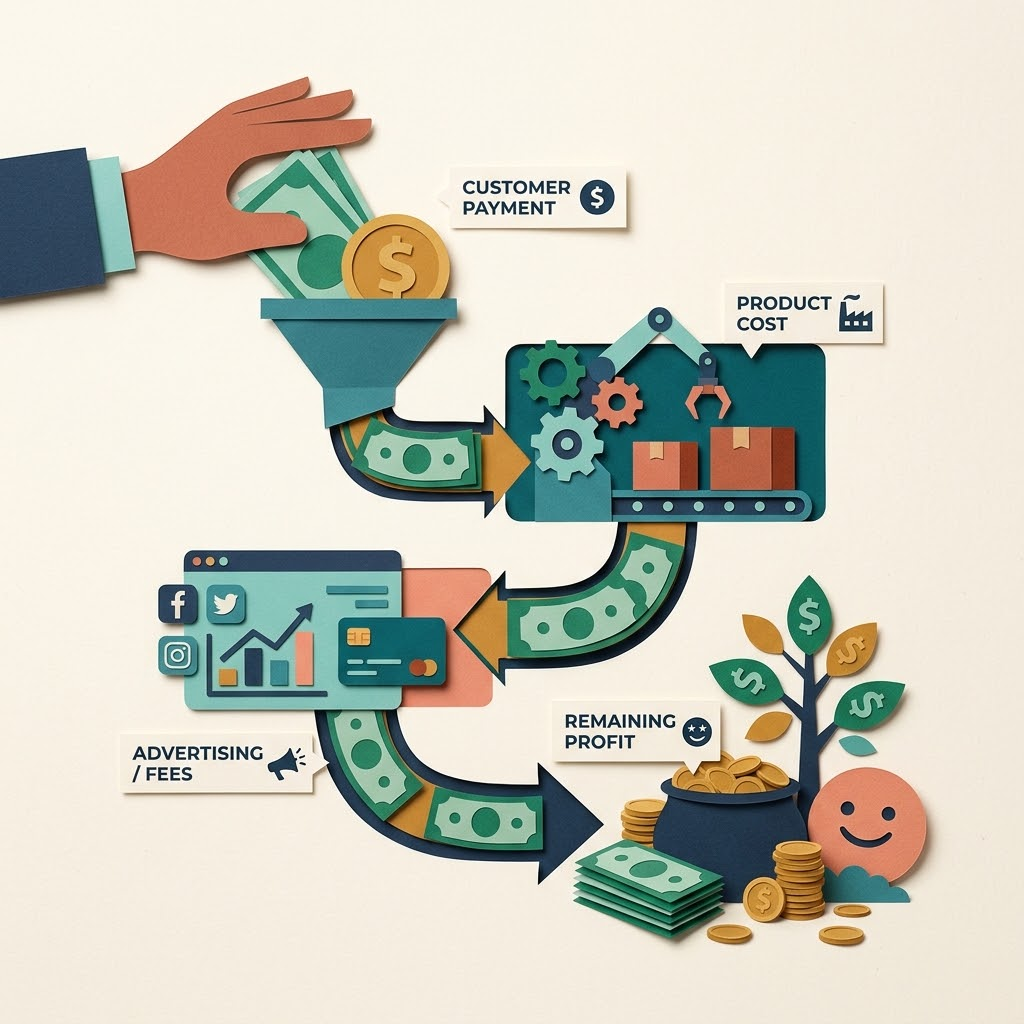
🧾 Common Margin Snapshot
💡 Metric | 📊 Typical Range |
Product cost | $5–$30 |
Selling price | $15–$100+ |
Gross margin | 20%–60% |
Ad costs | 30%–70% of revenue |
Net profit | 10%–30% after ads, fees, and issues |
🧮 Check Your Margin
Profit per order = selling price − product cost − ads − fees − refunds.
A $30 sale only matters if product cost, ads, processing fees, refunds, and app costs still leave profit. Track your real numbers on early orders and adjust price, creative, or product before scaling.
🚀 Action Step
💰 Set Your First Pricing Plan
5. Essential Tools & Your Starting Setup
Build a store setup that lets you check product quality, explain shipping honestly, process orders, and handle customer problems. Start with one store platform and a small catalog; automation does not remove your responsibilities as the seller.
🧰 Your Minimum Viable Setup
🧰 Start With What You Already Have
- Device: A dependable computer, internet connection, and secure business accounts.
- Store: One platform, a simple theme, and working checkout.
- Supplier checks: Product samples, delivery tests, and a record of supplier terms.
- Operations: Customer support email, order tracking, refund procedures, and financial records.
- Budget: A capped test budget plus funds for refunds, fulfillment, and payment delays.
💡 PRO TIP
Place a sample order before promoting a product. Check the actual item, packaging, tracking, and delivery time—not only the supplier listing.
🧭 Choose One Working Path
Small product test: Use one platform and a few closely related products. Confirm quality and realistic margins before expanding.
Organic-first: Test original demonstrations and useful content before committing to paid traffic. This still takes time and does not guarantee sales.
Paid testing: Set a spending ceiling, track purchases and delivery outcomes, and avoid scaling from clicks alone.
🎯 KEY TAKEAWAY
A working checkout, a dependable supplier, and a clear customer-service process matter more than a long list of apps.
⚙️ Set Up Your Workflow in 5 Steps
🎯 1. Define the Product and Customer
Choose a specific buyer problem. Check product safety, intellectual-property rights, applicable selling requirements, and any restricted categories before listing. Avoid products you cannot responsibly support.
🚚 2. Verify Supplier and Delivery
Order samples, review shipping and return arrangements, and confirm how unavailable inventory or defective items are handled. Keep a backup plan; supplier promises are not proof of reliable fulfillment.
🏪 3. Build the Store and Policies
Prepare accurate product details, original or authorized images, realistic shipping estimates, contact information, and clear return terms. Use only genuine, relevant reviews you are allowed to display—do not import unrelated reviews to imply customer experiences with your store.
🧪 4. Test Checkout and Fulfillment
Run a test transaction using the platform’s supported process. Check taxes and shipping settings, payment confirmations, order routing, tracking updates, customer messages, and refunds. Account for fees, returns, and payout delays.
🚀 5. Launch a Controlled Test
Choose one traffic approach and a maximum loss you can afford. Track orders, delivery issues, refunds, customer support time, and contribution after direct costs. Adjust or stop when the evidence does not justify further spending.
Before you begin:
💸 Keep Your Tool Budget Lean
⚠ COMMON MISTAKE
Subscribing to multiple automation and landing-page apps before verifying the product, delivery experience, and margins.
Separate one-time samples, recurring store costs, advertising, and working capital. The original budget examples below are not required minimums or guarantees of a successful test.
🚀 ACTION STEP
Choose one product, order a sample, draft its true delivered-cost calculation, and test checkout. Add a paid tool only when it solves a specific operational problem.
📝 Additional Starter Guidance
🛠️ Essential Apps & Tools
- 🤖 DSers or AutoDS($0–$30)
- Purpose: AliExpress order fulfillment & automation.
- 📦 Zendrop or Spocket (Varies)
- Purpose: Faster shipping alternatives to standard AliExpress.
- 📧 Klaviyo or MailChimp($0–$50)
- Purpose: Abandoned cart recovery & email marketing.
- ⭐ Loox or Judge.me ($10–$30)
- Purpose: Collecting photo reviews to build social proof.
- 🏗️ PageFly or GemPages($20–$40)
- Purpose: Drag-and-drop landing page builders for high conversion.
- 💰 Upsell ($8–$15)
- Purpose: Post-purchase upsells & thank you page optimization.
Minimum App Overhead: 🧾 $50–$150/month.
📣 Advertising Platforms
- 📘 Facebook Ads($20–$50/day testing)
- Best For: Broad audiences & retargeting.
- Notes: Most common, highly competitive, but massive reach.
- 📱 TikTok Ads($20–$50/day testing)
- Best For: Young audiences & viral potential.
- Notes: High growth trend in 2025–2026; requires strong video creative.
- 🔍 Google Shopping($10–$30/day)
- Best For: Direct search intent.
- Notes: Higher quality traffic because users are already looking for the product.
- 📌 Pinterest Ads ($10–$20/day)
- Best For: Home, fashion, and lifestyle.
- Notes: Often underutilized with lower CPCs (Cost Per Click).
Realistic Budget: 💸 $500–$2,000/month minimum to properly test products and gather data.
💳 Total Startup Investment
🐣 Minimum (Bare-Bones Testing)
- Shopify: $39
- Apps: $50
- Product samples: $100
- Ads (Month 1): $300
- Total: 🚩 $489 first month
🚀 Realistic (Proper Market Testing)
- Shopify: $117 (3 months)
- Apps: $300 (3 months)
- Samples: $200
- Ads: $3,000 ($1k/month for 3 months)
- Total: ✅ $3,617 for a 3-month test period
💡 Most successful sellers need $2,000–$5,000 to give dropshipping a fair shot. Trying to launch with $0 usually results in "spinning your wheels" without enough data to succeed.
📋 Tool, Equipment & Setup Reference
🛠 TOOLS & RESOURCES
Use these existing comparisons as a reference library, not a requirement to buy or use every option.
📝 QUICK NOTE
Original comparison entries are retained. Listed prices, fees, eligibility, availability, timelines, and performance claims have not been reverified here. Check current provider terms and applicable requirements before relying on them; a free software tier does not eliminate equipment, training, transaction, or other business costs.
🛒 Store Platform
Platform | Monthly Cost | Best For | Notes |
Shopify🛍️ | $39–$79 | Most dropshippers | Easiest, most apps, best support |
$15–$50 (hosting) | WordPress users | More technical, full control | |
$39–$79 | Larger catalogs | Good features, fewer apps |
Recommendation: 🏆 Shopify Basic ($39/month) — The industry standard for reliability and ease of use.
6. Find Customers & Reach Your Audience
Dropshipping depends on two connected systems: reliable product sourcing and profitable customer acquisition. Validate quality and delivery before scaling traffic, then compare channels using conversion, acquisition cost, refunds, and real margin.
📦 Source Products From Reliable Suppliers
Supplier quality affects delivery speed, refund pressure, reviews, and whether a promising product can scale safely.
🚚 Supplier Strategy
🧪 Beginner-Friendly Testing
- Platforms: AliExpress, DSers, and AutoDS
- Advantages: Low costs and broad product selection
- Risks: Variable quality and potentially slow delivery
📈 Scaling Options
- Platforms: Zendrop, CJ Dropshipping, and Spocket
- Advantages: Faster fulfillment and stronger quality control options
- Strategy: Move proven products to a more reliable supplier before increasing volume.
🛡️ Sourcing Safely
- Order samples and test the full delivery experience.
- Review recent supplier feedback and return patterns.
- Confirm processing times, tracking, packaging, and refund terms.
- Keep a backup supplier for important products.
💡 PRO TIP
Never scale a product you have not personally sampled and evaluated.
🔥 Test Demand With Paid Advertising
Paid channels can produce fast data, but they also expose weak products, pages, and margins quickly.
💸 Paid Acquisition Strategy
Platform | Best For |
Broad targeting and retargeting | |
Visual, demonstration-driven products | |
High-intent product searches | |
Home, fashion, lifestyle, and gift categories |
🧪 Test Carefully
- Use a fixed test budget and stop criteria.
- Compare multiple hooks and creative variations.
- Track purchases and contribution margin—not clicks alone.
- Scale only after repeatable profitable results.
💡 PRO TIP
Set your allowable acquisition cost before launching a campaign.
📱 Build Demand With Organic Content
Organic content takes longer but can validate messaging, demonstrate products, and reduce dependence on paid traffic.
🌱 Organic Marketing Strategy
Useful channels include:
- TikTok for product demonstrations and hooks
- Instagram Reels for visual storytelling
- Pinterest for home, lifestyle, and evergreen discovery
Create content that shows the problem, the product in use, and the result clearly.
💡 PRO TIP
Use organic response to identify stronger hooks before paying to amplify them.
🤝 Reach Niche Audiences Through Creators
Well-matched creators can provide content, credibility, and targeted exposure without relying entirely on platform ads.
🤝 Influencer Partnership Strategy
- Prioritize audience fit and engagement over follower count.
- Start with smaller creators who serve a defined niche.
- Offer free product, a fixed fee, affiliate commission, or a hybrid arrangement.
- Agree on deliverables, usage rights, disclosures, and deadlines in writing.
- Track sales with unique links or discount codes.
💡 PRO TIP
Review a creator’s recent audience interaction before paying for reach.
📧 Recover and Grow Revenue With Email
Email helps convert visitors who are not ready to buy immediately and supports repeat purchases after the first order.
📧 Email Revenue Strategy
Build simple flows for:
- Welcome offers
- Abandoned carts
- Order and shipping updates
- Post-purchase education
- Review requests
- Relevant cross-sells and repeat-purchase reminders
💡 PRO TIP
Prioritize clear service emails and abandoned-cart recovery before building complex campaigns.
🎯 Use a Disciplined Growth Formula
Sustainable growth comes from improving the whole system rather than increasing traffic to an unproven offer.
📈 Simple Growth Formula
- Find: Identify a problem-solving product with viable economics.
- Validate: Confirm quality, delivery, audience interest, and conversion potential.
- Drive: Send targeted paid or organic traffic to the offer.
- Optimize: Improve creative, product pages, trust, and checkout performance.
- Scale: Increase volume only when profit and operations remain healthy.
🚀 ACTION STEP
Choose one product, one traffic channel, and one success metric for your next controlled test.
7. How to Start: Your Beginner Roadmap
You do not need a huge catalog, a custom brand, or accounts on every advertising platform to begin. Use the seven tabs in order, starting with one product, one audience, one simple store, and one traffic strategy.
Confirm each checkpoint before adding spend, products, or channels. Sales are not guaranteed, and most first tests lose money. 🎯 YOUR FIRST GOAL Complete one full product-testing cycle and decide, with numbers, whether to improve, scale, or stop.
🔍 PHASE 1 — Find & Validate One Product
📋 Steps 1–3: Start with a product that solves a clear problem and is easy to understand in a few seconds. Do not build a store around something that only looks interesting.
✅ Ready to move on: A specific buyer, verified demand clues, an evaluated supplier/sample, and workable cost math.
🎯 Step 1: Confirm Demand Before You Build
Write three answers before you touch a theme:
- Who is this for?
- What problem does it solve?
- Can I sell it profitably after product cost, shipping, fees, ads, and refunds?
Then check that people already want similar products:
- Search ads, TikTok demos, Amazon listings, and competitor stores
- Look for a specific audience, not “everyone”
- Prefer lightweight, durable, easy-to-ship items
- Skip restricted, unsafe, fragile, or heavily saturated products
A product deserves a test when the benefit is obvious, the audience is recognizable, and the economics still work after ads.
📦 Step 2: Vet the Supplier on Paper & in Real Life
Compare at least two suppliers and order a sample before promoting the product. Supplier listings and promises are not proof of quality or delivery.
Check:
- Recent ratings, processing time, and tracking quality
- Packaging, product accuracy, and delivery time
- Return terms and what happens if stock runs out
- Whether you can legally sell it, including safety and IP limits
Confirm product safety, intellectual-property (IP) rights, and applicable selling requirements for your target market. Avoid products you cannot responsibly support.
🧮 Step 3: Calculate Your Margin & Allowable Acquisition Cost
Write the unit economics before committing to the product. Contribution means what an order leaves after its variable costs; it is not automatically net profit.
Before-acquisition contribution = selling price − product cost − shipping − payment fees − expected refunds/replacements.
This sets a ceiling for customer acquisition cost (CAC)—marketing spend divided by newly acquired customers. Set your allowable CAC below that ceiling to leave room for overhead and your desired earnings.
After-acquisition contribution = before-acquisition contribution − CAC.
- Account for discounts, delivery costs, and a realistic refund allowance.
- Keep fixed store/app costs, taxes, and working-capital needs visible separately.
- If the remaining contribution is too thin to afford a customer, the product is not ready to test.
💡 PRO TIP
Validate the offer first. A polished store cannot rescue a weak product, slow supplier, or margin that disappears after ads.
Phase checkpoint: You can name the buyer, the problem, the profit math, and the supplier you would actually use. Evaluate the sample and delivery experience before launching.
🚀 Your First 5 Actions
🚀 ACTION STEP
- Write the buyer/problem: Choose one product candidate and collect demand clues from ads, demonstrations, listings, and competitor stores.
- Compare two suppliers: Request current shipping/return terms and order a sample; do not launch before evaluating it.
- Calculate the limits: Write your delivered costs, allowable CAC, refund allowance, test budget, and maximum acceptable loss.
- Prepare one offer: Draft the product page, truthful delivery expectations, policies, and support process; test checkout and refunds.
- Prepare one controlled test: Choose one channel, create 3–5 demos or ad creatives, verify tracking, and write the stop/review rules.
Work through these as readiness allows. Samples, safety checks, and customer-service capacity come before a launch date.
The original 30-day plan is a scheduling example, not a guarantee or a deadline. Extend it when samples, delivery tests, or returns need more time.
- Days 1–5: Research products and pick one audience-problem-profit fit.
- Days 6–8: Compare suppliers and order a sample.
- Days 9–14: Build the store, policies, and a tested checkout.
- Days 15–17: Create 3–5 demos or ad creatives.
- Days 18–24: Launch one controlled test with a budget cap, only after readiness checks pass.
- Days 25–27: Review profit, CAC, refunds, and delivery; flag outcomes still pending.
- Days 28–30: Write the improve, scale, or stop decision and schedule a later review if needed.
Do not scale just to fit this calendar. Wait for enough fulfilled-order evidence to support the decision.
🛒 PHASE 2 — Build a Simple, Trustworthy Store
📋 Steps 4–6: Your first store only needs to make the buying decision easy. One strong product page beats a catalog of weak listings.
✅ Ready to move on: One accurate offer with visible shipping/returns and a tested buying and refund path.
🏠 Step 4: Build the Minimum Store
Include:
- A clean homepage or focused storefront
- One strong product page
- Clear photos or a product demonstration
- Benefit-focused description
- Secure checkout
- Honest shipping estimates
- Return and refund policy
- Contact information
- Basic trust signals
Use original or authorized images and only genuine reviews you are allowed to display. Do not import unrelated reviews to imply social proof you do not have.
✍️ Step 5: Make the Product Page Do the Selling
The page should follow a straight line:
Problem → Product → Benefit → Trust → Next step
Buyers should see:
- What it is and who it is for
- Why it is useful
- What they receive
- How long shipping actually takes
- What happens if there is a problem
- A clear buy button
Hiding long delivery times does not improve the customer experience; it creates problems after the first orders.
✅ Step 6: Test Checkout Before Sending Traffic
Test checkout, payment confirmation, taxes, shipping settings, and a refund path before sending traffic. Use the platform’s supported test process, not an invented customer order.
- Check the full buying path on desktop and mobile, including the selected variant, price, discounts, shipping charge, and delivery estimate.
- Verify the payment confirmation, order routing, and customer messages.
- Check how tracking is added and how you initiate a refund.
- Account for fees and payout delays; keep funds available for fulfillment and refunds.
🎯 KEY TAKEAWAY
A working checkout, accurate policies, and one clear offer matter more than apps, extra products, or a custom theme.
Phase checkpoint: Checkout works on desktop and mobile, shipping and returns are visible, and the product page explains the offer without confusion.
📣 PHASE 3 — Choose & Prepare One Traffic Strategy
📋 Steps 7–9: Pick one primary source, then prepare content or a campaign for that route. Steps 8 and 9 are alternatives, not two channels you must launch.
✅ Ready to move on: A maintainable posting cadence or a funded, capped test on one suitable channel.
🧭 Step 7: Choose Your Primary Traffic Source
A store without visitors cannot generate sales. Beginners often stall by trying TikTok, Facebook, Instagram, Google, Pinterest, influencers, and email at once.
Choose one primary traffic source and stay there long enough to learn:
- Organic-first: Less cash spending, but time and consistent content production are still required.
- Paid testing: Faster data, but only within a fixed budget you can afford to lose.
Match the channel to your audience and the way you can demonstrate the product. Complete Step 8 or Step 9 for the route you choose; you do not need both to start.
📱 Step 8: Prepare Organic Content If You Choose Organic-First
If you choose organic-first:
Create short-form content that shows:
- The problem
- The product in use
- The result
- A common objection or FAQ
Useful formats: demonstrations, before-and-after clips, tutorials, and use cases.
Organic traffic costs less cash but needs consistent posting. Use it to test hooks before you pay to amplify them, especially if your budget is tight.
Set a posting cadence you can maintain. Use original or authorized footage and make only claims you can support. Count content-production time in your test review.
💵 Step 9: Prepare Paid Traffic If You Choose Paid Testing
If you choose paid testing:
Pick one platform and a fixed test budget. Match the channel to the product:
- TikTok Ads for visual demos
- Facebook and Instagram for broad testing and retargeting
- Google Shopping Ads for high-intent searches
- Pinterest Ads for home, lifestyle, and gift products
Test a few hooks, creatives, and offers. Set your allowable acquisition cost before the first dollar is spent.
Use original or authorized creative and check current advertising and product-listing rules for your chosen platform. Do not assume competitor claims or copied ads are acceptable.
⚠ COMMON MISTAKE
Do not raise ad spend because clicks are coming in. Clicks are not profit. Continue only when purchases, contribution margin, and delivery still look acceptable.
Phase checkpoint: You have one traffic channel, a posting cadence or test budget, and a written spending/loss cap you can afford.
🧪 PHASE 4 — Launch a Controlled Product Test
📋 Steps 10–12: Write the rules, verify measurement, then launch within a loss limit you can afford. Purchases alone do not prove a viable business.
✅ Ready to move on: A live, measurable test with clear spending, quality, and stop rules.
📝 Step 10: Write the Test Rules Before Launch
Capture one test plan:
I will test [product] for [audience] at [price], spending up to [budget] on [channel], and stop or continue based on [profit per order / CAC].
Also write:
- Allowable acquisition cost, working backward from margin
- Maximum loss you can accept
- How many creatives or hooks you will test
- When you will pause if there are no profitable orders
A useful default: do not scale from one lucky day. Look for repeatable purchases that still leave contribution after costs. Judge CAC against the allowable limit from Step 3, not a margin figure that already subtracts advertising.
📊 Step 11: Track the Numbers That Change the Decision
Watch:
- Visitors
- Add-to-cart rate
- Purchases
- Conversion rate
- Customer acquisition cost
- Average order value
- Refunds and delivery issues
- Actual contribution per order, plus fixed costs tracked separately
Formula:
Selling price − product − shipping − marketing − fees − actual refunds/replacements = after-acquisition contribution.
Subtract fixed store/app costs and other overhead to assess overall profit before taxes. Do not subtract ads again when comparing CAC with the before-acquisition allowance, and do not count both an estimated refund allowance and the same actual refund in a finalized result.
Clicks and “interest” do not pay for ads, replacements, or chargebacks.
Check that purchase events, order values, and campaign/source labels are recorded correctly. Reconcile store orders with actual charges, receipts, and refunds; dashboard estimates alone are not proof of earnings.
🚀 Step 12: Launch the Test & Enforce the Limits
Treat the first launch as an experiment. Decide what would make you continue, improve, or stop before you spend time or money.
- Confirm the sample, supplier, store, checkout, budget, stop rules, tracking, and cost calculation are ready before traffic goes live.
- Publish your chosen content or launch the capped campaign using the prepared hooks and creatives.
- Check spend, orders, routing, and customer questions regularly; keep a short dated test log.
- Pause at the budget/loss limit or when quality, delivery, or a safety concern makes the test unacceptable.
- Record which change you made and when; avoid changing everything at once so the result remains interpretable.
🎯 KEY TAKEAWAY
A product can generate sales and still lose money. Judge the test by profit and customer experience, not revenue screenshots.
Phase checkpoint: The live test follows the written rules. Do not scale from early orders before their costs and delivery outcomes are understood.
📦 PHASE 5 — Fulfill Orders & Own the Customer Experience
📋 Steps 13–15: The supplier handles shipping; you handle customer expectations, communication, and resolution. Fulfillment quality is part of the test.
✅ Ready to move on: Routed orders, usable tracking, prompt support, and documented resolutions.
🚚 Step 13: Route & Monitor Every Order
After each purchase:
- Confirm the order reached the supplier
- Check that tracking appears
- Monitor shipping progress
- Message customers if delays happen
- Answer questions promptly
Verify the ordered variant, delivery details, and supplier acceptance. Keep the order record secure and share only customer information needed for fulfillment. The supplier may ship the product, but you own the customer relationship: checkout is the start of the work, not the end.
💬 Step 14: Set Support Standards You Can Keep
Aim to:
- Respond within 24 hours, faster if you can
- Show realistic shipping times on the page
- Send tracking without being asked
- Be clear and calm on refunds
- Keep a simple template for “Where is my order?”
Most support volume is tracking, not strategy. Slow replies and surprise delivery times create refunds even when the product is fine.
📝 QUICK NOTE
Customers bought from your store, not your supplier. From their perspective, you are responsible for the product, the wait, and the resolution.
🔄 Step 15: Resolve Refunds & Fix Repeating Failures
Process refunds and replacements according to your published policy and applicable customer rights. Do not leave customers waiting for the supplier to solve a problem you need to handle.
- Record the order, issue, evidence, agreed resolution, and refund/replacement status.
- Confirm the refund in the payment system or track the replacement until resolved.
- Log repeating product, packing, or supplier issues.
- If the same failure keeps happening, fix the supplier or the listing. Do not keep paying to acquire customers for a fulfillment problem.
Phase checkpoint: You can route an order, find tracking, answer a customer, and complete a refund without guessing. Keep monitoring outstanding orders after the ad test ends.
📊 PHASE 6 — Review the Numbers, Not the Excitement
📋 Steps 16–18: Evaluate purchases, costs, customer outcomes, and the main leak. Separate a fixable creative issue from an uneconomic product or unreliable supplier.
✅ Ready to move on: A written diagnosis based on actual evidence, with pending outcomes marked clearly.
🔎 Step 16: Ask What the Data Is Telling You
Do not scale because the first sale felt good. At the planned review point or budget limit, look at what actually happened:
- Did people click but not buy?
- Did they add to cart and abandon checkout?
- Was CAC above the allowable acquisition-cost limit?
- Did orders leave real profit after fees and refunds?
- Was product quality acceptable?
- Were shipping times in line with what you promised?
- Did one creative or offer clearly outperform the rest?
Write the answers down. A vague “it kind of worked” is not a decision.
Use the same date range for traffic, spend, orders, and costs. Flag pending deliveries and expected refunds instead of treating an unfinished order cohort as settled profit.
🛠️ Step 17: Match the Main Problem to the Next Fix
Different leaks need different fixes. More traffic will not repair a weak page, a thin margin, or a bad supplier.
If this happens | Do this next |
Traffic, no sales | Review product, price, offer, or page |
Sales, no profit | Review margins, CAC, and fees |
Sales, many complaints | Review product quality or supplier |
Slow shipping, many “where is it?” tickets | Change supplier or expectations |
Profitable orders and acceptable delivery | Improve the offer, then consider scaling |
✅ Confirm the Review Checkpoint
Identify the main leak: traffic, conversion, margin, or fulfillment. Name the next action before adding spend.
- If delivery or refund outcomes are still pending, mark the decision provisional.
- Look at actual order costs, not just platform-reported revenue.
- Keep the original test results so later changes can be compared fairly.
Phase checkpoint: You can point to the main leak and explain what evidence supports your next action.
🧠 Step 18: Separate Creative Problems From Offer Problems
Separate creative problems from offer problems:
- A weak hook needs new ads or demonstrations.
- A weak offer needs a better product, price, bundle, or page.
- Weak fulfillment needs a better supplier or more accurate expectations.
Do not keep swapping ads if the economics were never viable. Record one clear hypothesis and the change that would test it.
⭐ ADVANCED STRATEGY
Compare new creatives against a stable offer when possible. If you also change the price, bundle, or page, record that change so you do not credit the ad alone.
🚀 PHASE 7 — Improve, Scale, or Stop
📋 Steps 19–22: Choose the next action from the evidence, not sunk cost or excitement. Repeat the cycle only when a new test or controlled increase is justified.
✅ Done when: A documented decision, a next review point, and continued care for outstanding orders.
🛠️ Step 19: Improve the Most Important Weak Point
Improve if there is a signal but the numbers are not strong enough:
- Test new hooks and creatives
- Tighten the offer, price, or bundle
- Clarify the product page
- Try a more reliable or faster supplier
Choose the fix that matches Step 17 rather than rebuilding everything. Set a new capped test and write what improvement would justify continuing.
📈 Step 20: Scale Gradually Only After Repeatable Results
Scale only after repeatable profitable orders and acceptable delivery:
- Raise spend gradually
- Add creatives before adding platforms
- Improve fulfillment first
- Add complementary products later
- Build email retention and more advanced tracking once the core offer holds
Do not scale from two lucky orders or from clicks with no contribution.
Keep basic order and purchase tracking from the first test. Check supplier capacity, available working capital, refunds, and support workload before each increase. Pause growth if service quality or profitability deteriorates.
🛑 Step 21: Stop Spending When the Economics Stay Weak
Stop spending if, after a fair test:
- CAC stays above your allowable acquisition-cost limit
- Refunds or complaints erase the margin
- The product is hard to explain or demonstrate
- Shipping or quality cannot be fixed at this price
Sunk cost is not a reason to keep funding a loser. Stopping acquisition does not cancel existing orders: resolve deliveries, customer messages, refunds, and replacements, and remove unavailable or problematic listings.
📋 Step 22: Record the Decision & Plan the Next Cycle
Every test should end in a written decision. The goal is not to make every product work; it is to identify what works before spending heavily.
Record:
- What you tested
- What the numbers were
- What you would not repeat
- The next product worth a controlled test
Add the chosen improve, scale, or stop decision, its evidence, and the next review date. If costs or customer outcomes are pending, record those uncertainties and revisit the decision.
🎯 KEY TAKEAWAY
A useful beginner skill is ending weak tests quickly and repeating the cycle on a better offer.
This phase is complete when: You have a written decision backed by profit, refunds, and delivery—not by hope.
🎯 Turn the Roadmap Into One Test Cycle
🎯 KEY TAKEAWAY
Your first goal is not a massive store. It is one complete testing cycle:
Research → Validate → Build → Launch → Fulfill → Measure → Decide
Once you can repeat that process, you have something more valuable than a random winning product: a system for finding one.
Keep the core offer healthy before adding products, platforms, or sophisticated apps. A stopped test can still be useful when the evidence tells you what not to repeat.
Keep one compact set of records drawn from the workflow:
Use the records to identify recurring failures and review each spending increase. Automate repeatable tasks only after the manual process works; keep exceptions, refunds, and customer communication under active oversight.
8. Build Trust & Improve Results
Use this section to build trust, present your store professionally, communicate clearly, deliver reliably, market with purpose, scale strategically, and avoid the mistakes that cost new dropshippers customers, profit, and energy. Chapter 7 gets you started; this chapter helps you look credible, protect your margins, and keep customers coming back once you have a winning product.
⭐ ADVANCED STRATEGY
1️⃣ Build Proof Before You Sell 📁
Non-negotiable
Customers are sending money to a store they have never heard of, for a product they cannot touch. Before driving traffic, show that your products, shipping, and policies are real and dependable.
🛡️ Why Proof Builds Trust
Buyers want evidence that the product is real, the store is legitimate, and the order will arrive.
Why this matters:
- They pay before they see or hold the product
- Long or unclear shipping creates doubt
- A rushed or generic store looks risky
- Real demos and photos show the product actually works
- Clear policies lower the fear of being scammed
☑️ Minimum Trust Checklist
- A product you have personally sampled
- Original or authorized photos and a demo clip
- Honest delivery estimates on the product page
- Shipping, refund, and contact pages
- A working checkout and order tracking
- A secure payment method buyers recognize
- Genuine reviews or feedback once you have them
- Clear contact information and support email
🛡️ How to Create Proof Before Your First Real Sales
📦 Option 1: Order and Test a Sample
Experience what your customer will experience.
What to do:
- Place a sample order before promoting the product
- Check the item, packaging, tracking, and delivery time
- Photograph and film it in use
- Compare it with the supplier listing
- Drop the product if quality does not match the claims
🎥 Option 2: Create Original Demos
Show the product solving a problem.
What to do:
- Film the problem, the product in use, and the result
- Use your own samples, not copied supplier or competitor footage
- Make 3–5 short vertical clips for testing hooks
- Add simple captions explaining the benefit
- Make only claims you can support
🎁 Option 3: Run a Small Soft Launch
Use a small number of early orders to catch problems before you spend heavily.
What to do:
- Offer a limited introductory price to a small audience
- Use the same policies, shipping, and support you will use later
- Ask buyers for honest feedback and photos
- Request reviews only from real customers
- Fix issues before scaling traffic
{cap("tip","A discount should shorten the trust gap, not set your long-term price. Make sure the margin still works after ads, fees, and refunds.")}
🤝 Option 4: Ask Friends or Fellow Sellers for Feedback
People who know you can test your store and spot confusing details.
What to do:
- Ask them to go through the full buying path
- Have them check the product page, checkout, and policies
- Note anything unclear or untrustworthy
- Use real feedback to improve the page
Avoid:
- Importing unrelated reviews to imply customer experiences with your store
- Using fake testimonials or inflated numbers
- Using someone else’s photos or videos without permission
2️⃣ Showcase Your Store 🗂️
🖼️ What to Include on Your Store
Store Element | What It Shows |
Clear product images and demo | The product is real and works as described |
Benefit-focused description | What it is, who it is for, and why it helps |
Shipping and delivery estimates | Honest expectations, no surprises |
Return and refund policy | What happens if something goes wrong |
Genuine reviews and photos | Real customers were satisfied |
About and contact pages | A real business people can reach |
Keep it tight:
- Focus on one strong product page before adding a catalog
- Follow the line: Problem → Product → Benefit → Trust → Next step
- Show a clear buy button
- Remove weak products when stronger ones replace them
🛡️ Where to Show Your Products
Place | Best For |
TikTok and Instagram Reels | Product demos, hooks, and organic testing |
Facebook and Instagram Ads | Broad targeting and retargeting |
Pinterest | Home, fashion, lifestyle, and gift products |
Google Shopping | High-intent product searches |
Email and SMS | Abandoned carts and repeat purchases |
Creator partnerships | Niche audiences and credibility |
Display reviews:
- Use only genuine, relevant reviews you are allowed to show
- Photo reviews from tools like Loox or Judge.me build social proof
- Place the strongest review near the buy button
💡 PRO TIP
Make the benefit and the delivery time obvious within seconds. A shopper should understand what the product does and when it arrives without scrolling.
3️⃣ Be Recognizable and Honest ✨
Trust is built by what customers can see, expect, and verify.
🎨 Make Your Store Look Like a Real Brand
- Use a consistent color palette and simple theme
- Choose a clear store name and logo
- Keep product photos clean and consistent
- Match your social profiles to your store
- Use trust signals such as secure checkout and clear contact information
Why it works:
- Buyers recognize you across ads and pages
- A cohesive store feels less risky
- It prepares you to grow into a branded store later
📱 Optimize for Social Media
- Use vertical formats such as 9:16 or 4:5
- Put the hook in the first seconds
- Show the problem, the product in use, and the result
- Add a clear call to action
- Test several hooks before paying to amplify one
Avoid:
- Low-resolution or copied footage
- Misleading claims or fake urgency
- Mixing unrelated products in one feed
📹 Show the Real Product
Real demonstrations prove the product works and set accurate expectations.
What to share:
- Unboxing and sample test results
- Close-ups of materials and size
- Short use-case clips
- Honest notes about limitations
🤝 Be Honest About Your Business
Do:
- Show real shipping times on the page
- Deliver quality products and respond to problems
- Follow tax, business registration, and consumer-protection rules
- State your policies clearly
Avoid:
- Fake discounts or countdown timers
- Hiding long shipping times
- Hiding poor quality until after payment
- Copying another store exactly
4️⃣ Communicate Like a Professional 💼
Customers bought from your store, not your supplier. Your reliability starts with your first reply.
💬 Clear, Prompt Customer Service
Do:
- Respond within 24 hours, ideally 12
- Be friendly but firm on policies
- Offer partial refunds before full refunds when appropriate
- Track all orders proactively
- Set realistic shipping expectations upfront
- Send tracking without being asked
Avoid:
- Leaving customers waiting while you wait on the supplier
- Over-promising delivery times
- Ignoring complaints or repeating failures
⚠️ Common Customer Messages
Message Type | Share of Messages |
“Where is my order?” | About 70% |
“I want a refund” | About 15% |
“Product is broken / not as described” | About 10% |
Pre-sale questions | About 5% |
📉 Refund rate: Expect 5–15% depending on product quality and shipping times.
🏭 Supplier Communication
- Use CJDropshipping, Zendrop, or Spocket for better support
- Direct AliExpress suppliers can be hit or miss
- Build a relationship with good suppliers
- Have backup suppliers for popular products
📦 Store Status Updates
Status | What to Tell Customers |
Normal | “Orders ship in [timeframe]. Delivery is [range].” |
Delayed | “Orders are running [number] days late. Tracking is on the way.” |
Low stock | “Limited stock. Orders ship when restocked on [date].” |
Paused | “We’re not accepting new orders right now.” |
📝 QUICK NOTE
Slow replies and surprise delivery times create refunds even when the product is fine. Most support volume is tracking, not strategy.
5️⃣ Customer & Supplier Message Templates 📝
✅ Order Confirmation
Send right after purchase:
Hi [Customer Name],

Thank you for your order of [product]!

Order number: [number]
Processing time: [timeframe]
Estimated delivery: [range]
Tracking: You will receive a tracking link
by email once your order ships.

If you have any questions, reply to this
email and we will respond within 24 hours.

[Store Name]
📦 “Where Is My Order?” Reply
Hi [Customer Name],

Thanks for checking in. Here is your update:

Order number: [number]
Status: [shipped / in transit]
Tracking: [link]
Expected delivery: [date range]

International shipments can take [range].
If it has not arrived by [date], reply and
we will make it right.

[Store Name]
🔄 Refund or Replacement Message
Hi [Customer Name],

I’m sorry the [product] did not meet
your expectations. Here is what I can do:

Option 1: [replacement / partial refund]
Option 2: [full refund after return, if required]

Please reply with [photo / order number]
and I will process this within [timeframe].

[Store Name]
🏭 Supplier Sample Request
Hi [Supplier Name],

I’m interested in selling [product]. Could you
confirm the following?

Processing time: [timeframe]
Shipping time to [country]: [range]
Tracking: [included / how provided]
Return and defect policy: [terms]
Sample price and shipping: [amount]

I would like to order a sample first.

[Your Name]
📋 Policies to Cover in Writing
- Processing and delivery timelines
- Shipping costs and international limitations
- Return, refund, and replacement terms
- Damaged or defective item process
- Contact information and response times
- Privacy and payment security details
- Any local consumer-protection requirements
🛠 TOOLS & RESOURCES
Save these as reusable templates in your help desk, inbox, or Notion, and keep the store’s policy pages in sync with them.
6️⃣ Marketing Hook Mastery 🎣
A good product still needs a reason for people to stop scrolling and buy.
🪝 Hooks That Get Attention
Hook Type | Example |
Problem-solution | “Tired of messy cables?” |
Demonstration | Show the product in use in the first 3 seconds |
Before / after | “From cluttered to organized” |
Convenience | “Make this task faster and easier” |
Gift angle | “Perfect gift for pet owners” |
Lifestyle | Show the result the buyer wants |
Urgency (real) | Limited offer or seasonal demand |
🎯 Marketing Tactics That Work
- Test several hooks per product
- Use organic content to find stronger hooks before paying
- Retarget visitors who viewed or carted
- Build abandoned-cart and post-purchase email flows
- Work with niche creators and track sales with unique codes
- Set your allowable acquisition cost before launching ads
Avoid:
- Copying competitor ads
- Fake scarcity or inflated claims
- Raising ad spend because clicks are coming in
⏱ Limited-Time and Capacity Offers
- “Free shipping on orders over [amount]”
- “Bundle and save”
- “Seasonal offer until [date]”
Keep scarcity honest. Use real limits.
📧 Email and Repeat Purchases
- Welcome offers
- Abandoned carts
- Order and shipping updates
- Review requests
- Relevant cross-sells and repeat-purchase reminders
⭐ ADVANCED STRATEGY
Test one product, one channel, and one success metric at a time so you know what actually moved the numbers.
7️⃣ Delivery Quality Checklist ✅
Quality and delivery decide whether a sale becomes a happy customer or a refund.
🔍 Before You Promote or Ship
Check | Why It Matters |
Sample ordered and tested | You know the real quality |
Supplier reviews and return terms checked | Reduces surprise failures |
Delivery times verified | Sets honest expectations |
Tracking and order routing tested | Orders reach the supplier correctly |
Checkout and refund path tested | Customers can buy and get help |
Product claims are accurate | Protects trust and avoids disputes |
Safety and IP rights confirmed | Avoids restricted or risky products |
🚚 Shipping Time Reality
Source | Typical Delivery | Notes |
China (AliExpress) | 15–45 days | Customers will hate this |
US/EU suppliers | 3–10 days | Much better |
Private suppliers | 5–15 days | Better for scaling |
Faster shipping means fewer complaints and higher conversion. Show times honestly on the product page.
⛔ Don’t Scale Until
- ✅ Proven winner (50+ orders at profitable CPA)
- ⭐ Positive reviews coming in
- 🚚 Shipping times acceptable (under 2 weeks ideally)
- 💬 Customer service manageable
- 📊 Ad creatives still performing
🔍 Quality Control
- ⚠️ ALWAYS order samples before selling
- 🧪 Test the product yourself
- ⭐ Check reviews from other buyers
- 🔁 Have backup suppliers
- 📦 Re-check quality whenever you change suppliers
🚀 ACTION STEP
Create a one-page pre-launch and pre-scale checklist and review every product against it before you spend more on ads.
8️⃣ Niche, Pricing & Scaling Strategy 🎯
Stores usually grow when the product, audience, and numbers line up, not when they add more random products.
🎯 Choose a Direction
Direction | Typical Price Point* | Notes |
Home comfort and organization | $15–$60 | Visual, easy to demonstrate |
Smart pet accessories | $20–$80 | Emotional, gift-friendly |
Kitchen problem-solvers | $15–$50 | Everyday utility |
Wellness and recovery | $25–$100+ | Check claims and safety |
Creator accessories and desk gear | $20–$100+ | Fast-moving, competitive |
*Illustrative. Typical selling prices run about $15–$100+ with gross margins of about 20–60%. Ad costs often run 30–70% of revenue, leaving net profit of about 10–30% after ads, fees, and issues.
💰 Create Bundle and Upsell Options
Offer example (adjust to your own pricing):

Single item ...................... $30
Bundle of 2 (save 10%) ........... $54
Bundle of 3 (save 15%) ........... $76

Add-ons:
Extra accessory .................. +[amount]
Protection plan / warranty ....... +[amount]
Priority shipping ................ +[amount]- Raises average order value
- Builds an upsell path into every order
- Leaves room for ads, fees, and refunds
Profit per order = selling price − product cost − ads − fees − refunds.
📈 How to Scale in 5 Steps
1️⃣ Confirm a Proven Winner
Make sure you have repeatable, profitable orders and acceptable delivery.
2️⃣ Raise Budget Gradually
Increase the daily ad budget by about 20–30% every 2–3 days instead of doubling it.
3️⃣ Add Creatives and Audiences
Create new ad creatives and test new audiences, such as lookalikes and similar interests.
4️⃣ Test New Platforms and Countries
Expand to other ad platforms or countries only after the core offer holds.
5️⃣ Upgrade Suppliers
Move proven products to faster, more reliable suppliers before increasing volume.
Generic Positioning | Specific Positioning |
“Random trending gadgets” | “Problem-solving organization tools for small apartments” |
“Pet products” | “Smart accessories for dog owners who travel” |
“Everything store” | “Desk gear for content creators” |
⭐ ADVANCED STRATEGY
Scale only after repeatable profitable results and healthy fulfillment. Pause growth if service quality or profitability deteriorates.
9️⃣ Common Mistakes: Product, Pricing & Positioning ⚠️
The most expensive mistakes are often the ones that feel like shortcuts.
❌ Choosing Products Because They Look Trendy
The trap: “Everyone is selling it, so it must work.”
The reality: Saturated products make ads expensive and margins thin.
The fix: Pick problem-solving products with demand, margin room, and a clear angle.
❌ Ignoring Margins and Ad Costs
The trap: Focusing on revenue screenshots.
The reality: Revenue is not profit once product cost, shipping, fees, ads, and refunds are paid.
The fix: Calculate your allowable acquisition cost before launching.
❌ Hiding Long Shipping Times
The trap: Burying delivery times to improve conversion.
The reality: It creates complaints, chargebacks, and refunds.
The fix: Show honest delivery estimates on the product page and in emails.
❌ Copying Another Store Exactly
The trap: Cloning a competitor’s store and ads.
The reality: It creates no differentiation and can cross legal lines.
The fix: Use original or authorized content and build a better angle and offer.
❌ Adding Too Many Random Products
The trap: A big catalog feels more credible.
The reality: It splits attention and weakens trust.
The fix: Test one product at a time and build around proven winners.
❌ Giving Up After One Failed Test
The trap: “It didn’t work, so dropshipping doesn’t work.”
The reality: Many tests fail. The skill is ending weak tests quickly and repeating the cycle.
The fix: Use a written test plan and learn from each result.
⚠ COMMON MISTAKE
Weak products, unclear pricing, and hidden delivery times all make the customer work harder to say yes.
🔟 Common Mistakes: Suppliers, Service & Scaling ⚠️
Protecting your customer experience and cash flow is part of running a real e-commerce business.
❌ Selling Without Ordering a Sample
The trap: “The listing looks great.”
The reality: Quality and delivery often differ from the listing.
The fix: Always order and test samples before selling.
❌ Relying on One Supplier
The trap: One supplier for every product.
The reality: Stock-outs and delays can stop your store.
The fix: Keep backup suppliers for popular products.
❌ Slow or Defensive Customer Service
The trap: Letting tickets sit or blaming the supplier.
The reality: Customers bought from you, and slow replies create refunds and bad reviews.
The fix: Respond within 24 hours, ideally 12, and use templates.
❌ Scaling Too Early
The trap: Raising spend after a few lucky orders.
The reality: Clicks are not profit, and weak fulfillment multiplies at scale.
The fix: Scale only after repeatable profitable orders and healthy delivery.
❌ Ignoring Taxes, Legal, and Policy Basics
The trap: “I’ll deal with that later.”
The reality: Taxes, consumer protection, and product safety rules still apply.
The fix: Track expenses, set aside money for taxes, and consult a qualified professional as the store grows.
❌ Burnout and Set-and-Forget Thinking
The trap: Expecting passive income.
The reality: Products fade, ads fatigue, and testing never fully stops.
The fix: Set a sustainable weekly workflow and review numbers on a schedule.
🚀 ACTION STEP
This week, save your order confirmation, tracking reply, refund message, and supplier sample request as templates, then use them on every order.
9. Learning Resources & Templates
🛠 TOOLS & RESOURCES
Dropshipping brings together product validation, supplier reliability, store operations, and realistic margins. You do not need to master everything at once. Choose resources that help you complete the next practical step.
🎓 Learning (Free & Paid)
Start with one source that fits your current level. Practice what it teaches before collecting more courses or tools.
🎬 Dropshipping Tutorials & YouTube
See how store setup, supplier workflows, and order handling work before testing them yourself.
Watch AutoDS (YouTube Channel) for tutorials, examples, and practical ideas you can apply to dropshipping.
🟢 Beginner
Watch Learn With Shopify (YouTube Channel) for tutorials, examples, and practical ideas you can apply to dropshipping.
🟢 Beginner
Watch Wholesale Ted (YouTube Channel) for tutorials, examples, and practical ideas you can apply to dropshipping.
🟢 Beginner
Watch The Ecom King (YouTube Channel) for tutorials, examples, and practical ideas you can apply to dropshipping.
🟡 Intermediate
Watch Davie Fogarty (YouTube Channel) for tutorials, examples, and practical ideas you can apply to dropshipping.
🔴 Advanced
🆓 Free Beginner Dropshipping Learning
Learn product validation, fulfillment responsibilities, and unit economics before spending on ads or subscriptions.

Use Google Digital Garage to learn beginner concepts, examples, and workflows before starting dropshipping.
🟢 Beginner
Use Shopify Learn to learn beginner concepts, examples, and workflows before starting dropshipping.
🟢 Beginner
Use Shopify Dropshipping Guide to learn beginner concepts, examples, and workflows before starting dropshipping.
🟢 Beginner
Use Meta for Business Learning Center to learn beginner concepts, examples, and workflows before starting dropshipping.
🟡 Intermediate
Use TikTok Business Learning Center to learn beginner concepts, examples, and workflows before starting dropshipping.
🟡 Intermediate
💬 Dropshipping Communities & Forums
Use seller discussions to discover operational questions, then verify supplier and platform claims independently.
Use r/dropshipping to ask questions, study real examples, and network with people doing dropshipping.
🟢 Beginner
Use r/ecommerce to ask questions, study real examples, and network with people doing dropshipping.
🟡 Intermediate
Use r/shopify to ask questions, study real examples, and network with people doing dropshipping.
🟡 Intermediate
Use Shopify Community to ask questions, study real examples, and network with people doing dropshipping.
🟡 Intermediate
Use EcommerceFuel to ask questions, study real examples, and network with people doing dropshipping.
🔴 Advanced
💰 Paid Dropshipping Courses
Evaluate courses for practical coverage of margins, returns, and supplier checks—not screenshots of revenue.

Use Skillshare — Dropshipping Classes for structured training, courses, or credentials that build confidence in dropshipping.
🟢 Beginner
Use Udemy — Dropshipping Courses for structured training, courses, or credentials that build confidence in dropshipping.
🟢 Beginner

Use Coursera — Ecommerce Courses for structured training, courses, or credentials that build confidence in dropshipping.
🟡 Intermediate

Use LinkedIn Learning — Ecommerce for structured training, courses, or credentials that build confidence in dropshipping.
🟡 Intermediate
Use eCommerceFuel Courses for structured training, courses, or credentials that build confidence in dropshipping.
🔴 Advanced
📝 QUICK NOTE
Use communities for ideas and troubleshooting, but verify legal, tax, licensing, and platform information through authoritative sources. Check current terms and costs before relying on a tool or course.
📝 What Should You Learn First?
Follow this order:
1️⃣ Customer & product fit
Research a specific buyer need instead of selecting products only from viral lists.
2️⃣ Supplier checks
Review samples, shipping expectations, returns, product safety, and supplier communication.
3️⃣ Unit economics
Account for product, delivery, fees, refunds, and marketing costs before setting a price.
4️⃣ Store & checkout
Build accurate product pages and test the customer purchase and confirmation flow.
5️⃣ Customer service
Prepare order tracking, delay notices, refund handling, and clear policies.
6️⃣ Small-scale testing
Use a capped test budget and review actual margins before expanding.
🎯 KEY TAKEAWAY
Learn through a small, realistic practice task. Build confidence in the core workflow before adding more tools, paid courses, or commitments.
📄 Four Practical Starting Templates
Create these in a document, spreadsheet, or Notion page. They are working outlines—not ready-made legal agreements or professional advice. Use fictional data for practice and keep real records secure.
Product Validation Sheet
Record: Buyer need | Evidence | Competition | Risks | Test decision
Use before adding a product to the store.
Supplier Comparison
Record: Supplier | Sample quality | Landed cost | Delivery | Returns | Concerns
Record verified details rather than advertised claims alone.
Margin Worksheet
Record: Sale price | Product cost | Shipping | Fees | Ads | Refund allowance
Estimate contribution margin and revisit it with actual costs.
Order Issue Log
Record: Order | Issue | Supplier contacted | Customer update | Resolution | Cost
Track delays and returns through to resolution.
🚀 ACTION STEP
Choose one learning resource and draft your Product Validation Sheet. Use a small practice example to identify the next skill you need before taking on live work or spending more money.
🧰 Resources
Use these resources to put your dropshipping learning into practice. Start with a small, dependable setup and add a tool only when its purpose, cost, and limitations are clear.
🏷️ Store Branding & Design
Create a consistent store identity and accurate product presentation. Use design to support trust and clarity rather than hide product limitations.
Use Photopea to create visuals, templates, mockups, portfolios, or branded assets for dropshipping.
🟢 Beginner
Use Adobe Express to create visuals, templates, mockups, portfolios, or branded assets for dropshipping.
🟢 Beginner
Use Canva / Canva Mockups to create visuals, templates, mockups, portfolios, or branded assets for dropshipping.
🟢 Beginner
Use CapCut to create visuals, templates, mockups, portfolios, or branded assets for dropshipping.
🟢 Beginner
Use Adobe Photoshop to create visuals, templates, mockups, portfolios, or branded assets for dropshipping.
🔴 Advanced
💳 Payments & Checkout
Set up the buying flow and understand fees, refunds, and payment requirements. Test checkout before sending traffic to the store.
Use PayPal Business to handle payments, invoices, income tracking, or taxes for your dropshipping work.
🟢 Beginner
Use Wave to handle payments, invoices, income tracking, or taxes for your dropshipping work.
🟢 Beginner
Use Stripe to handle payments, invoices, income tracking, or taxes for your dropshipping work.
🟡 Intermediate

Use LegalZoom to handle payments, invoices, income tracking, or taxes for your dropshipping work.
🟡 Intermediate

Use Quickbooks to handle payments, invoices, income tracking, or taxes for your dropshipping work.
🟡 Intermediate
📈 Traffic & Customer Acquisition
Explore ways to attract relevant shoppers. Start with a capped test and compare acquisition costs with realistic margins.
Use Google Keyword Planner to research keywords, niches, competitors, or content ideas that support dropshipping.
🟢 Beginner
Use Ubersuggest to research keywords, niches, competitors, or content ideas that support dropshipping.
🟢 Beginner
Use Google Search Console to research keywords, niches, competitors, or content ideas that support dropshipping.
🟡 Intermediate
Use Google Search Console to research keywords, niches, competitors, or content ideas that support dropshipping.
🟡 Intermediate
Use Ahrefs to research keywords, niches, competitors, or content ideas that support dropshipping.
🔴 Advanced
Use Semrush to research keywords, niches, competitors, or content ideas that support dropshipping.
🔴 Advanced
📊 Store Analytics & Metrics
Review orders, conversion behavior, and costs. Separate gross revenue from what remains after fulfillment and marketing.
Use Google Analytics to track results, spot what is working, and improve performance for dropshipping.
🟡 Intermediate

Use Microsoft Clarity to track results, spot what is working, and improve performance for dropshipping.
🟡 Intermediate
Use Shopify Analytics to track results, spot what is working, and improve performance for dropshipping.
🟡 Intermediate
Use Hotjar to track results, spot what is working, and improve performance for dropshipping.
🔴 Advanced
Use Triple Whale to track results, spot what is working, and improve performance for dropshipping.
🔴 Advanced
📣 Marketing & Ad Creatives
Develop product explanations and ad variations using truthful claims. Test one meaningful change at a time.
Use Pinterest Trends to promote your offer, capture leads, and build an audience around dropshipping.
🟢 Beginner
Use Google Ads to promote your offer, capture leads, and build an audience around dropshipping.
🟡 Intermediate
Use Meta Ads Manager to promote your offer, capture leads, and build an audience around dropshipping.
🟡 Intermediate
Use TikTok Ads Manager to promote your offer, capture leads, and build an audience around dropshipping.
🟡 Intermediate
Use Klaviyo to promote your offer, capture leads, and build an audience around dropshipping.
🔴 Advanced
📦 Suppliers & Fulfillment
Compare suppliers and delivery arrangements. Verify product quality and returns processes before promising service levels to buyers.
Use AliExpress as a practical resource for dropshipping in this category.
🟢 Beginner
Use Spocket as a practical resource for dropshipping in this category.
🟢 Beginner
Use CJdropshipping as a practical resource for dropshipping in this category.
🟡 Intermediate
Use SaleHoo as a practical resource for dropshipping in this category.
🟡 Intermediate
🔍 Product Research & Trends
Investigate demand and competition. Use several signals and sample checks instead of choosing products from trend lists alone.
Use TikTok Creative Center to research keywords, niches, competitors, or content ideas that support dropshipping.
🟢 Beginner
Use Google Trends to research keywords, niches, competitors, or content ideas that support dropshipping.
🟢 Beginner
Use Pinterest Trends to research keywords, niches, competitors, or content ideas that support dropshipping.
🟢 Beginner
Use Ecomhunt to research keywords, niches, competitors, or content ideas that support dropshipping.
🟡 Intermediate
Use Sell The Trend to research keywords, niches, competitors, or content ideas that support dropshipping.
🔴 Advanced
🛒 Store Platforms & Tools
Build and operate the storefront. Check compatibility, recurring charges, and support needs before adding apps.
Use Wix eCommerce to build a storefront or website that presents and sells your dropshipping offer.
🟢 Beginner
Use WooCommerce to build a storefront or website that presents and sells your dropshipping offer.
🟡 Intermediate
Use BigCommerce to build a storefront or website that presents and sells your dropshipping offer.
🟡 Intermediate
Use Shopify to build a storefront or website that presents and sells your dropshipping offer.
🟡 Intermediate
Use Adobe Commerce to build a storefront or website that presents and sells your dropshipping offer.
🔴 Advanced
10. Your First 6 Months in Dropshipping
Your first 6 months in dropshipping should be focused on building product research skills, testing systems, supplier reliability, and conversion-focused marketing.
The goal is to move from:
Niche → Product Research → Store Setup → Testing → Sales Data → Optimization
By the end of 6 months, you should know how to find products, build a simple store, test offers, handle customer expectations, and decide whether a product is worth scaling or replacing.
🎯 6-Month Goal
By the end of your first 6 months, aim to have:
✅ One clear niche or product category
✅ 20–50 product ideas researched
✅ One simple dropshipping store launched
✅ 5–10 products tested
✅ A basic supplier vetting process
✅ Product pages with clear benefits
✅ Shipping, refund, and customer service policies
✅ Analytics and ad tracking set up
✅ A plan to scale winning products or pivot from weak ones
🎯 KEY TAKEAWAY
Dropshipping is not about randomly listing products. It is about testing offers, solving buyer problems, and improving based on real sales data.
📅 Month 1: Research Niches, Products & Suppliers
🎯 Main Goal
Choose a product direction and learn how to identify products that people may actually want to buy.
✅ What to Do
- Research product niches
- Study successful dropshipping stores
- Look for products with clear demand
- Find products with good margins
- Check supplier reviews and shipping times
- Avoid fragile, dangerous, restricted, or low-quality products
- Create a product research spreadsheet
- Pick 10–20 products to investigate further
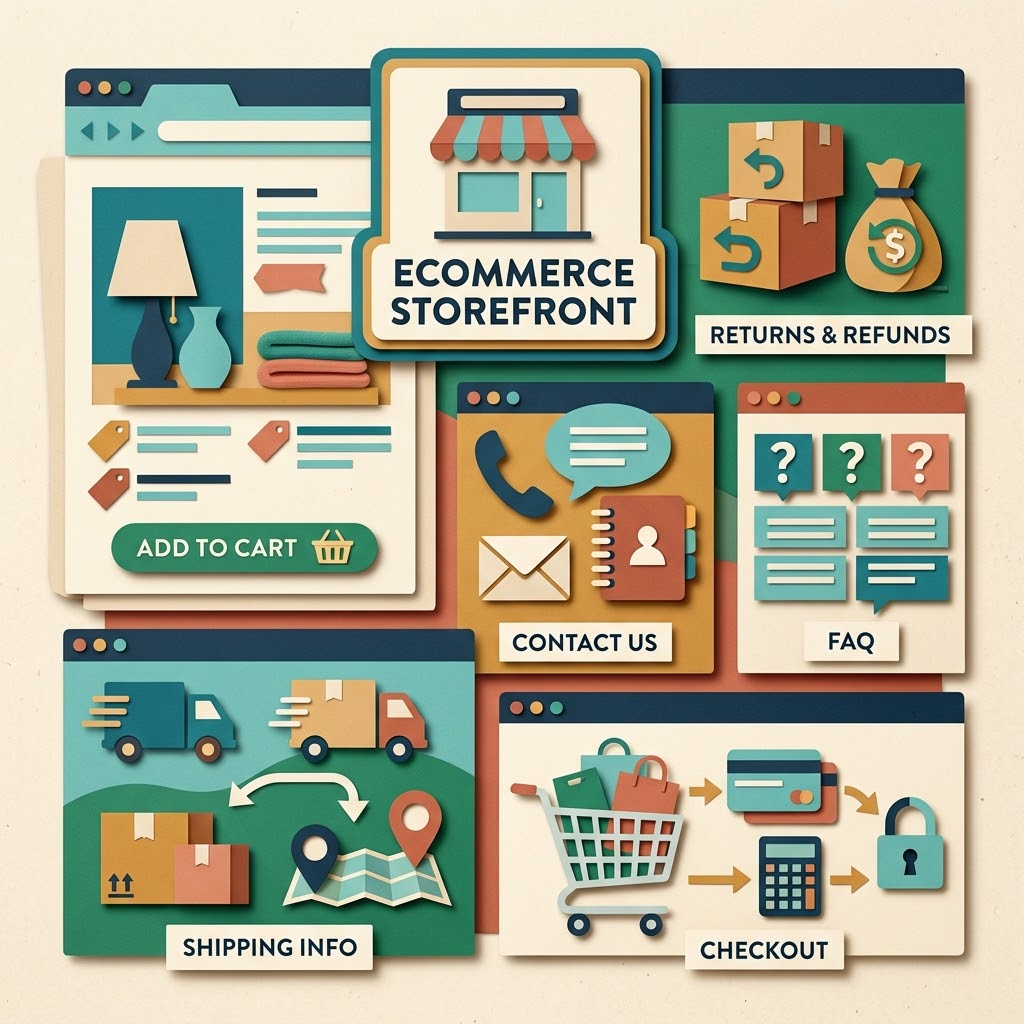
🏁 Month 1 Success Looks Like
- You have shortlisted 10–20 products for further research
- You can explain what makes a product worth testing
- You have checked margins, shipping, and supplier quality
- Your product research spreadsheet is organized
- You have a clear direction for your first product tests
⚠ COMMON MISTAKE
Picking products only because they look trendy. A product needs demand, margins, reliable suppliers, and a reason people would buy now.
⭐ Good Product Traits
Product Trait | Why It Matters |
Solves a clear problem | Easier to market |
Easy to demonstrate | Better for videos and ads |
Lightweight | Lower shipping risk |
Not easy to find locally | Makes online buying more appealing |
Has emotional appeal | Better for impulse purchases |
Good profit margin | Leaves room for ads and fees |
Simple to understand | Reduces customer confusion |
📅 Month 2: Build Your Store & Product Pages
🎯 Main Goal
Create a clean, trustworthy store that makes the product easy to understand and buy.
✅ What to Do
- Choose your store platform
- Pick a simple store name and theme
- Add your first products
- Write clear product descriptions
- Add shipping, refund, and contact pages
- Create product images or demos
- Set up payment processing
- Install analytics and tracking
- Test the checkout process
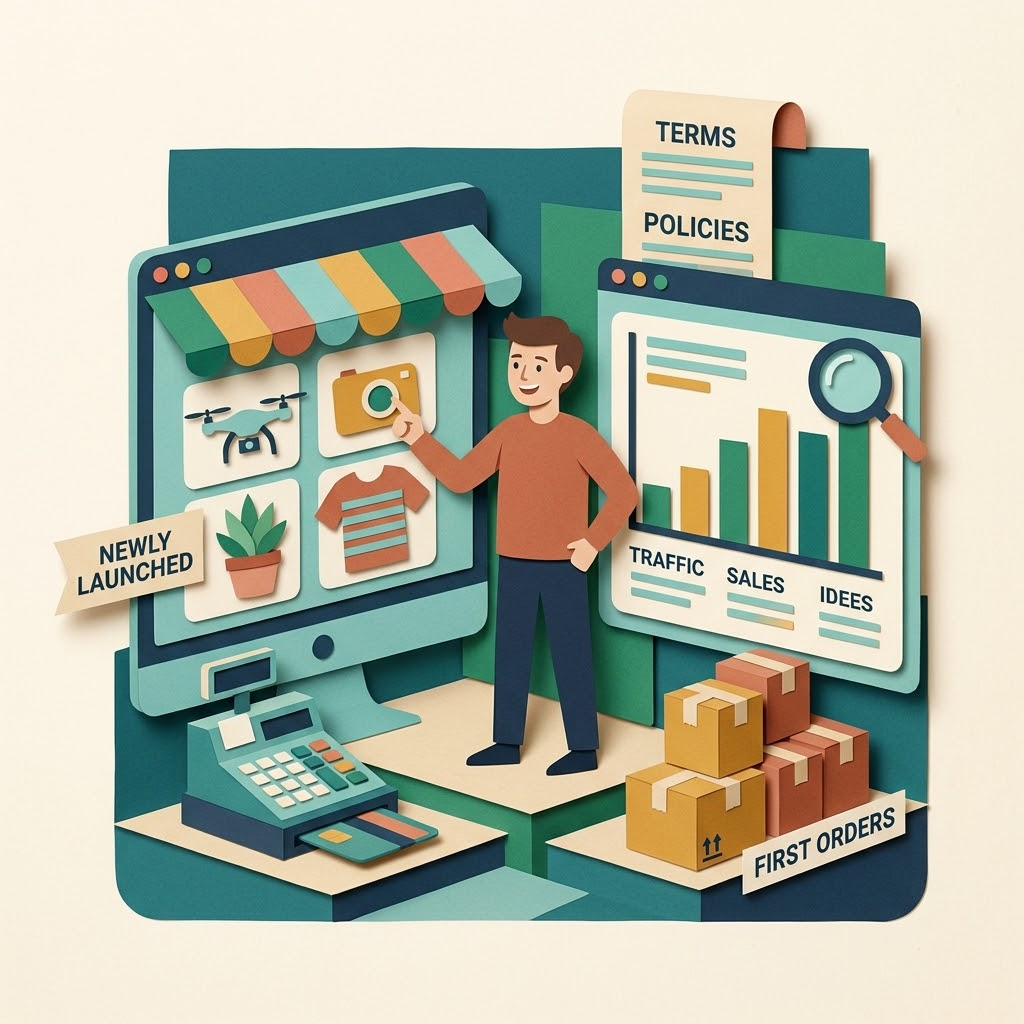
🏁 Month 2 Success Looks Like
- Your store is live
- Your checkout works
- Your policies are visible
- Your product pages are clear
- Your first products are ready for testing
☑️ Product Page Checklist
- Clear product title
- Strong product images
- Simple benefit-focused description
- Price and shipping expectations
- Size, color, or variant details
- Reviews or social proof if available
- FAQ section
- Clear call-to-action button
🎯 KEY TAKEAWAY
A dropshipping store must feel trustworthy. If the store looks rushed, unclear, or suspicious, people will leave before buying.
🏪 Important Store Pages
Page | Purpose |
Home page | Explains what the store sells |
Product page | Converts visitors into buyers |
About page | Builds trust |
Contact page | Helps customers reach you |
Shipping policy | Sets delivery expectations |
Refund policy | Reduces confusion and disputes |
FAQ page | Answers common buyer questions |
Order tracking page | Improves customer experience |
📅 Month 3: Test Products & Marketing Angles
🎯 Main Goal
Start testing products, ads, content, and offers to see what gets attention.
✅ What to Do
- Test 3–5 products
- Create simple product videos or image ads
- Test different hooks and benefits
- Try organic content before spending heavily
- Run small ad tests if you have a budget
- Track clicks, add-to-carts, and purchases
- Compare product page performance
- Pause weak products quickly
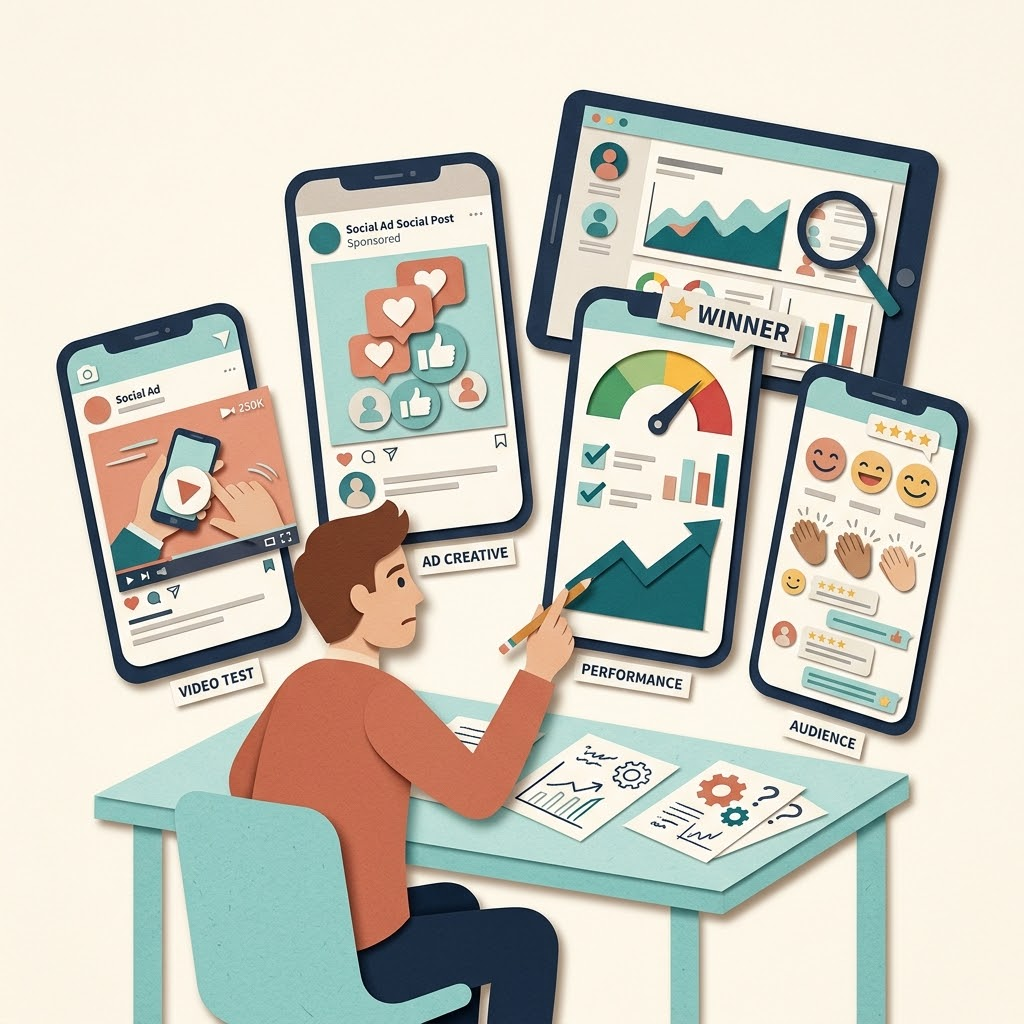
🏁 Month 3 Success Looks Like
- You tested several products, hooks, or offers
- You tracked clicks, add-to-carts, and purchases
- You learned which marketing angles attract attention
- You identified which products to continue or pause
- You have real data to guide your next tests
📣 Marketing Angles to Test
Angle | Example |
Problem-solution | “Tired of messy cables?” |
Convenience | “Make this task faster and easier” |
Gift angle | “Perfect gift for pet owners” |
Before-and-after | “From cluttered to organized” |
Demonstration | Show the product in use |
Lifestyle | Show the result the buyer wants |
Urgency | Limited offer or seasonal demand |
📅 Month 4: Improve the Store & Customer Experience
🎯 Main Goal
Fix weak points in your store, product pages, supplier process, and customer communication.
✅ What to Do
- Review product page data
- Improve photos, descriptions, and FAQs
- Check supplier shipping performance
- Create customer service response templates
- Improve abandoned cart emails if available
- Add order tracking information
- Remove weak products
- Strengthen your best product pages
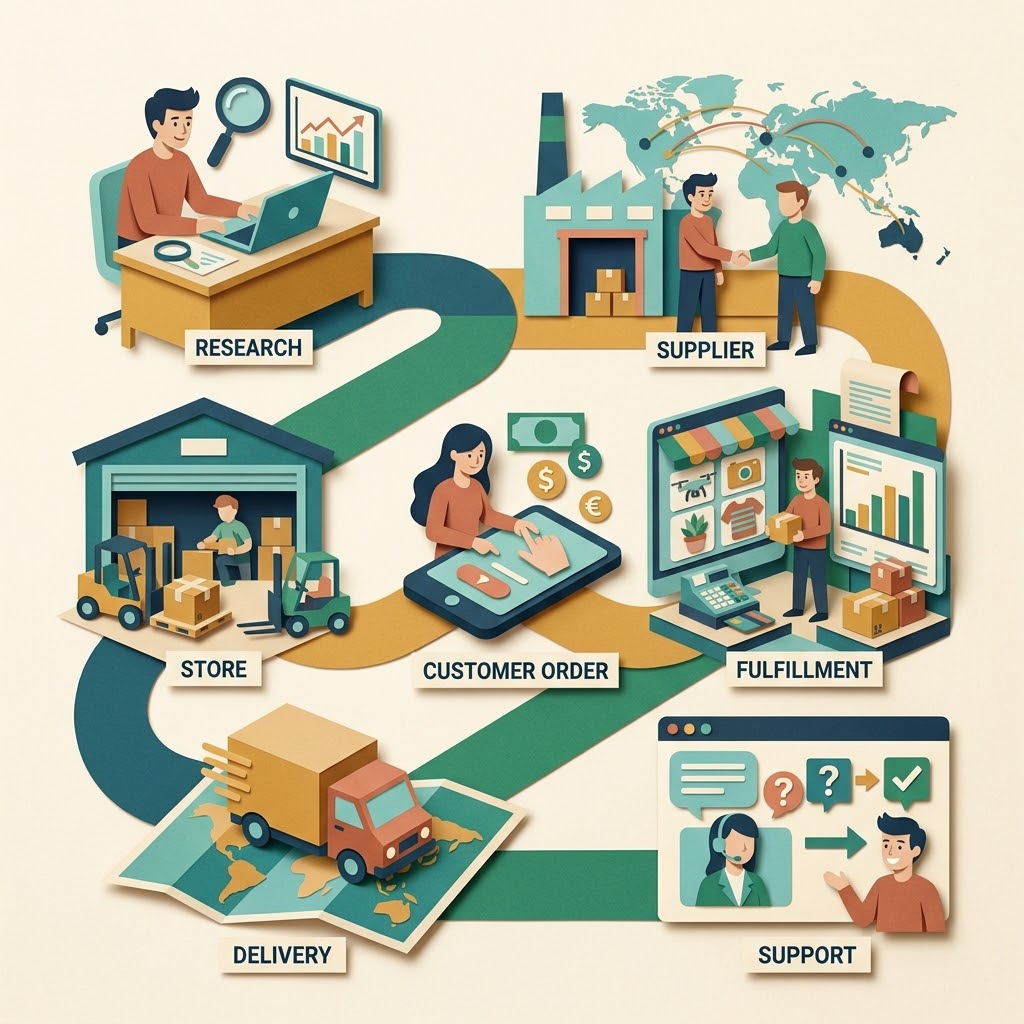
🏁 Month 4 Success Looks Like
- Your store feels more trustworthy
- Your customer service is more organized
- You have removed weak products
- Your best products are easier to buy
- Your workflow is more repeatable
⚠ COMMON MISTAKE
Customer experience matters. Slow shipping, unclear policies, and poor communication can destroy trust even if the product sells.
🗓️ Simple Weekly Workflow
Day | Task |
Monday | Research products and competitors |
Tuesday | Improve product pages |
Wednesday | Create ads or organic content |
Thursday | Review analytics and customer questions |
Friday | Test new offers or products |
Weekend | Check suppliers, orders, and store issues |
🔄 Simple Dropshipping Workflow
Step | What Happens |
Product research | Find possible products to test |
Supplier check | Review quality, shipping, and reliability |
Product page | Create the offer and description |
Traffic test | Run ads or organic content |
Order received | Customer buys from your store |
Supplier fulfillment | Supplier ships the product |
Customer update | You provide tracking and support |
Review data | Decide whether to scale, improve, or stop |
📅 Month 5: Optimize Winners & Control Costs
🎯 Main Goal
Focus on products and offers that show signs of demand while controlling ad spend and fulfillment problems.
✅ What to Do
- Identify your best-performing products
- Improve winning product pages
- Test new thumbnails, videos, or ad creatives
- Try bundles or quantity discounts
- Improve shipping expectations
- Negotiate with better suppliers if sales grow
- Cut products with poor margins or complaints
- Track profit after product cost, ads, fees, and refunds

🏁 Month 5 Success Looks Like
- You know which products and offers show real promise
- You improved winning pages, creatives, or bundles
- You are tracking profit after all major costs
- You have clearer supplier and shipping decisions
- You can distinguish revenue from actual profit
🎯 KEY TAKEAWAY
Revenue is not profit. Always track product cost, shipping, platform fees, ad spend, refunds, and customer service issues.
💰 Ways to Improve Profit
Improvement | Why It Helps |
Better product page | Increases conversion rate |
Stronger ad creative | Lowers wasted ad spend |
Product bundle | Raises average order value |
Upsell/cross-sell | Adds revenue per customer |
Better supplier | Reduces complaints |
Clear shipping policy | Reduces refund pressure |
Email follow-up | Recovers possible lost sales |
Better targeting | Attracts more likely buyers |
📅 Month 6: Review, Double Down or Pivot
🎯 Main Goal
Review your first 6 months and decide whether to scale a winner, improve the store, or pivot to a better product category.
✅ What to Do
- Review all products tested
- Identify your best traffic source
- Review profit and loss
- Review customer complaints and refunds
- Identify which ads or content worked best
- Decide what products to keep, remove, or retest
- Build a 90-day plan for months 7–9
- Consider moving toward branded products if traction exists
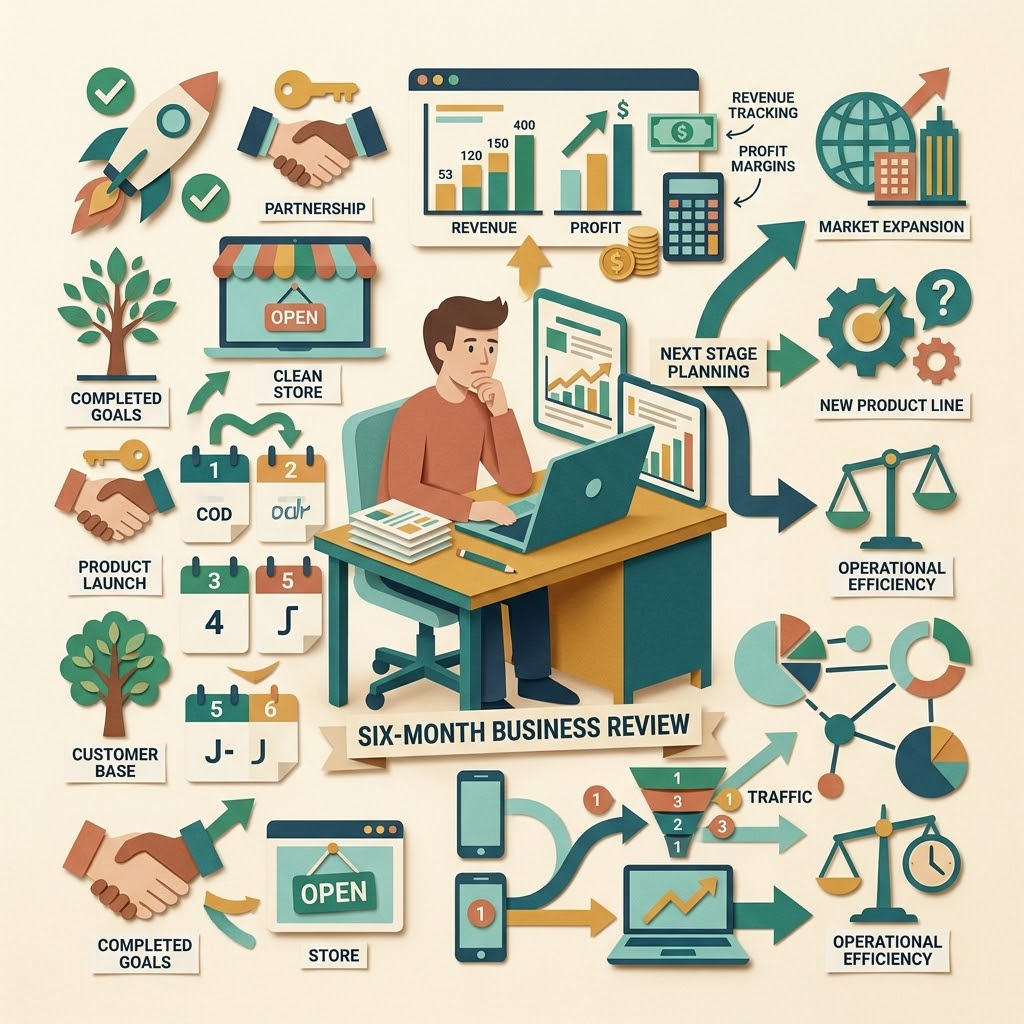
🏁 Month 6 Success Looks Like
- You know what products worked and failed
- You understand your real costs
- You have a clearer product testing process
- You know whether to scale or pivot
- You have a 90-day plan for future testing and growth
🎯 KEY TAKEAWAY
Dropshipping becomes more sustainable when you stop chasing random trends and start building around proven products, reliable suppliers, and better customer experience.
❓ 6-Month Review Questions
- Which products got the most clicks?
- Which products converted into sales?
- Which products caused complaints?
- Which suppliers were reliable?
- Which marketing angles worked best?
- Which traffic source performed best?
- What did customers ask before buying?
- What was your real profit after costs?
- Should you scale, improve, or pivot?
📊 Decision Table
If This Happens | Do This |
Product gets clicks but no sales | Improve product page, price, or offer |
Product gets sales but low profit | Raise price, bundle, or find better supplier |
Product gets complaints | Replace supplier or remove product |
Ads cost too much | Test organic content or new creative |
One product performs best | Create more content and offers around it |
No product works after testing | Revisit niche and product research |
Customers ask the same questions | Add answers to FAQ and product page |
✅ 6-Month Success Checklist
By the end of 6 months, check whether you have:
✅ Picked a niche or product category
✅ Built a product research spreadsheet
✅ Vetted suppliers before listing products
✅ Launched a simple store
✅ Added shipping, refund, and contact policies
✅ Tested multiple products
✅ Tracked clicks, carts, sales, and costs
✅ Improved product pages
✅ Created customer service templates
✅ Removed weak products
✅ Identified your best product or category
✅ Created a plan for the next 90 days
⚠️ What Not to Do During the First 6 Months
Avoid these mistakes:
❌ Selling products without checking supplier reliability
❌ Copying another store exactly
❌ Hiding long shipping times
❌ Spending heavily on ads before testing small
❌ Selling low-quality or risky products
❌ Ignoring customer complaints
❌ Treating revenue as profit
❌ Adding too many random products
❌ Using misleading product claims
❌ Giving up after one failed product test
📝 QUICK NOTE
Dropshipping is a testing business. The goal is to find proof before spending bigger money.
🧭 Simple 6-Month Milestone Tracker
Month | Main Focus | Target Output |
Month 1 | Product research | 10–20 products shortlisted |
Month 2 | Store setup | Store launched with policies |
Month 3 | Product testing | 3–5 products tested |
Month 4 | Store improvement | Weak products removed, pages improved |
Month 5 | Profit optimization | Winners improved, costs reviewed |
Month 6 | Review & pivot/scale | 90-day growth plan created |
🚀 Final 6-Month Strategy
Your first 6 months should follow this simple path:
Month 1: Research products and suppliers
Month 2: Build your store and product pages
Month 3: Test products and marketing angles
Month 4: Improve the store and customer experience
Month 5: Optimize winners and control costs
Month 6: Review results and decide whether to scale or pivot
The dropshippers who last are not the ones who chase every trending product. They are the ones who test carefully, track profit honestly, and build a store customers can trust.
11. Get the Dropshipping Starter Kit
🎁 Plan Your Dropshipping Store
The Dropshipping Starter Kit contains 12 browser-based tools for product research, store planning, supplier checks, pricing, marketing, fulfillment and business risk management.
Explore the 12 included workspaces:
✅ 1. Product Research Checklist — Compare product opportunities using your own market research.
✅ 2. Store Setup Guide — Plan essential store pages, policies and setup tasks.
✅ 3. Ad Creative Templates — Draft advertising messages and creative concepts to test.
✅ 4. Supplier Vetting Sheet — Evaluate supplier quality, shipping, communication and reliability.
✅ 5. Facebook Ads Testing Framework — Organize ad tests, budgets and results without promising performance.
✅ 6. Email Sequence Templates — Draft welcome, cart follow-up and customer emails.
✅ 7. Profitability Calculator — Estimate margins after product, delivery, advertising and other costs.
✅ 8. 90-Day Action Plan — Follow staged research, setup and optimization activities.
✅ 9. Order Fulfillment Workflow — Organize order processing and customer delivery checks.
✅ 10. Customer Service Scripts — Prepare honest customer replies and issue-resolution messages.
✅ 11. Scaling & Cash Flow Planner — Model inventory-free operations, spending and cash flow assumptions.
✅ 12. Risk & Account Protection Guide — Review platform, payment, data and supplier-related risks.
Also in the editable master: A central dashboard and Start Here instructions are available in the editable kit.
This toolkit does not build or host a store, purchase ads, place orders or verify suppliers automatically. Results, margins and sales are not guaranteed. Check current platform policies and consumer-protection duties before selling.
12. Frequently Asked Questions
⚖️ Is dropshipping ethical/legal?
Legal: Yes, if you follow laws, including taxes, business registration, and consumer protection.
Ethical: Gray area. Be honest about shipping times, deliver quality products, and provide good customer service. Don’t scam people with fake discounts or hide poor quality.
📦 How do I compete with Amazon?
Don’t sell commodity products Amazon already has. Compete on:
- 🎯 Unique products not on Amazon
- 🧠 Better marketing/branding
- 🔍 Targeting specific niches
- ❤️ Creating emotional connection
- 🛠️ Solving specific problems
🚀 What if my product goes viral and I can’t fulfill orders?
Good problem to have! Pause ads temporarily, communicate delays to customers, find additional suppliers fast, or increase the price to slow demand while you catch up.
🚚 How do I handle long shipping times?
Be transparent. Show shipping times clearly on the product page. Send tracking updates by email. Offer a compelling reason to wait, such as a cheaper price than Amazon or an exclusive product. Consider US/EU suppliers for faster shipping.
🛒 Should I use AliExpress or private suppliers?
AliExpress: Cheap but slow, usually 15–45 days. Good for testing.
Private suppliers, such as Spocket, CJDropshipping, or Zendrop: Faster, usually 5–15 days, but more expensive. Better for scaling.
Start with AliExpress, then move to better suppliers once you find winners.
⏰ Can I do this part-time?
Yes, most people start part-time, around 10–20 hours/week. Managing ads, customer service, and orders takes time but is doable alongside a full-time job. Growing beyond a small test usually requires more time.
🧾 What about taxes?
You’re self-employed. Set aside 25–30% of profits for taxes. Track ALL expenses, including ads, apps, samples, and software. Get tax software or an accountant once earning. Shopify doesn’t withhold taxes — you’re responsible.
🏢 Do I need an LLC or business license?
Not required to start testing. If the store becomes an ongoing business, consider entity and tax questions with a qualified professional in your jurisdiction.
⏳ How long until I make money?
Honest answer: Most people lose money for 3–6 months before finding a winner. Some get lucky in month 1. Many never profit and quit after losing $1,000–$3,000. Set realistic expectations.
💸 Can I start dropshipping with $0?
Technically yes with free trials, but you need ad money. Without $500+ for ads, you won’t get traffic. “Free” dropshipping usually means organic social media, which can take 6–12 months to see results.
💰 How much money do I really need to start?
Minimum: $500, but you’ll likely fail with this.
Realistic: $2,000–$5,000 for a proper 3-month test period. This includes store setup, apps, samples, and most importantly, ad spend to test products properly.
📉 Is dropshipping dead/saturated in 2025?
No, but it’s much harder than 2015–2018. Competition increased, ad costs rose, and customers expect faster shipping. It’s NOT dead, but it’s NOT easy. Success requires actual marketing skills and differentiation, not just copying trending products.
13. Important Considerations
Before starting, understand the realities most people ignore:
⏳ You Will Likely Lose Money First
- 💸 Most people lose $500–$3,000 before success
👉 This is part of the learning process
📉 Many Stores Fail
- ❌ Bad product selection
- 📣 Poor marketing
- 🏳️ Giving up too early
💰 Ads Are Required, Usually
- 🐢 Organic takes too long for most beginners
- 🚀 Paid ads = fastest path but requires budget
🧠 Product Research Is Everything
- 🚫 Don’t copy saturated products
- 🛠️ Solve real problems
- ✨ Look for “wow factor” items
🚚 Shipping & Customer Experience Matter
- ⏳ Long shipping = refunds + complaints
- ⚠️ Poor quality = bad reviews
👉 This can kill your store quickly
⚙️ You Handle Customer Service
- 💸 Refunds
- 😟 Complaints
- 📦 Tracking issues
💡 70% of messages = “Where is my order?”
📊 Margins Are Thin
- 📢 Most profit goes to ads
- 🔧 Small improvements = big difference
🔁 This Is Not Set-and-Forget
- 🧪 You must test constantly
- 📉 Products stop working over time
- 😴 Ads fatigue quickly
💡 Final Reality Check
This is NOT easy money
This IS a high-risk, high-reward business model
14. Your Next Steps
🚀 ACTION STEP
💰 If You're Willing to Invest $2,000–$5,000 and Risk Losing It While Learning
🗓️ Week 1: Deep Research Phase
- 🔍 Research 50+ products across multiple niches
- 🎯 Narrow down to 5 high-potential products
- 📦 Order samples, around $100–$200
- 🎥 Watch 20+ hours of YouTube tutorials
🗓️ Week 2: Store Setup
- 🛒 Set up Shopify store, around $39/month
- 🏆 Choose the best product from your samples
- 🧱 Build professional, high-converting product pages
- 🛠️ Install essential apps, around $50/month
🚀 Month 1: Launch & Testing
- 🎥 Create ad creatives, including photos + videos
- 📢 Launch Facebook Ads with a $500–$1,000 budget
- 📊 Test → analyze → ❌ kill losers → 📈 scale winners
- 📦 Handle first customer orders + 💬 support
📈 Months 2–3: Optimization & Direction
- 🚀 If you find a winner → scale ad spend carefully
- 🔄 If no winner → test new products and don’t quit early
- 🛠️ Optimize your store based on real data
🎯 GOALbreak even or reach small profit
🧠 Reality: Most beginners lose money before they find a winner. This phase is about learning, not just earning.
🎥 Don’t Have Time for YouTube? Use Recall to Learn Faster
If you don’t have hours to watch tutorials, tools like Recall let you extract the value from videos in minutes instead of hours.
Recall — Your AI Knowledge Base
⚠️ If You're NOT Willing to Risk $2,000+ and Spend 6+ Months Learning
👉 Dropshipping may not be the right fit — and that’s completely fine.
Consider exploring other side hustles from this series that:
- 💸 Require less upfront capital
- ⚡ Have faster time to first income
- 📉 Carry lower financial risk
💡 Simple Truth
- 💰 High upside = higher risk
- ⏳ Takes time to figure out what works
- 🧪 Success comes from testing, not guessing
15. The Bottom Line
🎯 KEY TAKEAWAY
Dropshipping is not hands-off income — it's a real e-commerce business.
🙋 If you:
✔ 🧪 Commit to testing products
✔ 📣 Learn marketing, including ads + creatives
✔ 🔁 Stay consistent through early losses
🏗️ You can build:
💰 A testing process for products, ads, and margins — not a set monthly income
💰 A store that may stay small, or scale, depending on winners you can fulfill profitably
🚀 The real opportunity isn’t the product — it’s mastering marketing + systems.
16. Recommended Websites & Tools
🛠 TOOLS & RESOURCES
You do not need every resource listed below. This directory brings together the major platforms, tools, and resources from this guide, along with additional research and learning options, so you can find them in one place when you need them.
Start with the essentials. Add tools only when your store develops a specific need for them.
🛒 Store Platforms & Website Builders
- Shopify — E-commerce platform for building a dropshipping store, adding products, taking payments, and installing sales apps.
- WooCommerce — WordPress-based e-commerce option for sellers who want more control and are comfortable with a more technical setup.
- BigCommerce — E-commerce platform for larger catalogs, built-in sales features, and scalable online stores.
- PageFly — Shopify landing page builder for creating higher-converting product pages without custom coding.
- GemPages — Drag-and-drop page builder for Shopify product pages, landing pages, and campaign-specific store pages.
💡 PRO TIP
Start with one platform and a simple theme. A working checkout, clear policies, and a tested supplier matter more than apps or custom design.
🔍 Product Research & Trend Validation
- TikTok Creative Center — Research tool for finding trending ads, viral product angles, hooks, and short-form creative ideas.
- Amazon Best Sellers — Product discovery page for spotting popular categories, buyer demand, and trending consumer products.
- Meta Ad Library — Research tool for studying competitor ads currently running on Facebook and Instagram.
- AliExpress Dropshipping Center — Supplier and product research tool for checking AliExpress product data, order volume, and dropshipping options.
- Google Trends — Demand validation tool for checking whether interest in a product, keyword, or niche is rising, falling, or seasonal.
- Sell The Trend — Paid dropshipping research platform for finding product ideas, store examples, analytics, and automation features.
- Dropship.io — Product and competitor research tool for estimating sales, tracking Shopify stores, and analyzing niche opportunities.
- Minea — Ad intelligence tool for studying product ads across TikTok, Facebook, Instagram, and Pinterest.
- Niche Scraper — Product research tool for analyzing winning products, Shopify stores, and dropshipping trends.
- Ecomhunt — Curated product research platform with product ideas, ad examples, analytics, and beginner-friendly dropshipping insights.
📝 QUICK NOTE
Free research tools are enough to spot demand patterns. Pay for product research tools only when they help you validate faster.
📦 Suppliers, Sourcing & Fulfillment
- AliExpress — Low-cost marketplace commonly used for testing dropshipping products before moving to faster suppliers.
- DSers — AliExpress dropshipping automation tool for importing products and managing order fulfillment.
- AutoDS — Dropshipping automation platform for product importing, order management, and fulfillment workflows.
- Zendrop — Dropshipping supplier platform mentioned as a faster-shipping alternative to standard AliExpress fulfillment.
- Spocket — Supplier platform mentioned for finding faster-shipping products from US, EU, and premium suppliers.
- CJDropshipping — Supplier and fulfillment platform for product sourcing, faster shipping options, and better scaling support.
📣 Advertising & Customer Acquisition
- Facebook Ads — Paid advertising platform for testing broad audiences, retargeting shoppers, and scaling product campaigns.
- Meta Ads Manager — Ad management tool for running and managing Facebook and Instagram ad campaigns.
- Instagram — Organic and paid traffic platform for Reels, product demos, influencer content, and visual product marketing.
- TikTok Ads — Paid ad platform for viral-style product campaigns, short-form video testing, and younger audiences.
- TikTok — Organic short-form video platform for product demos, trend-based content, and free traffic testing.
- Google Shopping — Shopping search experience connected to high-intent buyers actively comparing products.
- Google Shopping Ads — Google ad solution for promoting products to shoppers with direct purchase intent.
- Pinterest Ads — Paid advertising platform useful for home, fashion, lifestyle, gift, and visual product niches.
- Pinterest — Organic visual discovery platform for product pins, lifestyle content, and long-term traffic.
📝 QUICK NOTE
Set your allowable acquisition cost before launching any campaign, and track purchases and margin — not clicks.
📧 Email Marketing, Reviews & Conversion Tools
- Klaviyo — Email and SMS marketing platform for abandoned cart recovery, post-purchase flows, and customer retention.
- Mailchimp — Email marketing platform for beginner newsletters, abandoned cart emails, and customer follow-up sequences.
- Loox — Shopify review app for collecting and displaying customer photo reviews to build social proof.
- Judge.me — Product review app for collecting reviews, displaying star ratings, and improving trust on product pages.
- Upsell — Upsell tool mentioned for increasing average order value through post-purchase offers and thank-you page optimization.
📚 Learning & Research Support
- YouTube — Video platform mentioned for watching dropshipping tutorials, product research walkthroughs, and store-building lessons.
- Recall — AI knowledge-base tool mentioned for summarizing and extracting useful information from tutorials faster.
🎯 KEY TAKEAWAY
You do not need every tool on this page. One store platform, one supplier, and one traffic channel are enough to run your first test.
🧭 How to Use This Directory
🧰 Start With a Simple Setup
Do not start by creating accounts with every service listed above. For most beginners, a simple setup is enough:
- One store platform
- One supplier
- One way to take payment
- One traffic channel
- Basic analytics
That is enough to start building. Add tools only when you can name the specific problem they will solve.
🎯 KEY TAKEAWAY
Tools support the business. They are not the business.
Your biggest advantages will come from:
Finding a problem-solving product → Testing with honest numbers → Improving margins → Scaling only what works
17. Explore Similar Side Hustles
 Print-on-Demand — Sell custom-designed products with the same no-inventory model, built around your own designs.
 Product Flipping — Apply your product research skills to buying undervalued items and reselling them for profit.
- Selling Digital Products — Skip shipping and suppliers entirely by selling downloads, templates, and guides.
 UGC Creation — Use your ad-creative skills to make content for brands without running your own store.
 Social Media Management — Turn your TikTok and Meta advertising skills into a service for other businesses.
 Affiliate Marketing: Get Paid to Promote What You Love — Promote proven products for commissions without handling fulfillment or customer service.