
Affiliate disclosure: Some links in this guide may be paid referral links. If you purchase or sign up through one, One Stop Side Hustles may earn a commission. How our affiliate links work.
AFFILIATE MARKETING STARTER GUIDE
Turn your content, audience, or expertise into potential ongoing commissions. Recurring commissions apply only to affiliate programs that offer them. Whether you have 100 followers or 100,000, affiliate marketing lets you earn commissions by sharing products you genuinely believe in.
1. What Is Affiliate Marketing?
2. Why Choose Affiliate Marketing?
3. Choose Your Niche & Content Style
4. Earnings, Commissions & Offer Selection
5. Essential Tools & Your Starting Setup
6. Find Affiliate Programs & Reach Your Audience
7. From Product Research to Published Affiliate Content
8. Build Trust & Improve Conversions
9. Learning Resources & Templates
10. Your First 6 Months in Affiliate Marketing
11. Get the Affiliate Marketing Starter Kit
12. Frequently Asked Questions
Quick Snapshot
Earn: Highly variable — beginners may earn little or nothing initially, while established affiliates can potentially earn more as traffic, trust, content, and conversions grow.
Work: Create content on a blog, YouTube, social, or email — anytime, anywhere
Start: Low cost (often $0) using free platforms and free affiliate signups
Best for: Content creators who enjoy recommending products they trust
Grow: Build ongoing commission potential with traffic + trust; recurring payouts depend on the program
1. What Is Affiliate Marketing?
Affiliate marketing involves promoting products or services online and earning a commission for each sale, lead, or action generated through your unique referral link.
Think of it like digital word-of-mouth — you’re recommending products you already use or love, and companies reward you for spreading the word.
Here’s the step-by-step breakdown of how the process flows
- Join an Affiliate Program
- Get Your Unique Tracking Link
- Promote the Product
- Customer Makes a Purchase
- You Earn a Commission
Choose a company or platform (like Amazon Associates, or ClickBank) and sign up for their affiliate program.
After approval, you’ll receive a custom affiliate link for each product. This link tracks who clicks and buys through your referral.
Share your link through your blog, social media, YouTube channel, email list — anywhere your audience trusts you.
When someone clicks your link and buys the product, the sale is recorded under your affiliate ID.
You’ll receive a percentage of that sale according to the program’s attribution, approval, and payout schedule.
PRO TIP
Build trust first. People buy from creators they like and believe, not random links.

2. Why Choose Affiliate Marketing?
Affiliate marketing can combine low overhead, high scalability, and ongoing income potential as your content library grows.
💰 Income potential (performance-based commissions)
Some highly established affiliate businesses can generate substantial monthly revenue, but results vary widely based on niche, traffic, audience trust, conversion rates, commission structures, and experience.
What can help improve earning potential:
- Higher-intent traffic (SEO + tutorials)
- Better offer fit + trust
- Multiple content assets compounding
🕒 Flexible + location-independent
Create content on your schedule and earn from audiences worldwide.
Why this is great part-time:
- Work nights/weekends
- Batch content in sessions
- Let evergreen posts support ongoing discovery, with occasional updates
🧰 Low startup cost and simple setup
You can start with:
- Free social platforms
- A simple blog or channel
- Free affiliate program signups
Optional upgrades later:
- Website + hosting
- Email platform + lead magnet
🌍 Massive and growing industry
Affiliate marketing is a multi-billion dollar industry, and companies are constantly looking for partners to drive sales through content, email, and communities.
Translation: new products + new programs = ongoing opportunity.

📈 Highly scalable
Possible progression looks like—not a guaranteed path:
- Beginner → first links, small commissions
- Intermediate → consistent traffic, steady income
- Advanced → optimized funnels, higher conversions
- Scaled → multiple income streams, automation
Key idea: one useful piece of content may keep earning over time, with occasional maintenance.
🤝 Multiple income streams at once
You can diversify by promoting:
- Multiple products
- Across multiple platforms
- With multiple commission structures
- One-time and recurring offers
This reduces dependence on one product or one program.
🧠 No product creation required
You promote existing products and services, which means:
- No inventory
- No customer support
- No product development
Your focus stays on traffic + trust + conversion.
🎯 Trust-based recommendations convert better
Affiliate marketing works best when you recommend products you:
- Use
- Have tested
- Can explain clearly
Best content types: tutorials, comparisons, and buyer guides.
3. Choose Your Niche & Content Style
Choosing your affiliate marketing niche and promotion style is one of the most important steps in building a profitable affiliate business. You do not need to promote every type of product. The best beginner strategy is to choose one clear audience, solve one problem, and recommend products that genuinely fit that audience.
Below is a breakdown of the main affiliate marketing categories, grouped by product type, audience intent, and income potential.
🛒 Everyday Consumer Products
🛍️ Retail Product Affiliate Marketing
Recommend practical physical products that solve everyday problems for a defined group of shoppers.
- 🧺 Examples: Amazon products, home goods, gadgets, fitness gear, beauty items, kitchen tools
- ⭐ Difficulty: ⭐⭐ Easy to moderate | 🔥 Demand: Very high
- 💰 Commission Potential: Low per sale, but high volume
- 👥 Typical Audience: Shoppers, deal seekers, gift buyers, hobbyists
- 🌟 Best for: Beginners who want easy product recommendations and broad content ideas
💡 PRO TIP
Product roundups like “Best Budget Home Office Gear” or “Top 10 Gifts for New Dog Owners” are beginner-friendly because they match buyer intent.
👗 Fashion, Beauty & Lifestyle Products
Use visual demonstrations and personal experience to help shoppers evaluate style, beauty, and lifestyle purchases.
- 💄 Examples: Clothing, skincare, makeup, accessories, wellness products, home décor
- ⭐ Difficulty: ⭐⭐⭐ Moderate | 📱 Demand: High on visual platforms
- 💰 Commission Potential: Low to moderate, depending on brand
- 👥 Typical Audience: Style-focused shoppers, beauty fans, lifestyle audiences
- 🌟 Best for: Bloggers, Pinterest creators, Instagram creators, TikTok creators, and YouTubers
💡 PRO TIP
Visual content matters here. Use tutorials, “before and after” examples, outfit ideas, routines, and gift guides to make products easier to buy.

💻 Digital Products & Software
💻 Software / SaaS Affiliate Marketing
Show readers how a digital tool fits into a real workflow, rather than promoting features without context.
- 🧰 Examples: Email marketing tools, website builders, AI tools, project management apps, design software, hosting platforms
- ⭐ Difficulty: ⭐⭐⭐ Moderate | 💸 Demand: Strong and recurring
- 💰 Commission Potential: Moderate to high, often recurring
- 👥 Typical Audience: Business owners, creators, freelancers, marketers, students
- 🌟 Best for: Content creators who can make tutorials, comparisons, reviews, and “how-to” guides
💡 PRO TIP
Software affiliate programs can be powerful because many offer recurring commissions. A single tutorial can keep earning if it ranks in search or gets consistent traffic.
🎓 Online Courses & Digital Products
Help learners choose resources suited to their goals, experience level, and preferred way of learning.
- 🎓 Examples: Paid courses, ebooks, templates, memberships, coaching programs, digital downloads
- ⭐ Difficulty: ⭐⭐⭐ Moderate | 🚀 Demand: High in learning-based niches
- 💰 Commission Potential: Moderate to high per sale
- 👥 Typical Audience: Beginners trying to learn a skill, career changers, creators, entrepreneurs
- 🌟 Best for: Educational blogs, YouTube channels, newsletters, and niche resource pages
💡 PRO TIP
Promote courses and templates after giving free value first. Tutorials, case studies, and “best resources for beginners” pages convert better than random links.

💰 Finance, Business & Career Niches
💵 Personal Finance Affiliate Marketing
Explain financial products carefully for readers making consequential decisions; accuracy and trust come first.
- 🏦 Examples: Budgeting apps, investing platforms, credit tools, insurance products, tax software, banking products
- ⭐ Difficulty: ⭐⭐⭐⭐ Hard | 💰 Demand: Very high-value audience
- 💰 Commission Potential: High, but heavily trust-based
- 👥 Typical Audience: Budgeters, investors, side hustlers, families, small business owners
- 🌟 Best for: Creators who can build authority, explain topics clearly, and avoid hype
💡 PRO TIP
Finance content requires accuracy and trust. Focus on education, comparisons, and disclaimers rather than making unrealistic income or investment claims.
🏢 Business Tools & B2B Affiliate Marketing
Recommend tools around a specific business task, such as managing clients, invoicing, or publishing a website.
- 📊 Examples: CRM tools, invoicing software, bookkeeping platforms, productivity apps, website hosting, automation tools
- ⭐ Difficulty: ⭐⭐⭐ Moderate to hard | 🧠 Demand: Strong from business owners
- 💰 Commission Potential: Moderate to high
- 👥 Typical Audience: Freelancers, consultants, online business owners, agencies, service providers
- 🌟 Best for: Review sites, tutorial blogs, YouTube walkthroughs, newsletters, and business resource hubs
💡 PRO TIP
Business buyers are often less price-sensitive if the tool saves time or helps them make money. Comparison posts like “Best CRM for Freelancers” can perform well.

📣 Content Platform Affiliate Marketing
📝 Blog & SEO Affiliate Marketing
Create searchable articles that answer a concrete question and introduce relevant products naturally.
- 📝 Examples: Product reviews, comparison articles, buying guides, tutorials, resource pages
- ⭐ Difficulty: ⭐⭐⭐ Moderate | 📈 Demand: Long-term traffic potential
- 💰 Commission Potential: Slow at first, scalable over time
- 👥 Typical Audience: Searchers looking for answers, reviews, or recommendations
- 🌟 Best for: Beginners who like writing and want long-term evergreen content
💡 PRO TIP
Focus on buyer-intent keywords like “best,” “review,” “comparison,” “alternatives,” and “for beginners.”
📱 Social Media Affiliate Marketing
Demonstrate products in short, useful content that gives viewers a reason to consider the recommendation.
- 📱 Examples: TikTok product demos, Pinterest pins, Instagram reels, YouTube Shorts, Facebook groups
- ⭐ Difficulty: ⭐⭐ Easy to start | 🚀 Demand: Fast content discovery
- 💰 Commission Potential: Can grow quickly, but traffic is less predictable
- 👥 Typical Audience: Scroll-based viewers, impulse buyers, niche communities
- 🌟 Best for: Creators who prefer short-form content, visuals, and trend-based marketing
💡 PRO TIP
Do not just drop links. Show the product solving a problem, compare options, or create “things I wish I knew sooner” content.

🎯 Niche & Community-Based Affiliate Marketing
🎨 Hobby Affiliate Marketing
Use your understanding of a hobby to recommend equipment or resources for a particular activity or skill level.
- 🎨 Examples: Photography gear, gaming accessories, art supplies, outdoor gear, pet products, music equipment
- ⭐ Difficulty: ⭐⭐ Easy to moderate | ❤️ Demand: Strong in passionate communities
- 💰 Commission Potential: Low to moderate, depending on product price
- 👥 Typical Audience: Hobbyists, enthusiasts, beginners, collectors
- 🌟 Best for: Creators who already understand a hobby or community
💡 PRO TIP
Hobby audiences trust real experience. Product demos, beginner kits, “what I use,” and comparison guides usually work better than generic product lists.
📍 Local / Service-Based Affiliate Marketing
Help people evaluate a service they already need through focused reviews, comparisons, or local information.
- 📍 Examples: Home services, moving services, insurance quotes, repair services, local lead-generation offers
- ⭐ Difficulty: ⭐⭐⭐⭐ Hard | 🧲 Demand: High-intent but competitive
- 💰 Commission Potential: High per lead or referral
- 👥 Typical Audience: People actively searching for a service
- 🌟 Best for: SEO-focused websites, local niche blogs, review pages, and lead-generation content
💡 PRO TIP
This model works best when the searcher already needs help. Pages like “Best Pest Control Companies in [City]” or “How Much Does Moving Cost?” can attract high-intent traffic.

🎯 Build Your Beginner Affiliate Plan
🎯 KEY TAKEAWAY
Start with retail products, hobby products, or software tools. They are easier to explain, easier to turn into content, and easier to match with beginner-friendly search or social media topics.
🚀 ACTION STEP
Write a focused first plan:
- Audience & problem: Name one audience and the buying problem your content will solve.
- Offer fit: Select one or two relevant products you can explain honestly; check the program’s commission, approval, and promotion rules.
- Content plan: Draft three tutorials, comparisons, or buyer guides for one primary channel.
- Trust & measurement: Plan clear affiliate disclosures and track clicks and conversions before expanding.
4. Earnings, Commissions & Offer Selection
Affiliate marketing income depends on audience intent, trust, offer fit, and conversion—not traffic alone. Use the strategies below to build a realistic, diversified earning model.
🧠 Reality Check (What Actually Separates Earners)
- Most beginners make little to no money at first
- Not because affiliate marketing “doesn’t work”
- 👉 Usually because they quit too early
- 👉 Or they promote too broadly without strategy
- The people who usually break through are the ones who:
- Stay consistent
- Build trust first
- Focus on a specific niche
- Improve content based on data
🎯 KEY TAKEAWAY
First commissions often show up after a few months, and stronger results usually come after sustained content + traffic + trust-building.
🎯 Choose Offers That Fit Your Audience
Select relevant products that solve your audience’s problems, and understand each program’s commission structure, attribution window, payout requirements, and promotional terms before recommending an offer.
🛒 Low- & Mid-Ticket Offers
- Promote low-ticket products for easier conversions
- Promote mid-ticket products for better payout balance
🔁 High-Ticket & Recurring Offers
- Promote high-ticket or recurring tools for fewer but larger wins
- Mix all three so you are not dependent on one commission source
🧪 Illustrative Earnings Scenarios
📋 EXAMPLE
These hypothetical scenarios show how audience intent, offer selection, and conversion rates can affect earnings. They are not verified case studies or income forecasts.
🔀 Same Audience, Very Different Outcomes
🌱 Scenario A: Broad lifestyle creator
- 10,000 monthly visitors
- Promotes random low-commission products
- Weak targeting
- Illustrative monthly earnings: $100–$400/month
🎯 Scenario B: Niche creator with clear buyer intent
- 10,000 monthly visitors
- Promotes relevant software, tools, or high-converting products
- Strong content strategy + trust
- Illustrative monthly earnings: $1,000–$5,000+/month
🚀 Scenario C: Niche authority + recurring SaaS offers
- 10,000 monthly visitors
- Promotes recurring subscriptions + high-intent tutorials
- Email list + optimized calls to action
- Illustrative monthly earnings: $3,000–$8,000+/month
💡 Same traffic. Huge difference in monetization quality.
🎯 Strategic Takeaway (This Is What Matters)
Most people think: 👉 “I just need more traffic.” But the stronger formula is:
🧮 Traffic × Trust × Offer Fit = Income
- Low traffic + strong trust + strong offer fit can outperform bigger sites
- High traffic + weak intent can underperform badly
- The best affiliate earners usually:
- Solve specific problems
- Recommend products naturally
- Build trust before selling
- Diversify across multiple programs and content types

🚀 Build Your First Affiliate Offer
Start with one audience, one buying problem, and a small set of relevant offers. Your first affiliate plan should be easy to explain, useful to your audience, and simple enough to measure before you add more programs.
🧭 Build Your Affiliate Offer in 5 Steps
- Choose one audience and problem. Name the people you want to help and the buying decision or problem your content will make easier.
- Select relevant offers. Start with one or two products you can explain honestly; check the program’s commission, approval, cookie, payout, and promotion rules.
- Create helpful content first. Build tutorials, comparisons, reviews, or buyer guides that help someone decide before you place a link.
- Match the offer to the context. Use low- or mid-ticket products for easier entry, then add high-ticket or recurring offers only when they genuinely fit the audience.
- Track and improve. Use clear disclosures and monitor clicks, conversions, and earnings per click before expanding the offer mix.
🎯 KEY TAKEAWAY
Affiliate marketing is not about dropping links everywhere. It is about matching the right offer to the right audience in the right context.
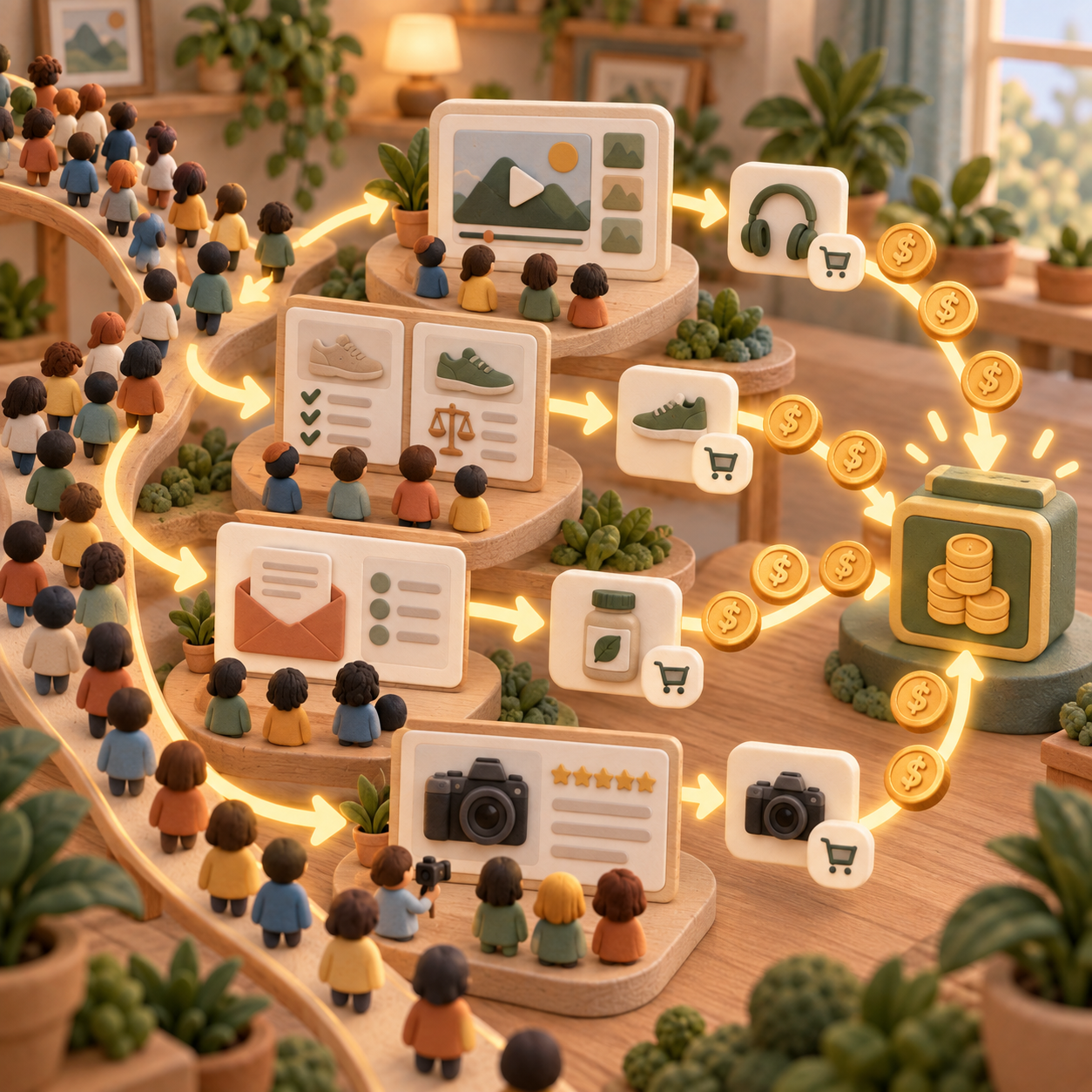
📋 Example: Beginner Affiliate Offer Mix
📋 EXAMPLE
Illustrative starter plan—not an income guarantee.
- Audience: Beginners building a simple online business.
- Problem: They need practical tools but do not know which products are worth considering.
- Content: Three tutorials, one comparison, and one buyer guide that explain the use case, tradeoffs, and best fit.
- Offer mix: 1–2 easy-entry products, 1 solid mid-tier solution, and 1 recurring software/tool offer.
- Trust: Explain your experience, include drawbacks, disclose affiliate relationships, and avoid unsupported claims.
- Measurement: Track clicks, conversions, and earnings per click for each content type before adding more offers.
✍️ Write Your One-Sentence Affiliate Recommendation
“I help [specific audience] solve [specific problem] by showing how to use or compare [product or tool]. Start with [clear next step], and I may earn a commission at no extra cost to you.”
🚀 ACTION STEP
Best approach for most beginners:
- 1–2 easy-entry products
- 1 solid mid-tier solution
- 1 recurring software/tool offer
That creates a more stable income base than chasing only high-ticket offers.
Before publishing, prepare:
📋 Affiliate Income & Commission Planning Reference
📖 How to Use These Tables
Compare the income stages, content monetization ranges, and commission structures below when choosing your affiliate offers.
📝 QUICK NOTE
Higher commissions do not automatically mean easier money. The best fit is where audience trust + buying intent + product relevance overlap.
📊 Illustrative Income Planning by Stage
These ranges are illustrative, not established averages or guaranteed results. Earnings vary widely, and some affiliates earn nothing. The timelines are planning examples, not predictions.
💵 Illustrative Affiliate Earnings Planning Examples
🚀 Stage | 👥 Audience / Traffic Level | 💰 Illustrative Monthly Income | ⏳ Planning Timeline Example | 📌 What’s Happening |
Beginner | Small audience / early content | $0–$100 | 0–3 months | Learning platforms, publishing first content |
Growing | Some traffic / early clicks | $100–$500 | 3–6 months | First conversions, testing offers |
Established | Consistent niche traffic | $500–$3,000 | 6–12 months | Better targeting, stronger trust, better offers |
Scaling | Strong SEO/social/email system | $3,000–$10,000+ | 12–24 months | Multiple programs + better conversion systems |
Advanced | Authority brand / multiple channels | $10,000+/month | 2+ years | Compounding traffic, recurring commissions, optimized funnels |
🎯 KEY TAKEAWAY
Affiliate income usually compounds. The biggest jump often comes after your content library, traffic sources, and audience trust start working together.
📈 Revenue Per 1,000 Visitors (Illustrative Affiliate RPM Planning Examples)
These ranges are illustrative, not established averages or guaranteed results. Earnings vary widely, and some affiliates earn nothing. The timelines are planning examples, not predictions.
🧾 Illustrative Content Monetization Planning Examples
💡 Content Type | 💰 Illustrative RPM Range | 📝 Notes |
General list posts | $5–$20 | Broad traffic, lower buyer intent |
Product roundups | $15–$50 | Better commercial intent |
Tutorials with tool links | $25–$100+ | High trust + strong relevance |
Buyer guides / comparisons | $40–$150+ | Often strongest affiliate content |
High-ticket niche funnels | $100–$300+ | Smaller traffic can still outperform |
🎯 KEY TAKEAWAY
The goal is not just “more traffic.” It is better-intent traffic going to the right offer.
💸 Commission Rate Breakdown
📌 IMPORTANT
Actual commission rates, attribution rules, eligibility requirements, and payouts vary by affiliate program and may change over time.
💼 Affiliate Program Type | 💰 Illustrative Commission Examples | 📈 Income Potential |
🛒 Physical products | 1%–10% | Lower margin, volume-based |
📚 Digital products | 20%–50% | Stronger payouts per sale |
🧩 Software / SaaS | 30%–50% recurring | Best for long-term recurring income |
💳 Lead-gen / finance / services | $50–$1,000 per lead or signup | High payout, niche-dependent |
5. Essential Tools & Your Starting Setup
You do not need an expensive website, a stack of subscriptions, or professional equipment to start affiliate marketing. Your first setup only needs to help you do four things:
Create useful content → Publish it → Share approved affiliate links → Track what happens
🧰 Your Minimum Viable Affiliate Setup
What You Need | What It Does | Beginner Approach |
💻 Device | Create and manage content | Use your current laptop, tablet, or smartphone |
📣 Publishing Channel | Gives your content a home | Start with one blog, YouTube channel, social account, or newsletter |
🗂️ Content Workspace | Organizes ideas, products, and publishing | Use Notion, a spreadsheet, or another simple workspace |
🎨 Creative Tool | Creates graphics, thumbnails, pins, or simple visuals | Start with Canva or your platform's built-in tools |
🔗 Affiliate Dashboard | Creates approved tracking links and reports commissions | Use the dashboard provided by each affiliate program |
📊 Basic Analytics | Shows which content attracts attention and clicks | Start with your platform analytics and affiliate reports |
🎯 KEY TAKEAWAY
You need a working system—not a perfect tool stack.
One publishing channel + one organization system + a few relevant affiliate programs is enough to begin.
🛠️ Choose Your Main Publishing Setup
You do not need to be everywhere.
Choose the setup that best matches how you naturally create content.
✍️ Writing-First
Best if you enjoy tutorials, comparisons, buying guides, and detailed reviews.
Your setup might include:
Blog or publishing platform → Content planner → Affiliate links → Analytics
A website gives you more control, but you can test your niche using other publishing platforms before investing heavily.
🎥 Video-First
Best if you enjoy demonstrations, walkthroughs, reviews, or explaining products.
Your setup might include:
YouTube or short-form video platform → Basic recording/editing tools → Affiliate links → Platform analytics
Clear audio, useful information, and a strong explanation matter more than expensive equipment.
📱 Social-First
Best if you prefer short-form content, visuals, demonstrations, or community interaction.
Your setup might include:
Primary social platform → Content planner → Approved link destination → Platform analytics
Keep the recommendation useful even if the viewer never clicks the link.
💌 Newsletter-First
Best if you enjoy writing directly to an audience and curating useful recommendations.
Your setup might include:
Email platform → Simple signup page → Helpful newsletter → Relevant affiliate recommendations
Always check both your email provider's rules and the affiliate program's promotional requirements.
⚙️ Build Your Workflow in 5 Steps
1️⃣ Create a Clear Content Home
Set up one primary place where people can consistently find your content.
Make it obvious:
- Who the content is for
- What problem you help solve
- What type of recommendations you provide
You can expand to additional platforms later.
2️⃣ Create a Simple Content & Product Tracker
For each product or service you may recommend, record:
Product → Audience → Problem solved → Affiliate program → Content idea → Published URL → Results
You may also want to track:
- Commission structure
- Attribution or cookie window
- Program requirements
- Promotional restrictions
- Date you last reviewed the offer
💡 PRO TIP
Keep passwords, banking information, tax information, and sensitive account details in secure systems—not inside your content tracker.
3️⃣ Prepare Your Affiliate Links
Create tracking links through the affiliate program's approved dashboard or tools.
Before publishing:
✅ Confirm the link works
✅ Make sure it goes to the correct product
✅ Check whether link shortening or redirects are permitted
✅ Follow the program's rules for the platform you are using
4️⃣ Add Clear Affiliate Disclosures
Tell people when you may earn money from a recommendation.
A simple example:
This content may contain affiliate links. I may earn a commission if you purchase through one of these links at no additional cost to you.
The disclosure should be easy to notice—not hidden at the bottom of a long page.
5️⃣ Track Content and Sales Separately
Your content platform tells you things like:
Views → Visitors → Watch time → Engagement → Link clicks
Your affiliate dashboard tells you things like:
Attributed clicks → Conversions → Pending commissions → Approved commissions → Payouts
Use both.
A popular post is not automatically a profitable post, and a smaller piece of content can sometimes attract stronger buyers.
💸 Keep Your Tool Budget Lean
⚠️ COMMON MISTAKE
Buying:
- Premium hosting
- Expensive SEO software
- Multiple design subscriptions
- Advanced link-management tools
- Paid automation tools
…before proving that people actually want your content.
Start with free or existing tools whenever practical.
Before paying for something, ask:
What specific problem will this tool solve?
If you cannot answer that clearly, you probably do not need it yet.
🚀 ACTION STEP
Before moving on, set up:
✅ One primary publishing channel
✅ One content tracker
✅ One simple creative tool
✅ Your first affiliate-program shortlist
✅ Basic analytics or platform reporting
6. Find Affiliate Programs & Reach Your Audience
Once your basic setup is ready, you need two things: Offers worth recommending + people who may need them
This section helps you decide where to find affiliate opportunities and how to reach potential buyers.
🛒 Where to Find Affiliate Programs
There are three common ways to find affiliate opportunities.
1️⃣ Affiliate Networks
Affiliate networks connect publishers with many companies through one platform.
Instead of creating a completely separate relationship with every company, a network may provide:
- Program discovery
- Tracking links
- Reporting
- Commission information
- Payment management
Common examples include:
Awin • CJ Affiliate • Impact • Rakuten Advertising • PartnerStack • ClickBank
You do not need to join all of them.
Choose networks that contain brands or products that actually fit your audience.
2️⃣ Individual Company Affiliate Programs
Many businesses operate their own affiliate programs.
If there is a product you already know and trust:
Visit the company's website and look for terms such as:
Affiliate Program • Partners • Referrals • Creators • Publishers
This can be one of the best ways to find highly relevant offers because you are starting with a product that already fits your niche.
3️⃣ Retail Affiliate Programs
Large retailers can be useful when your content covers many physical products.
For example, a creator covering:
Home organization, pet supplies, kitchen gear, technology, fitness products, or hobbies
may benefit from a retailer that carries many products in one place.
Retail programs are convenient, but commission structures and program rules can vary significantly.
🔎 Evaluate the Program Before Joining
📌 IMPORTANT
Do not choose an affiliate program just because the commission percentage looks high.
Check:
Factor | What to Look For |
🎯 Product Fit | Does your audience actually need it? |
💰 Commission | How and when are commissions earned? |
🍪 Attribution | How long can a referral remain eligible? |
💳 Payout | What is the payment threshold and schedule? |
📣 Promotion Rules | Are your intended platforms allowed? |
🔗 Link Rules | Are redirects, paid ads, email, or social promotion restricted? |
🏷️ Brand Quality | Would you feel comfortable recommending the company? |
🔄 Recurring Revenue | Does the program pay once or continue while a customer remains subscribed? |
💡 PRO TIP
A relevant 10% commission can be more valuable than an unrelated 50% commission.
Audience fit comes first.
📋 Before You Apply
Affiliate programs may review your website, social account, newsletter, or content before approving you.
Give them something useful to evaluate.
Try to have:
✅ A clearly defined niche
✅ Several published pieces of useful content
✅ A professional-looking profile or content home
✅ An explanation of how you plan to promote products
✅ Accurate information about your traffic or audience
Do not exaggerate your numbers.
A small, focused audience can still be valuable.
📣 Choose One Primary Traffic Channel
Your next decision is where people will discover your recommendations.
Platform | Best For | Strong Content Types | General Growth Pattern |
🔎 Blog / SEO | Writers and long-term search traffic | Reviews, comparisons, tutorials, buyer guides | Slower start with potential long-term discovery |
🎥 YouTube | Demonstrations and detailed explanations | Reviews, walkthroughs, tests, comparisons | Content can remain discoverable over time |
📌 Pinterest | Visual and search-oriented niches | Pins, guides, roundups, tutorials | Can support ongoing discovery |
📸 Instagram | Visual brands and communities | Reels, carousels, demonstrations | Relationship and engagement driven |
🎵 TikTok | Fast testing and short demonstrations | Mini reviews, demos, tips | Discovery can be fast but unpredictable |
💌 Email | Direct audience relationships | Recommendations, tutorials, sequences | Becomes stronger as trust grows |
✍️ Publishing Platforms | Writers testing ideas without a full website | Guides, reviews, educational articles | Easy entry with less platform control |
🚫 Can You Start Without a Website?
Yes. A website can eventually provide more control, search visibility, and ownership, but it does not have to be your first step.
Website-free options can include:
🎥 YouTube
Create tutorials, demonstrations, reviews, and comparisons.
Create useful visual content that directs users toward eligible content or destinations.
💌 Newsletter
Build a direct relationship with subscribers through helpful content and recommendations.
📱 Social Media
Use demonstrations, comparisons, mini tutorials, and useful niche content.
✍️ Publishing Platforms
Test written content and niche ideas before committing to your own website.
📝 QUICK NOTE
Platform rules and affiliate-program rules can change.
Always confirm that both allow the promotional method you intend to use.
🎯 Pick Your First Traffic Strategy
Do not launch on six platforms at once.
For your first 90 days:
Choose one primary channel.
Then:
1. Pick one repeatable content format.
2. Publish consistently.
3. Track views and clicks.
4. Identify your strongest topics.
5. Repurpose winners onto a second platform later.
🎯 KEY TAKEAWAY
Find relevant products first. Build useful content around them. Then send the right audience to that content.
Do not build your strategy around dropping links everywhere.
7. From Product Research to Published Affiliate Content
Joining an affiliate program does not create a recommendation. The real work is turning a product, service, or tool into content that helps someone make a better buying decision.
🎯 PHASE 1 — Plan the Content
📋 Steps 1–4: Define the buyer's question, create your content brief, establish your experience level, and set your decision criteria.
✅ Ready to move on: You have a completed brief, an honest experience category, and written decision criteria.
🎯 Step 1: Start With the Buying Question
Do not start with: “I need a post for this affiliate product.” Start with the question the buyer is trying to answer.
Examples
Review: Is this product actually worth paying for? Comparison: Which of these two options fits my situation better? Tutorial: Can this tool solve the problem I have? Buyer Guide: What should I look for before choosing? Alternatives: What should I use if the popular option is not right for me? Resource Page: What tools do I need to accomplish this task?
This keeps the content centered on the audience instead of the commission.
📝 Step 2: Write a One-Page Affiliate Content Brief
Before researching or writing, define the assignment.
Content Brief Audience: Problem / Buying Question: Product or Offer: Content Type: What I Need to Verify: My Experience Level With Product: Primary Alternatives: Who This May Be Best For: Who It May NOT Be Best For: Affiliate Program: Disclosure Needed: Primary CTA: Last Product Check:
This becomes the operating sheet for the content.
🧭 Step 3: Decide What Kind of Recommendation You Can Honestly Make
Not every affiliate relationship gives you the same level of knowledge. Use one of these categories.
✅ Personally Used: You have meaningful direct experience with the product. You can discuss:
- Setup
- Workflow
- Strengths
- Weaknesses
- Real use cases
- Friction you experienced
🧪 Personally Tested: You tested the product specifically for evaluation. State the nature of that test honestly. Do not turn: “I used the free trial for two hours.” into: “After using this for months...”
🔎 Researched: You have not personally used it enough to make an experience-based claim. That does not automatically make the content useless. You can still create:
- Feature comparisons
- Pricing explanations
- Eligibility guides
- Specification comparisons
- Research-based buyer guides
Just describe the basis accurately.
Example: “I haven't personally used this service long-term, so this comparison is based on its current published features, pricing, documentation, and customer-use considerations.” That's far better than pretending.
📋 Step 4: Define the Decision Criteria
Before you decide whether a product is “best,” decide what best means.
Example: Email Marketing Tool: You might compare:
- Ease of setup
- Automation
- Contact limits
- Templates
- Integrations
- Reporting
- Support
- Pricing structure
- Beginner friendliness
Example: Running Shoes: You might evaluate:
- Intended use
- Fit
- Cushioning
- Weight
- Durability
- Terrain
- Price
- Return policy
Your criteria should come from what the buyer cares about—not whichever strengths make the affiliate product look best.
🎯 KEY TAKEAWAY — Choose the scorecard before you see the winner.
🔎 PHASE 2 — Research the Product
📋 Steps 5–10. Check product facts and important claims, investigate user friction, and compare realistic alternatives. Build an evidence sheet you can rely on while writing—and return to when details change.
✅ READY TO MOVE ON Key facts are verified with dated sources, complaints and alternatives are noted, and the evidence sheet is filled in.
🔎 Step 5: Research the Product From Primary Sources First
Start with the product or company itself for factual information. Check:
- Official product page
- Pricing page
- Terms
- Documentation
- Specifications
- FAQs
- Return/refund policy
- Trial information
- Support documentation
- Affiliate-program terms
Record the Date: Products change. Pricing changes. Features disappear. Policies change. Add: Last Verified: [Date] to your internal notes. That makes future updates dramatically easier.
⚖️ Step 6: Separate Product Facts From Marketing Claims
A company's landing page is useful. It is also marketing.
Product Fact: “The plan includes up to five users.” Can usually be verified. Marketing Claim: “The easiest platform on Earth.” That's positioning—not an objective fact you should automatically repeat. Performance Claim: “Increase your revenue by 300%.” Needs much more scrutiny.
Do not copy promotional claims into your recommendation simply because the affiliate dashboard provided them.
🛡️ Step 7: Research Important Claims Independently
The higher the stakes, the stronger your verification should be. Give extra attention to:
- Health
- Finance
- Investing
- Credit
- Insurance
- Legal services
- Business income
- Safety
- Education outcomes
Ask: Can I support this statement? • Am I repeating the merchant's claim as if I verified it? • Does the reader need context or qualification? An affiliate relationship does not lower the standard for accuracy.
💬 Step 8: Study Real User Friction
Do not research only why people like the product. Look for:
- Common complaints
- Limitations
- Setup difficulties
- Missing features
- Unexpected fees
- Cancellation problems
- Compatibility issues
- Support complaints
- Reasons people switch away
Potential sources include:
- User communities
- Product forums
- Independent reviews
- App-store feedback
- Customer discussions
Treat individual complaints as experiences—not universal facts.
Better: “Some users report difficulty with X, so this is something worth checking if Y matters to you.” Not: “This product always has terrible support.”
🆚 Step 9: Verify the Alternatives
If you are recommending Product A, understand what the buyer might reasonably choose instead. Research: Product A • Product B • Product C • Do nothing / free alternative Sometimes the best recommendation is: “You probably don't need the paid option yet.” That kind of honesty can build far more trust than forcing a commission into every decision.
📑 Step 10: Build an Evidence Sheet
Keep facts separate from draft copy. This is especially useful when updating older content.
📋 Evidence Sheet
Claim | Evidence | Source | Checked |
Starts at ___ | Pricing page | Official | ✅ |
Includes ___ | Feature page | Official | ✅ |
Free trial offered | Terms | Official | ✅ |
Strong for beginners | Your analysis | Criteria sheet | ✅ |
Common complaint about ___ | Multiple user reports | Secondary | 🟡 |

✍️ PHASE 3 — Create the Recommendation
📋 Steps 11–17. Turn your research into content that helps the reader make a buying decision. Show the product in context, explain drawbacks and buyer fit, and keep your experience and claims accurate.
✅ READY TO MOVE ON A complete draft that leads with the reader's decision, shows the product in use, includes downsides, and makes no invented claims.
🎯 Step 11: Lead With the Reader's Decision
Do not make the reader scroll through 1,000 words before discovering what you think. For many affiliate formats, establish early: What is this? • Who is it for? • What problem does it solve? • What is the key tradeoff? Then prove your conclusion.
🧱 Step 12: Use the Right Structure for the Content Type
Different buying questions need different structures.
Product Review: What It Is → Who It's For → My Experience / Research → Strengths → Weaknesses → Price / Terms → Alternatives → Verdict Comparison: Buyer Question → Evaluation Criteria → Product A → Product B → Category Comparison → Best For Each Buyer → Verdict Tutorial: Problem → Steps → Product in Action → Limitations → Result → Who This Workflow Fits Buyer Guide: What Matters → Criteria → Options → Tradeoffs → Best Fit by Situation Alternatives Article: Why Someone Might Want an Alternative → Alternative Options → Tradeoffs → Who Each Fits
Do not force every affiliate article into the same template.
🎥 Step 13: Show the Product Doing Something
Whenever your content format allows it, demonstrate rather than merely describe. Instead of: “This software has automation features.” Show: “Here's how I set up an automatic follow-up after someone submits this form.”
Useful Proof Can Include
- Screenshots
- Screen recordings
- Photos
- Workflow examples
- Product demonstrations
- Before/after workflow examples
- Original comparisons
The goal is to help the audience understand what buying actually gives them.
⚠️ Step 14: Include the Downsides
Do not bury negatives because they might reduce commissions. Discuss:
- Missing features
- Learning curve
- Price
- Compatibility
- Ongoing costs
- Limitations
- Better alternatives for certain users
Example: “I like this for solo freelancers because setup is simple. I would not choose it for a large sales team that needs advanced permissions and reporting.” That's much more useful than: “Best CRM for everyone!”
💡 PRO TIP — A drawback helps the right buyer trust the recommendation—and helps the wrong buyer avoid it.
👥 Step 15: Separate “Best” Into “Best For”
Avoid universal rankings when the choice depends on the person. Instead of: Best Website Builder consider: Best for beginners • Best for stores • Best for customization • Best low-cost option • Best for people who don't want to maintain a site This produces better recommendations because buyers have different constraints.
🧪 Step 16: Be Precise About Your Experience
Use language that matches reality.
If You Own It: “I've used this microphone for...” If You Tested It: “I tested these features during...” If You Researched It: “According to the current pricing and feature documentation...” If It Was Given to You: Say so when the relationship needs disclosure.
Do not blur these situations together. The FTC says endorsements should reflect honest opinions and experiences, and endorsers should not claim experience they did not actually have. [1]
🚫 Step 17: Do Not Invent Results
⚠️ WARNING
Avoid claims such as: “This will double your sales.” • “You'll save 10 hours every week.” • “This product guarantees weight loss.” unless you have an appropriate factual basis and the claim itself is lawful.
Better: Describe:
- Feature
- Process
- Your experience
- Demonstrated use
- Appropriate evidence
- Tradeoff
Affiliate content should help someone evaluate a purchase—not manufacture certainty.
⚖️ PHASE 4 — Disclose & Add Affiliate Links
📋 Steps 18–26. Trust, disclosure, and correct link implementation are part of the content itself—not an afterthought. Make relationships clear, keep your verdict independent, and check the program's rules and every link before publishing.
✅ READY TO MOVE ON Disclosures are placed near recommendations, program and platform rules are checked, and every link is tested.
📢 Step 18: Put the Affiliate Disclosure Where People Will Actually See It
⚠️ WARNING
Do not hide the disclosure:
- On an About page
- Only in the footer
- After all the affiliate links
- Behind vague wording
The FTC's current guidance says a material connection should be disclosed clearly and conspicuously, and for affiliate links the closer the disclosure is to the recommendation or link, the better. It also says phrases like merely “affiliate link” may not clearly tell consumers that you earn money from purchases. [2]
Clear Example: I may earn a commission if you purchase through links in this content, at no additional cost to you. Use wording appropriate to what is actually happening.
📱 Step 19: Match the Disclosure to the Format
📌 IMPORTANT
Blog / Website: Place a clear disclosure where the reader will encounter it before or with affiliate recommendations. Video: Do not rely only on the description. The FTC specifically advises disclosure in the video as well as near affiliate links in the description when both relationships are relevant. [2] Social Media: Keep the disclosure hard to miss and part of the endorsement rather than buried among hashtags or behind More. [1] Email: Make the affiliate relationship understandable where the recommendation appears.
And always check the affiliate program's own promotional rules.
🤝 Step 20: Disclose Other Material Relationships Too
📌 IMPORTANT
Affiliate commission is not the only relationship that may matter. Also consider:
- Free product
- Discounted product
- Sponsorship payment
- Brand trip
- Employment relationship
- Family relationship
- Other incentives
The FTC's guidance says material connections that consumers would not reasonably expect and that could affect how they evaluate an endorsement should be disclosed. [2]
⚖️ Step 21: Keep Disclosure Separate From the Verdict
Being an affiliate should never determine whether the product wins. Your internal order should be: Research → Evaluate → Decide → Recommend → Monetize where appropriate not: Find highest commission → Build reasons it should win That's the difference between an affiliate business and a commission-driven content mill.
🔗 Step 22: Create the Affiliate Link Only After the Recommendation Makes Sense
Use the affiliate program's approved link-generation process. Then record internally:
Program: __________ Offer: __________ Destination: __________ Tracking ID / Sub-ID: __________ Content: __________ Date Added: __________ Last Checked: __________
Do not let your entire link library live in browser bookmarks and memory.
📜 Step 23: Check the Program's Promotion Rules
📌 IMPORTANT
Before publishing, confirm whether the program allows your intended method. Potential restrictions can involve:
- Paid search
- Brand bidding
- Social media
- Coupons
- Link shortening
- Redirects
- Incentives
- Offline promotion
- Certain domains
Treat this as a final pre-publish check. Confirm that both the affiliate program and the platform allow the promotional method you intend to use.
🧪 Step 24: Test Every Destination
Click the link yourself. Check:
- Correct product
- Correct region when relevant
- Page works
- Product still available
- Offer is current
- Pricing statement still matches
- Tracking format looks correct
- Mobile destination works where relevant
Common Failure: Your article says: “The starter plan is $19.” The vendor changed it to $29 six months ago. The affiliate link still works—but the content is now wrong. That's still a problem.
📍 Step 25: Check Links in Context
Ask: Does this link help at this point in the content? Avoid inserting links every other sentence simply because you can.
Useful Placement: After explaining:
- The product
- The relevant benefit
- The tradeoff
- Who it's for
then: “See the current plans and features.” The CTA follows the decision.
🆓 Step 26: Distinguish Affiliate and Non-Affiliate Options When Helpful
Do not remove useful alternatives solely because they do not pay you. If the free tool is genuinely better for a certain reader, say so.
Example: Best paid option: Product A Best free option: Product B Best for advanced teams: Product C
Your credibility is worth more than squeezing commission potential into every recommendation.
✅ PHASE 5 — QA & Publish
📋 Steps 27–30. Run the recommendation through quality checks, record the published version, and verify the live experience. Capture baseline performance before moving on to optimization.
✅ READY TO MOVE ON The piece passes the QA checklist, is live and verified, and its version record and baseline numbers are saved.
✅ Step 27: Run a Recommendation QA
Before publishing, ask:
If several boxes fail, the piece is not ready.
🔎 Accuracy
🧪 Experience
⚖️ Balance
📢 Disclosure
🔗 Links
📝 Content
📝 Step 28: Publish With a Clear Version Record
For each affiliate content asset, record:
Title: ____________________ URL / Platform: ____________________ Publish Date: ____________________ Offer(s): ____________________ Affiliate Program(s): ____________________ Primary Buying Question: ____________________ Disclosure Checked: ____________________ Links Checked: ____________________ Last Product Review: ____________________
This becomes invaluable once you have 50 or 100 pieces of content.
🌐 Step 29: Verify the Live Version
🚀 ACTION STEP
Do not assume the publishing system preserved everything correctly. After publishing:
- Open the content
- Check mobile when relevant
- Verify disclosure placement
- Click important links
- Check buttons
- Check images
- Check tables
- Check video description
- Check formatting
The draft editor is not the final customer experience.
📊 Step 30: Record the Baseline—Then Leave Optimization to Chapter 8
For the initial publication, capture enough baseline data to know what the content does. Depending on your setup:
Leave click-through rate, conversion improvement, and CTA testing for Chapter 8.
📊 Content Signals
- Views / visitors
- Engagement
- Watch time
💰 Affiliate Signals
- Affiliate clicks
- Conversions
- Pending commission
- Approved commission
- Received payout
🔄 PHASE 6 — Maintain & Update
📋 Steps 31–35. Affiliate content should be maintained after publication. Use review triggers and change logs to keep details current—and reevaluate the recommendation when circumstances change.
✅ READY TO MOVE ON You have review triggers, a change log, and a keep/update/replace/remove habit for every published asset.
🔄 Step 31: Treat Affiliate Content as a Maintained Asset
Affiliate content can continue working after publication. But it is not necessarily permanent. Things change:
- Pricing
- Features
- Programs
- Commission structures
- Product availability
- Links
- Alternatives
- Policies
- Your own opinion
Treat maintenance as part of the workflow. Useful content can become lower-maintenance over time, but links, products, programs, and commission rates can all change.
🚦 Step 32: Create Update Triggers
Do not necessarily reread every article every week. Create reasons to review content.
Trigger a Review When
- Product price changes
- Major feature changes
- Product is discontinued
- Affiliate program closes
- Link breaks
- Commission changes significantly
- Better alternative appears
- Reader reports an error
- Company changes ownership
- Your experience changes
- Content receives substantial traffic
- Content starts converting well
High-value content deserves closer maintenance than forgotten content nobody sees.
🗓️ Step 33: Maintain a Product Change Log
📋 EXAMPLE
Example: March 12
- Product increased starter price
- Updated pricing section
- Screenshot replaced
June 8
- Free plan removed
- Changed beginner recommendation
August 21
- Affiliate program changed tracking links
- Replaced links
This prevents you from repeatedly researching the same history.
🔎 Step 34: Recheck the Recommendation—Not Just the Link
⚠️ COMMON MISTAKE
A common mistake is: Link works = content is current. Not necessarily. Ask periodically: Would I still recommend this?
Maybe:
- Competitor became better
- Pricing became unreasonable
- Product quality declined
- Your audience changed
- A feature you praised disappeared
Possible Outcomes
KEEP: Recommendation still stands. UPDATE: Still useful, but details changed. DOWNGRADE: Still an option, but no longer your top pick. REPLACE: Another product now serves the audience better. REMOVE: You are no longer comfortable recommending it.
💰 Step 35: Handle Program Changes Without Rewriting Your Opinion
If the merchant lowers its commission, that may change the economics for you. It should not magically make the product worse for the reader. Similarly, a higher commission does not suddenly make a mediocre product “Editor's Choice.” Keep these separate: Reader Value and: Affiliate Value Both matter to the business. Only the first should determine whether you tell someone a product fits their needs.
📋 PHASE 7 — Practice & Review Your First 5 Assets
📋 Steps 36–37: Take five recommendations through the full workflow, then review what worked and what should become a template. An optional operating system is available at the bottom.
✅ DONE WHEN Five assets are published or updated, your review questions are answered, and you know which parts to repeat, template, or drop.
🚀 Step 36: Put the Workflow Into Action
The 35-step workflow is complete. Take five recommendations through the complete content workflow.
🔎 Asset 1 — Product Review
Focus on:
- Product research
- Personal experience or clearly labeled research
- Pros and cons
- Buyer fit
- Disclosure
Learn how to make one recommendation responsibly.
🆚 Asset 2 — Comparison
Compare two realistic options using the same criteria.
Focus on: Which buyer should choose which product?
Avoid forcing one universal winner.
🛠️ Asset 3 — Tutorial
Show a product solving a real problem.
Focus on:
- Actual workflow
- Useful demonstration
- Natural affiliate placement
If the tutorial is valuable without the link, you're on the right track.
🛒 Asset 4 — Buyer Guide
Compare several approaches or products.
Focus on:
- Decision criteria
- Different budgets
- Different users
- Non-affiliate alternatives where useful
🔄 Asset 5 — Update an Existing Asset
Do not create another new piece immediately.
Take one of the first four and revisit:
- Product details
- Links
- Disclosure
- Reader questions
- Accuracy
- Alternatives
This teaches the part of affiliate marketing beginners often forget:
maintenance.
📋 Step 37: Your First-5-Asset Review
After five pieces, ask:
- Which buying questions were easiest to answer?
- Which products did I genuinely understand?
- Which recommendation required too much guesswork?
- Did I disclose clearly every time?
- Did I accidentally overstate personal experience?
- Were my downsides specific enough?
- Which comparisons produced the clearest buyer decision?
- Did I include useful non-affiliate alternatives?
- Did any link or product detail change?
- Which content was useful even without the affiliate link?
- Which product would I still recommend if the commission disappeared?
- What should become a repeatable template?
That second-to-last question is particularly revealing: “Would I still recommend this if I earned $0?” If the answer is no, take another look at the recommendation.
🚦 Use a Recommendation Decision System
For every offer, eventually choose:
✅ KEEP
The product remains useful for the intended buyer and you are comfortable recommending it.
Continue using it where relevant.
🛠️ UPDATE
The recommendation still works, but:
- Price changed
- Features changed
- Screenshots changed
- Better explanation is needed
- New alternatives appeared
Refresh the content.
🆚 REPOSITION
The product still has value, but for a different buyer. Example: It was once your: Best overall but is now: Best for beginners
Update the recommendation.
🔁 REPLACE
A different solution now serves the audience better.
Recommend the better solution—even if switching costs you commission.
❌ REMOVE
Stop promoting when:
- Product quality becomes unacceptable
- Claims concern you
- Company behavior damages trust
- Program terms become incompatible
- Product is no longer relevant
Your audience's trust is an asset too.
🗂️ Build Your Affiliate Content Operating System
As your content library grows, create reusable systems.
🔎 Research
- Product research sheet
- Source log
- Comparison criteria
- Product change log
✍️ Content
- Review template
- Comparison template
- Tutorial template
- Buyer-guide template
- Content brief
⚖️ Compliance
- Disclosure checklist
- Relationship record
- Claims checklist
- Platform/program rule notes
🔗 Links
- Affiliate link tracker
- Tracking-ID record
- Broken-link process
- Last-checked date
🚀 Publishing
- Pre-publish QA
- Live-page QA
- Screenshot/visual checklist
🔄 Maintenance
- Update queue
- Product status
- Content review date
- Reader-reported issue log
📊 Performance
- Content analytics
- Affiliate clicks
- Conversions
- Approved commissions
- Received payouts
The goal is not to turn affiliate marketing into paperwork. It is to prevent your content library from becoming a museum of expired pricing and dead links.
🔄 Your Affiliate Content Workflow
Use the same cycle: Question → Research → Evaluate → Create → Disclose → Link → QA → Publish → Track → Maintain
Then use Chapter 8 to improve: Trust → Clicks → Conversion → Audience Relationship That separation is important.
🎯 The Goal
🎯 GOAL
Your goal is not: “Publish more affiliate links.” It is: “Build a library of recommendations people can actually use to make better decisions.” Start with the buyer's question. Research the product. Be precise about your experience. Compare fairly. Include drawbacks. Verify important claims. Disclose the relationship. Test the links. Publish carefully. Keep the recommendation current. Remove products you no longer trust.
Then let Chapter 8 improve how effectively that useful content converts.
🎯 KEY TAKEAWAY — The strongest affiliate content does not ask, “How do I get this person to buy?” It asks, “What does this person need to know before they should buy?”
8. Build Trust & Improve Conversions
Use this section to build trust, earn more clicks, improve conversions, communicate professionally, raise content quality, specialize strategically, and avoid the mistakes that keep new affiliates from earning. Chapter 7 gets your content published; this chapter makes it more trusted, more clickable, and more useful.
⭐ ADVANCED STRATEGY
1️⃣ Build Proof Before You Promote 📁
📌 IMPORTANT
Non-negotiable
People rarely buy through the link of someone they do not trust. Show that you are real, knowledgeable, and honest before asking for a click.
🛡️ Why Proof Builds Trust
Readers want evidence that you understand the product and are not recommending it only for the commission.
Why this matters:
- They need proof you know the topic
- Your recommendation may affect their money and time
- Anonymous link lists feel risky
- Seeing your process helps them judge your advice
- Real examples make you look credible immediately
☑️ Minimum Trust Checklist
- At least 5 helpful pieces of content published
- 3 different content types, such as review, tutorial, and comparison
- 2–3 different products or categories explained honestly
- A clear About or “Who this is for” page
- Real screenshots, photos, or demonstrations
- Pros and cons in every recommendation
- A clear affiliate disclosure
- Recently updated content
- Professional formatting and organization
🛡️ How to Create Proof Before You Earn Commissions
🏠 Option 1: Use Products You Already Own
Start with tools and products you already use and understand.
What to do:
- Write or film 3–5 honest reviews or tutorials
- Treat each piece like a real client project
- Explain who it is for and who should skip it
- Include real screenshots or photos
- Share the drawbacks you have noticed
Good product options:
- Software and apps
- Online courses
- Home and kitchen products
- Fitness gear
- Creator equipment
- Hobby supplies
- Tech accessories
🛠️ Option 2: Test Products Intentionally
Use free trials, free plans, or low-cost purchases to evaluate a product properly.
What to do:
- Choose 2–3 products your target audience is already considering
- Write your decision criteria first
- Complete a real task with each product
- Record what worked and what did not
- Describe the test honestly
⚠️ COMMON MISTAKE
Do not turn a two-hour trial into “after months of use.” Describe exactly what you tested.
📦 Option 3: Publish Helpful Free Content First
Useful content can earn trust before a single link appears.
What to do:
- Answer 5–10 questions your audience actually asks
- Create beginner guides and checklists
- Build a simple resource page
- Share templates or step-by-step workflows
- Add affiliate links only where they genuinely help
Best fit:
Blogs, YouTube channels, newsletters, Pinterest accounts, and niche communities.
👨👩👧 Option 4: Gather Real Feedback
You can build proof from real people, not just your own opinion.
What to do:
- Ask friends, readers, or community members what they struggle with
- Share your draft recommendations and note their questions
- Collect honest comments and reactions
- Get permission before quoting anyone
- Update your content based on what you learn
🛡️ PROOF MUST-HAVES
Aim for at least five strong, honest pieces of content before you apply to programs or push for clicks. This is a recommended starting milestone, not a universal affiliate-program requirement.
💡 PRO TIP
Having proof before promoting can improve program approvals, reader trust, and early conversion rates.
Do not skip this step.
2️⃣ Showcase Your Credibility 🗂️
💡 Proof Types to Include
Proof Type | What It Shows |
Review | You can explain a product fairly, including drawbacks |
Tutorial | You can show the product solving a real problem |
Comparison | You can help someone choose between realistic options |
Buyer guide | You understand what matters in a buying decision |
Case study | You can document a real process and its results |
Screenshots / demos | You have actually used what you recommend |
🛡️ Where to Show Your Proof
Place | Best For |
About page | Explaining who you are and why readers can trust you |
Resource page | Curated tools and recommendations in one place |
Blog or website | Most control and long-term search visibility |
YouTube channel | Demonstrations and detailed walkthroughs |
Pinterest boards | Visual guides that point to helpful content |
Newsletter | Building a direct relationship over time |
Notion page | Simple organized resource or portfolio page |
Linktree or link hub | Organizing several destinations from a social bio |
💡 PRO TIP
Put your best, most helpful content first. A short “start here” page can guide new visitors to your strongest work.
3️⃣ Authenticity Over Hype 🧠
Affiliate content should feel like advice from a knowledgeable friend, not a sales page. Honest, specific recommendations usually earn more trust than exaggerated promotion.
🎯 What Readers Actually Want
😮 Real Experience, Not Generic Claims
Specific details are more believable than broad praise.
What works:
- Describing what you actually did
- Showing real screens or results
- Naming specific use cases
- Explaining setup friction
- Saying what surprised you
- Being clear about what you did not test
🧰 Helpful Tutorials, Not Link Dumps
Readers want help solving a problem, not a list of links.
What works:
- Step-by-step walkthroughs
- Decision criteria
- Side-by-side comparisons
- Examples and templates
- Clear next steps
- Value even without a click
🗣️ Your Genuine Voice, Not a Sales Pitch
People trust a natural, conversational tone.
Use:
- Simple language
- Your own personality
- Honest opinions
- Clear explanations
- Relatable examples
🏠 Relatable Situations, Not Perfect Scenarios
Show how the product fits real life or real work.
Good examples:
- A freelancer organizing client work
- A beginner starting a blog
- A parent finding a practical gadget
- A small business owner comparing tools
- A hobbyist upgrading gear
⚠️ The “Too Salesy” Problem
Content can underperform when it feels like an ad.
Too salesy can look like:
- Link after every sentence
- Only positive claims
- Fake urgency
- Vague superlatives
- Copied merchant copy
- No drawbacks or alternatives
- Hidden or unclear disclosure
💬 Honest Opinions, Not Pure Praise
Mentioning a drawback can actually build trust.
Examples:
- “This is great for beginners, but advanced teams may outgrow it.”
- “I wish the free plan included X, but the paid plan solves it.”
- “The setup took longer than I expected.”
- “I would skip this if you only need basic features.”
🧪 The Trust-Building Formula
Use this structure for more believable recommendations:
- Start with the reader’s problem Name the situation they are trying to solve.
- Be clear about your basis Say whether you used, tested, or researched the product.
- Show the product in action Use screenshots, demos, or real examples.
- Include honest tradeoffs Explain limits, costs, and who should skip it.
- Recommend it for a specific person Match the product to a clear situation.
💡 Hype vs. Helpful Examples
Hype | Helpful |
“The BEST tool ever made!” | “Best for beginners who need a simple setup” |
“You’ll make thousands!” | “Here is what it does and how I tested it” |
Copy-pasted merchant claims | Independently checked facts with dates |
All praise, no detail | Honest pros, cons, and best-fit situations |
“Buy now before it’s gone!” | “Check the current pricing and decide if it fits” |
📝 QUICK NOTE
Affiliate marketing works best when it feels like a trusted recommendation, not a billboard.
Honesty is part of the strategy.
4️⃣ Professional Communication 💼
This separates you from the competition.
Readers, subscribers, and affiliate managers deal with many creators. They remember the ones who are clear, reliable, and easy to trust.
S
💡 Why This Matters
Professional communication leads to:
- Repeat visitors
- Stronger reader relationships
- Better program approvals
- Helpful partner support
- Fewer misunderstandings
- Higher trust
- More conversion opportunities
☑️ The Professional Affiliate Checklist
⏱️ Response Time
Do:
- Reply to reader comments and emails within a few days
- Answer affiliate manager messages promptly
- Set up email notifications
- Check messages on a regular schedule
- Use an auto-responder if away for a longer period
Avoid:
- Ignoring genuine questions
- Leaving partner messages unanswered
- Responding vaguely
- Letting warm leads go cold
💬 Communication Clarity
Do:
- Be specific about who a product is for
- Explain what is and is not included
- Clarify pricing, trials, and refund terms
- Confirm program rules before promoting
- Say plainly when you earn a commission
- Put key details in writing
Avoid:
- Assuming the reader understands the offer
- Being vague about costs
- Overpromising results
- Hiding important limitations
🔔 Updates & Corrections
Do:
- Update pricing and features when they change
- Add corrections openly
- Replace broken or outdated links
- Tell readers when a recommendation changes
- Review high-traffic content regularly
Avoid:
- Leaving outdated information live
- Quietly changing meaning without explanation
- Ignoring reader-reported errors
🔁 Handling Feedback
Do:
- Thank people for feedback
- Confirm you understand the concern
- Fix factual errors promptly
- Answer honestly when you do not know
- Stay calm and professional
Avoid:
- Getting defensive
- Deleting legitimate criticism
- Arguing with readers
- Pushing a product after someone says it is not a fit
5️⃣ Disclosure & Outreach Templates 📝
📝 Affiliate Disclosure Template
Adapt this wording to your platform and check it against current requirements, including the FTC’s influencer disclosure guidance:
Disclosure: This content contains affiliate links.
If you buy through them, I may earn a commission
at no additional cost to you.

I only recommend products I have used, tested, or
carefully researched, and I explain which applies.
My opinions are my own.
Place it where readers will see it before or alongside the links, and repeat it in videos and posts where needed.
📝 Program Application Template
Use this when applying to an affiliate program or contacting an affiliate manager:
6️⃣ Click Mastery 🎣
The first few seconds decide whether people keep reading or watching.
A strong opening gives people a reason to continue, and a clear next step helps them act.
💡 Why Openings Matter
- Attention is short and alternatives are one tap away
- Search and social results are often judged by the title alone
- A weak intro means readers may never reach your recommendation
- A clear headline sets honest expectations
- Better openings can improve engagement, clicks, and trust
🪝 Winning Opening Formulas
😣 Problem Hook
Best for products that solve a clear pain point.
Examples:
- “If you struggle with [problem]…”
- “Still dealing with [pain point]? Start here.”
- “This is for anyone who [relatable problem].”
- “If [task] feels overwhelming, read this first.”
🤝 Relatable Hook
Best for building immediate connection.
Examples:
- “As a beginner who [situation]…”
- “If you’re like me and [common experience]…”
- “Anyone else tired of [frustration]?”
- “I wish I had known this before I started…”
🎯 Direct Hook
Best for clear, benefit-driven messages.
Examples:
- “How to [achieve result] without [pain point]”
- “The simple way to [task]”
- “Everything you need to start [goal]”
- “How I set up [workflow] step by step”
🆚 Comparison Hook
Best for decision-stage readers.
Examples:
- “[Product A] vs. [Product B]: Which fits you?”
- “Best [category] for [specific audience]”
- “[Popular option] alternatives worth considering”
- “Is [product] worth it for [situation]?”
🔄 Before/After Hook
Best for workflow or transformation content.
Examples:
- “From [messy process] to [organized system]”
- “Before: [problem]. After: [improved workflow].”
- “How I cut [task] down to a simple routine”
- “What I changed after testing [product]”
❓ Question Hook
Best for curiosity and engagement.
Examples:
- “Do you really need [expensive option]?”
- “Which [product type] is right for you?”
- “What should you check before buying [product]?”
- “Is there a better way to [task]?”
🚫 Openings to Avoid
Avoid openings that waste attention or mislead.
Weak starts:
- “Hey guys!”
- “In today’s post…”
- Starting with a long personal story before the point
- Generic or clickbait headlines
- Promises you cannot support
- Explaining everything before showing value
🧠 Click & CTA Testing Strategy
Improve one element at a time.
What to do:
- Write 3–5 alternate titles or openings
- Test button text and link placement
- Compare placement near the recommendation versus the end
- Keep the rest of the page mostly the same
- Track clicks and conversions separately
- Keep the winning pattern for future content
🔍 CTA Add-On
Make the next step specific and honest:
“See current pricing,” “Check the free plan,” or “Compare features”
Clear calls to action usually work better than vague or pushy ones.
7️⃣ Conversion Quality Checklist ✅
Why good content still fails to convert
Before publishing or updating any recommendation, review it the way a skeptical reader would.
📋 Content Quality Standards
Check that the content:
- Answers one clear buying question
- Leads with the reader’s decision
- Explains who the product is and is not for
- Includes pros, cons, and alternatives
- Uses accurate, dated facts
- Separates facts from marketing claims
- Provides value even without a click
🔗 Link Quality Standards
Check that your links:
- Go to the correct product and region
- Work on desktop and mobile
- Appear where they help the reader
- Use wording that matches the destination
- Follow the program’s link rules
- Are not hidden or misleading
- Are checked on a regular schedule
📢 Disclosure & Compliance Standards
Check that your disclosure is:
- Easy to notice
- Close to the recommendation or link
- Written in plain language
- Present in videos, posts, and emails where relevant
- Consistent with program and platform rules
- Free of unsupported claims
- Updated when your relationship changes
📱 Page Experience Standards
Check that the page:
- Loads quickly
- Reads well on mobile
- Has clear headings and short paragraphs
- Uses readable tables and images
- Has obvious next-step buttons
- Avoids intrusive popups and clutter
- Works across common browsers
📈 Conversion Standards
Check that the page:
- Matches the intent of the traffic source
- Places the CTA after the reader has enough information
- Includes comparison tables where helpful
- Uses “best for” labels
- Shows the product in action
- Answers common objections
- Has a clear primary next step
❌ Common Reasons Readers Don’t Click or Buy
Avoid these issues:
- No trust signals or proof
- Unclear who the product is for
- Salesy or exaggerated tone
- Hidden or unclear disclosure
- Outdated pricing or features
- Weak or misplaced calls to action
- Too many competing links
- Poor mobile experience
- Mismatch between traffic intent and offer
- No honest drawbacks or alternatives
🔍 Pre-Publish Self-Review
Before publishing, review the content four ways:
- Read it as a beginner: is the problem and next step clear?
- Read it as a skeptic: where would you doubt it?
- View it on your phone: is it easy to use?
- Remove the links: is it still genuinely helpful?
8️⃣ Specialization Strategy 🎯
Become the trusted source for one audience
After you have published a solid body of content, choose one niche or problem area to focus on.
🧭 Promising Affiliate Niches
Niche | Why It Can Work | Typical Offer Type | Competition |
Software & AI Tools | Clear use cases and frequent recurring programs | Subscriptions; recurring where offered | High |
Online Business & Creator Tools | Audiences actively looking for tools and training | Software, courses, memberships | Medium–High |
Personal Finance | High-value decisions, but strict accuracy and trust needs | Financial tools and lead-based offers | High |
Health & Wellness | Ongoing interest; claims require extra care | Physical and digital products | Medium–High |
Home & Lifestyle | Broad category with many sub-niches | Retail products | Medium |
Hobbies & Equipment | Passionate communities that trust real experience | Gear and accessories | Low–Medium |
Parenting & Family | Problem-solving products and loyal audiences | Physical and digital products | Medium |
Education & Career | Learners seeking resources and outcomes | Courses, templates, tools | Medium |
Local & Service Offers | High-intent searchers actively seeking help | Lead or referral offers | Medium–High |
💡 Why Specialization Matters
Specialists can often earn more trust because they understand a specific audience better.
Benefits:
- Readers trust niche expertise
- You understand the language and common problems
- Your content library looks more focused
- You get referrals within the community
- Content creation becomes faster
- You learn which offers and angles work
- You build authority and reputation
🧭 How to Specialize
🛠️ Step 1: Analyze Your First Content
Ask:
- Which topics did you enjoy most?
- Which content got the most clicks?
- Which products convert best?
- Which questions did readers ask repeatedly?
- Which offers fit your audience best?
- Which content felt natural to create?
🛠️ Step 2: Choose Based on Fit
Choose a niche based on:
- Genuine interest
- Audience demand
- Your experience
- Competition level
- Offer quality
- Long-term content potential
Examples:
- Parent → family organization products
- Freelancer → business and productivity tools
- Fitness enthusiast → gear and routines
- Teacher → learning tools and resources
- Creator → publishing and editing tools
🛡️ Step 3: Go All-In on Your Content Library
Create a focused cluster in your chosen niche.
Include:
- Reviews
- Tutorials
- Comparisons
- Buyer guides
- Beginner guides
- Alternatives posts
- A resource page
🛠️ Step 4: Update Your Marketing
Update your:
- Bio
- About page
- Resource page
- Program applications
- Newsletter positioning
- Social profiles
- Content titles and descriptions
🧭 Step 5: Network Within the Niche
Build relationships where your ideal readers spend time.
What to do:
- Join niche communities and forums
- Follow brands and creators in the space
- Comment thoughtfully on relevant posts
- Connect with affiliate managers
- Study common audience questions
- Save high-performing content examples
- Pitch niche-specific content ideas
📦 Positioning Example
Instead of:
“I review random products.”
Use:
“I help freelance designers choose affordable tools to manage clients, invoices, and projects.”
💰 Positioning Premium Example
Affiliate Type | How Readers See You |
General link sharer | One of many similar sources |
Niche specialist | Trusted guide who understands the problem |
Same effort, stronger positioning, higher trust. Specialization can improve results, but it does not guarantee higher earnings.
9️⃣ Common Mistakes: Trust, Content & Offers ⚠️
⚠️ COMMON MISTAKE
Learn from others before you lose time or trust.
🛡️ Promoting Without Proof
People are unlikely to click or buy from a source with no credibility.
Avoid this by:
- Publishing helpful content first
- Using products you understand
- Showing real screenshots or demos
- Explaining your experience honestly
- Building an About and Resource page early
⚠️ Promoting Products You Do Not Understand
Weak knowledge leads to vague, risky recommendations.
Basis | What You Can Say | What to Avoid |
Used | “Here is my experience with it” | Hiding drawbacks |
Tested | “Here is what I tested and found” | Implying long-term use |
Researched | “Based on current documentation and pricing” | Claiming personal experience |
Be clear about which category applies.
💸 Choosing Offers Only for High Commissions
A high commission does not matter if your audience does not trust or need the product.
Avoid this by:
- Starting with the audience problem
- Checking product quality and reputation
- Comparing realistic alternatives
- Reading program terms
- Mixing easy-entry, mid-tier, and recurring offers
🔗 Posting Links Without Helpful Content
Links with no context rarely build trust or conversions.
Avoid this by:
- Explaining the problem first
- Matching the offer to the content
- Placing links where they help the decision
- Adding screenshots or examples
- Making the content useful without the link
📚 Promoting Too Many Products at Once
Becoming a random link directory weakens trust.
Avoid this by:
- Focusing on a few strong recommendations
- Joining only relevant programs
- Choosing one primary channel first
- Pruning weak or outdated offers
- Becoming known for a specific audience
🔟 Common Mistakes: Disclosure, Tracking & Consistency ⚠️
⚠️ COMMON MISTAKE
📢 Hiding or Weakening Disclosures
Unclear disclosures can hurt trust and may create compliance problems.
Do this instead:
- Place the disclosure near the recommendation or link
- Use plain language
- Disclose in videos and posts, not only descriptions
- Disclose other material relationships too
- Follow program and platform rules
📜 Ignoring Program & Platform Rules
Rules can limit links, redirects, ads, email, coupons, and social promotion.
Rule:
Check both the affiliate program’s terms and the platform’s policies before you publish.
Review:
- Link and redirect rules
- Paid-ad restrictions
- Email and social restrictions
- Coupon and branding rules
- Payout and approval terms
📊 Not Tracking Results
You cannot improve what you do not measure.
🔍 Track:
- Page views and engagement
- Affiliate clicks
- Conversions
- Pending and approved commissions
- Earnings per click
- Content type and traffic source
- Offer and program
- Date last updated
⏰ Giving Up Too Early
Affiliate marketing is slow at first.
Reality check:
- Many beginners earn little or nothing early on
- Content takes time to be found
- Trust builds gradually
- Early data shows what to improve
- Consistent improvement compounds over time
🔁 Letting Content Go Stale
Outdated content can quietly lose trust and conversions.
Why stale content hurts:
- Prices and features change
- Links break
- Programs close or change terms
- Better alternatives appear
- Readers notice outdated advice
🏠 Depending on One Platform
Algorithms, accounts, and policies can change.
Reduce the risk by:
- Building an email list
- Owning a home base such as a website
- Repurposing your best content
- Diversifying gradually
- Saving your content and links
9. Learning Resources & Templates
🛠 TOOLS & RESOURCES
Affiliate marketing combines content creation, research, SEO, copywriting, analytics, product selection, and trust-building. You do not need to master all of them before starting.
🎓 Learning (Free & Paid)
🎥 YouTube Channels
Watch practical demonstrations of content, research, and affiliate workflows when you need to see a specific task carried out.
Adam Enfroy looks at blogging as a business: choosing a niche, finding topics people search for, and publishing articles that can earn affiliate commissions. A useful starting point if you want to build a blog around reviews and comparisons but aren't sure how to connect your content plan to relevant products.
🟢 Beginner
Income School helps you work through the basics of building a content website, from choosing article topics to answering readers' questions clearly. Start here if you need help deciding what to write and building a steady publishing habit before worrying about affiliate links.
🟢 Beginner
Miles Beckler explains how helpful content, email lists, and sales funnels work together. His channel is especially useful when you're ready to move beyond one-off product recommendations and give readers a clear path from discovering your content to subscribing and considering a relevant offer.
🟡 Intermediate
Ahrefs turns SEO tasks into walkthroughs you can follow, including keyword research, competitor analysis, and link building. Use it when you need to find search topics for reviews or buyer guides and understand why competing pages rank. Many demonstrations use Ahrefs' paid tools, though the underlying lessons apply more broadly.
🟡 Intermediate
🎓 Free Beginner Learning
Build a foundation in affiliate links, disclosures, audience needs, and useful content before paying for a larger course.
Authority Hacker’s podcast page currently presents “AI That Actually Works,” focused on practical AI business workflows and automation. Affiliate-marketing beginners can use relevant episodes to evaluate research and content-production processes, while checking facts and disclosures. It is not a substitute for current SEO, affiliate-program, or advertising-policy guidance.
🟢 Beginner
Shopify gives you a straightforward introduction to earning commissions through product recommendations. It walks through choosing a publishing channel, narrowing your niche, finding a program, and picking your first product. Read this if you want to turn a vague interest in affiliate marketing into a simple starting plan.
🟢 Beginner
Neil Patel's guide connects the affiliate business model to the marketing work behind it: choosing offers, creating content, and attracting potential buyers. Useful if you understand what an affiliate link is but still need to figure out how people will find—and act on—your recommendations.
🟢 Beginner
HubSpot's guide is an introductory reference for affiliate terminology and how recommendations fit into a wider content marketing strategy. A good fit if you're weighing affiliate income for a blog or newsletter and want to understand the model before joining programs.
🟢 Beginner
Ahrefs lays out a seven-step path from choosing a niche to turning affiliate clicks into sales, with particular attention to search traffic. It also explains how link placement and context affect clicks. Read this when you're planning a review or comparison website and need to connect your article ideas to a traffic strategy.
🟡 Intermediate
💬 Communities & Forums
Compare publishing experiences and ask specific questions while verifying program rules and compliance advice at the source.
r/Blogging is a place to discuss the day-to-day work of running a blog: writing, publishing, attracting readers, and monetizing content. Useful when you're stuck on a specific blogging problem or want to hear how others handle their workflow. Not every discussion is about affiliate marketing, and advice needs a second look before you apply it.
🟢 Beginner
r/affiliate_marketing focuses on questions about affiliate programs, niches, promotion methods, and tracking results. Browse it when you want peer perspectives on an offer or help diagnosing why clicks aren't turning into sales. Treat promotional posts and income claims cautiously, and confirm program rules with the provider.
🟢 Beginner
r/SEO is most useful when search traffic is your bottleneck. Discussions cover rankings, indexing, keywords, technical issues, and search updates rather than affiliate programs themselves. Bring a specific problem and relevant details about your site; compare replies with official search guidance before making major changes.
🟡 Intermediate
r/juststart is worth browsing for niche-site build logs and discussions about publishing, traffic, and monetization. These accounts can help you see the work and setbacks behind an affiliate website, not just the finished result. Check each post's date: older SEO tactics and reported earnings may not reflect what a new site can achieve today.
🟡 Intermediate
Indie Hackers brings together people building small online businesses, with stories about finding an audience, testing ideas, and earning revenue. It's useful for thinking beyond individual affiliate links—especially if you want to combine a content site or newsletter with your own products. Expect broader business discussions, not a dedicated affiliate help forum.
🟡 Intermediate
💰 Paid Learning
Consider focused instruction in content, SEO, or analytics when free guidance no longer addresses the skill you need.
Udemy lets you compare affiliate marketing courses from different instructors rather than follow one fixed curriculum. Look here when you want guided lessons on a particular channel, such as blogging or email. Check the syllabus, preview lessons, recent reviews, and update date before buying; course quality and income claims vary.
🟢 Beginner

Use Skillshare — Affiliate Marketing Classes for structured training, courses, or credentials that build confidence in affiliate marketing.
🟢 Beginner
Michelle Schroeder-Gardner's course focuses on adding affiliate recommendations to a content business. Lessons cover finding programs, choosing products readers want, disclosures, reviews, tutorials, and improving existing posts. A good fit for bloggers who want an organized monetization plan rather than another general introduction to online marketing.
🟢 Beginner
LinkedIn Learning is useful for studying affiliate marketing alongside related skills such as content marketing, SEO, and performance measurement. Start here if you prefer structured video lessons and want to fill a particular knowledge gap. This link opens course search results, so review each syllabus rather than expect one complete affiliate course.
🟡 Intermediate
Authority Hacker is known for affiliate-site and SEO education, but its current paid offering emphasizes AI workflows and business automation. Consider it if you already run a content business and want to improve production or operations. Check the current curriculum before buying; it is no longer best described as a straightforward beginner affiliate course.
🔴 Advanced
📝 QUICK NOTE
Community advice is not automatically correct. Use communities for ideas, experiences, and troubleshooting, but verify legal, tax, SEO, and affiliate-program information through authoritative sources.
📝 What Should You Learn First?
Follow this order:
1️⃣ Affiliate basics
Understand tracking links, commissions, disclosures, and program rules.
2️⃣ Your primary content platform
Learn how to create useful content where you plan to publish.
3️⃣ Audience research
Learn what questions and buying problems your audience actually has.
4️⃣ Content creation
Practice tutorials, comparisons, reviews, and buyer-focused content.
5️⃣ Traffic generation
Learn SEO, social discovery, video discovery, or email based on your primary channel.
6️⃣ Analytics
Learn to recognize which content produces attention, clicks, and conversions.
🎯 KEY TAKEAWAY
Learn while you build.
Do not spend six months studying affiliate marketing before publishing your first useful piece of content.
📄 Free Templates You Can Create Yourself
Before buying anything, you can start with four simple templates:
🗓️ Content Planner
Track: Topic | Audience Problem | Content Type | Product | Status | Publish Date
🔗 Affiliate Program Tracker
Track: Program | Product | Commission | Attribution Window | Promotion Rules | Status
📊 Performance Tracker
Track: Content | Views | Affiliate Clicks | Conversions | Commission | Notes
💡 Content Idea Bank
Save: Questions | Problems | Comparisons | Product Ideas | Tutorials | Buyer Guides
🚀 ACTION STEP
Choose one learning resource and one skill you need right now.
Learn enough to take the next action—then go build something.
🧰 Resources
These resources help you put what you learn into practice: build your content home, find relevant affiliate programs, research your niche, and track clicks and results. Start with tools that support your primary publishing channel, then add others only when you have a specific problem to solve.
🌐 Website & Content Tools
Build and publish your content home. Start here when you need a dependable place for articles, comparisons, or landing pages.
Use WordPress.com to compare, buy, or organize the tools and supplies needed for affiliate marketing.
🟢 Beginner
Use Namecheap to compare, buy, or organize the tools and supplies needed for affiliate marketing.
🟢 Beginner
Use Mailchimp to compare, buy, or organize the tools and supplies needed for affiliate marketing.
🟡 Intermediate
Use Kit to compare, buy, or organize the tools and supplies needed for affiliate marketing.
🟡 Intermediate

Use Canva / Canva Mockups to compare, buy, or organize the tools and supplies needed for affiliate marketing.
🟢 Beginner
🤝 Affiliate Networks & Programs
Explore programs that fit your audience and content. Compare official eligibility, commission, and promotion terms before applying.
Use PartnerStack to find affiliate programs, create tracking links, and earn commissions from relevant product recommendations.
🟡 Intermediate
Use Impact to find affiliate programs, create tracking links, and earn commissions from relevant product recommendations.
🟡 Intermediate

Use CJ Affiliate to find affiliate programs, create tracking links, and earn commissions from relevant product recommendations.
🟡 Intermediate

Use Awin to find affiliate programs, create tracking links, and earn commissions from relevant product recommendations.
🟡 Intermediate

Use Amazon Associates to find affiliate programs, create tracking links, and earn commissions from relevant product recommendations.
🟢 Beginner
🔎 Research & Niche Tools
Investigate audience questions, demand, and competing content. Use the findings to choose a focused topic rather than chasing broad keywords.
Use Ubersuggest to research keywords, niches, competitors, or content ideas that support affiliate marketing.
🟢 Beginner
Use Semrush to research keywords, niches, competitors, or content ideas that support affiliate marketing.
🔴 Advanced
Use Google Trends to research keywords, niches, competitors, or content ideas that support affiliate marketing.
🟢 Beginner
Use AnswerThePublic to research keywords, niches, competitors, or content ideas that support affiliate marketing.
🟢 Beginner
Use Ahrefs Webmaster Tools to research keywords, niches, competitors, or content ideas that support affiliate marketing.
🟡 Intermediate
📊 Link Tracking & Analytics
Review link activity and content performance. Check what each tool actually measures before treating clicks as sales.
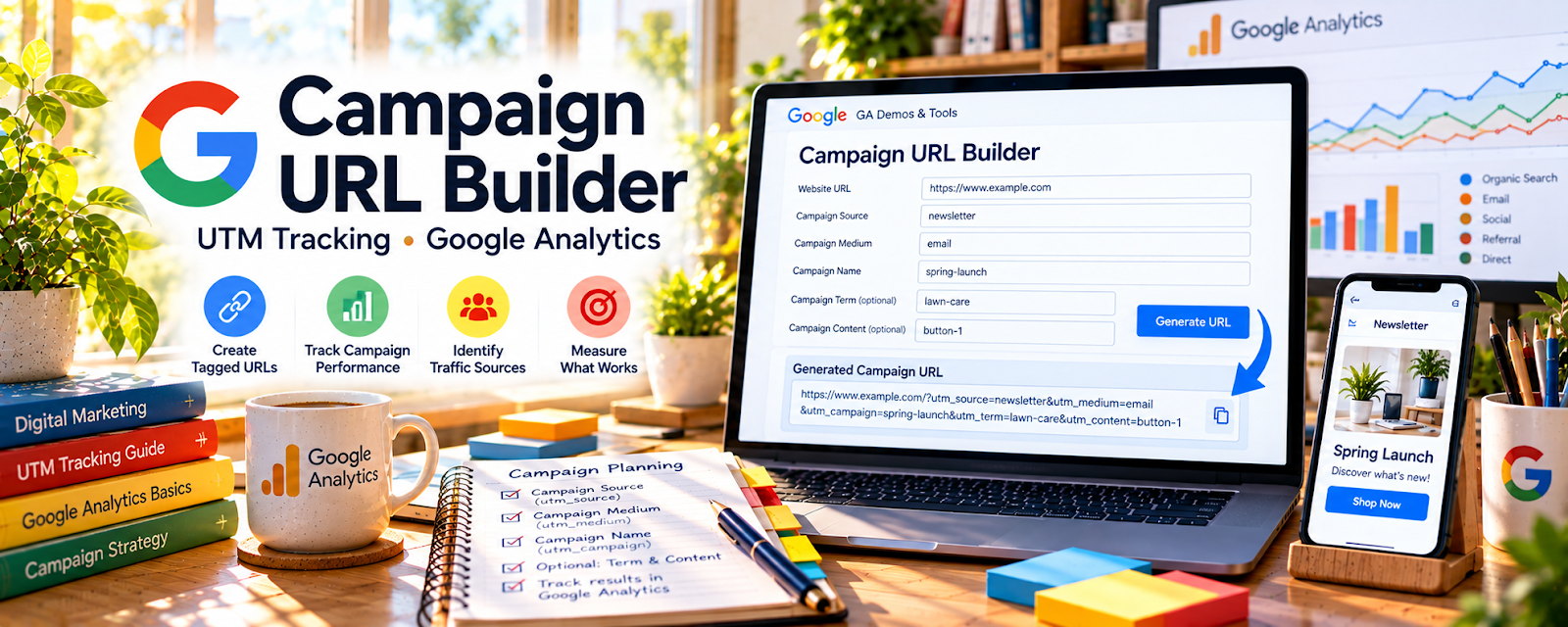
Use UTM Campaign URL Builder to track results, spot what is working, and improve performance for affiliate marketing.
🟡 Intermediate
Use ThirstyAffiliates to track results, spot what is working, and improve performance for affiliate marketing.
🟢 Beginner
Use Pretty Links to track results, spot what is working, and improve performance for affiliate marketing.
🟢 Beginner
Use Google Search Console to track results, spot what is working, and improve performance for affiliate marketing.
🟡 Intermediate
Use Google Analytics to track results, spot what is working, and improve performance for affiliate marketing.
🟡 Intermediate
10. Your First 6 Months in Affiliate Marketing
Your first 6 months in affiliate marketing should be focused on building a trust-based content system, not just dropping random links.
The goal is to move from:
Niche → Audience → Helpful Content → Clicks → Conversions → Repeat
By the end of 6 months, you should know what audience you serve, what products they care about, what content drives clicks, and which affiliate offers are worth promoting long term.
🎯 6-Month Goal
🎯 GOAL
By the end of your first 6 months, aim for milestones like these—not requirements. Adjust the numbers based on your available time and content format:
✅ One clear affiliate niche
✅ 3–5 affiliate programs joined
✅ 30–60 helpful pieces of content published
✅ A simple website, blog, landing page, or social content hub
✅ A basic email list or lead magnet started
✅ Affiliate links placed naturally in useful content
✅ Analytics tracking for clicks and conversions
✅ A repeatable weekly content workflow
✅ A plan to double down on your best-performing products
🎯 KEY TAKEAWAY
Affiliate marketing works best when people trust your recommendation before they click the link.
📅 Month 1: Choose Your Niche & Set Up Your Foundation
🎯 Main Goal
Pick a niche, define your audience, and set up the basic platform where you will promote affiliate products.
✅ What to Do
- Choose one niche with buyer intent
- Research common problems in that niche
- Identify beginner-friendly affiliate programs
- Study competitors, blogs, YouTube channels, TikToks, and Pinterest content
- Create your website, Notion page, blog, YouTube channel, or social profile
- Write a clear description of who your content helps
- Aim for a first list of 50–100 content ideas as an example target; adjust to your available time and niche
🏁 Month 1 Success Looks Like
- You know who your audience is
- You know what problems they need solved
- You have picked one main content platform
- You have joined or shortlisted affiliate programs
- You have a content idea bank ready
⚠ COMMON MISTAKE
Choosing random products only because they pay high commissions. A high commission does not matter if your audience does not trust or need the product.
🧭 Good Affiliate Niches
Niche | Why It Works |
Personal finance | High buyer intent and many tools |
Software & AI tools | Strong recurring commissions |
Fitness & wellness | Large audience and product demand |
Online business | Courses, tools, platforms, and software |
Parenting & family | Problem-solving products |
Home organization | Useful physical and digital products |
Travel | Gear, booking platforms, and guides |
Tech gadgets | Reviews, comparisons, and tutorials |

📅 Month 2: Create Helpful Content & Add Affiliate Links Naturally
🎯 Main Goal
Publish useful content that helps people make decisions before buying.
✅ What to Do
- Aim for 2–3 pieces of content per week as an example pace; adjust to your available time and content format
- Create beginner guides, tutorials, reviews, and comparison posts
- Add affiliate links only where they make sense
- Use clear calls to action
- Add affiliate disclosures
- Track which links get clicks
- Start building internal links between related content
🏁 Month 2 Success Looks Like
- You are publishing consistently
- Your links are placed in helpful content
- You have started tracking affiliate clicks
- Your content library is growing
- You are learning which topics attract buyers
🎯 KEY TAKEAWAY
The best affiliate content helps people decide. Reviews, comparisons, tutorials, and buyer guides usually convert better than random promotional posts.
💡 Content Types to Create
Content Type | Example |
Product review | “Is Canva Pro Worth It for Beginners?” |
Comparison | “Printful vs. Printify: Which Is Better?” |
Tutorial | “How to Start a Blog With Bluehost” |
List post | “7 Tools Every Beginner Freelancer Needs” |
Buyer guide | “Best Budget Cameras for New Creators” |
Problem-solving post | “How to Make Thumbnails Without Photoshop” |

📅 Month 3: Track Clicks, Improve Content & Build Trust
🎯 Main Goal
Use data to see what people are clicking, reading, saving, or watching.
✅ What to Do
- Review affiliate dashboard clicks weekly
- Check which content gets the most traffic
- Improve weak titles, intros, and calls to action
- Add better product explanations
- Update old content with clearer recommendations
- Create more content around your most-clicked topics
- Start collecting emails with a simple free resource
🛠️ What to Improve First
- Weak headlines
- Unclear product benefits
- Missing affiliate disclosures
- Links that are hard to find
- Content that feels too generic
- Recommendations without explanation
- Pages with no next step
🏁 Month 3 Success Looks Like
- You know which products get interest
- You understand which content gets clicks
- Your recommendations feel more useful
- You have started building trust with repeat visitors
- You are building a useful content library; 15–30 published pieces is one possible milestone, not a requirement
💡 PRO TIP
If one article, video, or post gets clicks, create related content around the same problem, product, or audience.
📈 Metrics to Watch
Metric | What It Tells You |
Page views | Which content attracts attention |
Link clicks | Which products interest people |
Conversion rate | Which links actually make sales |
Earnings per click | Which offers are most valuable |
Email signups | Whether people want more from you |
Search terms | What people are looking for |
Comments/questions | What content to make next |

📅 Month 4: Build a Repeatable Affiliate Content System
🎯 Main Goal
Turn affiliate marketing into a weekly workflow instead of guessing what to post.
✅ What to Do
- Create content templates for reviews, comparisons, and tutorials
- Batch keyword and topic research
- Build a simple content calendar
- Create a product tracking spreadsheet
- Add internal links between related posts
- Repurpose content into short posts, pins, reels, or emails
- Start improving SEO on your best pages

🏁 Month 4 Success Looks Like
- You have a repeatable content process
- You know what content formats are easiest to produce
- You are repurposing content across platforms
- Your best content is getting stronger
- Your content library is growing; 25–45 published pieces is one possible milestone, not a requirement
⚠ COMMON MISTAKE
Do not promote too many products at once. It is better to become trusted for a few strong recommendations than to look like a random link directory.
🗓️ Simple Weekly Workflow
Day | Task |
Monday | Research topics and keywords |
Tuesday | Write or outline content |
Wednesday | Add affiliate links and product details |
Thursday | Create graphics, screenshots, or short clips |
Friday | Publish and share |
Weekend | Review clicks, traffic, and conversions |
📝 Helpful Content Templates
Template | Best For |
Review template | Explaining one product clearly |
Comparison template | Helping people choose between options |
Tutorial template | Showing how to use a product |
Beginner guide template | Building trust with new users |
Resource list template | Grouping multiple affiliate tools |
📅 Month 5: Optimize for Conversions
🎯 Main Goal
Improve the content that already gets traffic or clicks so it can earn more.
✅ What to Do
- Review your top-performing content
- Make calls to action clearer
- Add comparison tables
- Add pros and cons
- Add “best for” recommendations
- Update product pricing or features when needed
- Create stronger lead magnets
- Add email follow-ups if you have a list
- Focus on products with the best conversion potential
🏁 Month 5 Success Looks Like
- Your best content is easier to use
- Your product recommendations are clearer
- You know which affiliate programs are worth keeping
- You have improved your highest-click pages
- You are starting to see stronger click or conversion patterns
🎯 KEY TAKEAWAY
More traffic helps, but better conversion can sometimes increase earnings faster than publishing more content.
📈 Conversion Boosters
Conversion Tool | Why It Helps |
Comparison tables | Helps readers decide faster |
Pros and cons | Builds trust and balance |
Best-for labels | Matches products to user needs |
Tutorials | Shows the product in action |
Screenshots | Makes recommendations feel real |
Email follow-up | Gives more chances to convert |
Clear buttons | Makes the next step obvious |

📅 Month 6: Review, Double Down & Scale
🎯 Main Goal
Review your first 6 months and decide which products, platforms, and content types deserve more effort.
✅ What to Do
- Identify your top 5 pieces of content
- Identify your top 3 affiliate products
- Review which products earned the most
- Review which content brought the most clicks
- Remove or replace weak offers
- Create more content around winning topics
- Build a 90-day content plan
- Consider adding a second traffic source
❓ 6-Month Review Questions
- Which content got the most traffic?
- Which links got the most clicks?
- Which products converted best?
- Which audience problems came up repeatedly?
- Which content was easiest to create?
- Which platform brought the best visitors?
- Which affiliate programs are worth continuing?
- What should be repeated, improved, or removed?
🏁 Month 6 Success Looks Like
- You know your strongest products
- You know your best traffic source
- You understand what your audience clicks
- You have a clearer affiliate strategy
- You have a 90-day growth plan for months 7–9
🎯 KEY TAKEAWAY
Affiliate marketing becomes easier once you stop guessing and start building around proven clicks, proven products, and proven audience problems.
📊 Decision Table
If This Happens | Do This |
One product gets most clicks | Create more tutorials and comparisons around it |
Traffic is growing but clicks are low | Improve calls to action and link placement |
Clicks are high but sales are low | Test better offers or stronger product education |
Content is not ranking | Improve SEO and target easier keywords |
Social posts get attention | Repurpose top posts into more short-form content |
One niche angle works best | Narrow your focus around that audience |

✅ 6-Month Success Checklist
By the end of 6 months, check whether you have:
✅ Picked one clear niche
✅ Defined your audience
✅ Joined relevant affiliate programs
✅ Published consistently
✅ Created helpful reviews, comparisons, or tutorials
✅ Added affiliate disclosures
✅ Tracked clicks and conversions
✅ Built a basic content calendar
✅ Improved your best-performing content
✅ Started an email list or resource page
✅ Found your strongest products
✅ Created a plan for the next 90 days
⚠️ What Not to Do During the First 6 Months
⚠️ COMMON MISTAKES
Avoid these mistakes:
❌ Promoting products you do not understand
❌ Joining too many affiliate programs too early
❌ Hiding affiliate disclosures
❌ Posting links without helpful content
❌ Choosing products only because of high commissions
❌ Copying other creators exactly
❌ Ignoring analytics
❌ Giving up before enough content is published
❌ Recommending low-quality products
❌ Making every post feel like a sales pitch
📝 QUICK NOTE
Affiliate marketing is built on trust. Every recommendation should help the viewer, reader, or follower make a better decision.
🧭 Example Beginner Milestones
📋 EXAMPLE
These are example beginner milestones, not requirements. Your pace may be faster or slower depending on your niche, available time, content format, experience, and audience. Focus on publishing useful content consistently rather than hitting an exact number.
Month | Main Focus | Example Target Output |
Month 1 | Niche & setup | Platform created, 50–100 ideas |
Month 2 | Helpful content | 8–15 pieces published |
Month 3 | Click tracking | 15–30 total pieces published |
Month 4 | Content system | 25–45 total pieces published |
Month 5 | Conversion optimization | Top content improved |
Month 6 | Review & scale | 90-day growth plan created |
🚀 Final 6-Month Strategy
Your first 6 months should follow this simple path:
Month 1: Pick the niche and set up your platform
Month 2: Publish helpful content consistently
Month 3: Track clicks and improve weak content
Month 4: Build a repeatable content system
Month 5: Optimize for conversions
Month 6: Review results and double down on winners
The affiliate marketers who win are not the ones who post the most links. They are the ones who understand their audience, recommend useful products, and improve their system every month.
11. Get the Affiliate Marketing Starter Kit
The paid One Stop Side Hustles Affiliate Marketing Starter Kit includes 12 interactive, browser-based workspaces, a central dashboard, and a guided 90-day roadmap to help you research programs, create content, organize campaigns, and track your progress.
🎁 Inside Your Affiliate Marketing Toolkit
What's included in the starter kit:
✅ 1. Affiliate Launch Lab — Follow beginner-friendly setup steps and create a focused launch plan.
✅ 2. Affiliate Program Decision Studio — Research and compare potential programs based on terms and audience fit.
✅ 3. Content & Traffic Growth Studio — Plan content topics, promotion channels, and growth activities.
✅ 4. Affiliate Commission Ledger — Manually record commissions and reconcile payments.
✅ 5. Disclosure Clarity Studio — Draft and review affiliate disclosures for your content.
✅ 6. Content Idea Research Studio — Research, evaluate, and prioritize content ideas.
✅ 7. Affiliate Email Campaign Studio — Draft and organize email campaign sequences.
✅ 8. Affiliate Link Command Center — Organize, audit, and export your affiliate link inventory.
✅ 9. Affiliate Funnel & Landing Page Studio — Create and download static landing-page HTML.
✅ 10. Affiliate Traffic Experiment Lab — Plan traffic experiments and record observations.
✅ 11. Affiliate Review Evidence Studio — Develop balanced product reviews supported by your research.
✅ 12. 90-Day Roadmap Execution Studio — Work through 13 weekly action plans and track your progress.
Also included: A central kit dashboard, a Start Here guide, three companion worksheets (HTML and editable Markdown), and instructions for use and backups.
Delivered as a downloadable ZIP of browser-based tools. Tracking and research require your own entries; the kit does not automatically pull live program data, publish content, send emails, or sync work across devices. Earnings are not guaranteed.
12. Frequently Asked Questions
🌐 Do I need a website to do affiliate marketing?
No, but it helps. You can start on Pinterest, Medium, YouTube, or even a free Linktree page. However, owning a website gives you more control and credibility.
⏳ How long until I make my first sale?
Time to your first sale varies widely. An existing audience may help, but beginners can spend several months creating content without earning a commission. Focus on useful content, relevant offers, and measurable progress.
📣 Can I do affiliate marketing with a small following?
Absolutely. SEO-driven blogs and Pinterest don’t require any existing following. You’re targeting people searching for solutions, not building a fan base first.
📈 Is affiliate marketing saturated?
Popular products are competitive, but new products launch daily, and there are millions of niche problems to solve. Success comes from specificity and quality, not being first.
🎭 What if I don’t want to show my face?
Perfect. Many successful affiliate marketers are faceless. Focus on blogging, Pinterest, or screen-recording tutorials. No personal brand required.
💵 How do taxes work with affiliate income?
Many U.S. affiliates operating as a business report affiliate income and eligible business expenses on Schedule C and may also have self-employment or estimated-tax obligations. Tax treatment depends on your circumstances, so check current IRS guidance or consult a qualified tax professional.
📱 Can I promote affiliate links on social media?
Yes. Affiliate marketing can be used on social media, but the rules vary by platform and affiliate program. Before publishing, check both the social platform's current linking and disclosure requirements and the affiliate program's promotional rules. Some programs may restrict direct affiliate links, link shortening, paid promotion, email use, or certain social platforms. Always make your affiliate relationship clear wherever you recommend a product.
⚖️ What’s the difference between affiliate marketing and MLM?
Affiliate marketing: You promote existing products and earn per sale. No recruiting.
MLM: You recruit people into a network and often earn from their sales. Very different model.
13. Important Considerations
Before you dive in, understand the realities — this is what separates beginners from professionals:
⏳ It Takes Time to See Results
📋 QUICK NOTE
- ⌛ 1–3 months is an example planning window for first sales, not a prediction; it may take longer
- 📈 3–6 months is an example planning window for building momentum, not a promise of consistent income
- 🚫 Earnings may remain low or absent; review your progress and adjust your approach
📜 Legal Compliance Is Required
⚠️ WARNING
- ✅ You must disclose affiliate links
- 💬 Use clear statements like: “I earn a commission if you purchase through this link.”
❌ Hiding this can get you banned or penalized
🧠 Trust Is Everything
- 🚫 Promoting bad products = short-term gain, long-term loss
- 💎 Your reputation is your biggest asset
📉 Not All Content Will Convert
- 📄 Some posts or videos will flop
- 🔁 That is normal — use data to improve
📊 Success comes from iteration, not perfection.
⚙️ Platforms Can Change Anytime
📌 IMPORTANT
- 🔄 Algorithms change (TikTok, Google, Pinterest)
- 🚫 Accounts can get restricted
✅ Solution: diversify across platforms and build an email list
💸 Income Is Not Instant or Guaranteed
⚠️ WARNING
- 🚫 No “get rich quick”
- 🛠️ Requires effort, testing, and patience
⚠️ Treat this like a business — not a shortcut.
🔁 Reinvest to Grow Faster
Once you start earning:
- 🧰 Upgrade tools
- 🎨 Improve content quality
- 📈 Scale into multiple products or niches
🧱 Evergreen Content Can Keep Earning
One advantage of affiliate marketing is that useful content can continue attracting visitors and generating commissions after it is published. However, this income is not completely hands-off. Links can break, products can change, programs can close, commission rates can change, and older content may need updates. Think of your content as an asset that can become lower-maintenance over time rather than completely passive income.
14. Your Next Steps
🚀 ACTION STEP
📅 Today
🚀 ACTION STEP
- 📦 Explore the Affiliate Marketing Starter Kit
- 🎯 Choose your niche
- 🔗 Sign up for Amazon Associates
📆 This Month
🚀 ACTION STEP
- ✍️ Publish consistently this month based on your content format, available time, and chosen platform
- 📩 Apply to a small number of relevant affiliate programs that closely match your audience
- 📈 Start driving traffic (SEO, Pinterest, or social)
- 💌 Build your email list from day one
🚀 Months 2–3
🚀 ACTION STEP
- 🔎 Analyze what content performs best
- ⚡ Double down on winners
- 🧪 Test different traffic sources
- 🧠 Make your first optimizations
- 🎉 Celebrate your first sales
15. The Bottom Line
🎯 KEY TAKEAWAY
Affiliate marketing is one of the simplest and most scalable ways to earn online — but it rewards strategy, not shortcuts.
🙋 If you:
✔ Focus on helping people (not just selling)
✔ Stay consistent for 3–6 months
✔ Promote products you genuinely believe in
🏗️ You can build:
💰 Evergreen content with ongoing income potential
📈 Scalable online assets
🌍 Location-independent income
🚀 You don’t need a product, inventory, or large audience — just trust and traffic.
16. Recommended Websites & Tools
🛠 TOOLS & RESOURCES
You do not need every resource listed below. This directory brings together the major platforms, tools, and resources from this guide, along with additional research and learning options, so you can find them in one place when you need them.
Start with the essentials. Add tools only when your affiliate business develops a specific need for them.
🛠️ Content Creation & Website Setup
- WordPress — For creating blogs, review sites, tutorials, buyer guides, and SEO-focused content.
- Wix — For building a beginner-friendly website or simple landing page without much technical experience.
- Canva — For creating graphics, thumbnails, Pinterest pins, lead magnets, social-media visuals, and simple promotional materials.
- Notion — For organizing content ideas, product research, affiliate programs, publishing calendars, and performance tracking.
- Grammarly — For improving grammar, readability, clarity, and writing quality.
- Namecheap — For purchasing domain names and managing basic website-related services.
- Bluehost — For website hosting and beginner-friendly WordPress setup.
💡 PRO TIP
You do not need a complicated website setup when you are starting. Use the simplest option that allows you to publish consistently and professionally.
🛒 Affiliate Networks & Programs
- Amazon Associates — For recommending physical products across a wide range of consumer categories.
- Awin — For finding affiliate programs across retail, lifestyle, travel, digital services, and physical products.
- CJ Affiliate — For established brands, retailers, services, and larger advertisers.
- Impact — For SaaS companies, direct-to-consumer brands, creator partnerships, and online services.
- Rakuten Advertising — For established retail and consumer brands.
- PartnerStack — For B2B software, SaaS products, and subscription-based affiliate opportunities; check each program’s recurring-commission terms.
- ClickBank — For digital products, online courses, subscriptions, and information products.
🎯 KEY TAKEAWAY
Do not join every affiliate network you find. Start with programs that offer products or services your audience is actually likely to use.
📣 Traffic & Publishing Platforms
- YouTube — For tutorials, reviews, demonstrations, walkthroughs, comparisons, and long-form educational content.
- Pinterest — For visual discovery, tutorials, product ideas, guides, and sending traffic to useful content.
- Instagram — For Reels, carousels, product demonstrations, lifestyle content, and building a community around your niche.
- TikTok — For short-form demonstrations, quick reviews, tips, product discovery, and testing content ideas.
- Facebook — For niche communities, groups, discussions, audience interaction, and sharing helpful content.
- Medium — For publishing long-form written content without immediately building your own website.
- Google Search — For generating organic traffic to SEO-focused content over time.
📝 QUICK NOTE
Platform rules and affiliate-program rules can change. Always confirm that both allow the promotional method you plan to use.
💌 Email & Audience Building
- Kit — For creator newsletters, email lists, automations, lead magnets, and audience building.
- beehiiv — For publishing newsletters and growing an email-based audience.
- Mailchimp — For email campaigns, audience lists, segmentation, and automation.
- Substack — For newsletter publishing, building a subscriber audience, and publishing directly to readers.
Check the provider’s current acceptable-use rules and your plan’s features before using any email service for affiliate promotions.
📜 Compliance & Disclosure Resources
- FTC — U.S. consumer protection agency referenced for affiliate disclosure and advertising compliance.
- FTC Disclosures 101 for Social Media Influencers — Practical FTC guidance for making clear affiliate, sponsorship, and paid-promotion disclosures.
🔗 Link Management
- Pretty Links — For organizing and managing affiliate links on WordPress websites.
- ThirstyAffiliates — For managing affiliate links, organizing them by category, and simplifying link management in WordPress.
- Bitly — For shortening links and basic click tracking where the affiliate program allows it.
- Linktree — For organizing multiple destinations from a social-media profile or bio link.
📝 QUICK NOTE
Some affiliate programs restrict link shortening, redirects, masking, cloaking, or certain promotional methods. Check the program’s current rules before modifying an affiliate link.
📚 SEO & Official Learning Resources
- Google Search Central — For official guidance about Google Search, indexing, website quality, SEO fundamentals, and search visibility.
- Ahrefs Learning Resources — For learning SEO, keyword research, content strategy, backlinks, and search-focused content creation.
- Shopify Guides — For beginner-friendly education on ecommerce, affiliate marketing, content, and online-business topics.
- HubSpot Resources — For learning content marketing, email marketing, digital marketing, sales, audience building, and conversion fundamentals.
🔎 Research & Content-Idea Tools
- Google Trends — For comparing search interest, spotting trends, and seeing how interest in a topic changes over time.
- Google Search — For studying search results, identifying competing content, finding common questions, and understanding what people are looking for.
- AnswerThePublic — For discovering questions, search phrases, and content ideas related to a topic.
- Ubersuggest — For beginner-friendly keyword research, competitor research, and content ideas.
- Ahrefs — For SEO research, keyword analysis, competitor research, backlinks, and content planning.
- Semrush — For advanced SEO, competitive research, keyword analysis, and broader digital-marketing research.
📊 Analytics & Performance Tracking
- Google Analytics — For understanding website traffic, user behavior, traffic sources, and how visitors interact with your site.
- Google Search Console — For monitoring Google Search visibility, search queries, indexing, and organic performance.
- Affiliate Program Dashboards — For checking attributed clicks, conversions, pending commissions, approved commissions, and payouts. Use the dashboard provided by each program.
- Platform Analytics — For measuring views, reach, engagement, watch time, audience growth, and content performance within your publishing platform.
- UTM Campaign URL Builder — For adding tracking parameters to compatible links so you can identify where traffic comes from. Use only where permitted, and do not overwrite affiliate tracking parameters.
🧭 How to Use This Directory
🧰 Start With a Simple Setup
Do not start by creating accounts with every service listed above. For most beginners, a simple setup is enough:
- One publishing platform
- One affiliate program or network
- One content-planning system
- One basic creative tool
- Basic analytics
That is enough to start building. Add tools only when you can name the specific problem they will solve.
🎯 KEY TAKEAWAY
Tools support the business. They are not the business.
Your biggest advantages will come from:
Understanding your audience → Creating useful content → Recommending relevant products → Building trust → Measuring what works
17. Explore Similar Side Hustles
 Blogging: Build an Online Brand and Earn from Your Words — Publish reviews, comparisons, and tutorials that attract search traffic and introduce relevant affiliate recommendations.
 Newsletter Monetization: Get Paid to Write About What You Love — Build a direct audience and share useful, disclosed affiliate recommendations alongside regular newsletter content.
 Faceless Video Content Creation: Go Viral Without Showing Your Face — Use screen recordings, product demonstrations, and tutorials to explain affiliate products without appearing on camera.
 Freelance Writing: Get Paid to Write Online — Use the same research and writing skills needed for affiliate reviews and buyer guides, while earning from client work rather than commissions.
 Social Media Management — Develop content planning, publishing, and engagement skills that also help distribute affiliate content and build audience trust.
 Selling Digital Products — Serve the same niche audience with your own templates, guides, or downloads, complementing commissions from relevant third-party products.