

Affiliate disclosure: Some links in this guide may be paid referral links. If you purchase or sign up through one, One Stop Side Hustles may earn a commission. How our affiliate links work.
NEWSLETTER MONETIZATION STARTER GUIDE
Learn how newsletter monetization works—including choosing a niche, publishing consistently, growing an email list, and testing revenue streams such as affiliates, sponsors, or paid tiers. Results vary with audience fit, engagement, consistency, and whether readers actually buy.
1. What Is Newsletter Monetization?
2. Why Newsletter Monetization Is a Great Side Hustle
3. Newsletter Niches You Can Build
4. How Much Can You Earn & Pricing Strategies
5. Tools You’ll Need to Launch
6. Platforms to Build Your Audience
7. How to Publish: Your Repeatable Newsletter System
8. Build Trust & Improve Results
9. Learn Newsletter Strategy (Free or Cheap)
10. Your First 6 Months Newsletter Monetization Plan
11. Get the Newsletter Starter Kit
12. Frequently Asked Questions
Quick Snapshot
Earn: Highly variable — early issues often earn little; later income depends on list quality, engagement, and offer fit
Work: Write once a week — batch and automate content
Start: Low cost (often free) with Substack or beehiiv
Best for: Writers with a clear niche and engaged audience
Grow: Subscribers → sponsors, affiliates, and paid tiers
1. What Is Newsletter Monetization?
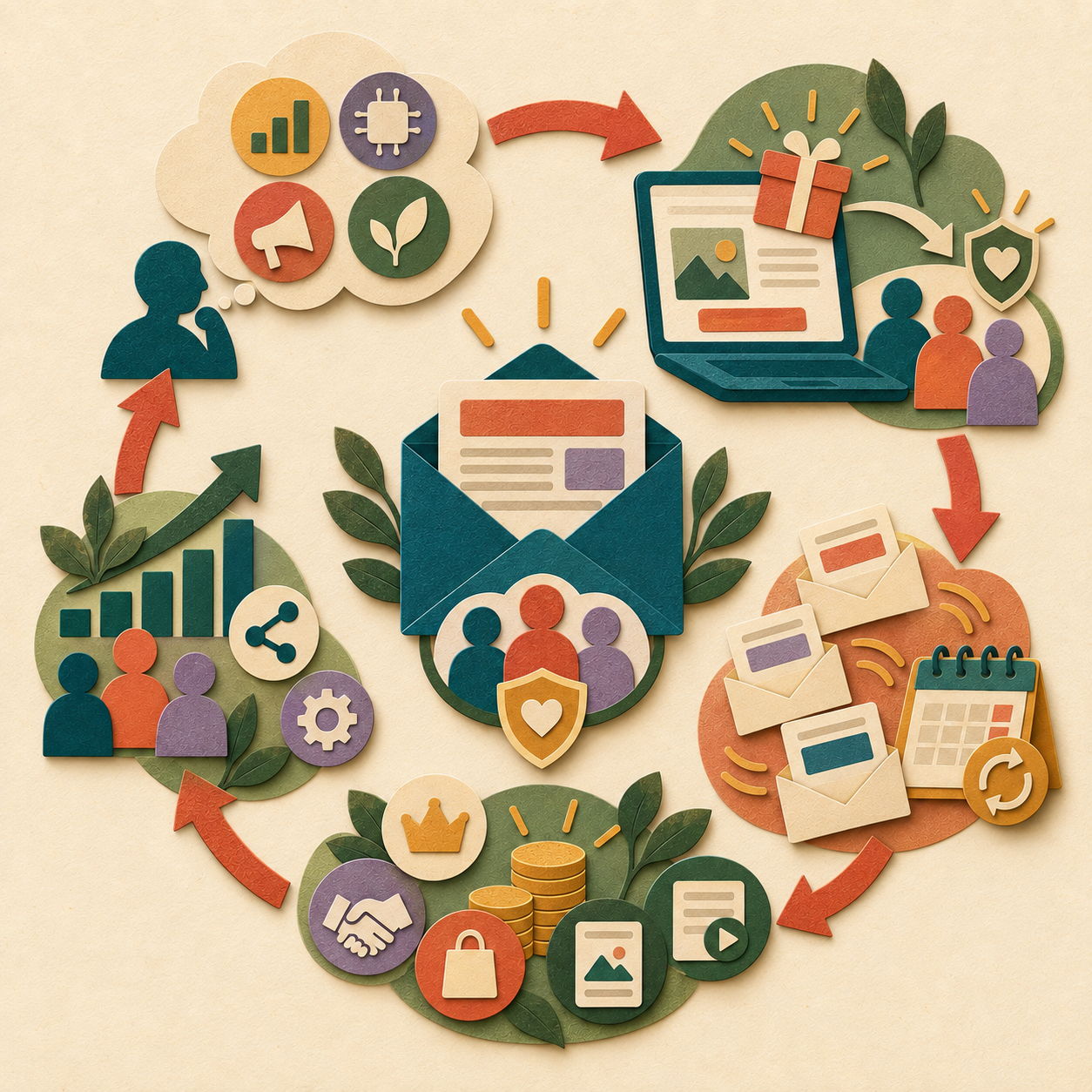
Newsletter monetization is the process of building an email list around a specific topic and earning money by delivering consistent, valuable content directly to subscribers' inboxes.
⚙️ How It Works
- Choose your niche (finance, AI, marketing, wellness, etc.)
- Build email list (landing page, social media, lead magnets)
- Send regular content (weekly or daily newsletters with insights/curation)
- Monetize (paid subscriptions, sponsorships, affiliates, products)
- Grow and optimize (referral programs, collaborations, SEO)
🎯 KEY TAKEAWAY
You OWN your email list. Unlike social media (where algorithms control reach), email gives you direct access to your audience. 100 engaged subscribers > 10,000 followers.
2. Why Newsletter Monetization Is a Great Side Hustle
Newsletter monetization is a strong side hustle because it helps you build an owned audience, create trust-driven income, and turn consistent publishing into multiple revenue paths over time.
💰 One newsletter can support several income streams
Once readers trust your emails, monetization does not need to come from only one source.
Common revenue paths include:
- Sponsorships
- Affiliate offers
- Paid subscriptions
- Digital products
- Services or consulting
That flexibility is a big reason newsletters can become more valuable as they mature.
💻 You can start with very little upfront cost
Many beginners can launch with tools that are free or inexpensive.
A simple setup often means:
- Newsletter platform
- Built-in landing page
- Basic writing workflow
- One growth channel
- Simple signup link
That makes it easier to validate the idea before investing heavily in software.
🕒 The publishing rhythm is flexible and sustainable
Newsletters work especially well for part-time creators because the schedule can stay simple.
Common workflows include:
- One issue per week
- Batched idea collection
- Scheduled sends
- Repurposed posts from each issue
That flexibility helps you build consistency without needing to create content every day.
📈 Growth gets stronger as trust compounds
Subscriber count matters, but reader trust matters even more.
A strong growth path often looks like:
- First subscribers
- Better opens and clicks
- Repeat engagement
- Monetized offers
- Higher-value products or partnerships
The more useful and reliable the newsletter becomes, the easier it is to monetize well.

🧠 An email list is an audience you actually own
Unlike relying only on social platforms, email gives you a direct way to reach people who chose to hear from you.
That matters because:
- You control the list
- You can contact readers directly
- You build long-term familiarity
- The audience becomes a business asset
- Future offers become easier to launch
This ownership is one of the biggest long-term advantages of newsletters.
🎯 A focused niche usually performs better than broad content
The best newsletters rarely try to cover everything.
Strong starting angles include:
- Side hustles for beginners
- AI tools for a specific audience
- Career advice for a defined group
- Fitness or parenting routines
- Curated resources in one niche
Clear positioning helps readers understand quickly why they should stay subscribed.
🤝 Recurring income becomes possible when engagement is strong
Newsletters can become steadier businesses when readers keep opening, clicking, and responding.
What usually helps most:
- Clear audience fit
- Consistent sending schedule
- Useful recommendations
- Strong open rates
- Offers that match reader needs
That trust can turn a simple email habit into steadier monthly revenue.
🧪 It can grow into a much bigger creator business
A newsletter often becomes the center of a larger ecosystem instead of staying just an email product.
Common expansion paths include:
- Courses
- Communities
- Coaching
- Templates
- Premium reports
- Affiliate funnels
That makes newsletter monetization attractive not just for side income, but for long-term brand building.
3. Newsletter Niches You Can Build
Choosing the right newsletter niche is one of the most important decisions you’ll make. You do not need the biggest possible audience. You need a specific group of readers with a reason to keep opening your emails.
The strongest newsletter niches usually combine three things: a clear audience, a repeatable source of useful content, and at least one logical way to eventually make money.
Below are several newsletter categories you can build around, along with the type of audience they attract and how they can be monetized.
📝 QUICK NOTE
Revenue streams listed here are possibilities, not guaranteed income. Sponsor, affiliate, and paid-tier results depend on audience size, engagement, and trust. Follow email-marketing rules (such as consent and unsubscribe links), disclose paid relationships, and avoid claiming results you cannot support.
💼 Business, Career & Professional Newsletters
🏢 Business & Entrepreneurship
- 💡 Examples: Small business growth, solopreneur tips, freelancing, startup news, online business, sales strategies
- ⭐ Difficulty: ⭐⭐⭐ Moderate | 💰 Monetization Potential: High
- 💵 Best Revenue Streams: Sponsorships, software affiliates, courses, templates, consulting
- 👥 Typical Audience: Entrepreneurs, freelancers, consultants, creators, small-business owners
- 🌟 Best for: Writers with business experience or people who enjoy researching tools, strategies, and trends
💼 Career & Professional Development
- 💼 Examples: Remote work, job-search strategies, career advancement, industry news, leadership, professional skills
- ⭐ Difficulty: ⭐⭐ Easy to moderate | 📈 Demand: Consistent
- 💵 Best Revenue Streams: Job-board sponsorships, recruiting partners, courses, coaching, affiliates
- 👥 Typical Audience: Job seekers, professionals, career changers, remote workers
- 🌟 Best for: Creators who enjoy teaching practical skills and helping readers advance professionally
💡 PRO TIP
Pick one reader and one recurring problem, such as “first-time freelancers landing clients.” A narrow promise is easier to write, easier to share, and easier to sponsor.

📈 Marketing, Productivity & Career Niches
📈 Investing & Market News
- 📈 Examples: Dividend investing, stock-market summaries, ETFs, real estate investing, market research
- ⭐ Difficulty: ⭐⭐⭐⭐ Hard | 💸 Monetization Potential: High
- 💵 Best Revenue Streams: Paid subscriptions, sponsorships, financial affiliates, premium research
- 👥 Typical Audience: Investors, finance enthusiasts, professionals
- 🌟 Best for: Research-oriented creators who can consistently interpret complex information
💵 Personal Finance
- 🏦 Examples: Budgeting, saving, debt payoff, beginner investing, credit, financial independence
- ⭐ Difficulty: ⭐⭐⭐⭐ Moderate to hard | 💰 Audience Value: Very high
- 💵 Best Revenue Streams: Financial affiliates, sponsorships, premium research, digital products
- 👥 Typical Audience: Savers, investors, families, young professionals, side hustlers
- 🌟 Best for: Creators comfortable explaining financial topics carefully and building long-term reader trust
⚠ COMMON MISTAKE
Do not present opinions as personalized financial advice or promise returns. Add a clear disclaimer, cite your sources, and disclose affiliate or sponsor relationships to protect reader trust.

🤖 Technology & AI Newsletters
🧰 AI Tools & Automation
- 🧠 Examples: AI tools for freelancers, AI for marketers, automation workflows, weekly AI news, prompts
- ⭐ Difficulty: ⭐⭐⭐ Moderate | 🚀 Demand: High but fast-changing
- 💵 Best Revenue Streams: Software affiliates, SaaS sponsorships, templates, courses, premium guides
- 👥 Typical Audience: Professionals, creators, freelancers, business owners, technology enthusiasts
- 🌟 Best for: People who enjoy testing new tools and turning them into practical tutorials or recommendations
📰 Technology & Industry News
- 💻 Examples: Startup news, cybersecurity, apps, software releases, creator technology, industry trends
- ⭐ Difficulty: ⭐⭐⭐ Moderate | 📰 Content Supply: Very high
- 💵 Best Revenue Streams: Sponsorships, affiliates, premium subscriptions, job boards
- 👥 Typical Audience: Tech workers, founders, developers, early adopters
- 🌟 Best for: Curators who enjoy finding important developments and explaining why they matter
📋 REAL-WORLD EXAMPLE
A weekly AI newsletter might share five tools with a one-line “who should use this” note. Readers return for the filtering, and software affiliates or sponsors can fit naturally once the list grows.

🏠 Lifestyle & Self-Improvement Newsletters
🧘 Health, Wellness & Personal Growth
- 🌱 Examples: Fitness, healthy habits, productivity, mindfulness, meal planning, personal development
- ⭐ Difficulty: ⭐⭐⭐ Moderate | ❤️ Audience Loyalty: Strong
- 💵 Best Revenue Streams: Sponsorships, affiliates, memberships, courses, digital products
- 👥 Typical Audience: Readers trying to improve their health, routines, productivity, or lifestyle
- 🌟 Best for: Creators who can consistently provide actionable advice rather than generic inspiration
👪 Parenting & Family
- 👨👩👧 Examples: Parenting tips, family budgeting, activities, meal planning, education resources, family travel
- ⭐ Difficulty: ⭐⭐ Easy to moderate | 🔥 Demand: Consistent
- 💵 Best Revenue Streams: Product affiliates, sponsorships, printables, guides, memberships
- 👥 Typical Audience: Parents, caregivers, families
- 🌟 Best for: Creators with firsthand experience who can solve practical everyday problems
💡 PRO TIP
Lead with your own experience and test results. Readers in personal topics trust specifics, and you should avoid medical or legal claims that go beyond what you are qualified to share.

🎨 Hobby & Passion Newsletters
📧 Hobby & Enthusiast Newsletters
- 🎮 Examples: Gaming, photography, gardening, cooking, crafts, fitness, books, travel, outdoor activities
- ⭐ Difficulty: ⭐⭐ Easy to moderate | ❤️ Audience Engagement: Often high
- 💵 Best Revenue Streams: Product affiliates, sponsorships, premium guides, memberships
- 👥 Typical Audience: Hobbyists, enthusiasts, collectors, beginners
- 🌟 Best for: People who already spend a lot of time learning about a particular hobby
🎭 Entertainment & Culture
- 🎬 Examples: Movies, television, books, music, sports commentary, pop culture, entertainment recommendations
- ⭐ Difficulty: ⭐⭐ Easy to start | 📣 Shareability: High
- 💵 Best Revenue Streams: Sponsorships, paid memberships, merchandise, affiliates
- 👥 Typical Audience: Fans, enthusiasts, entertainment seekers
- 🌟 Best for: Writers with a distinctive voice, strong opinions, or excellent curation skills
⚠ COMMON MISTAKE
Do not choose a hobby topic only because it feels fun, without checking for readers who would pay or buy. Look for an engaged community, then test with a few issues before investing more.

📰 Curated & Research Newsletters
📧 Curated Resource Newsletter
- 🔎 Examples: Five useful links each week, industry news roundups, tool discoveries, job opportunities, deals, research summaries
- ⭐ Difficulty: ⭐⭐ Easy to start | ⏱️ Research Required: Moderate
- 💵 Best Revenue Streams: Sponsorships, affiliates, classified ads, premium editions
- 👥 Typical Audience: Busy readers who want someone else to filter information for them
- 🌟 Best for: People who already spend significant time researching a subject
📧 Deep-Dive / Research Newsletter
- 📊 Examples: Industry analysis, case studies, market reports, business breakdowns, technical explainers
- ⭐ Difficulty: ⭐⭐⭐⭐ Hard | 💎 Audience Value: Potentially very high
- 💵 Best Revenue Streams: Paid subscriptions, premium reports, B2B sponsorships, consulting
- 👥 Typical Audience: Professionals, executives, investors, specialists
- 🌟 Best for: Subject-matter experts and creators who enjoy research-intensive content
💡 PRO TIP
Keep research sustainable by setting a fixed issue format and a source list. A repeatable structure protects your time and helps readers know exactly what they will get each week.

🎯 Define Your First Newsletter Promise
🎯 KEY TAKEAWAY
Choose a specific audience, one recurring problem, and one clear publishing promise. A narrower topic with a real reader usually monetizes faster than a broad topic with fuzzy positioning.
🚀 ACTION STEP
Write a focused first plan:
- Reader: Name a specific audience and the problem your newsletter helps solve.
- Promise: Define the recurring value, format, and publishing frequency.
- Runway: Draft four issue ideas and identify dependable research sources.
- First test: Publish a sample issue and ask early readers what they would keep or change.
4. How Much Can You Earn & Pricing Strategies
Newsletter income usually grows from audience trust first, monetization second. A big subscriber count by itself does not guarantee meaningful revenue.
What matters more is whether readers open, click, reply, and actually care about what you recommend.
🧠 Reality Check (What Actually Separates Earners)
Newsletters tend to earn more when creators:
- Focus on a clear niche
- Publish consistently
- Build a loyal, engaged audience
- Match offers to reader needs
- Stack multiple revenue streams
A smaller high-trust list can outperform a much larger inactive one.
🎯 KEY TAKEAWAY
Better engagement, reader fit, and positioning can matter more than raw subscriber count. Keep the newsletter useful and add revenue streams only where they support the reader promise.
🔑 Smart Monetization Progression
A practical path often looks like:
🌱 Free Publishing & Affiliates
- Start free and build trust
- Add affiliate recommendations
📦 Sponsorships, Products & Paid Tiers
- Test sponsorships
- Add products, services, or a paid tier
That layering usually creates a more stable business than relying on one revenue source.
🎯 KEY TAKEAWAY
A paid tier or sponsor is not a substitute for a clear audience promise. Match each offer to reader needs, disclose commercial relationships, and track actual collected revenue.
🧪 Real Example
📋 REAL-WORLD EXAMPLE
These scenarios illustrate possible gross revenue models, not verified typical outcomes or forecasts. They exclude platform and payment fees, refunds, production costs, overhead, and taxes. The same list size can produce very different results—or no meaningful revenue.
🌱 Scenario A: Broad low-engagement list
- 5,000 subscribers
- Free only
- Weak monetization fit
- Around $50–$300/month
🎯 Scenario B: Focused niche newsletter
- 5,000 subscribers
- Sponsorships + affiliates
- Around $1,000–$3,000/month
🚀 Scenario C: Authority-style newsletter
- 5,000 subscribers
- Paid tier + affiliates + products
- Around $3,000–$10,000+/month
The audience size can stay the same while the business model changes dramatically.
🎯 KEY TAKEAWAY
Use these scenarios to understand the model, not to predict your own income. Compare actual results and risks with your written plan.
🎯 What Actually Drives Income
🧮 Reader Trust × Offer Fit × Consistency = Income Potential
This is a business framework, not a mathematical earnings forecast.
- Audience quality: Better-fit readers convert more often
- Engagement: Opens, clicks, and replies matter more than vanity metrics
- Offer fit: The monetization should feel natural for the audience
- Consistency: Reliable publishing builds trust
- Positioning: A sharp niche helps sponsors and buyers understand the value
- Revenue stacking: Multiple streams usually outperform one lonely offer
📈 Subscriber Value & Engagement (Revenue Reality)
📖 Read the Numbers in Context
List size does not show how many readers are active or ready to buy. Open tracking can be distorted by privacy tools; combine it with clicks, replies, unsubscribes, conversions, and retention. Distinguish billed revenue from collected payments, and paid subscriptions from free sign-ups.
🎯 KEY TAKEAWAY
Look beyond headline income: assess the complete economics, risks, and real cash available.

🚀 Build Your First Newsletter Income Plan
Start with one defined reader, one repeatable issue format, one sustainable publishing cadence, and one relevant monetization path. Test usefulness and reader response before adding sponsors, products, and paid tiers all at once.
🧭 Run a Disciplined Newsletter Monetization Test
- Define the reader and content promise. Choose a specific audience and the result each issue will help them achieve. Write that promise in one sentence and draft a few issue ideas that meet it. A focused useful newsletter is easier to explain and monetize than a broad collection of unrelated links.
- Choose a sustainable publishing workflow. Pick one repeatable format and a realistic cadence. Prepare research, drafting, editing, subject-line, and sending checklists. Use permission-based sign-ups, a clear sender identity, and an easy unsubscribe process. Do not buy a list or add people without appropriate consent.
- Test one relevant revenue path. Choose an affiliate recommendation, sponsor offer, product, or paid tier only when it fits the audience and you can deliver it responsibly. Explain the value, disclose sponsorships and affiliate relationships, and define deliverables, price, fees, and cancellation or refund terms where relevant. An early test can remain free if reader demand is unclear.
- Publish a small four-week test. Send one useful issue per week for four weeks if that cadence fits your capacity. Keep the core reader promise stable; vary one element, such as subject framing or offer placement, at a time. Make calls to action clear without letting commercial content overwhelm the issue.
- Review meaningful reader and business signals. Track delivered sends, unique clicks where available, replies, sign-ups, unsubscribes, conversions, refunds, paid retention, actual revenue, and time or platform costs. Use your own baseline, not a supposed universal earnings-per-subscriber rate. Expand only when usefulness, audience fit, and economics hold up.
🎯 KEY TAKEAWAY
Better engagement, reader fit, and positioning can matter more than raw subscriber count. Keep the newsletter useful and add revenue streams only where they support the reader promise.
💡 Example: A Four-Week Newsletter Test
- Reader: Freelancers seeking practical ways to improve their weekly work
- Promise: One useful workflow, a concise explanation, and a relevant resource per issue
- Format: A repeatable weekly issue with a clear subject, practical takeaway, and one next step
- Test set: Four issues over four weeks on one email platform
- Monetization: One clearly disclosed affiliate recommendation only if it directly helps the reader; otherwise keep the initial test free
- Boundaries: No bought lists, misleading claims, or undisclosed commercial links
- Signals: Compare clicks, replies, unsubscribes, relevant conversions, collected commissions, and production time with the newsletter’s own baseline
This is a learning test, not a promise of audience growth or income. Affiliate commissions may be delayed or reversed; sponsorships, products, and paid subscriptions have different costs and obligations. Gross revenue is not profit after platform fees, refunds, contractors, and production costs.
✍️ Write Your One-Line Earnings Test Plan
Use this structure to make the plan easy to review:
“For [reader], I will publish [issue format] at [cadence] for [test period]. I will test [one relevant revenue path] with [clear disclosure and terms], then review [reader response, conversions, retention, collected revenue, and costs].”
✅ Completed example
“For freelancers seeking practical workflows, I will publish one focused issue weekly for four weeks. I will include a disclosed affiliate recommendation only when it genuinely fits the issue, then review clicks, replies, unsubscribes, conversions, collected commissions, and production time before adding more monetization.”
🚀 ACTION STEP
Before starting:
Keep the first plan focused. Build a workable process before adding more complexity.

📋 Pricing & Revenue Planning Reference
Review the income stages, subscriber-value illustrations, and revenue models alongside engagement, niche, offer fit, fees, and retention. Existing ranges are indicative planning references—not verified benchmarks or guaranteed results. Subscriber counts do not mechanically determine income.
💵 What Newsletter Creators Can Earn
📊 Income Progression by Stage
🚀 Stage | Audience Level | 💰 Typical Monthly Income | ⏳ Timeline | 📌 What’s Changing |
Beginner | 0–500 subscribers | $0–$100 | 0–3 months | Testing content, defining the promise, learning what gets opened |
Early Growth | 500–2,000 subscribers | $100–$1,000 | 3–6 months | First affiliates, early sponsors, and better audience fit |
Established | 2k–10k subscribers | $1,000–$5,000 | 6–12 months | Engagement improves and monetization becomes more intentional |
Scaling | 10k–50k subscribers | $5,000–$20,000+ | 12–24 months | Products, paid tiers, and sponsors start working together |
Authority Newsletter | 50k+ subscribers | $20,000+/month | 2+ years | Brand strength and multiple income streams create real leverage |
🎯 KEY TAKEAWAY
The stages describe possible progression, not guaranteed income or a required timeline. Use your own capital or business records to plan realistically.
📊 Key Metrics & Margin Snapshot
📈 Subscriber Value & Engagement (Revenue Reality)
📊 What 1,000 Subscribers Can Be Worth
Newsletter Type | Estimated Value | What Usually Drives It |
General free newsletter | $10–$100/month | Low monetization and weaker audience fit |
Sponsor-supported niche newsletter | $100–$500/month | Targeted audience and decent engagement |
Affiliate-driven newsletter | $200–$1,000+/month | Trust plus strong offer fit |
Paid newsletter | $500–$2,000+/month | Even a small percentage of paying readers can matter a lot |
Product or service funnel | $1,000–$5,000+/month | Higher-ticket offers create more leverage |
🎯 KEY TAKEAWAY
Subscriber-value ranges are illustrations, not a reliable payout formula. Measure the behavior and collected revenue of your own audience.
💸 Newsletter Revenue Streams
🧾 Common Revenue Models
Revenue Model | Typical Range | Best Use |
Paid subscriptions | $5–$20+/month per subscriber | Strong recurring income for high-value content |
Sponsorships / ads | $100–$5,000+ per send | Niche newsletters with good engagement |
Affiliate recommendations | $10–$200+ per 1,000 subscribers | Tool, product, or service-driven newsletters |
Digital products | $10–$500+ per sale | Templates, guides, courses, or resources |
Services / consulting | Highly variable | Expert-led newsletters with a strong point of view |
🎯 KEY TAKEAWAY
Layer revenue gradually and track each stream separately. A paid subscription, affiliate click, and sponsor placement have different economics and obligations.
🧮 Check Your Newsletter Economics
Newsletter contribution = collected newsletter revenue − refunds, platform or payment fees, and content-specific costs.
Record paid subscription retention, affiliate approvals, sponsor payments, and product sales separately. Track production time and broader overhead when evaluating profit. Do not count an unpaid sponsor invoice or pending affiliate commission as spendable cash.
🚀 ACTION STEP
🗓️ Build a Monthly Newsletter Revenue Snapshot
Use actual records and a sustainable plan—not projections alone—to decide what to continue.
5. Tools You’ll Need to Launch
🛠 TOOLS & RESOURCES
📧 Email Platform Comparison
Platform | Free Plan | Paid Plans | Best For | Monetization Features |
Yes, unlimited subscribers with paid subscription fee | No monthly paid plan | Beginner newsletter writers | Paid subscriptions, simple publishing, built-in discovery | |
Free up to 2,500 subscribers | $49-$99/mo | Growth-focused creators | Ad network, referrals, polls, premium newsletters | |
Free up to 1,000 subscribers | $9-$29/mo | Creators selling products | Automations, landing pages, commerce tools | |
Paid hosting / self-host option | $25-$199/mo | Tech-savvy publishers | Memberships, SEO tools, full website control | |
Free up to 1,000 subscribers | $10-$30/mo | Budget-conscious beginners | Landing pages, email automation, paid newsletter options | |
Free up to 500 contacts | $13-$350/mo | Small businesses | Basic email marketing and audience segmentation |
Best beginner picks:
- Substack = easiest way to start writing and offer paid subscriptions
- Beehiiv = best if you want growth, referrals, and newsletter monetization tools
- Kit = best if you plan to sell courses, templates, guides, or digital products
🧲 Landing Page Builders
Tool | Cost | Ease of Use | Best For |
Free-$19/year | ⭐ Very Easy | Simple newsletter landing page | |
Free-$13/mo | ⭐ Very Easy | Visual pages, graphics, lead magnets | |
$37-$74/mo | ⭐⭐⭐ Moderate | Professional landing pages and funnels | |
Built-in | ⭐ Very Easy | Newsletter signup pages | |
Built-in | ⭐ Very Easy | All-in-one publishing and signup | |
Built-in | ⭐⭐ Easy | Creator-focused email list building |
Recommendation: Start with the built-in landing page from your email platform. Upgrade to Carrd or Leadpages once you need a more branded page.
🎨 Content & Design Tools
Tool | Purpose | Cost | Best For |
Graphics, lead magnets, social posts | Free-$13/mo | Beginner-friendly visuals | |
Drafting newsletter issues | Free | Writing before publishing | |
Content calendar and idea database | Free-$10/mo | Organizing topics | |
Brainstorming, outlines, subject lines | Free-$20/mo | Faster content planning | |
Grammar, tone, clarity checks | Free-$12/mo | Polished writing |
📊 Analytics & Growth Tools
Tool | Purpose | Cost | Priority |
Track landing page traffic | Free | 🔥 Essential | |
Audience research and niche discovery | Free-$50/mo | ⭐ High | |
Referral growth and newsletter rewards | $50-$500/mo | Medium | |
Competitor newsletter research | $29-$99/mo | Medium | |
SEO and content growth | $49-$299/mo | Optional | |
Organic growth and professional audience building | Free | ⭐ High | |
Short-form content and audience growth | Free | Medium |
💰 Monetization Tools
Tool | Purpose | Cost | Best Use |
Sell digital products | Platform fees may apply | Selling templates, guides, mini-courses | |
Sell products, downloads, subscriptions | Transaction fee | Simple digital product sales | |
Tips, memberships, donations | Free / fee options | Reader support and small memberships | |
Payment processing | 2.9% + $0.30 | Direct payments and checkout | |
Referral program | $50-$500/mo | Growing through subscriber referrals | |
Find newsletter sponsors | Free / deal commission | Sponsorship monetization |
✅ Your $0 Starter Stack
Need | Tool | Cost |
Newsletter platform | Free | |
Landing page | Built-in platform page or Carrd | Free |
Graphics | Free | |
Traffic tracking | Free | |
Writing drafts | Free | |
Growth channels | Free |
Total to launch: $0/month
Upgrade path: Move to Beehiiv Pro, Kit Creator, or a paid landing page builder once you have consistent subscribers, clear monetization goals, or a product to sell.
💡 PRO TIP
Do not overbuild your tech stack early. Start with one email platform, one landing page, one content calendar, and one main growth channel. The goal is to publish consistently and build trust before paying for advanced tools.
6. Platforms to Build Your Audience
Choose one primary discovery channel, pair it with a clear lead magnet, and point every public post toward your signup page. Expand only after the first channel produces a repeatable flow of subscribers.
🚀 Choose the Right Core Growth Platform
Your newsletter grows when people can find you consistently. The goal is to build a simple content ecosystem where your public content sends readers back to your email list.
Platform | Best For | How to Use It | Priority |
Newsletter creators, writers, niche experts | Share threads, short insights, lessons, and newsletter previews | 🔥 Highest ROI | |
Business, finance, career, marketing, consulting | Share frameworks, case studies, professional lessons, and thought leadership | 🔥 High | |
Lifestyle, productivity, fitness, creator content | Turn newsletter ideas into short educational videos | ⭐ High | |
Visual brands, personal brands, creators | Use Reels, carousels, stories, and link-in-bio funnels | ⭐ High | |
Blog / SEO | Evergreen search traffic | Turn newsletter topics into searchable articles | Medium |
Visual niches, templates, crafts, lifestyle, finance | Create pins that lead to your signup page or lead magnet | Medium |
⭐ Best Beginner Move
Choose one primary platform first. Do not try to grow everywhere at once.
🧭 Pick Based on Your Niche
Newsletter Niche | Best Starting Platform |
Business / Marketing / Startups | X / Twitter or LinkedIn |
Career / Consulting / Finance | LinkedIn |
Lifestyle / Fitness / Productivity | TikTok or Instagram |
Templates / Crafts / Printables | Pinterest |
Educational / How-To Topics | Blog, YouTube, or LinkedIn |
Creator Business / Digital Products | X / Twitter, TikTok, or Instagram |
🎯 KEY TAKEAWAY
Your platform is not the business. Your email list is the asset. Every public platform should point people back to your newsletter signup page.
🐦 X / Twitter for Writers and Idea-Based Niches
X / Twitter works well for newsletter creators because it rewards short insights, strong opinions, helpful threads, and repeated visibility around a niche.
Strategy | How It Works | Example |
Threads | Turn one newsletter topic into a 5–10 post thread | “7 mistakes beginners make when starting a newsletter…” |
Short Insights | Share quick lessons from your niche | “One thing I’d do differently if I started today…” |
Newsletter CTA | Point readers to your full email breakdown | “Full breakdown goes out Friday — link in bio.” |
Pinned Post | Pin your best thread or newsletter offer | “Start here if you’re new to this topic.” |
Repurposing | Break each newsletter into multiple posts | 1 email = 5–10 social posts |
🧠 Simple Weekly X Plan
Day | Content Idea |
Monday | Short insight or lesson |
Tuesday | Thread from your latest newsletter |
Wednesday | Question or opinion post |
Thursday | Resource list or framework |
Friday | Newsletter preview + CTA |
Weekend | Repurpose best-performing post |
💡 Why It Works: Threads give people a sample of your thinking before asking them to subscribe. If they like the public version, they are more likely to want the full email.
📝 What to Post
- Short lessons from your newsletter
- Contrarian opinions in your niche
- Mini case studies
- Mistakes and lessons learned
- “How I would start today” posts
- Resource lists
- Frameworks
- Newsletter previews
💼 LinkedIn for Professional Niches
LinkedIn is ideal for newsletters about business, marketing, careers, finance, consulting, productivity, leadership, and professional development.
Strategy | How It Works | Best For |
Framework Posts | Teach a process, system, or step-by-step method | Business, marketing, career |
Case Studies | Share lessons, results, or before/after examples | Consulting, finance, entrepreneurship |
Personal Lessons | Tell a short story with a clear takeaway | Personal brand growth |
Featured Link | Add your newsletter link to your profile and Featured section | Converting profile visitors |
Comment Strategy | Leave useful comments on relevant posts | Getting discovered by the right audience |
📧 Ideal Newsletter Niches for LinkedIn
- Business
- Marketing
- Sales
- Career growth
- Resume writing
- Finance
- Consulting
- Productivity
- Leadership
- Remote work
- Entrepreneurship
- Professional development
💼 LinkedIn Profile Setup
- Headline explains who the newsletter helps
- About section includes your newsletter topic
- Featured section links to your signup page
- Banner mentions your newsletter promise
- Posts reinforce the same niche repeatedly
💡 Post Ideas
- “3 lessons from working with [audience]”
- “The mistake most [professionals] make with [topic]”
- “A simple framework for [result]”
- “Before you [do X], understand this”
- “I studied [topic] so you don’t have to”
💡 Best Use: LinkedIn works best when your newsletter helps readers make money, save time, grow professionally, or make better decisions.
🎥 Video and Visual Platforms for Discovery
Video and visual platforms help you turn newsletter ideas into short, easy-to-consume content. These platforms are especially useful if your newsletter topic is visual, lifestyle-driven, educational, or highly shareable.
Content Type | How to Use It | Best For |
Short Educational Videos | Turn newsletter tips into 15–45 second lessons | Fast discovery |
Behind-the-Scenes Content | Show how you research, write, or build your newsletter | Trust-building |
Carousels | Break newsletter ideas into slide-style posts | Instagram, LinkedIn |
Reels / TikToks | Use strong hooks from newsletter topics | Audience growth |
Link-in-Bio Funnel | Send viewers to your signup page or lead magnet | Subscriber conversion |
🧭 Best Niches
- Lifestyle
- Fitness
- Productivity
- Self-improvement
- Money
- Creator business
- Digital products
- Study tips
- Personal development
- Side hustles
💡 Video Ideas
- “3 ideas from this week’s newsletter”
- “One mistake I see beginners make”
- “Here’s the framework I use for [topic]”
- “I researched [topic] so you don’t have to”
- “Save this before you start [thing]”
📌 Blog / SEO & Pinterest
🔎 Blog / SEO
Turn newsletter topics into searchable articles that can bring long-term traffic.
Good article types:
- How-to guides
- Resource lists
- Templates
- Beginner guides
- Case studies
- Comparison posts
- “Best tools for…” posts
Pinterest works well for visual niches because it behaves more like a search engine than a typical social platform.
Best Pinterest newsletter niches:
- Templates
- Crafts
- Lifestyle
- Personal finance
- Productivity
- Home organization
- Digital products
- Printables
- Side hustles
💡 BEST STRATEGY
Use TikTok and Instagram for fast discovery, then use SEO and Pinterest for long-term evergreen traffic.
🎁 Lead Magnets That Convert Visitors
A lead magnet is a free resource people receive in exchange for joining your email list. This usually converts better than simply saying, “Subscribe to my newsletter.”
Lead Magnet | Best For | Example |
Checklist | Beginner-friendly topics | “10-Step Newsletter Launch Checklist” |
Template | Business, productivity, marketing | “Weekly Content Calendar Template” |
Mini Course | Educational newsletters | “5-Day Email Growth Course” |
Resource List | Tool-heavy niches | “25 Free Tools for New Creators” |
Cheat Sheet | Technical or skill-based topics | “Newsletter Subject Line Cheat Sheet” |
Swipe File | Copywriting, marketing, social media | “50 Proven Newsletter Hooks” |
🧲 Strong Lead Magnet Formula
Specific Audience + Specific Problem + Quick Win
💡 Examples
- For creators: “30 Newsletter Hooks for First-Time Creators”
- For job seekers: “Resume Checklist Before You Apply”
- For productivity: “Weekly Planning Template”
- For side hustles: “Side Hustle Startup Checklist”
- For finance: “Beginner Budget Spreadsheet”
📣 Where to Promote Your Lead Magnet
- X / Twitter bio
- LinkedIn Featured section
- Instagram link in bio
- TikTok bio
- Blog posts
- Pinterest pins
- YouTube descriptions
- Newsletter footer
- Guest posts
- Podcast guest appearances
💡 WHY IT MATTERS
A strong lead magnet can dramatically improve signup rates because visitors get an immediate benefit for joining your list.
🤝 Newsletter Swaps and Referral Growth
Newsletter swaps let you partner with creators who have similar audiences and promote each other.
Swap Type | How It Works | Best For |
Simple Swap | You recommend their newsletter, they recommend yours | Similar audience sizes |
Dedicated Feature | One newsletter gets a larger spotlight | Strong niche alignment |
Bundle Swap | Multiple newsletters promote a shared resource | Creator networks |
Paid Placement | One creator pays for a newsletter feature | More advanced monetization |
Cross-Platform Swap | Promote each other on email + social | Stronger exposure |
🤝 How to Find Swap Partners
- Look for newsletters in adjacent niches
- Ask creators with similar list sizes
- Search X / Twitter and LinkedIn
- Join creator communities
- Look at who your audience already follows
- Start with simple swaps before paid placements
💡 TYPICAL BENEFIT
Newsletter swaps can bring highly relevant subscribers because the recommendation comes from another trusted creator.
🤝 Referral Programs — Turn Readers Into Promoters
Referral programs reward subscribers for inviting friends to your newsletter.
Referral Idea | How It Works | Reward Example |
Refer 1 Friend | Reader shares your newsletter with one person | Bonus checklist |
Refer 3 Friends | Reader unlocks a better free resource | Template pack |
Refer 5 Friends | Reader gets a premium bonus | Private guide or mini-course |
Refer 10+ Friends | Reader becomes a super-referrer | Exclusive content, call, or community access |
🤝 Simple Referral Example
Refer 3 friends → get my private content calendar template.
📈 Other High-Converting Growth Channels
- Guest posts
- Podcast guesting
- Online communities
- Creator collaborations
- Bundle partnerships
- Free workshops
🎯 KEY TAKEAWAY
Swaps and referrals work because they borrow trust. A recommendation from another creator or reader is stronger than a cold ad.
🧭 Build a Simple Newsletter Growth System
Best beginner formula: One primary platform → one lead magnet → one signup page → consistent publishing.
📈 Growth Stages
Stage | Focus | What to Do |
Stage 1: Start | 1 newsletter + 1 primary platform | Publish consistently and learn what gets attention |
Stage 2: Convert | Add a lead magnet | Give people a clear reason to subscribe |
Stage 3: Repurpose | Turn emails into posts, videos, and carousels | Get more reach from every issue |
Stage 4: Partner | Add swaps and referrals | Grow through other audiences |
Stage 5: Monetize | Add paid offers | Sponsorships, products, memberships, or premium content |
🔄 Content Repurposing System
Start With | Repurpose Into | Purpose |
1 Newsletter Issue | X / Twitter thread | Reach idea-focused readers |
1 Newsletter Issue | LinkedIn post | Reach professional audiences |
1 Newsletter Issue | TikTok video | Reach short-form video audiences |
1 Newsletter Issue | Instagram carousel | Create visual, saveable content |
1 Newsletter Issue | Blog post | Build long-term search traffic |
1 Newsletter Issue | Lead magnet section | Build free resources over time |
📧 Newsletter Platforms
Platform | Best For | Why Use It |
Beginners and writers | Simple publishing, built-in paid subscriptions, easy setup | |
Growth-focused creators | Strong analytics, referrals, and monetization tools | |
Product creators | Great for selling courses, templates, and digital products | |
Budget-conscious beginners | Affordable email marketing and landing pages | |
Serious publishers | Website, memberships, SEO, and more control |
⭐ Best Beginner Picks
Substack if you want simple writing and paid subscriptions
Beehiiv if you want growth tools and monetization features
Kit if you plan to sell products, courses, or services
💡 PRO TIP
Do not try to grow on every platform at once. Pick the one platform where your target audience already spends time, post consistently, and make every piece of content point back to your newsletter.
7. How to Publish: Your Repeatable Newsletter System
You do not need a complicated content machine to start. Use the seven phase tabs in order, then reopen the phase you need while working.
Begin with a clear reader promise, one repeatable format, and four issues sent on schedule. Confirm each checkpoint before adding extra sections, extra send days, or monetization. Subscribers and income are not guaranteed.
Your first goal: Become someone who reliably publishes something worth opening.
Use this cycle: Idea → Research → Outline → Write → Edit → Send → Learn → Repeat
🎯 PHASE 1 — Define the Promise & Publishing Rhythm
📋 Steps 1–3: Turn your chosen niche into a clear promise, a recognizable format, and a sustainable schedule. Finish with one sentence describing the value and a realistic production calendar.
✅ Ready to move on: The promise, format, send day, and production order are written down.
👥 Step 1: Write Your Reader Promise
Before choosing this week’s topic, remember why someone subscribed. Every issue should answer: “Why is this worth opening?”
A strong promise includes:
- Who it’s for: A specific type of reader.
- What they receive: The information, insight, entertainment, or resources you provide.
- How often they receive it: A publishing schedule you can realistically maintain.
Instead of “A newsletter about AI.”, try:
Every Friday, freelancers get three practical AI workflows they can use to save time the following week.
Write yours in one sentence:
For [reader], I send [value] every [cadence] so they can [result].
Keep that sentence next to your draft. If the issue cannot deliver it, rewrite the issue — not the promise. If an idea does not serve it, it probably does not belong in the newsletter.
✅ Done when: You can state who it’s for, what they get, and how often — in one sentence.
🧩 Step 2: Choose One Repeatable Issue Format
Do not design a completely different newsletter every week. Choose a structure you can reuse so publishing gets easier, not harder.
Format | Best For | Example |
📰 Curated Roundup | News, trends, resources | “5 Things Worth Knowing This Week” |
📚 Educational Deep Dive | Teaching and expertise | “How to Build Your First Client Pipeline” |
🧠 Story + Lesson | Personal brands | “What I Learned From a Failed Launch” |
🛠️ Tools & Resources | Software, business, hobbies | “7 Tools Worth Trying This Month” |
⚡ Quick Tips | Busy audiences | “3 Ways to Improve Your Workflow” |
🔍 Analysis | Industry or professional niches | “What This Week's Change Actually Means” |
✅ Done when: You have chosen one primary format and can describe what each issue will contain.
🧭 Match the Format to Your Strengths
Choose one primary format for your first several issues. You can experiment later. First, make publishing easier.
- A roundup is often the fastest to start.
- A deep dive is better if you already teach a process.
- A story-plus-lesson format works when you have a distinct point of view.
Consistency does not mean every issue has to be identical. It means readers recognize what kind of value they can expect.
💡 PRO TIP
One format you can ship on time beats five formats you abandon.
📆 Step 3: Set a Cadence You Can Keep
Choose a send rhythm you can maintain — not one that sounds impressive. Cadence means how often you publish.
- Weekly: a strong starting point for many newsletters
- Every other week: useful for deeper research or limited schedules
- Twice weekly: only with enough ideas and a reliable workflow
- Daily: usually requires a much stronger production system
There is no prize for publishing more often if quality collapses.
Write down:
- Frequency
- Normal send day
- Target send window and time zone
A sustainable schedule beats an ambitious schedule you abandon.
Ready for Phase 2 when: The promise, format, send day, and production order are written down.
📅 Example: A Friday Publishing Week
If you publish on Friday, use this simple production order. Reserve time for research before drafting; finalize the subject line after the issue exists.
Day | Work to complete |
Monday | Choose the idea, research sources, and write the brief |
Tuesday | Outline the issue |
Wednesday | Write the full draft |
Thursday | Edit, verify facts, and choose the subject line |
Friday | Run the checklist, test, and send |
Use the same order over a longer period if you publish every other week. Leave a little room for revisions rather than writing at the send deadline.
🚀 Your First 5 Actions
🚀 ACTION STEP
Start with one useful issue. Continue with the four-issue challenge in Phase 7; growth and income are not guaranteed.
🛠️ PHASE 2 — Prepare a Working Signup & Email Path
📋 Steps 4–6: Use the platform you selected in Chapter 5; this is a setup pass, not another tools comparison. Make sure a reader can subscribe knowingly, receive your welcome, and reach a real reply address.
✅ Ready to move on: Signup, welcome, replies, and unsubscribe controls have been tested.
🧲 Step 4: Publish Your Signup Page & Confirm Permission
Build a simple page using your email platform’s existing signup tools.
- Put your reader promise and publishing frequency near the form.
- Explain what subscribing means; do not hide future emails behind a free download.
- Add a sample issue or short preview so readers know what to expect.
- Link the relevant privacy information and use your platform’s confirmation options as appropriate.
- Test the form with an address you control; check the confirmation, if enabled, and the subscriber record.
Always use permission-based email practices and follow applicable email-marketing requirements. Do not add people to your list simply because you have their address. Do not buy a list or import contacts whose permission is unclear.
✅ Done when: The signup path works and the reader’s choice is clear.
📬 Step 5: Configure Your Sender & Required Footer
Use a recognizable sender name and a reply address you monitor.
- Check the platform’s sender-verification prompts before sending.
- If using your own sending domain, follow the platform’s current domain-authentication instructions and confirm verification is complete.
- Keep sender identity consistent with your signup page.
- Retain the unsubscribe link and footer details required by your platform and applicable email rules.
- Check that replies reach your inbox; protect subscriber information and account access.
Do not remove compliance controls to make the email look cleaner. If you are unsure which requirements apply to your audience or location, check the relevant guidance before launch.
✅ Done when: Sender verification, replies, and the footer work.
💌 Step 6: Write & Test Your Welcome Email
Create the first message a new subscriber receives.
- Restate who the newsletter helps and what readers will get.
- Tell them the normal send day and frequency.
- Deliver any resource promised at signup, with a working link.
- Include a useful sample or one small next step.
- Ask one easy reply question, such as: “What is your biggest challenge with [topic]?”
Subscribe through your live form with a test address. Check the welcome email on mobile, open its links, and confirm the unsubscribe path works for that test subscriber.
Ready for Phase 3 when: Signup, welcome, replies, and unsubscribe controls have been tested. If the platform cannot automate the welcome, use a consistent manual process while the list is small.
🔎 PHASE 3 — Find & Verify the Next Useful Issue
📋 Steps 7–9: Build an idea buffer, choose an angle that serves the promise, and collect evidence before writing. Finish with at least 10 saved ideas, one selected issue, and notes you can trust.
✅ Ready to move on: You have 10+ saved ideas, one chosen angle, and evidence to support it.
📥 Step 7: Build an Idea Bank Before You Need It
One of the easiest ways to miss a publishing week is to start with “What should I write about today?” Keep an ongoing idea bank instead.
Save ideas from:
- Questions readers ask
- Problems your audience keeps having
- Comments and replies
- Industry developments
- Things you recently learned
- Mistakes you’ve made
- Useful tools or resources
- Interesting research
- Common misconceptions
- Case studies
- Personal experiences
- Previous issues worth expanding
Capture them the moment they appear. A note in your phone is enough.
💡 PRO TIP
Reader questions are the best idea source. If three people ask the same thing, that is next week’s issue.
✅ Done when: You have at least 10 saved ideas.
🔁 Step 8: Turn One Topic Into Several Issue Angles
Topic: Freelance pricing could become:
- 5 pricing mistakes beginners make
- Hourly vs. project pricing
- How to raise your rate
- What to include in a quote
- Why cheap clients can cost more
- A real pricing example
You do not need endless ideas. You need multiple useful angles on problems your audience already cares about.
Keep a small buffer: 10+ raw ideas, 3–5 outlined, and 1–2 drafts. That is enough to survive one busy week.
Select one angle for the next issue and save the others. Check that it delivers the reader promise instead of trying to include every angle at once.
✅ Done when: You can turn one topic into three issue angles and have chosen the next one.
📚 Step 9: Research the Topic & Save Supporting Evidence
Start with the reader’s question, then collect only material that helps answer it.
- Use original documentation, research, or credible reporting where available.
- Save the source link, date checked, key fact, and why it matters to your reader.
- Check dates, numbers, quotations, tool features, and pricing before relying on them.
- Test a workflow or recommendation when the issue promises hands-on instruction; record what you actually tried.
- Distinguish facts, your interpretation, and your own experience. Do not invent results or present generated text as verified research.
- Summarize in your own words, credit sources with descriptive links, and use content or images you have permission to use.
Ready for Phase 4 when: You can support the main points. If something remains uncertain, qualify it, research further, or leave it out.
✍️ PHASE 4 — Build the Issue & Deliver the Promise
📋 Steps 10–12: Use your reusable structure, complete the issue brief, then write the useful version first. Finish with a complete draft, an obvious takeaway, and one logical reader action.
✅ Ready to move on: A complete draft exists with an obvious takeaway and one logical reader action.
📐 Step 10: Create Your Reusable Issue Blueprint
Create a template before you start writing. Then spend a few minutes on an issue brief so the email does not wander.
- 1. Subject line — a clear reason to open
- 2. Opening hook — a question, observation, story, problem, or useful insight
- 3. Main value — deliver what the issue promised
- 4. Takeaway — make the lesson or recommendation obvious
- 5. Next step — one logical action
- 6. Sign-off — end in a consistent voice
CTA means call to action: the next thing you ask the reader to do. Keep one primary CTA so the issue has a clear destination.
Leave the subject line as a working placeholder until the draft is complete.
📝 Step 11: Complete the Brief & Outline the Main Points
Fill this in before the full draft:
- This issue is for:
- The problem or question:
- The main promise:
- By the end, the reader will know:
- Three main points:
- Primary CTA:
Arrange the three points in a logical order and place your research or examples under each. If a point does not support the promise, save it for another issue.
Do not make readers work to find the point. If the brief is fuzzy, the issue will be too.
✅ Done when: You have a reusable template and a one-page brief before starting the full draft.
🧪 Example: A Freelancer AI Issue
Use the same structure to keep the draft focused.
- Subject: 3 AI workflows that can save freelancers time
- Opening: a short explanation of the week’s problem
- Main section: three useful workflows with examples
- Takeaway: which workflow is easiest to try first
- CTA: “Reply and tell me which one you plan to test.”
🧠 Step 12: Write the Complete Draft for Value First
Write the useful version first. Then make it easier to read. Do not spend twenty minutes polishing the first sentence while the rest of the newsletter is still blank.
Focus on answering: Did I deliver what I promised?
Prioritize:
- Useful information
- Clear explanations
- Specific examples
- Logical flow
- Original perspective
- Reader relevance
Get the complete draft down. Then improve it. Perfecting one paragraph while the rest is empty is how issues miss the send day.
Ready for Phase 5 when: The full issue exists, the takeaway is obvious, and you could explain the point in one sentence.
✂️ PHASE 5 — Make the Issue Clear & Ready to Open
📋 Steps 13–15: Edit for the reader, check the next step and any commercial relationships, then finalize the subject and preview text. Finish with an accurate, readable issue whose opening promise matches its contents.
✅ Ready to move on: The final subject and preview text honestly match the edited issue.
✂️ Step 13: Edit for Clarity, Relevance & Accuracy
Ask:
- Is the opening too long?
- Is the main idea obvious?
- Did I repeat myself?
- Can any paragraph be shorter?
- Are examples specific enough?
- Are any sections unnecessary?
- Does every link belong?
- Is the CTA clear?
- Does this issue fulfill the newsletter promise?
After an important section, use the “so what?” test: Why should my reader care? If you cannot answer easily, strengthen or remove it.
Keep it easy to scan: short paragraphs, clear headings, bullets when useful, white space, descriptive links, and one primary CTA.
Recheck factual claims against your saved sources. Read the draft aloud to catch awkward wording, missing context, and overlong sentences.
Useful beats impressive. Clear beats clever.
✅ Done when: The issue delivers the promise and the main point is easy to find.
🔗 Step 14: Check the Reader Action & Commercial Disclosures
Choose the next step that naturally follows this issue: reply, try a workflow, read a resource, or consider a relevant offer. Make the wording specific and check the destination.
If the issue includes a commercial recommendation:
- Disclose sponsored or affiliate relationships clearly near the relevant content.
- Recommend only what fits the reader’s needs; do not let the offer replace the promised value.
- Describe your actual experience honestly and check current claims, links, and terms.
- For your own paid offer, make the deliverable, price, and relevant cancellation or refund terms clear on the destination page.
You do not need to monetize the first issues. Chapter 4 covers revenue planning; this check prevents an offer from undermining reader trust.
✅ Done when: The CTA works and applicable commercial disclosures are visible.
🎣 Step 15: Write Three Subject Lines & Set Preview Text
Finalize the subject after the issue exists. Once the issue is complete, identify its strongest reason to open.
- Specific benefit: “3 ways to make client outreach easier”
- Curiosity: “The mistake I didn’t notice for six months”
- Direct question: “Is your pricing actually profitable?”
- Useful list: “7 tools worth trying this week”
- Timely insight: “What changed—and what actually matters”
Avoid: misleading promises, fake urgency, subjects unrelated to the email, excessive capitalization, and clickbait the content cannot deliver.
The subject line gets the open. The newsletter has to earn the next one.
💡 PRO TIP
Write three subject lines, then pick the one that most honestly matches the issue.
Set preview text — the short snippet shown beside or below the subject in many inboxes. Add a useful detail instead of repeating the subject or leaving template text.
Ready for Phase 6 when: The final subject and preview text honestly match the edited issue.
✅ PHASE 6 — Check the Actual Email & Publish on Schedule
📋 Steps 16–19: Do not rely on memory every week. Run both pre-send checklists, send a test to yourself, and check the real recipient settings. QA means quality assurance: the final checks that catch mistakes before readers see them.
✅ Ready to move on: Both checklists and a test send are done, and the issue goes only to permission-based recipients.
📋 Step 16: Run the Content Checklist
Check the edited version in your email platform, not only the writing document.
Also check names, figures, source links, and time-sensitive claims against the final copy. Make sure the primary CTA is still clear after any last-minute edits.
✅ Done when: Every content check is complete; unresolved accuracy or disclosure problems are fixed before sending.
⚙️ Step 17: Run the Technical & Recipient Checklist
Use the final email and send settings.
Check the selected subscriber group, excluded or unsubscribed contacts, schedule, and time zone. If this is a paid-only or targeted issue, confirm who is included before approving the send.
✅ Done when: The email displays correctly and the audience and schedule match your plan.
🧪 Step 18: Send Yourself a Test & Read Like a Subscriber
Send yourself a test email. Read it like a subscriber.
- Check the inbox subject, preview text, and sender name.
- Read on mobile as well as desktop where possible.
- Click every link, including the main CTA and any download.
- Check that images load, essential text is readable without images, and formatting is not broken.
- Review the footer and unsubscribe controls.
- If you change a link, layout, or major section, send another test.
✅ Done when: The tested email matches the version you intend to send. Do not substitute an editor preview for the test send.
⚠️ Common Mistake: Skipping the Test Send
⚠️ COMMON MISTAKE
Skipping the test send and finding the broken link, missing image, or wrong subject line after thousands of people already received it.
If something fails, fix it and test again. Delay the send if a material error remains; a publishing deadline is not a reason to distribute inaccurate or broken content.
📤 Step 19: Schedule or Send the Final Issue
Once the issue is ready, send it. Then stop tweaking.
- Reconfirm the final version, recipient group, send date, and time zone.
- Approve the send or schedule it in the platform.
- After the scheduled time, confirm the platform reports the send and that any published archive version looks correct.
- Save the issue link and send details for your review log.
- If you discover a material error afterward, correct the archive where possible and use an appropriate correction rather than silently repeating the mistake.
Chapter 8 covers the larger growth system: social promotion, lead magnets, repurposing, collaborations, swaps, referrals, and paid growth when appropriate. You cannot growth-hack your way around weak content.
Ready for Phase 7 when: The issue has been sent, the checklist and test are complete, and no one was added without permission.
📊 PHASE 7 — Learn From Each Send & Keep the System Working
📋 Steps 20–24: Do not judge an email by one number, and do not redesign the newsletter after every send. Capture what you learned, improve one thing, and queue the next issue. Review the whole experiment after four sends.
✅ Done when: The issue is logged, one improvement named, the next issue queued, and the four-issue review decision recorded.
📈 Step 20: Review Reader Signals in Context
Depending on what your platform provides:
- Link clicks
- Replies
- Shares or forwards
- Unsubscribes
- Conversions
- New subscriptions connected to the issue
- Paid retention when relevant
- Direct reader feedback
Open data can be directional, but privacy features make it imperfect. Combine it with clicks, replies, and unsubscribes.
Ask:
- What did readers care about?
- What did they ignore or respond to?
- What should I write about again?
- What took too long?
Use your own issue history as the baseline; small lists can produce noisy results. Review at a consistent interval after each send rather than comparing one issue after an hour with another after a week.
🗒️ Step 21: Log the Issue in a Simple Scorecard
Use a spreadsheet, note, or existing content tracker. One row per issue is enough.
Record | What to capture |
Topic & subject line | What the issue covered and the final inbox subject |
CTA | The primary action and its destination |
Strongest signal | Clicks, replies, shares, or a relevant conversion |
Feedback | Reader questions, reactions, and unsubscribe context |
Production time | Research, drafting, editing, and sending effort |
What to repeat | The useful topic, example, or format |
What to change | One specific improvement |
Next idea | The next issue to prepare |
Keep sensitive subscriber details out of broadly shared notes. Track paid retention or revenue separately when relevant rather than treating free signups as paying customers.
🔁 Step 22: Change One Meaningful Thing & Publish Again
Choose one meaningful change:
- Stronger subject line
- Shorter opening
- Better examples
- Clearer CTA
- More focused topic
- Easier formatting
- Better research
- More consistent length
Then publish again. That is how you learn what actually helped.
Write down the change before the next send and compare it with your own baseline. Avoid changing the topic, format, send time, and CTA all at once; you will not know what caused the difference.
✅ Done when: You have logged the issue, named one improvement, and queued the next idea.
🧭 Step 23: Review the Full Four-Issue Experiment
After four issues, review the whole experiment: which topic, subject, and format earned the strongest response — and whether the cadence is realistic.
- Compare clicks, replies, reader questions, and unsubscribes, not just opens.
- Identify the topics and formats readers want again.
- Review production time and whether the buffer survived busy weeks.
- Decide what to repeat, improve, or stop before adding more sections or send days.
⭐ ADVANCED STRATEGY
Your own issue history becomes the playbook. Repeat the topics and formats that earn clicks and replies. Drop the ones that take too long or get ignored.
✅ Done when: You have a written repeat/change decision and a sustainable plan for the next four issues.
🔄 Step 24: Maintain the List, Buffer & Next Send
Keep the publishing system ready for the next cycle.
- Turn useful replies into new ideas and answer readers when appropriate.
- Refill the buffer: 10+ raw ideas, 3–5 outlined, and 1–2 drafts.
- Queue the next brief and reserve research, draft, edit, and QA time.
- Monitor failed deliveries and complaints; use the platform’s list-management guidance.
- Respect unsubscribes and do not re-import or re-add suppressed contacts.
- Keep saved drafts, source notes, and permitted list backups secure; follow platform guidance when exporting subscriber data.
- Update outdated archive links or claims when they could mislead readers.
Workflow complete when: The sent issue is logged, one improvement is selected, the next idea is queued, and the list and schedule are ready for another cycle.
🧪 Turn the Roadmap Into Four Issues
Use this 4-issue challenge:
- Issue 1: Establish the promise with a clear topic and simple structure.
- Issue 2: Improve flow, scanning, and the CTA.
- Issue 3: Use replies, clicks, and questions to shape the next issue.
- Issue 4: Tighten the checklist, buffer, and schedule.
Then review: which topic, subject line, and format to repeat — and whether the cadence is sustainable.
🎯 Key Takeaway: Build a Process Readers Can Trust
🎯 KEY TAKEAWAY
You do not need the biggest newsletter possible. You need a process readers can trust:
Promise → Idea → Brief → Research → Draft → Edit → QA → Send → Learn → Repeat
Create a clear promise. Use a repeatable format. Build an idea bank. Write for one reader. Check before you send. Learn from every issue. Then do it again.
A newsletter grows from a promise readers can trust, not from covering whatever felt interesting that week.
8. Build Trust & Improve Results
Use this section to build proof before you scale, showcase your archive, stay recognizable and honest, engage readers like a professional, use ready-made templates, master growth hooks, check every issue before it sends, choose a niche and monetization path, and avoid the mistakes that cost new newsletter writers subscribers, sponsors, and momentum. Chapter 7 gives you the repeatable publishing system; this chapter helps you grow the list, earn reader trust, and keep improving. Results vary with audience fit, engagement, and consistency, and income is never guaranteed.
⭐ ADVANCED STRATEGY
1️⃣ Build Proof Before You Scale 📁
Non-negotiable
Readers, sponsors, and partners have no reason to trust an empty archive or a promise with no samples. Build real proof before you spend time or money on growth.
🛡️ Why Proof Builds Trust
Strangers decide quickly whether a newsletter is worth their inbox.
Why this matters:
- Sample issues show your voice and value before anyone subscribes
- A few real reader replies carry more weight than your own claims
- Consistency over several weeks proves you will keep showing up
- Early feedback shows what readers open, click, and reply to
- Sponsors and swap partners ask to see your archive and stats
☑️ Minimum Proof Checklist
- One clear sentence describing who the newsletter is for
- Three to five published issues in a public archive
- A signup page that works on desktop and mobile
- A welcome email that sets expectations
- A handful of reader replies or testimonials (with permission)
- A basic stat sheet: subscribers, open rate, click rate
- A visible send schedule you have actually kept
🛡️ How to Create Proof From Scratch
✍️ Option 1: Publish Sample Issues
Write the issues you wish existed in your niche.
What to do:
- Publish three to five issues before promoting anything
- Make each one useful on its own
- Keep the format consistent so readers know what to expect
- Share the best one publicly as a sample
👥 Option 2: Start With a Small Private Group
Invite people who genuinely fit your topic.
What to do:
- Email friends, colleagues, or community members who opted in
- Ask what was useful and what to cut
- Request permission before quoting anyone
- Never add people to your list without their consent
🎁 Option 3: Offer a Free Beta Edition
Treat the first month as a public test.
What to do:
- Label the first issues as a beta and invite replies
- Ask two or three questions at the end of each issue
- Track which topics earn the most opens and replies
- Adjust the format based on real answers
💡 PRO TIP
Your first 50 to 100 subscribers are a feedback group, not a scoreboard. Ask what they would miss if the newsletter disappeared and write more of that.
🤝 Option 4: Collaborate With Peers
Other writers can vouch for you once they have seen your work.
What to do:
- Exchange feedback with a few writers in your niche
- Guest-write or interview someone for one issue
- Ask for an honest quote only after they have read your work
- Share what you learned publicly
Avoid:
- Buying subscribers or fake reviews
- Inflating numbers on your pitch or landing page
2️⃣ Showcase Your Newsletter Like a Pro 🗂️
🖼️ What to Include in Your Showcase
What to Show | Why It Matters |
Public archive of best issues | Lets visitors judge your voice before subscribing |
Signup page with a clear promise | Explains who it is for, what they get, and how often |
Sample issue or “start here” page | Gives new readers your best entry point |
Reader quotes (with permission) | Social proof that comes from real people |
Subscriber count and open rate (honest) | Helps sponsors and partners assess fit |
About page with your background | Shows why you are the right person to write it |
Keep it tight:
- Lead with your strongest issue, not your newest
- Use a one-sentence promise above the signup box
- Update stats on a schedule and label the date
- Remove outdated or off-topic issues from featured spots
🛡️ Where to Showcase Your Work
Place | Best For |
Newsletter archive (Substack, beehiiv, Ghost, Kit) | Searchable issues that also help with discovery |
Simple landing page (Carrd, Notion, or your platform) | Signup conversion with a single clear call to action |
Social profile links and pinned posts | Sending followers to your signup page |
Media kit page (one page) | Audience, topics, formats, and sponsor options |
Sample PDF or “best of” issue | Easy to share in pitches and swaps |
Protect your readers:
- Never publish subscriber names or emails
- Quote a reader only with their permission
- Link to your privacy policy and unsubscribe process
- Keep your signup form free of unnecessary fields
💡 PRO TIP
Put your single best issue at the top of the archive. Most visitors read one issue before deciding to subscribe.
3️⃣ Be Recognizable and Honest ✨
Trust grows when readers know what you offer and what you will not do.
🎨 Make Your Newsletter Instantly Recognizable
- State the promise in one sentence, such as “One practical [topic] tip every Tuesday for [audience]”
- Use the same name, logo, and header across every channel
- Keep a consistent structure: hook, main insight, action step, sign-off
- Write in a voice readers can recognize in one paragraph
- Choose a subject-line style you can repeat
Why it works:
- Readers know what they will get before they open
- A distinct voice makes forwarding and sharing easier
- Consistency makes your sponsor spots easier to price
🧱 Core Principles
- Serve one reader first: Write for a specific person, not “everyone”
- Teach, don't just promote: Aim for most issues to be useful on their own
- Be consistent: A schedule you can keep beats an ambitious one you skip
- Earn the click: Subject lines should match what the issue delivers
- Test one thing at a time: Change a single element so you know what worked
🤝 Be Honest With Readers
Do:
- Disclose sponsors, affiliate links, and paid placements clearly
- Say when you are sharing an opinion rather than a fact
- Mark paid tiers and what they include
- Correct mistakes in a later issue
- Describe results as examples, not promises
Avoid:
- Claiming income or growth numbers you cannot show
- Hiding that a recommendation earns you a commission
- Pretending a sponsored section is editorial
🔐 Respect Reader Privacy
Do:
- Use permission-based sign-ups with a clear unsubscribe link
- Honor unsubscribe requests promptly
- Include your sender identity and a valid mailing address as required where you operate
- Keep subscriber data inside your email platform
Avoid:
- Buying, renting, or scraping email lists
- Adding people who did not opt in
- Sharing subscriber information with sponsors without consent
4️⃣ Engage Readers Like a Professional 💼
Professional newsletters feel reliable, personal, and easy to leave or join.
💬 Clear, Consistent Communication
Do:
- Pick a send day and time and tell readers what it is
- Reply to reader emails, even briefly
- Tell subscribers in advance if you must pause or change the format
- Keep every issue's call to action to one clear ask
- Make unsubscribing easy and visible
Avoid:
- Disappearing for weeks without a note
- Sending extra emails that do not match your promise
- Using misleading subject lines or fake “Re:” tricks
- Burying disclosures at the bottom
🔁 Handling Feedback, Complaints & Drops
Do:
- Thank readers who point out mistakes and correct them publicly
- Review unsubscribes for patterns, not individual blame
- Check spam complaints and fix the cause quickly
- Re-engage inactive readers once, then remove them
Prevent problems by:
- Setting expectations in your welcome email
- Testing sends before the full list
- Authenticating your sending domain where your platform supports it
🟢 Follow a Weekly and Monthly Rhythm
When | What to Do |
Before each issue | Confirm topic, links, disclosures, and send time |
Right after sending | Watch for bounces, broken links, or reader replies |
Within 1–2 days | Reply to readers who wrote back and note common questions |
Weekly | Review opens, clicks, replies, unsubscribes, and new subscribers |
Monthly | Clean inactive subscribers and review growth sources |
Quarterly | Survey readers and revisit your promise and schedule |
⏱ Keep Your Schedule Dependable
- Batch writing so late issues are the exception
- Keep a buffer of one or two drafted issues
- Review the process every month, not every send
- Track engagement trends over weeks, not single issues
- Stay realistic: list growth is often slow at first
📝 QUICK NOTE
A reader who replies is worth many passive opens. Answer replies personally when you can; it is the cheapest trust-building tool you have.
5️⃣ Ready-to-Use Newsletter Templates 📝
👋 Welcome Email Template
Send this automatically to every new subscriber:
Subject: Welcome to [Newsletter Name]

Hi [First name],

Thanks for subscribing. Here's what to expect:
- What I cover: [topic and audience]
- When it arrives: [day and time]
- What you can do now: [read best issue / reply
with your biggest question]

Reply and tell me: [one simple question].
I read every response.

[Name]
You can unsubscribe any time using the link below.
Set expectations in the first email so unsubscribes and spam complaints stay low.
🗒️ Issue Outline Template
Use this to keep every issue consistent:
Issue Outline

Subject line: [clear benefit or curiosity]
Preview text: [one supporting line]
Hook (1-2 lines): [why this matters now]
Main insight: [one idea, explained simply]
Example or story: [real or clearly labeled]
Action step: [one thing to try this week]
Sponsor or affiliate note: [disclosed clearly]
One question for readers: [reply prompt]
Sign-off: [short, consistent]
Save the outline once and duplicate it each week.
💼 Sponsor Pitch Template
Use this when you have real stats to share:
Subject: Sponsorship opportunity: [Newsletter Name]

Hi [Name],

I write [Newsletter Name], a [frequency] newsletter
for [audience]. Current stats: [subscribers],
[open rate], [click rate] as of [date].

I think [Brand] would fit because [reason].
Formats available: [dedicated send / sponsored
section / classified]. Rates: [range].

All sponsored content is labeled as such.
Happy to share a sample issue and media kit.

[Name]
🤝 Newsletter Swap Template
Use this for outreach to similar-sized newsletters (adjacent niches, not direct competitors):
Subject: Newsletter swap idea

Hi [Name],

I read [Their Newsletter] and enjoyed [specific
issue]. I write [My Newsletter] for [audience].
Our readers seem to overlap on [topic].

Would you be open to a swap where we each
recommend the other? Happy to share my stats
and a draft blurb.

[Name]
📊 Reader Survey Template
Send this to your list once a quarter:
Reader Survey (5 questions)

1. What is your main goal when reading this?
2. Which past issue was most useful? Why?
3. What topic do you want more of?
4. What would you cut or change?
5. May I quote your answers? [yes / no]
📌 Use Your Templates Every Time
- Save each template in Notion or your email platform
- Personalize the first line before sending
- Keep sponsor and affiliate disclosures in every version
- Update stats before every pitch
- Track replies to see which versions work
💡 PRO TIP
Fill in every bracket, then read the template aloud once. If it sounds like a mass email, rewrite the first line so it is specific to the reader.
6️⃣ Growth Hook Mastery 🎣
Great growth starts with a hook that promises something specific, then delivers it.
🪝 Subject Lines and Hooks That Convert
Hook Type | Example Subject Line / Opening |
Specific benefit | “3 tools that cut my weekly writing time in half” |
Curiosity gap | “The one habit most [niche] newsletters skip” |
Number + outcome | “5 templates you can copy this week” |
Question | “Are you making this [niche] mistake?” |
Story opener | “I almost quit at 40 subscribers. Here's what changed.” |
Proof-based | “What I learned from [X] reader replies” |
🧠 Lead Magnet Strategy
Offer a freebie in exchange for an email:
- PDF checklist (“10-point checklist for [topic]”)
- Swipe file (templates, scripts, examples)
- Mini email course (5-day challenge)
- Resource list (“50 tools for [topic]”)
Where to promote:
- Social media bio and pinned posts
- Every piece of content
- Blog posts and guest appearances
Conversion boost: A useful lead magnet can improve signup rates versus “join my newsletter” alone. Results vary.
👥 Organic Social Media Growth
✅ X (Twitter) Strategy
Best for sharing short, insight-driven content.
- Share insights from your issue as threads
- Put “Subscribe here” in your profile and thread replies
- Post 1–3 times daily with valuable content
- Engage with others in your niche
Conversion tactic: Viral thread → “Full breakdown in my newsletter” → link
✅ LinkedIn Strategy
Best for B2B and professional niches.
- Share professional insights as posts
- “Subscribe to my newsletter for weekly [niche] tips”
- Comment actively on relevant posts
- Add the newsletter link to your Featured section
✅ TikTok / Instagram Strategy
Best for visual niches.
- Share educational content in your niche
- “Link in bio for the full guide” → newsletter signup
- Show behind-the-scenes of your writing process
- Use trending formats where they fit your voice
📧 Swaps & Cross-Promotions
Partner with similar-sized newsletters:
- Find newsletters in adjacent niches, not direct competitors
- Agree to feature each other
- “Check out [newsletter] if you like…”
- Both sides may gain subscribers if audiences overlap
Where to find partners:
- Swapstack (newsletter swap marketplace)
- SparkLoop (automated referral network)
- Direct outreach to creators you admire
🤝 Referral Programs
Reward subscribers for sharing:
- “Refer 3 friends, get [bonus]”
- SparkLoop automates this (about $50/mo)
- Typical rewards: free month of paid tier, ebook, merch, 1-on-1 call
Results: Some subscribers may refer others; results vary
Keep it honest: Describe the reward accurately and honor it
🎙️ Guest Appearances
Get in front of other audiences:
- Guest on podcasts
- Guest post on blogs
- Collaborate with other creators
- Interview experts (they may share with their audience)
Pitch: “I write a newsletter about [topic]. Would love to share my insights on your [podcast/blog].”
♻️ Content Repurposing
Turn each issue into multiple formats:
- X thread (before the issue sends)
- LinkedIn post
- TikTok or Instagram carousel
- Blog post (SEO benefit)
- YouTube video
One issue = 5+ pieces of content = 5+ opportunities to grow
💡 PRO TIP
One newsletter can become five or more pieces of content. Post the thread before the issue sends, then repurpose the best section as a post or carousel.
📈 Paid Growth (Once Validated)
Method | Cost | Results | When to Use |
SparkLoop Partner Network | $50/mo + CPA | 100–1,000+ subs/month (varies) | Once profitable |
$5–50/day | Varies widely | Test with a lead magnet | |
Newsletter Ads (in other newsletters) | $100–2,000 | 50–500 subs per ad (varies) | Once you have budget |
$5–20/day | Lower ROI typically | Test cautiously |
Don't run ads until you have validated your content and lead magnet organically, and you can afford to lose the test budget. Track cost per subscriber and whether those subscribers stay engaged.
🚀 ACTION STEP
Pick one free growth channel and one lead magnet this week. Post consistently for 30 days before adding another channel.
7️⃣ Issue Quality Checklist ✅
Before you hit send, check what readers will actually see.
✅ Pre-Send Checklist
Check | What to Verify |
Subject line and preview text | Clear, honest, and consistent with the issue |
Links | Every link opens the right page; tracking links labeled if used |
Disclosures | Sponsors, affiliates, and paid placements clearly marked |
Facts and claims | Numbers, quotes, and sources verified; no income guarantees |
Mobile preview | Readable on a phone; images load; short paragraphs |
Unsubscribe and footer | Unsubscribe link, sender name, and mailing address present |
Test send | Sent to yourself; checked in more than one inbox app |
📬 Deliverability Habits
Deliverability Habit | Why It Helps |
Authenticate your sending domain | Helps inbox providers trust your emails |
Send to opted-in readers only | Keeps spam complaints low |
Clean inactive subscribers | Protects engagement rates |
Avoid spammy phrases and ALL CAPS | Reduces filtering risk |
Keep image and link counts reasonable | Helps messages reach the inbox |
Watch bounce and complaint rates | Flags problems early |
Platform rules differ, so check your provider's current guidance for your account.
✍️ Content Quality
- One main idea per issue, explained clearly
- A hook in the first two lines
- An action step readers can take this week
- Real examples, clearly labeled as such
- No filler to hit a word count
- Edited at least once after a break
🧭 Value Check
- Would you forward this to a friend?
- Does it match what the signup page promised?
- Is anything sponsored clearly labeled?
- Is the call to action single and clear?
- Does it sound like you?
📈 After You Send
- Review open, click, and reply rates after 48 hours
- Note which sections got clicks
- Answer replies and questions
- Record one lesson in your tracker
- Plan one change for the next issue
🚀 ACTION STEP
Copy this checklist into your issue template and complete it before every send for the next 4 issues. Edit it as you discover what you usually miss.
8️⃣ Specialization & Monetization Strategy 🎯
Specialize first. Monetize second. Add revenue streams one at a time.
🎯 Specialization Beats General
Focus | Typical Monetization Fit | Notes |
Broad topic (“tech news”) | Slower to monetize | Crowded; harder to stand out |
Specific audience (“tools for freelance designers”) | Sponsors, affiliates, digital products | Clearer value to advertisers and readers |
Professional or B2B niche | Sponsorships, paid tiers | Often higher value per subscriber; sales cycles vary |
Hobby or lifestyle niche | Affiliates, products, memberships | Engagement matters more than list size |
Education or career niche | Courses, paid tiers, products | Trust and proof are especially important |
💰 Offer Tiers & Revenue Models
Offer Tier | Approximate Range (see Chapter 4) | Notes |
Paid subscriptions | $5–$20+/mo per subscriber | Only a share of readers typically pay; test free vs paid |
Sponsorships | $100–$5,000+ per send | Depends on audience size, niche, and engagement |
Affiliate links | $10–$200+ per 1,000 subscribers | Depends on fit, clicks, and disclosure |
Digital products | $10–$500+ per sale | Needs a defined audience problem |
Ranges are approximate and not guaranteed; see Chapter 4 for more detail.
🧭 5-Step Specialization Plan
1. Pick your reader
- Choose a specific audience you understand
2. Name the problem
- Define what readers want solved
3. Test with samples
- Publish a few issues and watch engagement
4. Add one revenue stream
- Sponsors, affiliates, paid tier, or a product
5. Review and refine
- Compare results and keep what works
🏷️ Positioning Choices
Positioning Choice | What to Do |
Audience | Name one reader type and one problem you solve |
Format | Pick a repeatable structure and send frequency |
Voice | Choose a tone and keep it consistent |
Promise | Write it in one sentence on the signup page |
Monetization order | Start with the model that fits your readers, then add one at a time |
📊 Metrics That Matter
- Subscriber growth and where subscribers come from
- Open rate and click rate (with caution about privacy-related distortions)
- Reply rate and unsubscribe rate
- Revenue per subscriber or per send
- Percent of readers who convert to paid or click affiliates
Tip: Engaged readers are usually more valuable than a larger, inactive list.
🧱 When to Raise Prices or Add Offers
- Opens and replies have stayed steady for several weeks
- Sponsors or readers are asking for something specific
- Your archive and stats back up your pitch
- You can deliver without hurting issue quality
- Your disclosures and terms are written down
⭐ ADVANCED STRATEGY
Once you have steady opens and replies, test one monetization model at a time. Compare revenue per subscriber, unsubscribe rate, and reader feedback before adding another. Ranges are approximate and results vary.
9️⃣ Common Mistakes: Niche, Growth & Positioning ⚠️
Avoid the mistakes that make a newsletter hard to grow, hard to monetize, or hard to trust.
❌ Writing for Everyone
The trap: “I'll cover all topics so more people subscribe.”
The reality: Vague newsletters are harder to describe, share, and sell to sponsors.
The fix: Pick a specific audience and problem. Broaden later if readers ask.
❌ Ignoring Reader Fit
The trap: “More subscribers always means more income.”
The reality: Sponsors and buyers care about relevance and engagement. A small, engaged list can outperform a large, inactive one.
The fix: Track opens, clicks, and replies, and grow with channels that attract your target reader.
❌ Spreading Across Too Many Channels
The trap: “I'll post on every platform every day.”
The reality: Splitting your effort can lead to inconsistent posts and burnout.
The fix: Choose one or two channels, post consistently for 30 days, then review results.
❌ Running Ads Too Early
The trap: “Paid ads will fix slow growth.”
The reality: Ads amplify what already works. Without a clear promise and a useful lead magnet, you may pay for subscribers who never open.
The fix: Validate organically first, then test small budgets and track cost per engaged subscriber.
❌ Weak Positioning
The trap: “My newsletter is a bit of everything.”
The reality: Without a clear promise, new visitors do not know why to subscribe.
The fix: Put a one-sentence promise above the signup box and in your welcome email.
❌ Copying Competitors
The trap: “I'll mimic the biggest newsletter in my niche.”
The reality: Readers can already subscribe to the original. Imitation rarely builds loyalty.
The fix: Add your own experience, voice, examples, and angle.
⚠ COMMON MISTAKE
Chasing every topic and every channel at once. Choose one reader, one promise, and one or two growth channels first.
🔟 Common Mistakes: Disclosure, Platform Rules & Burnout ⚠️
Protect your readers, your account, and your energy.
❌ Skipping Disclosures
The trap: “Readers don't need to know it's an affiliate link.”
The reality: Undisclosed sponsorships or affiliate links can break reader trust and may violate advertising rules and platform terms.
The fix: Label sponsored content and affiliate links clearly, and check the rules that apply where you and your readers live.
❌ Buying or Scraping Email Lists
The trap: “I'll buy a list to grow faster.”
The reality: Non-consenting recipients mark emails as spam, which hurts deliverability and may violate email laws and platform terms.
The fix: Grow with permission-based sign-ups, lead magnets, swaps, and referrals.
❌ Ignoring Platform Rules and Payment Terms
The trap: “I'll figure out the fine print later.”
The reality: Platforms differ on paid subscriptions, fees, payouts, and what you may promote. Sponsors may have their own terms and payment timelines.
The fix: Read your platform's current terms, agree on sponsor deliverables and payment terms in writing, and track what you are owed.
❌ Ignoring Taxes and Records
The trap: “It's just a little side income.”
The reality: Newsletter income may be taxable and may need records of expenses and payments.
The fix: Keep a simple income and expense log and consider qualified tax advice for your situation.
❌ Burning Out on Consistency
The trap: “I'll send three times a week to grow faster.”
The reality: An unsustainable schedule leads to skipped issues and falling quality.
The fix: Choose a frequency you can maintain, keep a buffer of drafts, and announce breaks in advance.
❌ Expecting Fast Income
The trap: “I'll earn quickly once I launch.”
The reality: Newsletters usually take time to build an audience and revenue; results vary and are not guaranteed.
The fix: Treat the first months as learning, set modest milestones, and measure progress by engagement and reader feedback.
🚀 ACTION STEP
Before your next send, check that every sponsor, affiliate link, and paid placement is disclosed, and that you have read your platform's current rules for monetization.
9. Learn Newsletter Strategy (Free or Cheap)
🛠 TOOLS & RESOURCES
Newsletter Monetization brings together audience fit, useful issues, permission-based growth, and measured revenue tests. You do not need to master everything at once. Choose resources that help you complete the next practical step.
🎓 Learning (Free & Paid)
Start with one source that fits your current level. Practice what it teaches before collecting more courses or tools.
🎬 Newsletter Tutorials & YouTube
See how newsletter writers organize issues, set up signup flows, and review results before building your own routine.
Watch Creator Science for tutorials, examples, and practical ideas you can apply to newsletter growth and monetization.
🟡 Intermediate
Search YouTube for interviews with Justin Welsh and other creators’ breakdowns of his teachings on content systems, audience growth, and digital products. Use it to find practical ideas for growing and monetizing a newsletter—not as a link to an official channel.
🟡 Intermediate
🆓 Free Newsletter Learning
Learn permission-based growth, clear issue structure, and basic email operations before testing monetization.
Creator Science Podcast helps newsletter beginners study audience growth, content positioning, and sustainable monetization through creator interviews. Use relevant episodes to refine a publication promise, improve publishing systems, and test revenue ideas without assuming interview results are typical.
🟢 Beginner
Contrarian Thinking is a business-focused newsletter that newsletter beginners can study for niche positioning, editorial voice, business storytelling, and reader value. Use it as an example for developing an original publication and researching business topics—not as a promise of newsletter income or risk-free business acquisition.
🟢 Beginner
Use Kit Newsletter Resources to learn beginner concepts, examples, and workflows before starting newsletter growth and monetization.
🟢 Beginner
Use Mailchimp Email Marketing Library to learn beginner concepts, examples, and workflows before starting newsletter growth and monetization.
🟢 Beginner
Alex & Books offers reading advice, book recommendations, and summaries that newsletter beginners can use to research topics, develop original editorial ideas, and curate thoughtful recommendations. Use it to strengthen a publication’s point of view and reading workflow—not as a newsletter platform or a source to copy.
🟢 Beginner
Use HubSpot Email Marketing Guide to learn beginner concepts, examples, and workflows before starting newsletter growth and monetization.
🟢 Beginner
Newsletter Crew’s blog archive offers practical newsletter lessons on launch planning, audience growth, monetization, email publishing, and subscriber engagement. Beginners can use it to build a publishing checklist and test growth ideas, while checking older platform-specific and deliverability advice against current provider documentation.
🟢 Beginner
Use Substack Going Paid Guide to learn beginner concepts, examples, and workflows before starting newsletter growth and monetization.
🟢 Beginner
Use Really Good Emails to learn beginner concepts, examples, and workflows before starting newsletter growth and monetization.
🟡 Intermediate
💬 Newsletter Communities & Forums
Discuss reader feedback, editorial routines, and growth experiments without assuming another publication’s audience behaves like yours.
Use r/Newsletter to ask questions, study real examples, and network with people doing newsletter growth and monetization.
🟢 Beginner
Use r/Substack to ask questions, study real examples, and network with people doing newsletter growth and monetization.
🟢 Beginner
Use Indie Hackers to ask questions, study real examples, and network with people doing newsletter growth and monetization.
🟡 Intermediate
Use Newsletter Circle to ask questions, study real examples, and network with people doing newsletter growth and monetization.
🟡 Intermediate
💰 Paid Newsletter Courses
Choose training around an identified need—such as writing, deliverability, or sponsorship operations—not a promised subscriber count.

Use Skillshare — Email Marketing Classes for structured training, courses, or credentials that build confidence in newsletter growth and monetization.
🟢 Beginner
Use Udemy — Newsletter Courses for structured training, courses, or credentials that build confidence in newsletter growth and monetization.
🟢 Beginner

Use Coursera — Email Marketing Courses for structured training, courses, or credentials that build confidence in newsletter growth and monetization.
🟡 Intermediate

Use LinkedIn Learning — Email Marketing for structured training, courses, or credentials that build confidence in newsletter growth and monetization.
🟡 Intermediate
Use Creator Science Lab for structured training, courses, or credentials that build confidence in newsletter growth and monetization.
🔴 Advanced
📝 QUICK NOTE
Check applicable email laws and platform policies. Use permission-based signups, honor unsubscribes, and clearly disclose paid or affiliate relationships.
📝 What Should You Learn First?
Follow this order:
1️⃣ Reader & promise
Define who the newsletter serves and why they would want the next issue.
2️⃣ Email platform basics
Learn signup forms, consent records, unsubscribe handling, and test sends.
3️⃣ Issue writing
Create a clear subject, useful content, and one primary reader action.
4️⃣ Sustainable growth
Test one permission-based acquisition channel instead of buying a list.
5️⃣ Monetization fit
Evaluate sponsors, affiliates, or paid tiers that genuinely suit readers.
6️⃣ Performance review
Review clicks, replies, unsubscribes, and revenue with appropriate context.
🎯 KEY TAKEAWAY
Learn through a small, realistic practice task. Build confidence in the core workflow before adding more tools, paid courses, or commitments.
📄 Four Practical Starting Templates
Create these in a document, spreadsheet, or Notion page. They are working outlines—not ready-made legal agreements or professional advice. Use fictional data for practice and keep real records secure.
Issue Planner
Record: Reader need | Subject | Sections | CTA | Sources | Send date
Plan the next useful issue before writing.
Growth Experiment Log
Record: Channel | Hypothesis | Cost | Signups | Engagement | Decision
Track whether new subscribers actually engage.
Sponsor & Offer Tracker
Record: Partner | Audience fit | Terms | Disclosure | Deliverables | Payment
Keep commercial commitments and disclosures visible.
Issue Review
Record: Issue | Delivered | Clicks | Replies | Unsubscribes | Revenue | Next change
Compare several signals rather than relying on open rates alone.
🚀 ACTION STEP
Choose one learning resource and draft your Issue Planner. Use a small practice example to identify the next skill you need before taking on live work or spending more money.
🧰 Resources
Use these resources to put your newsletter monetization learning into practice. Start with a small, dependable setup and add a tool only when its purpose, cost, and limitations are clear.
📧 Newsletter Platforms
Choose a place to collect subscriptions, write issues, and manage delivery. Compare export options, recurring costs, and subscriber-management features.
Use Substack to organize clients, files, schedules, communication, or repeatable workflows for newsletter growth and monetization.
🟢 Beginner
Use Beehiiv to organize clients, files, schedules, communication, or repeatable workflows for newsletter growth and monetization.
🟡 Intermediate
Use Kit to organize clients, files, schedules, communication, or repeatable workflows for newsletter growth and monetization.
🟡 Intermediate
Use Mailchimp to organize clients, files, schedules, communication, or repeatable workflows for newsletter growth and monetization.
🟡 Intermediate
Use Ghost to organize clients, files, schedules, communication, or repeatable workflows for newsletter growth and monetization.
🔴 Advanced
📈 Newsletter Growth & Referrals
Test permission-based ways to attract suitable readers. Review engagement after signup instead of measuring growth by subscriber count alone.
Use Google Forms to promote your offer, capture leads, and build an audience around newsletter growth and monetization.
🟢 Beginner
Use Carrd to promote your offer, capture leads, and build an audience around newsletter growth and monetization.
🟢 Beginner
Use Linktree to promote your offer, capture leads, and build an audience around newsletter growth and monetization.
🟢 Beginner
Use Typeform to promote your offer, capture leads, and build an audience around newsletter growth and monetization.
🟡 Intermediate
Use SparkLoop to promote your offer, capture leads, and build an audience around newsletter growth and monetization.
🔴 Advanced
💰 Newsletter Monetization Tools
Explore sponsorships, affiliates, and paid subscriptions. Choose offers that fit readers and define the work and obligations involved.
Use Buy Me a Coffee to turn audience attention into revenue through ads, memberships, sponsorships, or affiliate income.
🟢 Beginner
Use Ko-fi to turn audience attention into revenue through ads, memberships, sponsorships, or affiliate income.
🟢 Beginner
Use Passionfroot to turn audience attention into revenue through ads, memberships, sponsorships, or affiliate income.
🟡 Intermediate
Use Paved to turn audience attention into revenue through ads, memberships, sponsorships, or affiliate income.
🟡 Intermediate
Use Stripe to turn audience attention into revenue through ads, memberships, sponsorships, or affiliate income.
🟡 Intermediate
✍️ Newsletter Writing & Content Tools
Organize ideas, research, and issue drafts. Use a repeatable outline without making every edition feel interchangeable.
Use Google Docs to draft, edit, and share project documents with authorized collaborators for Newsletter Monetization.
🟢 Beginner
Use Grammarly to review grammar, spelling, clarity, and tone in written drafts for Newsletter Monetization.
🟢 Beginner
Use Hemingway Editor to review readability, sentence complexity, and clarity in written drafts for Newsletter Monetization.
🟢 Beginner
Use Notion to organize project notes, documents, tasks, and reusable workflows in one workspace for Newsletter Monetization.
🟢 Beginner

Use Scrivener to draft, structure, and organize longer writing projects and supporting research for Newsletter Monetization.
🟡 Intermediate
📊 Newsletter Analytics & Tracking
Review delivery, clicks, replies, and subscriber changes. Interpret open-rate data cautiously and connect metrics to reader value.

Use Google Analytics to track results, spot what is working, and improve performance for newsletter growth and monetization.
🟡 Intermediate
Use UTM Campaign URL Builder to track results, spot what is working, and improve performance for newsletter growth and monetization.
🟡 Intermediate
Use Fathom Analytics to track results, spot what is working, and improve performance for newsletter growth and monetization.
🔴 Advanced
🎨 Newsletter Design & Branding
Create readable email layouts and a consistent identity. Test on mobile and avoid designs that depend entirely on images.

Use Pexels to create visuals, templates, mockups, portfolios, or branded assets for newsletter growth and monetization.
🟢 Beginner

Use Unsplash to create visuals, templates, mockups, portfolios, or branded assets for newsletter growth and monetization.
🟢 Beginner
Use Adobe Express to create visuals, templates, mockups, portfolios, or branded assets for newsletter growth and monetization.
🟢 Beginner
Use Canva / Canva Mockups to create visuals, templates, mockups, portfolios, or branded assets for newsletter growth and monetization.
🟢 Beginner
Use Figma to create visuals, templates, mockups, portfolios, or branded assets for newsletter growth and monetization.
🟡 Intermediate
10. Your First 6 Months Newsletter Monetization Plan
Your first 6 months in newsletter monetization should be focused on building a clear topic, consistent publishing habit, reader trust, and a small but engaged audience.
The goal is to move from:
Niche → Email Platform → First Issues → Audience Growth → Engagement → Monetization
By the end of 6 months, you should know who your newsletter serves, what type of content readers want, how often you can publish, and which monetization methods fit your audience best.
🎯 6-Month Goal
By the end of your first 6 months, aim to have:
✅ One clear newsletter niche
✅ A simple email platform set up
✅ A basic signup page or landing page
✅ 20–30 newsletter ideas planned
✅ 12–24 newsletter issues published
✅ A consistent publishing schedule
✅ A small subscriber base started
✅ Basic open rate and click tracking
✅ A monetization plan using affiliates, sponsors, products, or paid subscriptions
🎯 KEY TAKEAWAY
A newsletter does not need a huge audience to become valuable. A small list of the right readers can be more profitable than a large list of people who do not care.
📅 Month 1: Choose Your Newsletter Niche & Set Up the Platform
🎯 Main Goal
Pick a clear newsletter topic and create a simple place for people to subscribe.
✅ What to Do
- Choose one newsletter niche
- Define your target reader
- Research other newsletters in your space
- Pick an email platform
- Create a simple signup page
- Write a short newsletter description
- Create your first 20–30 issue ideas
- Decide how often you will publish
🏁 Month 1 Success Looks Like
- You picked one newsletter topic
- You know who your reader is
- Your email platform is set up
- Your signup page is live
- You have your first content ideas ready
⚠️ Beginner Mistake: Starting a newsletter with no clear promise. Readers should immediately understand why they should subscribe.
📧 Newsletter Niches to Consider
Newsletter Niche | Why It Works |
Personal finance | High buyer intent and affiliate potential |
Side hustles | Strong interest and practical value |
Tech and AI tools | Trend-friendly and sponsor-friendly |
Local events | Clear community audience |
Career growth | Useful for job seekers and professionals |
Parenting tips | Repeat problems and loyal readers |
Fitness and wellness | Strong routine-based content |
Deals and discounts | Readers expect product recommendations |
Business insights | Good for sponsorships and paid content |

📅 Month 2: Publish Your First Issues Consistently
🎯 Main Goal
Start sending useful newsletter issues and build the habit of publishing on schedule.
✅ What to Do
- Publish once per week or every other week
- Keep the format simple
- Write strong subject lines
- Include useful links, tips, or insights
- Ask readers a simple question
- Share the signup page on social media or your website
- Invite friends, coworkers, or niche communities to subscribe
- Track open rates and clicks
🏁 Month 2 Success Looks Like
- You published your first 3–5 issues
- You are learning what takes time to write
- You have your first subscribers
- You are tracking basic engagement
- Your newsletter format is starting to feel repeatable
🎯 KEY TAKEAWAY
Do not make the first issues too complicated. A simple format you can publish consistently is better than a perfect format you cannot maintain.
📧 Beginner Newsletter Formats
Format | Example |
Curated links | “5 useful tools, articles, or resources this week” |
Weekly tips | “3 tips to help you improve ___” |
Personal insight | “What I learned about ___ this week” |
Resource roundup | “Best free tools for ___” |
Case study | “How someone achieved ___” |
Deals newsletter | “Best offers and discounts this week” |
How-to email | “How to solve ___ in 5 steps” |
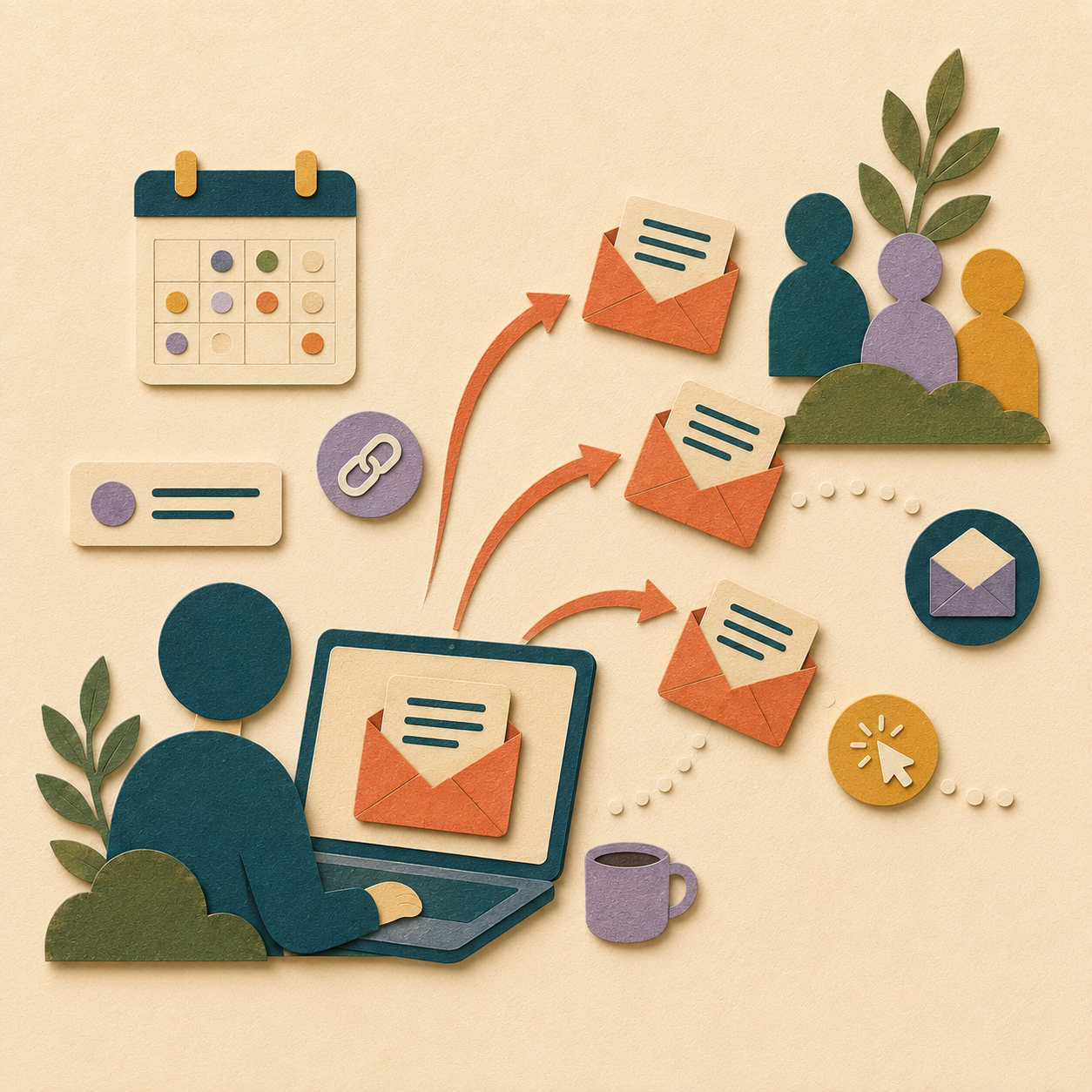
📅 Month 3: Grow Subscribers & Improve Engagement
🎯 Main Goal
Start growing your list and improving how readers interact with your emails.
✅ What to Do
- Share every issue consistently
- Create a simple lead magnet
- Add a signup link to your website, bio, or content pages
- Ask current subscribers to forward the newsletter
- Test different subject line styles
- Study which links get clicked
- Ask readers what they want more of
- Create content around the topics with the best engagement
🛠️ What to Improve First
- Weak subject lines
- Unclear newsletter promise
- Emails that are too long
- No clear links or next step
- Inconsistent publishing
- Generic content
- Signup page with no benefit
🏁 Month 3 Success Looks Like
- Your list is growing slowly but consistently
- You know which topics readers click
- You have improved your subject lines
- Readers are replying, clicking, or sharing
- You have 6–10 issues published
🎯 KEY TAKEAWAY
A reply from a reader is valuable data. Pay attention to the questions, problems, and interests they mention.
📈 Metrics to Watch
Metric | What It Tells You |
Subscriber count | Whether the list is growing |
Open rate | Whether subject lines and trust are strong |
Click rate | Whether readers care about the content |
Replies | Whether readers feel connected |
Unsubscribes | Whether expectations are mismatched |
Forwarding/shares | Whether content is valuable enough to pass along |
Signup source | Where your best subscribers come from |

📅 Month 4: Build a Repeatable Newsletter System
🎯 Main Goal
Create a simple system for finding ideas, writing issues, publishing, and growing the list.
✅ What to Do
- Create a newsletter template
- Create a subject line swipe file
- Build a content calendar
- Batch research for future issues
- Create a lead magnet or improve your existing one
- Add signup forms to more places
- Repurpose newsletter content into posts
- Track every issue in a spreadsheet or Notion

🏁 Month 4 Success Looks Like
- Your newsletter has a repeatable format
- You are no longer starting from scratch every issue
- Your publishing schedule is more consistent
- Your signup page is easier to promote
- You have 10–16 issues published
⚠️ Scale Smart: Do not add too many sections too early. A newsletter should be useful, readable, and sustainable.
🗓️ Simple Weekly Workflow
Day | Task |
Monday | Research topic ideas and links |
Tuesday | Outline the next issue |
Wednesday | Write the draft |
Thursday | Edit, add links, and choose subject line |
Friday | Send newsletter |
Weekend | Review metrics and promote signup page |
🔄 Simple Newsletter Workflow
Step | What Happens |
Idea research | Find topics, links, questions, or trends |
Outline | Choose the issue topic and sections |
Draft | Write the newsletter |
Edit | Tighten the message and links |
Subject line | Create 3–5 options and choose the strongest |
Send | Publish on schedule |
Share | Promote the issue or signup page |
Review | Track opens, clicks, replies, and unsubscribes |
📅 Month 5: Test Monetization Carefully
🎯 Main Goal
Start testing income streams without damaging reader trust.
✅ What to Do
- Add affiliate links where relevant
- Create a resource section or recommendation section
- Test a small sponsor slot if your audience is engaged
- Offer a simple digital product if you know the reader’s problem
- Promote your own service if it fits the niche
- Track clicks on monetized links
- Keep disclosures clear
- Avoid promoting products that do not match the audience
🏁 Month 5 Success Looks Like
- You have tested one monetization method
- Your recommendations still feel useful
- You understand what readers click
- You know which offers fit your audience
- You are monetizing carefully without turning every issue into a sales pitch
🎯 KEY TAKEAWAY
Newsletter monetization works best when the offer feels like a helpful recommendation, not a random ad.
📧 Newsletter Monetization Options
Monetization Method | Best Use |
Affiliate links | Tools, products, software, books, or services |
Sponsorships | Brands that want your niche audience |
Paid subscriptions | Premium insights, deeper research, or exclusive content |
Digital products | Templates, guides, checklists, trackers |
Services | Consulting, writing, design, coaching, or setup help |
Classified ads | Small paid listings or community promotions |
Resource page | Central place for recommended tools |
Courses/workshops | Best after you understand reader needs |

📅 Month 6: Review, Refine & Build a Growth Plan
🎯 Main Goal
Review your first 6 months and decide how to grow subscribers, improve engagement, and increase revenue.
✅ What to Do
- Review every newsletter issue
- Identify your best subject lines
- Identify your most-clicked topics
- Review subscriber growth sources
- Review unsubscribes and weak issues
- Decide which monetization method worked best
- Improve your signup page and lead magnet
- Create a 90-day plan for months 7–9
❓ 6-Month Review Questions
- Which issues had the highest open rates?
- Which links got the most clicks?
- Which subject lines worked best?
- Which topics got replies or shares?
- Where did most subscribers come from?
- Which monetized links got interest?
- Which issues caused unsubscribes?
- Is the publishing schedule realistic?
- What should you repeat, improve, or remove?
🏁 Month 6 Success Looks Like
- You know your best newsletter topics
- You understand what readers click
- You have a repeatable publishing system
- You know which monetization path fits best
- You have a 90-day plan for subscriber growth and income
🎯 KEY TAKEAWAY
A newsletter becomes more valuable when the audience is clear, the content is consistent, and every issue strengthens reader trust.
📊 Decision Table
If This Happens | Do This |
Open rates are low | Improve subject lines and newsletter promise |
Click rates are low | Make content more useful and links clearer |
Subscribers grow slowly | Promote signup page more consistently |
Readers reply often | Build content around their questions |
Affiliate clicks are strong | Create more recommendation-based issues |
Sponsors show interest | Build a media kit and simple sponsor slot |
Writing takes too long | Simplify the format or batch research |
Unsubscribes increase | Check if content shifted away from the promise |

✅ 6-Month Success Checklist
By the end of 6 months, check whether you have:
✅ Picked one newsletter niche
✅ Defined your target reader
✅ Set up an email platform
✅ Created a signup page
✅ Published consistently
✅ Tested subject lines
✅ Tracked opens and clicks
✅ Created a lead magnet or subscriber incentive
✅ Asked readers for feedback
✅ Tested one monetization method
✅ Identified your best topics
✅ Created a plan for the next 90 days
⚠️ What Not to Do During the First 6 Months
Avoid these mistakes:
❌ Starting with no clear newsletter promise
❌ Sending random topics with no audience focus
❌ Publishing inconsistently
❌ Making every email too long
❌ Ignoring open rates and click rates
❌ Promoting products that do not fit your readers
❌ Hiding affiliate relationships
❌ Buying low-quality email lists
❌ Adding too many monetization methods too soon
❌ Treating subscribers like numbers instead of people
⚠️ Reminder: Your email list is built on trust. Protect that trust by sending useful content, clear recommendations, and offers that make sense.
🧭 Simple 6-Month Milestone Tracker
Month | Main Focus | Target Output |
Month 1 | Niche & setup | Email platform, signup page, 20–30 ideas |
Month 2 | First issues | 3–5 issues published |
Month 3 | Growth & engagement | Lead magnet started, 6–10 total issues |
Month 4 | Newsletter system | Template, calendar, 10–16 total issues |
Month 5 | Monetization testing | Affiliate, sponsor, product, or service test |
Month 6 | Review & growth plan | 90-day plan created |
🚀 Final 6-Month Strategy
Your first 6 months should follow this simple path:
Month 1: Choose your niche and set up the newsletter
Month 2: Publish your first issues consistently
Month 3: Grow subscribers and improve engagement
Month 4: Build a repeatable newsletter system
Month 5: Test monetization carefully
Month 6: Review results and create your growth plan
The newsletters that grow fastest are not always the biggest. They are the ones that serve a clear audience, publish consistently, and earn reader trust before asking for money.
11. Get the Newsletter Starter Kit
🎁 Your Newsletter Growth Toolkit
The Newsletter Monetization Starter Kit contains 12 browser-based workspaces to help develop editorial content, research your audience, plan promotions, draft email sequences and organize monetization experiments.
The 12 components:
✅ 1. Newsletter Template Library — Choose and adapt newsletter layouts and formats to suit your publication.
✅ 2. Monetization Checklist — Evaluate possible revenue models and readiness requirements.
✅ 3. Subject Line Formula Bank — Adapt formulas to draft and test email subject lines; open rates are not guaranteed.
✅ 4. Newsletter Tools Directory — Explore tools for newsletter production and distribution, checking current features and pricing before choosing.
✅ 5. Lead Magnet Builder — Plan a useful opt-in resource and draft the copy that introduces it to prospective subscribers.
✅ 6. Sponsorship Pitch Builder — Draft sponsorship pitches and assess whether potential sponsors fit your publication and audience.
✅ 7. 12-Week Content Calendar — Organize three months of newsletter topics, deadlines and publishing cadence.
✅ 8. Welcome Email Sequence Builder — Draft and review a sequence of emails that introduces new subscribers to your publication.
✅ 9. Newsletter Analytics Tracker — Manually record engagement and revenue indicators to review newsletter performance.
✅ 10. Newsletter Niche Evaluator — Research publication ideas and compare how well they address audience needs.
✅ 11. Audience Segmentation Planner — Plan reader groups and tailor content ideas to their interests and needs.
✅ 12. Newsletter Growth & Automation Guide — Evaluate workflow improvements and potential automation to support a sustainable newsletter operation.
Also included in the editable master: The editable master also includes a dashboard and Start Here instructions.
These workspaces do not send email, automatically segment subscribers, connect to live analytics or guarantee audience growth or revenue. Release approval and platform-specific compliance remain separate steps.

12. Frequently Asked Questions
💰 How many subscribers do I need to make money?
A small list can earn something through affiliates or products, but it is not automatic.
More useful benchmarks:
- 💸 A small list may support affiliates or a small product if readers trust you
- 🤝 Sponsorships usually need a clearer audience and proof of engagement
- 🚀 Larger engaged lists can support more income options — not a set monthly total
💡 Engagement matters more than raw subscriber count.
📰 Should I use Substack or Beehiiv?
Substack:
- ✅ Simple to use
- 💳 Built-in paid subscriptions
- 🛠️ No tech skills needed
Beehiiv:
- 📈 More growth tools
- 📢 Built-in ad network
- 🚀 Better for scaling
💡 Both work — choose based on your goals and preference.
📅 How often should I send newsletters?
Weekly is ideal for beginners because it is manageable and builds the habit.
General rule:
- ✅ Weekly = best starting point
- 🗞️ Daily = works for news/curation
- ⚠️ Bi-weekly = risk of being forgotten
👉 Consistency > frequency.
💡 What if I run out of content ideas?
You won’t if you choose a niche you genuinely care about.
Content sources:
- 🧠 Curate others’ content
- 🎙️ Interview experts
- ❓ Answer subscriber questions
- 📖 Share personal stories
- 🔍 Break down trends or tools
💡 Content is everywhere once you start looking for problems to solve.
🌐 Do I need a website?
No. Newsletter platforms include landing pages.
A website can help with:
- 🔍 SEO
- 🏗️ Brand authority
- 📚 Content archive
- 📈 Long-term traffic
But it is not required to start.
👥 How do I get my first 100 subscribers?
Start with your warm network and relevant communities.
Simple path:
- 👨👩👧 People who already know you
- 📱 Posts on one social platform
- 👥 Relevant communities
💡 Quality matters more than quantity at this stage.
💵 Can I make money without paid subscriptions?
Yes.
Monetization options include:
- 🤝 Sponsorships
- 🔗 Affiliate links
- 📦 Digital products
- 💼 Services
- 🎓 Courses or consulting
💡 Some newsletters earn through sponsors, affiliates, or products without a paid tier — results still vary widely.
⏳ How long until I make $1,000/month?
There is no set timeline. Progress depends on:
- 🎯 Niche
- 📈 Growth tactics
- 💰 Monetization strategy
- 👥 Existing audience
- 🔁 Publishing consistency
💡 Faster if you already have an audience.
📬 What's a good open rate?
General benchmarks:
- 📉 20–30% = average
- ✅ 30–40% = good
- 🔥 40–50%+ = excellent
💡 Smaller, more engaged lists often have higher open rates.
🚀 Should I grow fast or slow?
Quality > quantity.
Better:
- ✅ 1,000 engaged subscribers
Worse:
- ❌ 10,000 unengaged subscribers
💡 Organic growth usually builds a better audience than buying subscribers or relying on giveaways.
13. Important Considerations
Before starting, understand the realities:
⏳ Consistency Is Everything
- 📉 Most people quit within 3 months
- 📅 Growth comes from showing up weekly
- 🏆 Top earners stay consistent for 12+ months
👉 Consistency is the real moat.
🧠 Content Quality Matters
- ❌ Low-value content = unsubscribes
- ✅ High-value content = growth + monetization
- 💡 Useful content builds trust
👉 Always prioritize usefulness.
📉 Growth Is Slow at First
- 🐢 First 100 subscribers = hardest
- 📈 Momentum builds later
- 🔁 Early growth requires repetition
👉 Don’t expect instant results.
💸 Monetization Takes Time
- 🤝 Sponsors usually need 1,000+ subscribers
- 💳 Paid subscriptions require trust
- 📦 Products need audience fit
👉 Focus on audience first.
🧩 Idea Burnout Is Real
You must consistently generate content.
Solve this with:
- 🧠 Idea bank
- 🧱 Content frameworks
- 🔁 Repurposing
- 📋 Reader questions
- 🔍 Weekly trend research
⚖️ Platform Dependence Still Exists Partially
Even though you own your email list, you may still rely on social platforms for growth.
Growth channels can include:
- 📱 Social media
- 🔍 SEO
- 🤝 Newsletter swaps
- 🎙️ Podcasts
- 👥 Communities
👉 Diversify traffic sources.
🧾 Legal & Trust Factors
Protect trust from day one.
Do this:
- 🔗 Disclose affiliate links
- 🚫 Don’t spam
- 🔐 Protect subscriber data
- 📬 Make unsubscribing easy
- 🧾 Follow email marketing laws
👉 Trust = long-term revenue.
💡 Final Reality Check
This is:
✔ 💸 Low-cost
✔ 📈 Scalable
✔ 💰 Can scale if readers stay engaged and offers fit
But also:
❌ Requires consistency
❌ Requires patience
❌ Requires real value
🚀 The creators who win aren’t the smartest — they’re the ones who keep publishing when others quit.
14. Your Next Steps
🚀 ACTION STEP
Choose a small first step today, then build toward a repeatable weekly routine.
📍 Today
- 📦 View the starter kit above
- 🎯 Choose your niche and make it specific
- 📰 Sign up for Substack or Beehiiv for free
📅 This Week
- 🧲 Create a landing page with a lead magnet
- ✍️ Write your first 3 newsletters in advance
- 📱 Share daily on social media about your topic
- 👥 Invite 20 friends/family members to subscribe
🗓️ This Month
- 📬 Send weekly newsletters on the same day/time
- 📣 Post 3–5x/week on one social platform
- 🔁 Create a referral program
- 🎯 Goal: a small permission-based list and a publishing habit
🚀 Months 2–3
- 🔁 Maintain weekly consistency and never miss
- 🧪 Experiment with social content formats
- 🤝 Launch newsletter swaps with 2–3 creators
- 💰 Add first monetization through affiliate links or a sponsor
- 🎯 Goal: a clearer picture of which topics, channels, and offers are worth repeating
15. The Bottom Line
🎯 KEY TAKEAWAY
Build a newsletter people want to read before building a newsletter that sells. A focused audience, useful content, and a sustainable publishing schedule create the foundation for monetization — subscriber count alone does not guarantee income.
🙋 If you:
✔ Serve one reader with a specific, repeatable promise
✔ Publish on a schedule you can maintain, not one that sounds impressive
✔ Use permission-based signups and disclose paid recommendations
✔ Keep offers relevant to your readers
🏗️ You can build:
💌 A direct reader relationship that doesn’t rely on social feeds
🔁 A reusable publishing system — one issue can become posts, videos, or other content
💰 Several revenue options: affiliates, sponsors, paid tiers, products, or services
🚀 Choose a niche → publish consistently → listen to readers → grow deliberately → test one relevant offer. The goal is not the biggest list — it’s a newsletter the right readers keep coming back to.
16. Recommended Websites & Tools
🛠 TOOLS & RESOURCES
You do not need every resource listed below. This directory brings together the major platforms, tools, and resources from this guide, along with additional research and learning options, so you can find them in one place when you need them.
Start with the essentials. Add tools only when your newsletter develops a specific need for them.
📧 Newsletter Platforms
- Substack — Beginner-friendly newsletter platform for publishing free or paid newsletters with simple setup and built-in discovery.
- beehiiv — Newsletter platform for growth-focused creators who want referral tools, premium newsletters, polls, and monetization features.
- Kit — Creator-focused email platform for newsletters, automations, landing pages, digital product sales, and audience building.
- Ghost — Publishing and membership platform for creators who want a newsletter, website, SEO tools, and paid subscriptions under one system.
- MailerLite — Budget-friendly email platform for newsletters, landing pages, automations, and beginner email list growth.
- Mailchimp — Email marketing platform for small businesses that need audience segmentation, campaigns, and basic newsletter tools.
💡 PRO TIP
Substack and beehiiv are both free to start. Pick the one that fits your growth plans — switching later means migrating your list.
🧲 Landing Pages, Lead Magnets & Signup Pages
- Carrd — Simple one-page website builder for newsletter landing pages, lead magnet pages, and basic signup funnels.
- Canva — Design tool for lead magnets, social graphics, newsletter visuals, signup-page graphics, and promotional content.
- Leadpages — Landing page and funnel builder for more professional newsletter signup pages and conversion-focused campaigns.
- Beehiiv — Built-in newsletter landing page option for collecting subscribers directly from your beehiiv publication.
- Substack — Built-in newsletter homepage and signup page for writers who want the simplest possible launch path.
- Kit Landing Pages — Creator-focused landing page tool for collecting subscribers and promoting newsletter lead magnets.
💰 Monetization, Payments & Sponsorship Tools
- Kit Commerce — Commerce tool for selling digital products, templates, guides, and mini-courses to your newsletter audience.
- Gumroad — Digital product and subscription platform for selling downloads, guides, templates, paid resources, and simple offers.
- Ko-fi — Creator support platform for tips, memberships, donations, small digital products, and reader-backed monetization.
- Stripe — Payment processor for direct checkout, paid products, subscriptions, and newsletter-related payment flows.
- SparkLoop — Newsletter referral tool for rewarding subscribers who bring in new readers.
- Swapstack — Sponsorship marketplace for connecting newsletter creators with brands that want to reach their audience.
📝 QUICK NOTE
You can monetize before 1,000 subscribers with affiliate links or a small digital product — sponsors come later.
📊 Analytics, Research & Growth Tools
- Google Analytics — Analytics platform for tracking newsletter landing page traffic, signup sources, and campaign performance.
- SparkToro — Audience research tool for understanding where your target readers spend time and what they follow online.
- SparkLoop — Referral growth platform for building subscriber reward systems and newsletter growth loops.
- MailCharts — Email research tool for studying competitor newsletters, campaigns, subject lines, and email strategy.
- Letterdrop — SEO and content growth platform mentioned for turning newsletter ideas into searchable content.
🎨 Writing, Planning & Content Creation Tools
- Google Docs — Writing workspace for drafting newsletter issues, outlines, lead magnets, and reusable content.
- Notion — Workspace for organizing newsletter ideas, content calendars, research notes, sponsor tracking, and publishing plans.
- ChatGPT — AI assistant for brainstorming topics, drafting outlines, improving subject lines, and generating content angles.
- Grammarly — Writing assistant for checking grammar, clarity, tone, and polish before sending newsletter issues.
- Canva — Visual design tool for newsletter graphics, lead magnets, social posts, content upgrades, and promotional assets.
📣 Audience Growth & Social Platforms
- X / Twitter — Short-form content platform for threads, insights, newsletter previews, and idea-based audience growth.
- LinkedIn — Professional platform for business, career, finance, consulting, leadership, and B2B newsletter growth.
- TikTok — Short-form video platform for turning newsletter ideas into educational clips, quick tips, and discovery content.
- Instagram — Visual platform for Reels, carousels, Stories, and link-in-bio funnels that send readers to your signup page.
- Pinterest — Visual search platform for growing newsletters in lifestyle, templates, crafts, finance, printables, and evergreen niches.
- Facebook Ads Manager — Paid advertising tool mentioned for testing paid newsletter growth once the offer and audience are validated.
- Instagram Ads — Paid growth channel for promoting lead magnets, signup pages, and newsletter content to targeted audiences.
- X Ads — Paid advertising platform for promoting newsletter content, lead magnets, or audience-building campaigns on X.
🎯 KEY TAKEAWAY
You do not need every tool on this page. One email platform, one signup page, and one growth channel are enough to publish your first issue.
🧭 How to Use This Directory
🧰 Start With a Simple Setup
Do not start by creating accounts with every service listed above. For most beginners, a simple setup is enough:
- One email platform
- One signup page
- One repeatable format
- One growth channel
That is enough to start building. Add tools only when you can name the specific problem they will solve.
🎯 KEY TAKEAWAY
Tools support the business. They are not the business.
Your biggest advantages will come from:
Choosing a focused niche → Publishing consistently → Listening to readers → Testing one relevant offer
17. Explore Similar Side Hustles
 Blogging: Build an Online Brand and Earn from Your Words — Repurpose each issue as SEO content that brings new subscribers from search.
 Freelance Writing: Get Paid to Write Online — Get paid to write for clients while your own audience grows.
 Affiliate Marketing: Get Paid to Promote What You Love — Monetize your newsletter with disclosed product recommendations.
- Online Course Creation: Turn Your Knowledge Into Income — Package your expertise into a course your subscribers already want.
 Social Media Management — Turn your content repurposing skills into a service for clients.
 Selling Digital Products — Sell templates and guides directly to your email list.