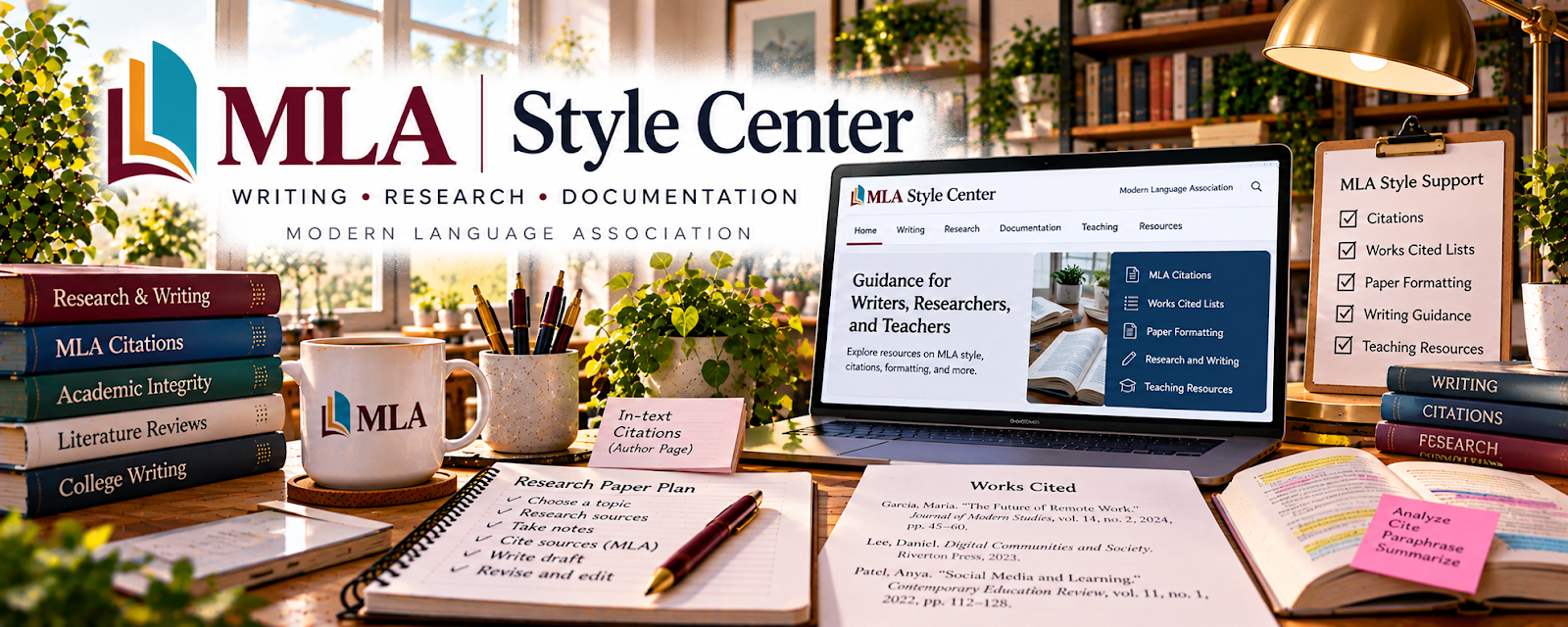
Official Website
MLA Style Center is the Modern Language Association’s free reference site for MLA style, citations, grammar questions, and writing guidance.
🔗 Visit Official Website — MLA Style Center
Domain: style.mla.org
What This Website Is
MLA Style Center is the Modern Language Association’s free reference site for MLA style, citations, grammar questions, and writing guidance. For 📝 Copyediting & Proofreading, it is useful when editing academic, humanities, student, or citation-heavy work.
How to Use It for Copyediting & Proofreading
Use MLA Style Center as a decision source when a client asks for MLA formatting. Build a repeatable checklist so you are not guessing citation punctuation, page layout, or source treatment.
Step-by-Step Implementation:
- Review MLA citation and formatting examples.
- Save answers for recurring citation questions.
- Create an MLA proofreading checklist.
- Check works-cited entries against official examples.
- Flag uncertain source types for client confirmation.
- Keep notes on common mistakes for future projects.
Best Time to Use This
- When proofreading essays, papers, or humanities content.
- When a client requests MLA style.
- Before quoting academic editing work.
- When source types are unfamiliar.
Best Skills to Learn Here
- MLA citations
- Works-cited formatting
- Academic style checking
- Source documentation
- Grammar decision-making
- Editorial consistency
Getting Started Steps
- Open MLA Style Center.
- Review the main citation examples.
- Build a checklist for in-text citations and works cited.
- Test the checklist on one sample paper.
- Save links for common source formats.
Good Beginner Search Terms
- MLA Style Center citations
- MLA works cited examples
- MLA in text citation
- MLA formatting checklist
- MLA proofreading
- academic copyediting style guide
Monetization Angle
MLA fluency can support paid editing for students, academics, researchers, and writers who need clean formatting. It helps you price work more confidently because citation checking becomes a defined service rather than a vague add-on.
Pros
- Free official MLA guidance.
- Strong for academic editing.
- Useful examples for tricky citation cases.
- Helps create a professional checklist.
Cons
- Limited to MLA-related work.
- Not a complete proofreading course.
- Some clients may use APA, Chicago, or house style instead.
- Requires careful checking against current rules.
Who Should Use This
Use this if you edit academic or humanities writing and need reliable MLA answers.
Who Should Skip This
Skip this if your work is mostly business copy, fiction, or non-MLA projects.
Practical Applications
- Check an MLA-specific citation or formatting question against the relevant official guidance.
- Build a client checklist for source information and consistent references.
- Explain a correction by distinguishing the style rule from a personal preference.
Important Considerations
- Confirm the edition and style actually requested; MLA is not interchangeable with APA, Chicago, or a client’s house style.
- Check original source details rather than inventing missing references. Style guidance does not replace a full editorial review, permissions checks, or academic-integrity boundaries.
Related Resources
Oxford English Dictionary Resources — Supports word meaning, usage, and spelling decisions.
Conscious Style Guide — Adds inclusive language and sensitivity-editing judgment.
Grammarly — Helps catch grammar, punctuation, and clarity issues.
Hemingway Editor — Helps simplify dense sentences after mechanical edits.
AMA Manual of Style — Provides a more specialized medical and scientific style reference.
Related Side Hustles
 Copyediting & Proofreading: Get Paid to Polish Words — MLA Style Center supports academic citation and formatting work.
Freelance Writing: Get Paid to Write Online — Style knowledge improves research-heavy articles and client deliverables.
Resume Writing & LinkedIn Optimization — Attention to formatting and consistency transfers to career documents.
 Blogging: Build an Online Brand and Earn from Your Words — Clear citation and reference habits support trustworthy long-form content.