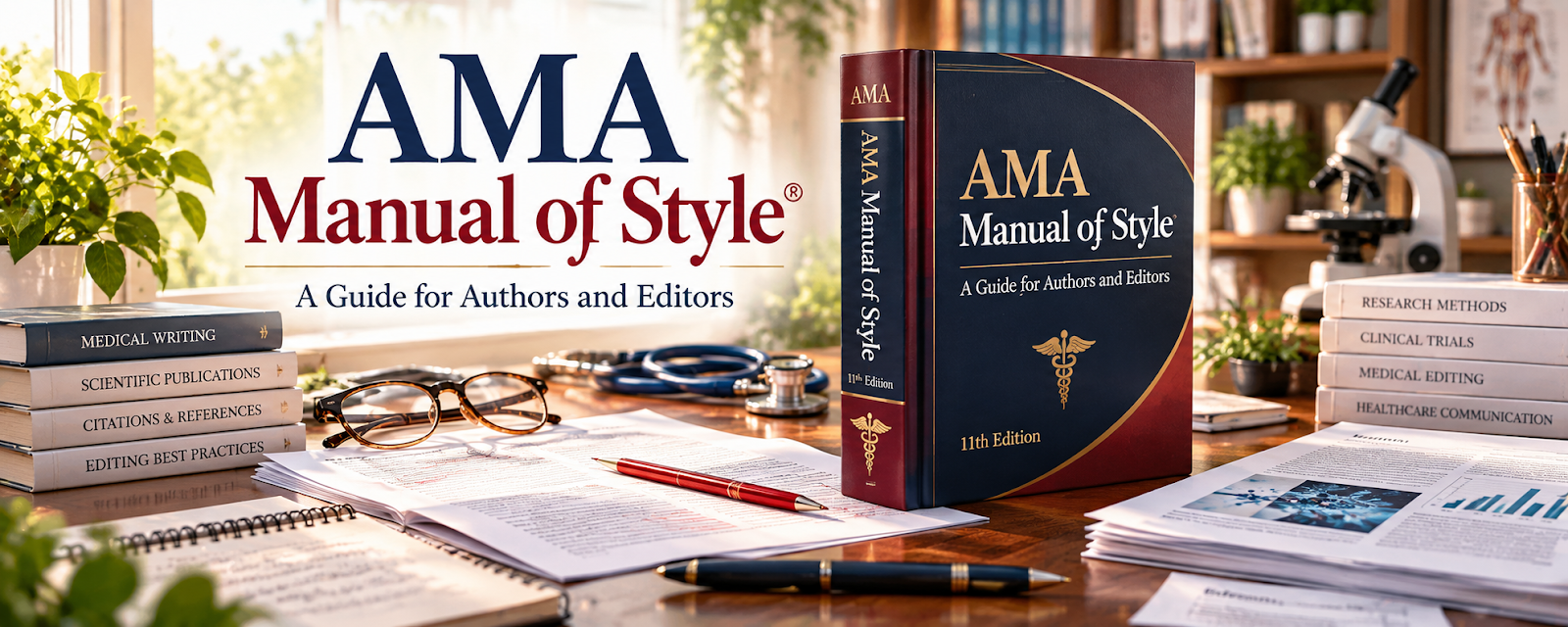
Official Website
AMA Manual of Style is a professional medical and scientific style reference published by Oxford University Press.
🔗 Visit Official Website — AMA Manual of Style
Domain: academic.oup.com
What This Learning Resource Is
AMA Manual of Style is a professional medical and scientific style reference published by Oxford University Press. For 📝 Copyediting & Proofreading, it is most useful when editing healthcare, medical, pharmaceutical, academic, or scientific material.
How to Use It for Copyediting & Proofreading
Use AMA Manual of Style as a specialist editing reference. It helps you check terminology, citations, abbreviations, numbers, units, references, and consistency in high-stakes technical content.
Step-by-Step Implementation:
- Confirm whether the project requires AMA style.
- Review citation, abbreviation, number, and unit rules.
- Create a medical-editing checklist.
- Apply the checklist during the final editing pass.
- Keep client-specific deviations in a style sheet.
- Flag subject-matter questions instead of guessing.
Best Time to Use This
- When proofreading medical or scientific writing.
- When a client requests AMA style.
- Before taking higher-stakes technical editing work.
- During final consistency review.
Best Skills to Learn Here
- AMA citations
- Medical style rules
- Technical consistency
- Abbreviation handling
- Numbers and units
- Specialist proofreading judgment
Getting Started Steps
- Review whether AMA fits your target editing niche.
- Learn the citation and abbreviation sections first.
- Build a checklist for medical copyediting.
- Practice on a short health article.
- Add AMA familiarity to relevant service descriptions.
Good Beginner Search Terms
- AMA Manual of Style
- AMA style citations
- medical copyediting style guide
- AMA abbreviations
- scientific proofreading
- medical editing checklist
Monetization Angle
AMA style knowledge can help you position copyediting services for higher-value medical and scientific projects. Clients in these niches often pay for accuracy, consistency, and reduced publication risk.
Pros
- Professional specialist reference.
- Strong fit for medical editing.
- Helps justify premium proofreading services.
- Useful for technical consistency.
Cons
- Paid resource.
- Advanced for general proofreading.
- Requires careful application.
- Does not replace subject-matter expertise.
Who Should Use This
Use this if you want to edit medical, health, scientific, or academic content professionally.
Who Should Skip This
Skip this if your editing work is mostly casual copy, fiction, or basic grammar cleanup.
Practical Applications
- Check medical references and abbreviations against the appropriate style rule.
- Maintain a client-approved style sheet for units and terminology.
- Query ambiguous scientific wording rather than silently changing its meaning.
Important Considerations
- Follow current journal and client instructions where they override general style guidance.
- Editorial style does not establish clinical or scientific accuracy; specialist content may require qualified subject review.
Related Resources
Chicago Manual of Style Online — Provides broader publishing and academic style rules.
MLA Style Center — Supports MLA academic formatting and citations.
Grammarly — Helps catch grammar and clarity issues.
Conscious Style Guide — Adds inclusive-language judgment.
Related Side Hustles
 Copyediting & Proofreading: Get Paid to Polish Words — AMA supports specialist editing services.
Freelance Writing: Get Paid to Write Online — Medical style knowledge can support health writing.
 Consulting: Get Paid for What You Know — Specialist editorial knowledge can become advisory support for content teams.