Official Website
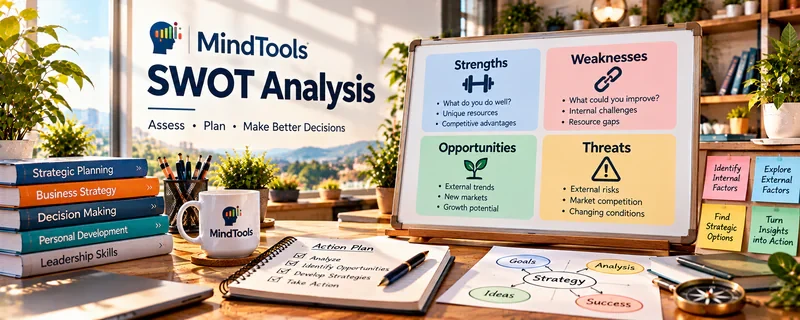
SWOT Analysis is a strategy framework for organizing strengths, weaknesses, opportunities, and threats.
🔗 Visit Official Website — SWOT Analysis
Domain: www.mindtools.com
What This Learning Resource Is
SWOT Analysis is a strategy framework for organizing strengths, weaknesses, opportunities, and threats. For 💼 Consulting, it helps turn messy client situations into a simple decision-making view.
How to Use It for Consulting
Use SWOT Analysis when a client needs clarity before choosing a direction. Keep it evidence-based: each point should connect to facts, observations, customer feedback, market conditions, or operational realities.
Step-by-Step Implementation:
- Define the client decision or business area being analyzed.
- List internal strengths and weaknesses.
- List external opportunities and threats.
- Separate facts from guesses.
- Prioritize the highest-impact items.
- Turn the analysis into 3–5 recommended actions.
Best Time to Use This
- At the beginning of a consulting project.
- When a client feels stuck between options.
- Before writing a strategy memo.
- During discovery calls or workshops.
Best Skills to Learn Here
- Strategic diagnosis
- Client discovery
- Prioritization
- Workshop facilitation
- Business writing
- Recommendation framing
Getting Started Steps
- Read the SWOT explanation.
- Create a one-page SWOT template.
- Practice on your own side hustle.
- Add evidence beside each point.
- Convert the top findings into action steps.
Good Beginner Search Terms
- SWOT analysis example
- SWOT analysis consulting
- strategy framework for beginners
- business strengths weaknesses opportunities threats
- consulting discovery template
- strategic planning framework
Monetization Angle
SWOT can become a simple paid deliverable when paired with research, facilitation, and clear recommendations. It is especially useful for low-cost strategy audits, startup reviews, and small-business planning sessions.
Pros
- Easy for clients to understand.
- Works across many business types.
- Good entry-level consulting framework.
- Helps structure messy conversations.
Cons
- Can become shallow without evidence.
- Does not automatically produce strategy.
- Needs prioritization to be useful.
- Overused if presented without insight.
Who Should Use This
Use this if you want a simple framework for organizing client strategy problems.
Who Should Skip This
Skip this if the client needs detailed financial modeling, technical implementation, or legal advice.
Practical Applications
- Collect evidence for a client’s strengths, weaknesses, opportunities, and threats.
- Run a workshop that separates internal factors from external conditions.
- Translate the most important findings into owners, next steps, and testable assumptions.
Important Considerations
- A SWOT is a framing tool, not proof of causation or a complete strategy.
- Document evidence quality, challenge unsupported opinions, and handle confidential business information appropriately.
Related Resources
Kit — Can support consulting lead capture and email follow-up.
HubSpot CRM — Helps manage consulting leads and client pipelines.
Google Sheets — Useful for analysis tables, scoring, and simple client models.
Related Side Hustles
 Consulting: Get Paid for What You Know — SWOT helps structure client discovery and strategy deliverables.
 Freelance Writing: Get Paid to Write Online — Strategy findings can become reports, decks, and client-facing memos.
 Social Media Management — SWOT can clarify brand positioning and content opportunities.