Official Website
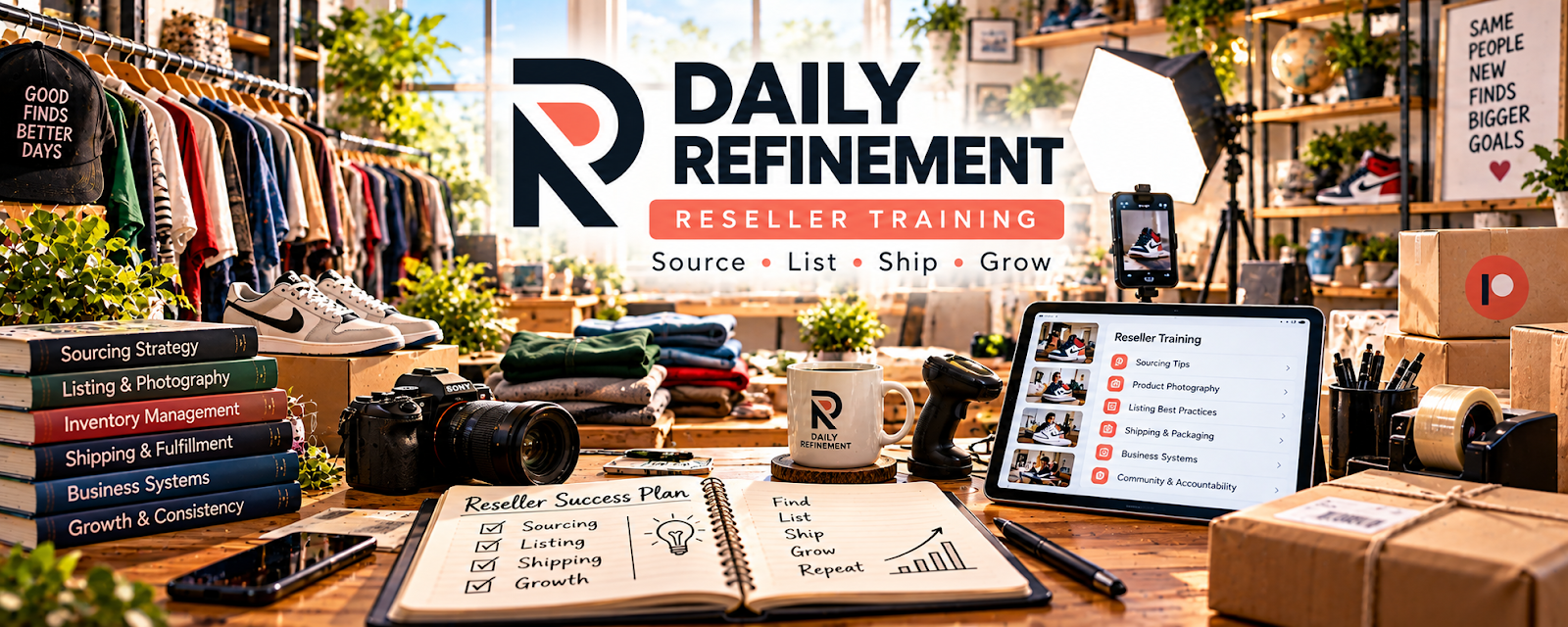
Daily Refinement Reseller Training is a paid creator-led training and community resource focused on reselling systems, sourcing, listings, pricing, shipping, inventory discipline, marketplace operations, and building a more consistent resale business.
🔗 Visit Official Website — Daily Refinement Reseller Training
Domain: www.patreon.com
What This Resource Is
Daily Refinement Reseller Training is a paid creator-led training and community resource focused on reselling systems, sourcing, listings, pricing, shipping, inventory discipline, marketplace operations, and building a more consistent resale business. For ♻️ Product Flipping, it works as an advanced structured-learning resource because it is most useful after you already understand basic flipping and want stronger routines, better sell-through, tighter inventory control, and more professional marketplace habits.
What You Can Learn From This Resource
- How experienced resellers think about sourcing, pricing, listing volume, and sell-through.
- How to build daily habits around sourcing, photographing, listing, shipping, and accounting.
- How inventory organization affects speed, cash flow, and buyer experience.
- How to evaluate whether an item is worth buying before it becomes dead stock.
- How marketplace fees, shipping costs, returns, and time affect real profit.
- How paid reseller communities can provide accountability, examples, and repeatable systems.
- How to avoid treating product flipping like random thrifting instead of a business.
- How to review operations data before scaling inventory or buying more items.
How to Apply It to ♻️ Product Flipping
Use Daily Refinement Reseller Training as a business-systems layer for product flipping. Instead of copying another reseller’s exact inventory choices, use the training to improve your repeatable process: buy smarter, list faster, track profit, ship reliably, and stop holding slow-moving items too long.
Step-by-Step Implementation:
- Phase 1: Review whether your current flipping workflow is ready for paid training: active listings, tracked costs, basic shipping knowledge, and at least some marketplace experience.
- Phase 2: Turn lessons into checklists for sourcing criteria, listing templates, photo workflow, pricing research, shipping prep, inventory labels, and weekly review.
- Phase 3: Track sell-through rate, average profit, time-to-list, returns, storage problems, and stale inventory, then refine what you buy and how you operate.
Common Use Cases for This Side Hustle:
- Scenario A: A reseller has inconsistent sales and uses training to build a daily listing and sourcing rhythm.
- Scenario B: A flipper buys too many low-profit items and uses pricing/sell-through lessons to tighten buying criteria.
- Scenario C: A growing seller improves inventory storage, shipping workflow, and marketplace processes before scaling.
When to Use This
- When you already understand basic reselling but need better systems.
- When inventory is piling up and sell-through is weak.
- When sourcing decisions are based on guesses instead of sold comps and margins.
- When listing, photos, shipping, or storage feel disorganized.
- When you want accountability from a paid reseller community.
- When you are ready to track profit, fees, shipping, and time more seriously.
- When scaling from casual flipping to a more structured resale operation.
Recommended Learning Path
- Baseline: Track current inventory, cost of goods, listing count, sell-through, and average profit.
- Sourcing Rules: Define what you buy, what you avoid, and what margins justify the work.
- Listing System: Standardize photos, titles, item specifics, descriptions, pricing, and cross-posting rules.
- Inventory Control: Label, store, audit, and retire items so inventory stays findable and profitable.
- Shipping & Service: Improve packing, shipping speed, returns handling, and buyer communication.
- Weekly Review: Use numbers to decide what to source, discount, relist, donate, or stop buying.
Getting Started Steps
- Review the Daily Refinement Reseller Training offer, cost, community expectations, and current focus before joining.
- Audit your current flipping workflow: sourcing, photos, listings, storage, shipping, returns, and profit tracking.
- Choose one bottleneck to improve first instead of trying to overhaul everything.
- Convert one training lesson into a checklist or standard operating procedure.
- Apply it to a small batch of items and measure whether it improves speed, accuracy, or profit.
- Track listing count, sell-through, average profit, stale inventory, and time spent each week.
- Keep the training only if it produces better decisions, clearer systems, or accountability worth the cost.
Recommended Searches on This Resource
- reseller inventory system
- eBay sell through rate
- reseller listing workflow
- product flipping sourcing
- reseller shipping process
- eBay sold comps
- reseller daily routine
- stale inventory
- reselling profit tracking
- reseller pricing strategy
Best Practices
- Treat paid training as an operating-system investment, not a shortcut to guaranteed profit.
- Do not buy more inventory just because a trainer or community highlights a category.
- Verify every sourcing decision with sold comps, fees, shipping cost, condition, demand, and storage constraints.
- Track cost of goods, marketplace fees, shipping, returns, supplies, time, and taxes.
- Avoid copying another reseller’s listings, photos, titles, or sourcing route.
- Keep marketplace rules, tax obligations, and local resale regulations in mind.
- Review whether the subscription pays for itself through better decisions or saved time.
- Use a small test batch before scaling any new sourcing category or workflow.
Monetization Angle
Daily Refinement Reseller Training can support product flipping income indirectly by improving sourcing discipline, listing consistency, inventory control, shipping workflow, and business review habits. Better systems may improve sell-through and reduce costly mistakes, but profit still depends on sourcing access, buying price, demand, condition, platform fees, shipping, storage, competition, and execution.
Pros
- Structured paid training for resellers who want stronger systems.
- Useful for moving from casual flipping to more consistent operations.
- Can help with listing discipline, sourcing criteria, inventory control, and accountability.
- Good fit for sellers who learn from examples and community discussion.
- Encourages thinking about resale as a business rather than random buying.
- May reduce costly mistakes if lessons are applied carefully and tracked.
Cons
- Paid cost may not be justified for beginners with little inventory or experience.
- Training cannot guarantee profitable sourcing, sales, or marketplace success.
- Advice may need adaptation by category, platform, region, budget, and storage space.
- Community examples can tempt people to buy inventory outside their skill level.
- It does not replace platform policy review, tax advice, or careful profit tracking.
Who Should Use This
Daily Refinement Reseller Training is best for intermediate or advanced product flippers who already sell items online and want more structure around sourcing, listing, inventory, shipping, accountability, and resale business routines.
Who Should Skip This
Skip this if you are brand new to reselling, have not listed any items yet, cannot afford paid training, need free beginner basics, or want guaranteed profitable flips.
Practical Applications
- Compare current membership topics with a specific resale workflow problem.
- Use a relevant lesson to standardize sourcing, listing, or inventory steps.
- Test one process change on a small group of items and record the outcome.
Important Considerations
- Verify current tiers, pricing, access, and cancellation terms before paying.
- Creator results are not a forecast for your business; evaluate local sourcing, fees, time, storage, and unsold inventory independently.
Related Resources
 Daily Refinement (YouTube Channel) — provides free reseller education before committing to paid training.
eBay Seller Center — offers another paid community focused on sourcing, pricing, platforms, and resale consistency.
r/Flipping — provides peer discussion around sourcing, pricing, scams, shipping, and resale realities.
eBay / eBay Sold Listings — helps check real sold prices, demand, sell-through, and listing language before buying inventory.
eBay Seller Center — supports platform-specific listing, pricing, shipping, selling tools, and policy basics.
Udemy — Reselling Courses — adds structured course options for sourcing, pricing, marketplace listings, shipping, and inventory tracking.
Related Side Hustles
 Product Flipping — directly uses sourcing, pricing, listings, inventory tracking, shipping, and resale strategy.
 Print-on-Demand — overlaps through product research, ecommerce listings, pricing, and marketplace testing.
Dropshipping: Start an Online Store Without Holding Inventory — shares ecommerce thinking, product research, pricing, customer expectations, and online selling operations.
 Social Media Management — can help resellers market inventory, build local trust, and create short-form content around finds.
 Consulting: Get Paid for What You Know — overlaps when experienced sellers package resale systems, audits, or coaching for other flippers.