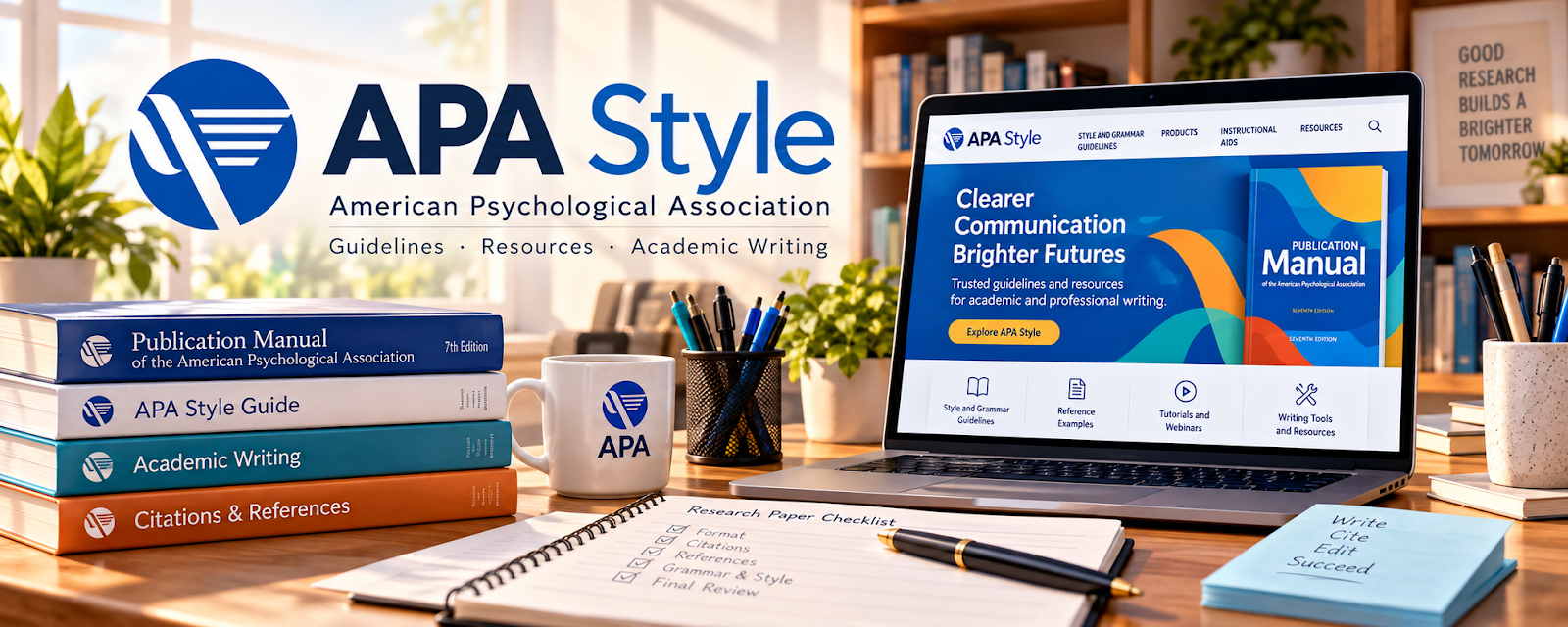
Official Website
APA Style is the official style resource for the American Psychological Association, covering citations, references, paper formatting, bias-free language, grammar, and publication style.
🔗 Visit Official Website — APA Style
Domain: apastyle.apa.org
What This Learning Resource Is
APA Style is the official style resource for the American Psychological Association, covering citations, references, paper formatting, bias-free language, grammar, and publication style. For 📝 Copyediting & Proofreading, it is especially useful for academic, psychology, education, social science, and research-based documents.
How to Use It for Copyediting & Proofreading
Use APA Style as a rule-checking source when a client, student, or publication requires APA formatting. Focus on reference entries, in-text citations, headings, tables, numbers, bias-free language, and manuscript consistency.
Step-by-Step Implementation:
- Confirm whether the document requires APA style.
- Review the APA rules that match the document type.
- Build a checklist for citations, references, headings, and formatting.
- Proofread the draft for grammar, clarity, and style consistency.
- Verify references against source details before delivery.
- Track client or instructor preferences separately from official APA rules.
Best Time to Use This
- When editing APA-style papers or reports.
- Before checking reference lists.
- When proofreading social science or education writing.
- When a client asks for citation cleanup.
Best Skills to Learn Here
- APA citations
- Reference formatting
- Academic proofreading
- Bias-free language
- Heading structure
- Style consistency
Getting Started Steps
- Open APA Style.
- Review examples for common source types.
- Create a quick APA proofreading checklist.
- Practice checking one sample reference list.
- Save tricky rules for future editing projects.
Good Beginner Search Terms
- APA Style references
- APA in text citations
- APA proofreading checklist
- APA headings format
- APA bias free language
- APA academic editing
Monetization Angle
APA knowledge can support academic editing, student proofreading, research report cleanup, citation formatting, and professional document review. It gives proofreading services a clear standard when APA is required.
Pros
- Official APA resource.
- Strong fit for academic editing.
- Helpful for citation-heavy work.
- Free guidance is available.
Cons
- Specific to APA style.
- Citation details require careful checking.
- Not every client needs academic formatting.
- Some advanced guidance may require the manual.
Who Should Use This
Use this if you proofread academic, research, education, psychology, or social science writing.
Who Should Skip This
Skip this if your editing work is mostly brand copy, social posts, or journalism-style content.
Practical Applications
- Check a citation or language question against the required APA edition.
- Compare reference details with the original source.
- Record client-approved style decisions before final review.
Important Considerations
- APA is not the required style for every document and guidance can change by edition or context.
- A style resource does not validate factual claims or grant quotation rights; preserve author meaning, protect confidential text, and flag unresolved issues.
Related Resources
Purdue OWL — Adds grammar and citation support.
MLA Style Center — Supports MLA-style writing and citations.
Chicago Manual of Style Online — Supports publishing and manuscript style.
AP Stylebook — Supports journalism and PR style.
Related Side Hustles
 Copyediting & Proofreading: Get Paid to Polish Words — APA Style supports academic and citation-focused editing.
Freelance Writing: Get Paid to Write Online — Academic style knowledge can support writing projects.
 Self-Publishing on Amazon KDP — Manuscript style discipline can improve book projects.