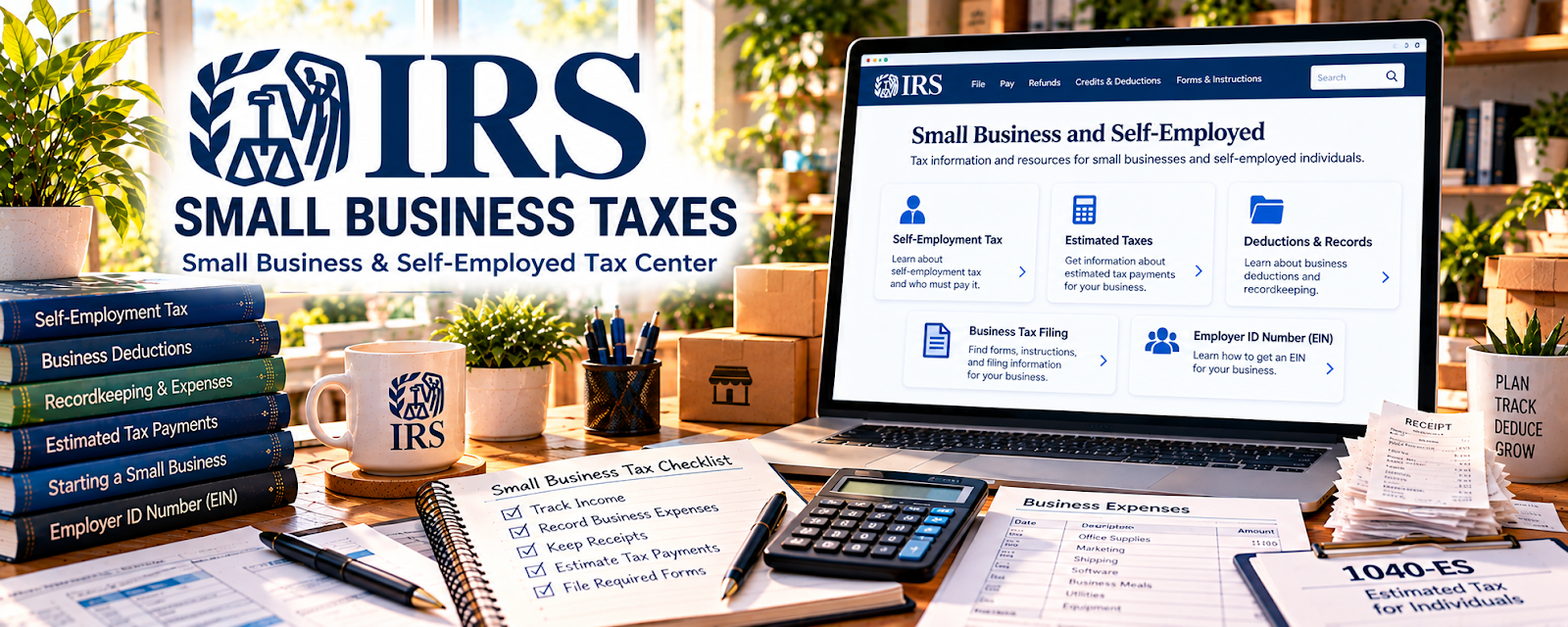
Official Website
IRS Small Business Taxes is the IRS resource area for small-business and self-employed tax topics, including income, deductions, estimated taxes, recordkeeping, employment taxes, and business structures.
🔗 Visit Official Website — IRS Small Business Taxes
Domain: www.irs.gov
What This Website Is
IRS Small Business Taxes is the IRS resource area for small-business and self-employed tax topics, including income, deductions, estimated taxes, recordkeeping, employment taxes, and business structures. For 📊 Online Bookkeeping, it provides important tax-awareness context for keeping cleaner records.
How to Use It for Online Bookkeeping
Use IRS Small Business Taxes to understand what records clients may need for tax time. Focus on recordkeeping, income tracking, deductible expense categories, estimated tax basics, payroll boundaries, and when to refer to a tax professional.
Step-by-Step Implementation:
- Review IRS small-business recordkeeping topics.
- Build a bookkeeping checklist around income, expenses, receipts, invoices, and reports.
- Separate bookkeeping support from tax advice.
- Flag missing records early for clients.
- Keep monthly summaries organized for tax preparers.
- Refer tax questions to qualified professionals.
Best Time to Use This
- When supporting self-employed or small-business clients.
- Before setting up recordkeeping systems.
- When categorizing income and expenses.
- Before year-end bookkeeping cleanup.
Best Skills to Learn Here
- Small-business tax awareness
- Recordkeeping
- Income and expense tracking
- Estimated tax context
- Referral boundaries
- Year-end preparation
Getting Started Steps
- Open IRS Small Business Taxes.
- Start with recordkeeping and self-employed topics.
- Turn key points into a monthly bookkeeping checklist.
- Add a tax-professional referral boundary to your service notes.
- Use the checklist when organizing client records.
Good Beginner Search Terms
- IRS small business taxes
- small business recordkeeping IRS
- self employed tax records
- bookkeeping tax preparation
- estimated taxes small business
- business deductions recordkeeping
Monetization Angle
Bookkeepers can provide value by keeping records clean and tax-ready. IRS guidance helps you build better monthly bookkeeping packages while avoiding tax advice outside your role.
Pros
- Official IRS source.
- Useful for recordkeeping systems.
- Helps clarify tax-time information needs.
- Supports better bookkeeping boundaries.
Cons
- Tax guidance can be dense.
- Does not make you a tax professional.
- Rules can change.
- Clients may still need a CPA or enrolled agent.
Who Should Use This
Use this if you support small-business or self-employed bookkeeping records.
Who Should Skip This
Skip this if you only do non-financial admin work and never handle income, expenses, invoices, or reports.
Practical Applications
- Find official federal guidance relevant to a specific small-business recordkeeping question.
- Organize supporting documents for review.
- Prepare precise questions for the client’s authorized tax professional.
Important Considerations
- U.S. federal guidance does not by itself resolve state, local, foreign, or every fact-specific tax issue.
- Verify current tax-year instructions and authority, protect financial records, and do not provide services beyond your competence or assume a software category establishes deductibility.
Related Resources
AIPB Resources — Supports professional bookkeeping skill development.
Xero Central — Helps with bookkeeping software workflows.
SCORE — Provides small-business education and mentoring.
Related Side Hustles
 Online Bookkeeping: Earn Steady Income by Helping Businesses Stay Organized — IRS guidance supports tax-aware recordkeeping.
 Virtual Assistance — Admin support can overlap with invoices and records.
Consulting: Get Paid for What You Know — Small-business tax awareness can support advisory boundaries.