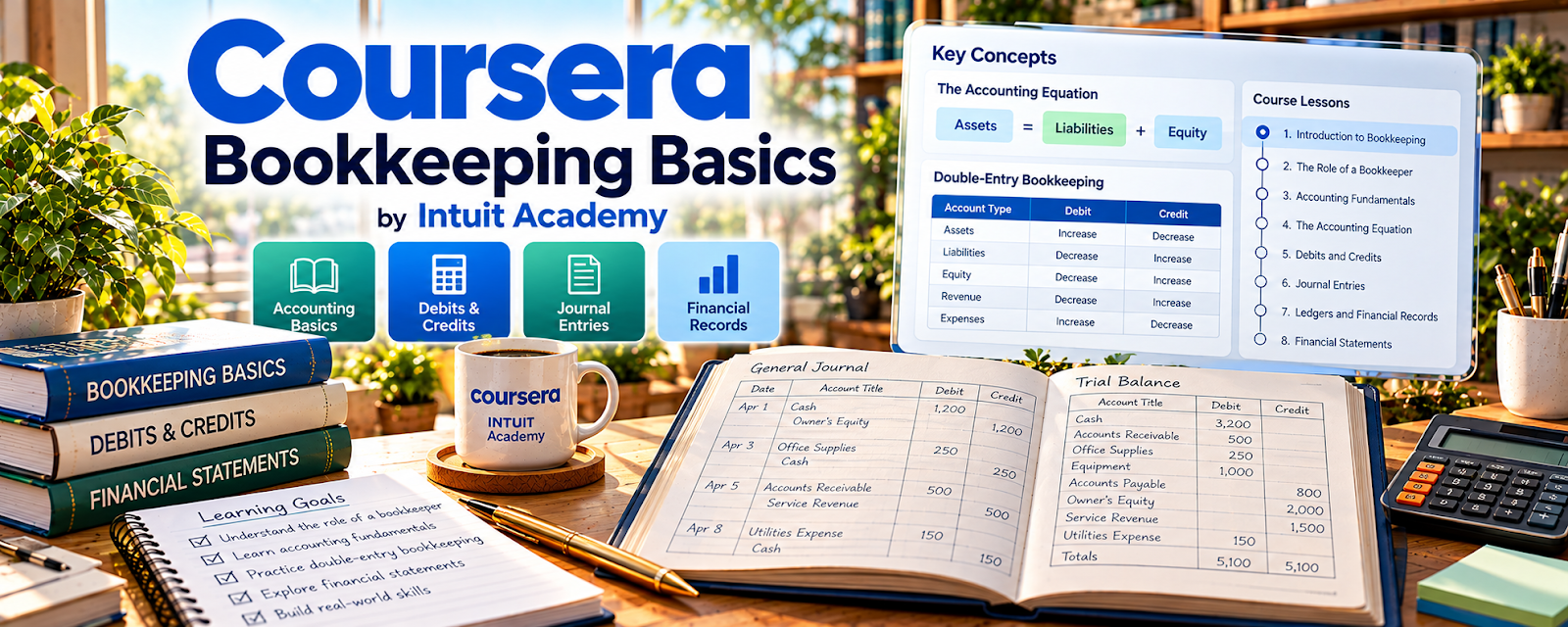
Official Website
Coursera — Bookkeeping Basics is a focused beginner course for learning bookkeeping language, transactions, accounts, records, and basic financial organization.
🔗 Visit Official Website — Coursera — Bookkeeping Basics
Domain: www.coursera.org
What This Learning Resource Is
Coursera — Bookkeeping Basics is a focused beginner course for learning bookkeeping language, transactions, accounts, records, and basic financial organization. For 📊 Online Bookkeeping, it helps beginners build a foundation before touching client books.
How to Use It for Online Bookkeeping
Use this course as your first bookkeeping practice path. Turn each lesson into a checklist or sample workflow you can repeat before working with real business records.
Step-by-Step Implementation:
- Complete lessons in order.
- Take notes on accounts, debits, credits, revenue, and expenses.
- Practice categorizing sample transactions.
- Build a simple monthly bookkeeping checklist.
- Review basic reports and what they mean.
- Continue into software-specific training when ready.
Best Time to Use This
- At the very beginning of bookkeeping learning.
- Before QuickBooks, Xero, or client work.
- When accounting terminology feels intimidating.
Best Skills to Learn Here
- Bookkeeping vocabulary
- Transaction basics
- Account categories
- Record organization
- Monthly workflow
- Report awareness
Getting Started Steps
- Enroll in the beginner course.
- Complete each module with notes.
- Create a sample transaction list.
- Categorize each transaction.
- Turn the steps into a repeatable checklist.
Good Beginner Search Terms
- Coursera Bookkeeping Basics
- bookkeeping basics beginner
- accounting terms beginner
- transaction categorization
- online bookkeeping basics
- small business bookkeeping course
Monetization Angle
Bookkeeping basics training supports future paid work by improving accuracy and confidence. It is an early step toward client-ready workflows, not a shortcut to handling complex books immediately.
Pros
- Focused beginner path.
- Useful for accounting vocabulary.
- Good before software-specific training.
- Can become a basic workflow checklist.
Cons
- Beginner-level only.
- Not enough for complex client work alone.
- Software practice is still needed.
- Tax and compliance rules still matter.
Who Should Use This
Use this if you are new to bookkeeping and need a clear starting point.
Who Should Skip This
Skip this if you already understand bookkeeping basics and need certification, software training, or advanced accounting.
Practical Applications
- Review the current course syllabus against a beginner bookkeeping gap.
- Practice with approved sample records.
- Use feedback to identify questions for authoritative accounting guidance.
Important Considerations
- Verify current availability, instructor, dates, access, assessment, costs, and credential meaning.
- Course completion does not establish accounting licensure or tax competence; validate outputs, protect financial records, and perform only authorized services within your abilities.
Related Resources
Coursera — Bookkeeping Courses — Adds broader bookkeeping course options.
QuickBooks ProAdvisor Academy — Provides platform-specific credibility.
Xero Advisor Certification — Supports Xero-focused client work.
Google Sheets — Helps practice ledgers and reports.
Karbon — Supports bookkeeping workflow organization.
Related Side Hustles
 Online Bookkeeping: Earn Steady Income by Helping Businesses Stay Organized — Bookkeeping Basics supports the foundation for client-ready records.
 Virtual Assistance — Admin clients may need light invoicing or expense tracking.
Consulting: Get Paid for What You Know — Financial organization can support small business advisory conversations.